


























Views
Plays

Plural Nouns Ending in F Worksheet | Grade 2 Essential
Paste this activity's link or code into your existing LMS (Google Classroom, Canvas, Teams, Schoology, Moodle, etc.).
Students can open and work on the activity right away, with no student login required.
You'll still be able to track student progress and results from your teacher account.
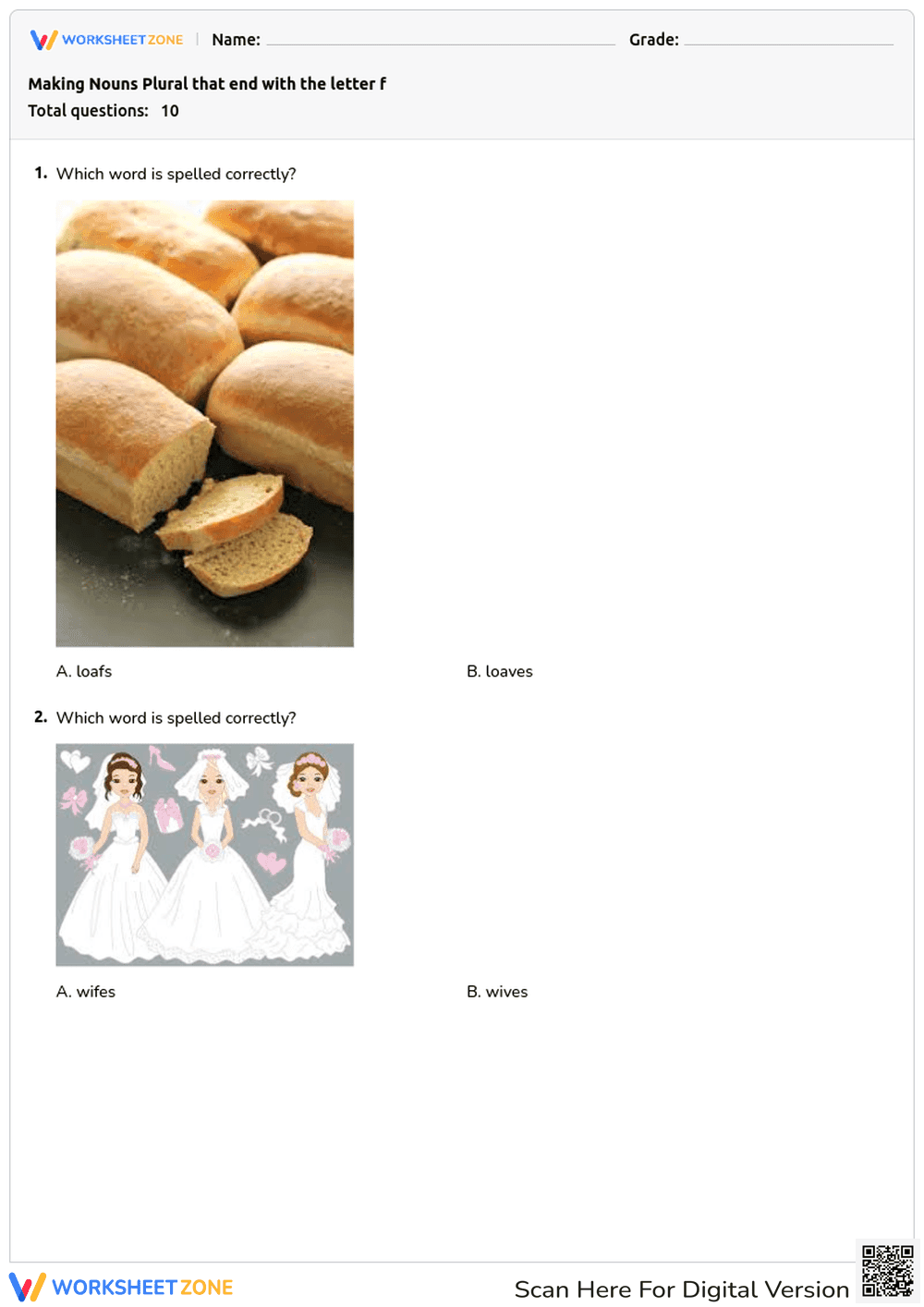
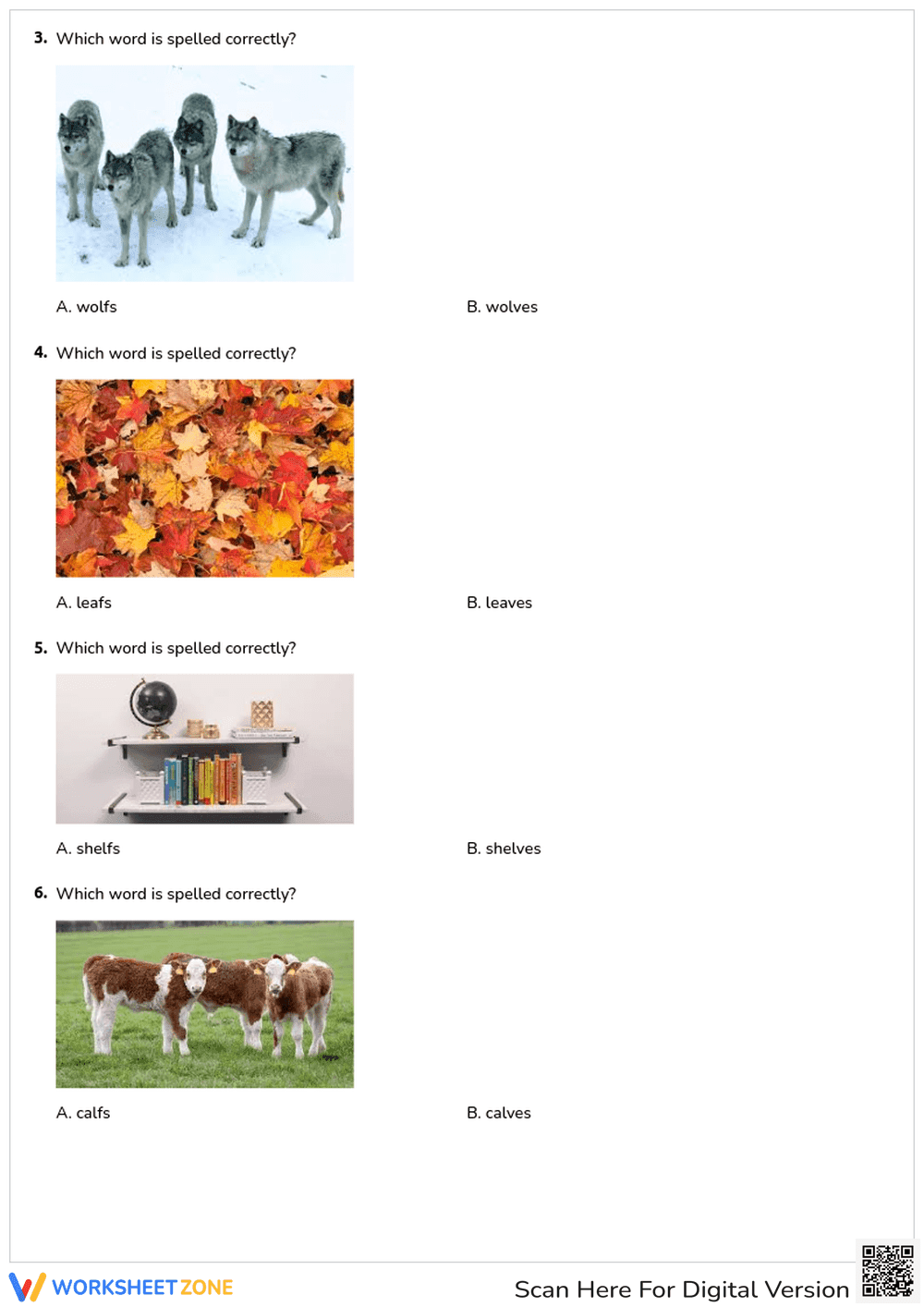
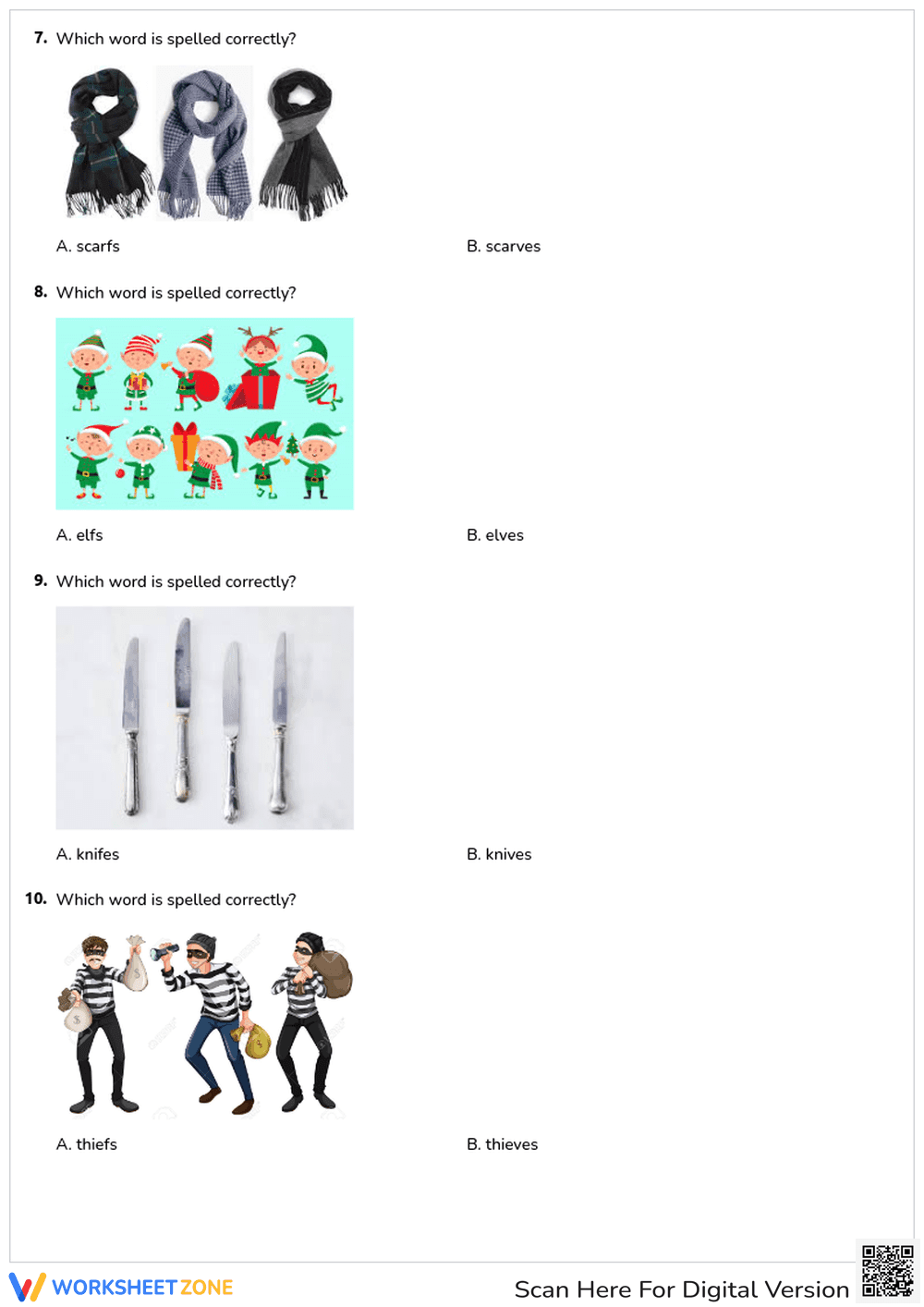
This Grade 2 English Language Arts worksheet provides targeted practice for one of the most common spelling hurdles: pluralizing nouns that end in the letter f or fe. By focusing specifically on the change f to v and add es rule, students build the orthographic awareness necessary for fluent writing and reading.
At a Glance
- Grade: 2 · Subject: English Language Arts
- Standard:
CCSS.ELA-LITERACY.L.2.1.B— Form and use frequently occurring irregular plural nouns- Skill Focus: Irregular plural spelling (f to ves)
- Format: 3 pages · 10 problems · Answer key included · PDF
- Best For: Independent grammar practice or formative assessment
- Time: 10–15 minutes
What's Inside: The resource consists of 3 pages containing 10 carefully selected vocabulary words. Each question features a vibrant, real-world photograph to provide context, helping students connect the written word to the physical object. The multiple-choice format reduces cognitive load, allowing learners to focus purely on the spelling pattern rather than handwriting or recall.
Skill Progression: The worksheet follows a structured path toward mastery. First, students engage in guided practice by observing the singular image and identifying the correct plural form from two options. Next, supported practice occurs as students recognize recurring patterns across different word families like leaves and thieves. Finally, independent practice is achieved when students can apply the rule to all 10 examples without teacher intervention. This gradual release model ensures high success rates.
Standards Alignment: This resource is directly aligned with CCSS.ELA-LITERACY.L.2.1.B, which requires students to form and use frequently occurring irregular plural nouns. By mastering the f to ves transition, students move beyond basic s and es additions, preparing them for more complex linguistic structures. Both standard codes can be copied directly into lesson plans, IEP goals, or district curriculum mapping tools.
How to Use It: Use this worksheet during the independent practice phase of a grammar lesson on irregular plurals. It works exceptionally well as a formative assessment after an anchor chart demonstration. Teachers can observe students as they work; if a student consistently chooses the fs ending, it indicates a need for immediate corrective feedback. Expect completion in 10–15 minutes.
Who It's For: This is designed for second-grade students, though it serves as an excellent intervention for third graders or English Language Learners (ELLs) who struggle with English spelling conventions. Pair this with a physical word sort or a classroom scavenger hunt for f nouns to reinforce the concept.
According to the RAND AIRS 2024 report on foundational literacy, targeted orthographic practice is essential for moving students from phonetic decoding to automatic word recognition. This worksheet addresses the specific irregular plural pattern of changing f to ves, a critical component of the CCSS.ELA-LITERACY.L.2.1.B standard. Research indicates that visual aids, such as the 10 high-quality images included here, significantly improve retention for early elementary learners by providing a concrete anchor for abstract spelling rules. By isolating this single mechanic, the resource prevents cognitive overstimulation and allows for the repetition required to achieve spelling mastery. This evidence-based approach ensures that students do not just memorize words but understand the underlying linguistic logic, facilitating better transfer to independent writing tasks across the curriculum.


