


























Views
Downloads
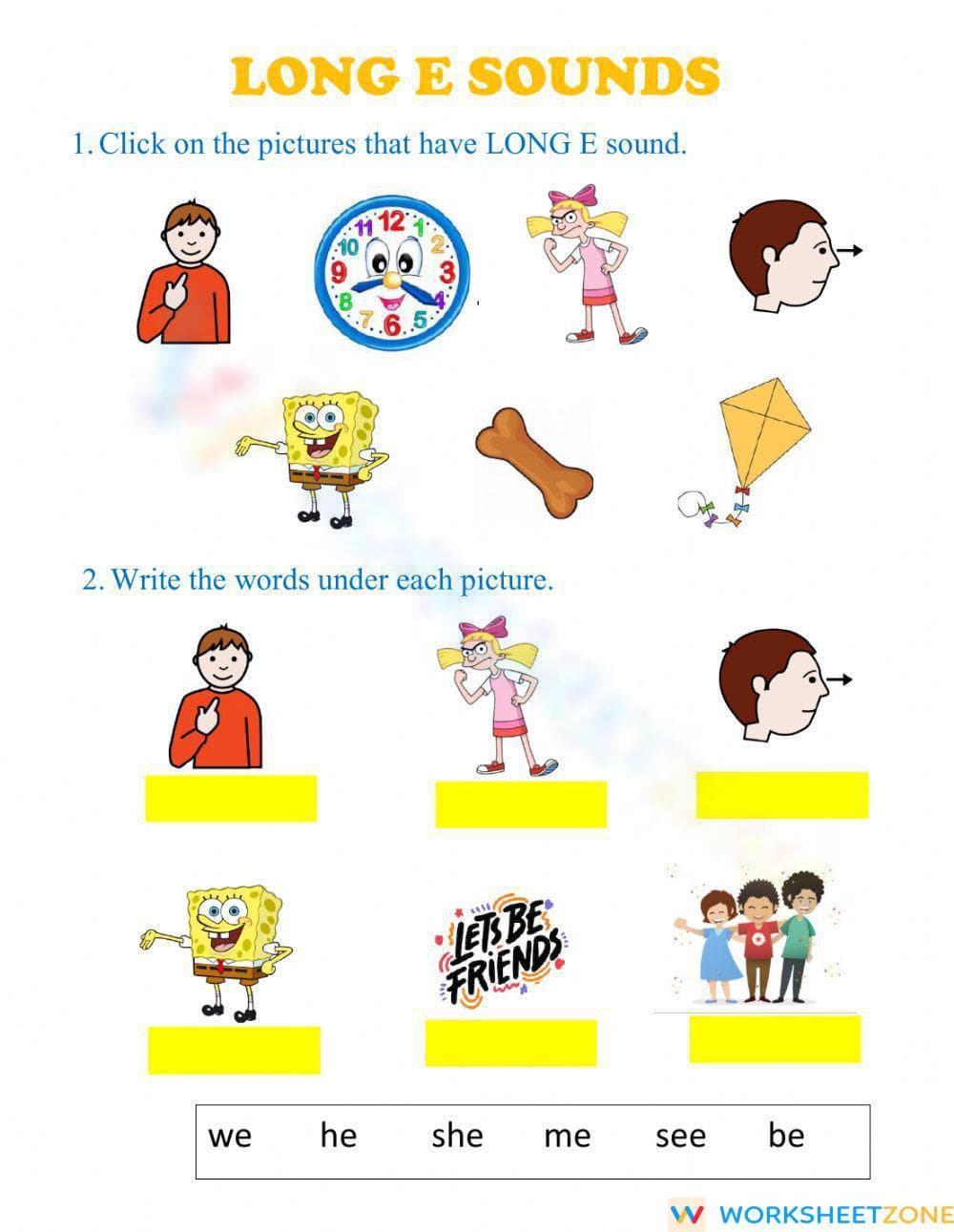

Essential Long E Vowel Sounds Worksheet | Grade 2 Phonics
Paste this activity's link or code into your existing LMS (Google Classroom, Canvas, Teams, Schoology, Moodle, etc.).
Students can open and work on the activity right away, with no student login required.
You'll still be able to track student progress and results from your teacher account.
This Essential Long E sounds worksheet provides Grade 2 students with focused phonics practice to master vowel team recognition. Students identify auditory patterns and apply spelling rules to common high-frequency words. By connecting visual cues with written responses, this resource ensures students internalize the "ee" and "e" vowel conventions required for fluent reading and writing.
At a Glance
- Grade: 2 · Subject: English Language Arts
- Standard:
CCSS.ELA-LITERACY.RF.2.3— Know and apply grade-level phonics and word analysis skills in decoding words- Skill Focus: Long E vowel sound recognition
- Format: 1 page · 12 tasks · Answer key included · PDF
- Best For: Independent phonics centers and morning work
- Time: 15–20 minutes
The worksheet features a clean, two-part layout designed for maximum student clarity and engagement. The first section asks students to select images containing the long e sound, building phonemic awareness. The second section provides a word bank with six words—we, he, she, me, see, and be—to be placed under corresponding illustrations. The single-page PDF includes a built-in word bank to support emerging writers.
The zero-prep workflow is designed for educators who need high-quality materials instantly. First, print the single-page document in 30 seconds. Next, distribute the sheets with two-minute verbal instructions on the auditory identification task. Finally, review the completed work using the included answer key for immediate feedback. The total preparation time for this activity is less than two minutes.
This resource aligns with CCSS.ELA-LITERACY.RF.2.3, targeting the ability to distinguish long vowels when reading regularly spelled words. It also supports CCSS.ELA-LITERACY.L.2.2.E by encouraging correct spelling through the use of a reference bank. Both standard codes can be copied directly into lesson plans, IEP goals, or district curriculum mapping tools.
Use this worksheet as a formative assessment after a lesson on vowel teams. Teachers should observe if students identify the long e sound without prompting. It serves as an excellent sub-plan activity due to its self-explanatory nature. Expected completion time is 18 minutes, making it an ideal exit ticket to gauge mastery before moving to other vowel sounds.
This practice is ideal for Grade 2 students, though it provides review for Grade 3 students struggling with spelling. The clear illustrations and word bank offer necessary scaffolds for English Language Learners and students with diverse needs. It pairs naturally with an anchor chart displaying "ee" and "e" spelling patterns for classroom-wide reference during literacy blocks.
The Long E sounds worksheet addresses a critical milestone in early literacy: the transition from simple phonetic decoding to recognizing complex vowel patterns. According to Fisher & Frey (2014), the gradual release of responsibility model is most effective when students move from guided auditory recognition to independent orthographic application. This resource facilitates that shift by providing 12 structured tasks that bridge the gap between hearing a sound and writing its correct letter representation. By focusing on high-frequency words like "she" and "see," the worksheet reinforces the phonics-to-fluency pipeline essential for elementary success. Research indicates that targeted practice with vowel teams significantly reduces spelling errors in early writing samples and increases overall reading comprehension scores. Educators can utilize the standard CCSS.ELA-LITERACY.RF.2.3 to document progress toward foundational reading goals, ensuring that every student develops the necessary decoding skills for advanced academic achievement in later grades.


