




























Views
Downloads

Living vs. Non-Living Worksheet | Grade 3 Essential

Paste this activity's link or code into your existing LMS (Google Classroom, Canvas, Teams, Schoology, Moodle, etc.).
Students can open and work on the activity right away, with no student login required.
You'll still be able to track student progress and results from your teacher account.
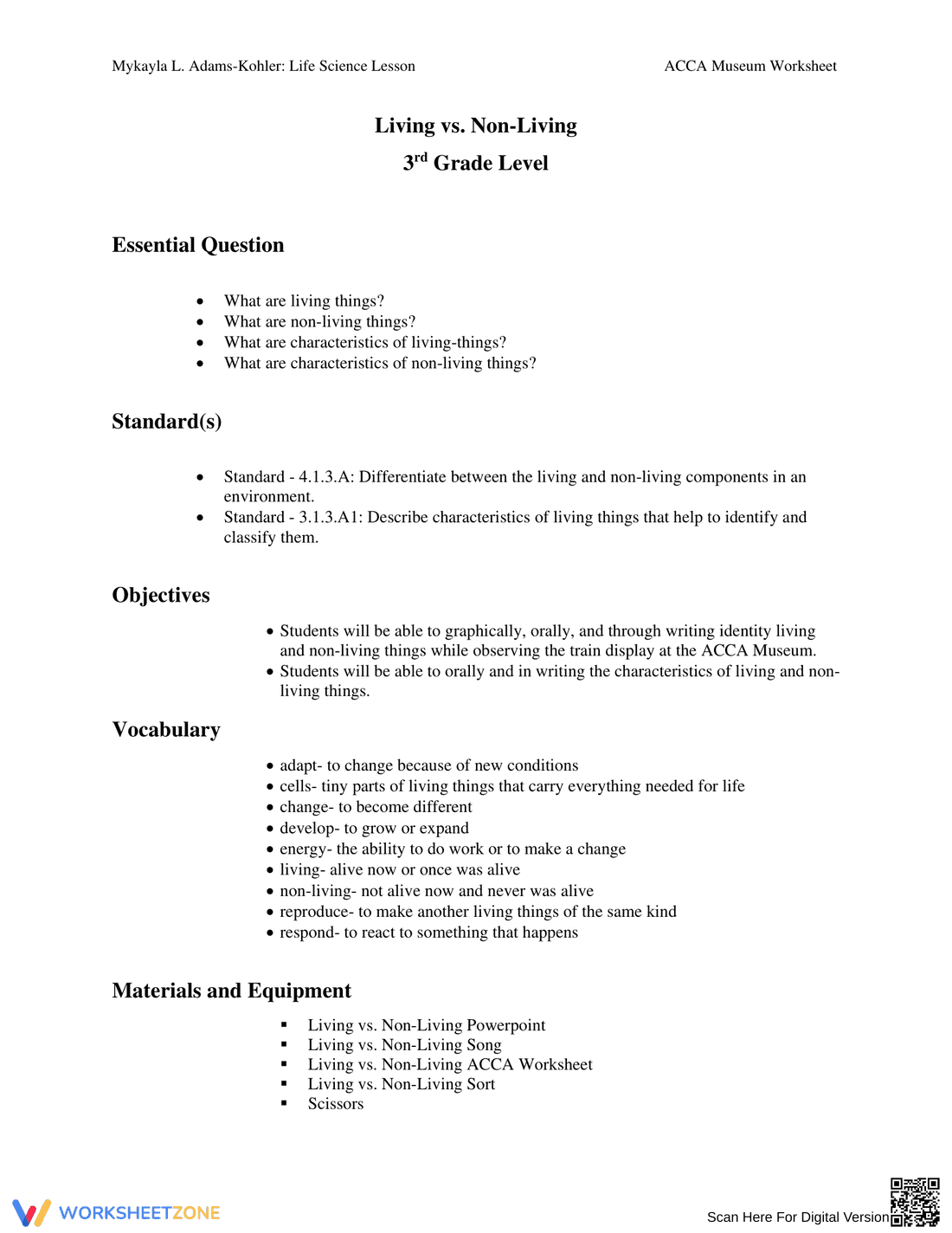
This Grade 3 science worksheet provides a comprehensive framework for students to identify and categorize living and non-living things. By engaging with visual sorting tasks and observational logs, learners master the fundamental characteristics of life, including growth, reproduction, and response to stimuli. This resource ensures students can confidently differentiate between biological organisms and inanimate objects in any environment.
At a Glance
- Grade: 3 · Subject: Science
- Standard:
3.1.3.A1— Describe characteristics of living things to identify and classify them- Skill Focus: Biological Classification & Observation
- Format: 8 pages · 33 tasks · Lesson Plan Included · PDF
- Best For: Field trips and introductory biology lessons
- Time: 45–60 minutes
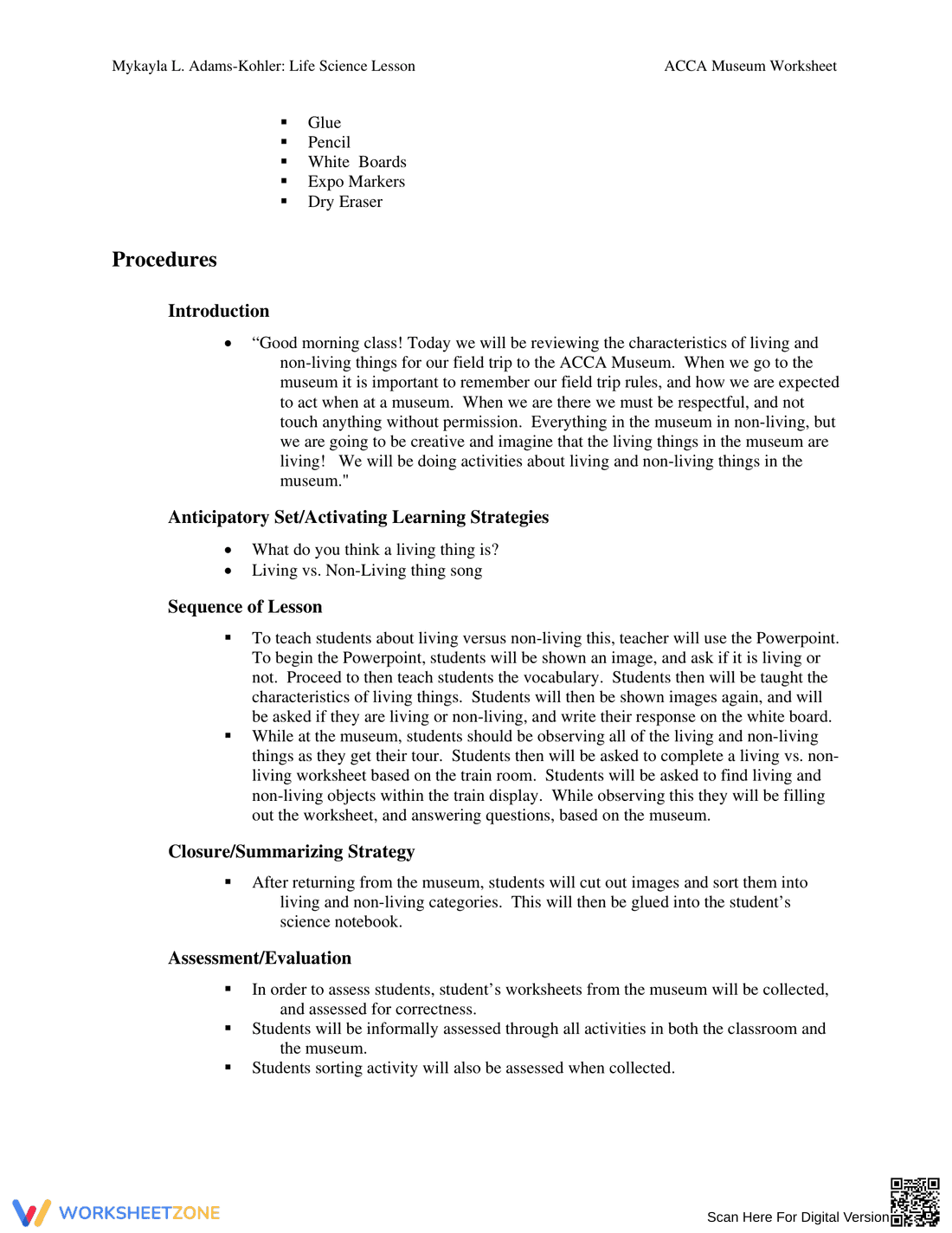
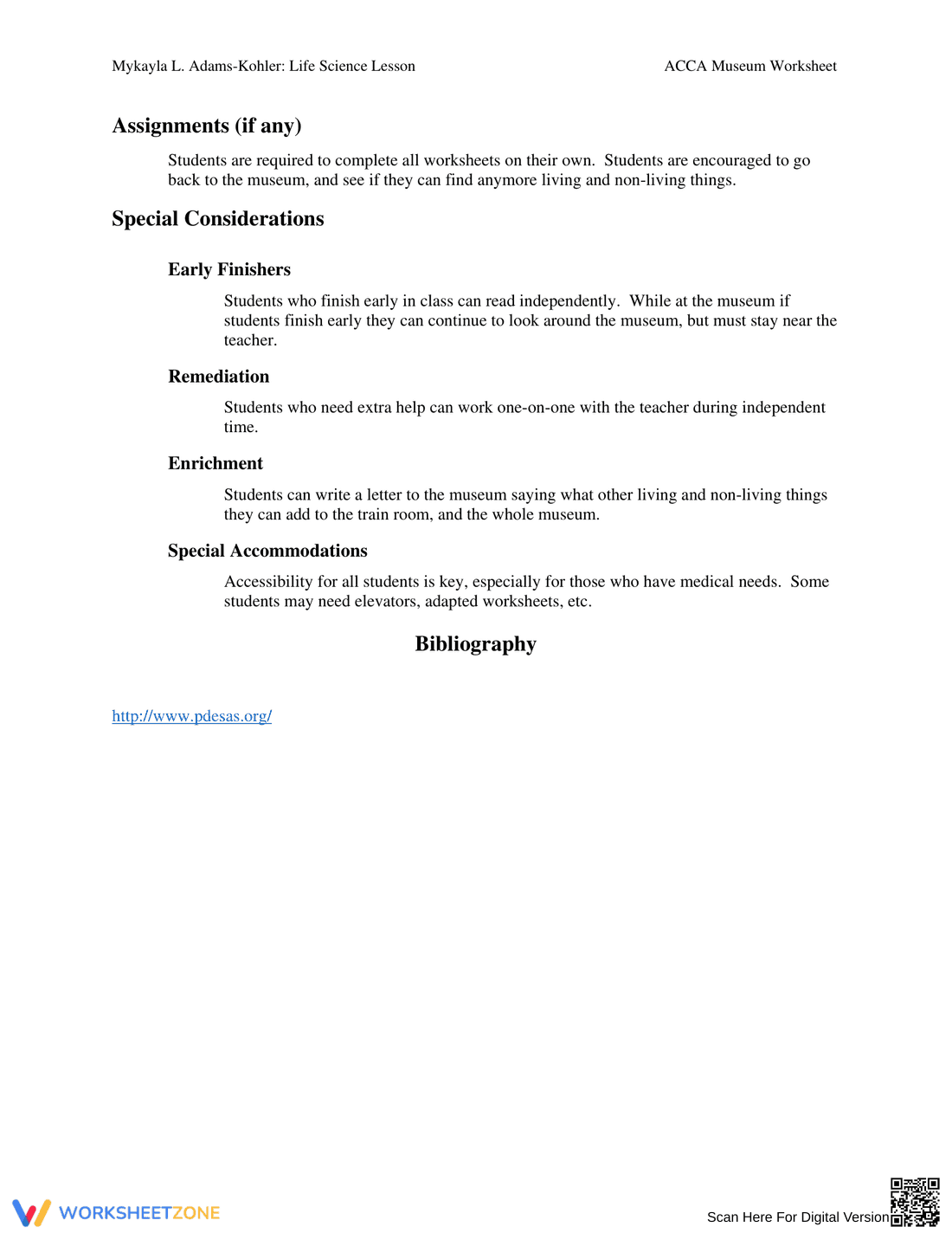
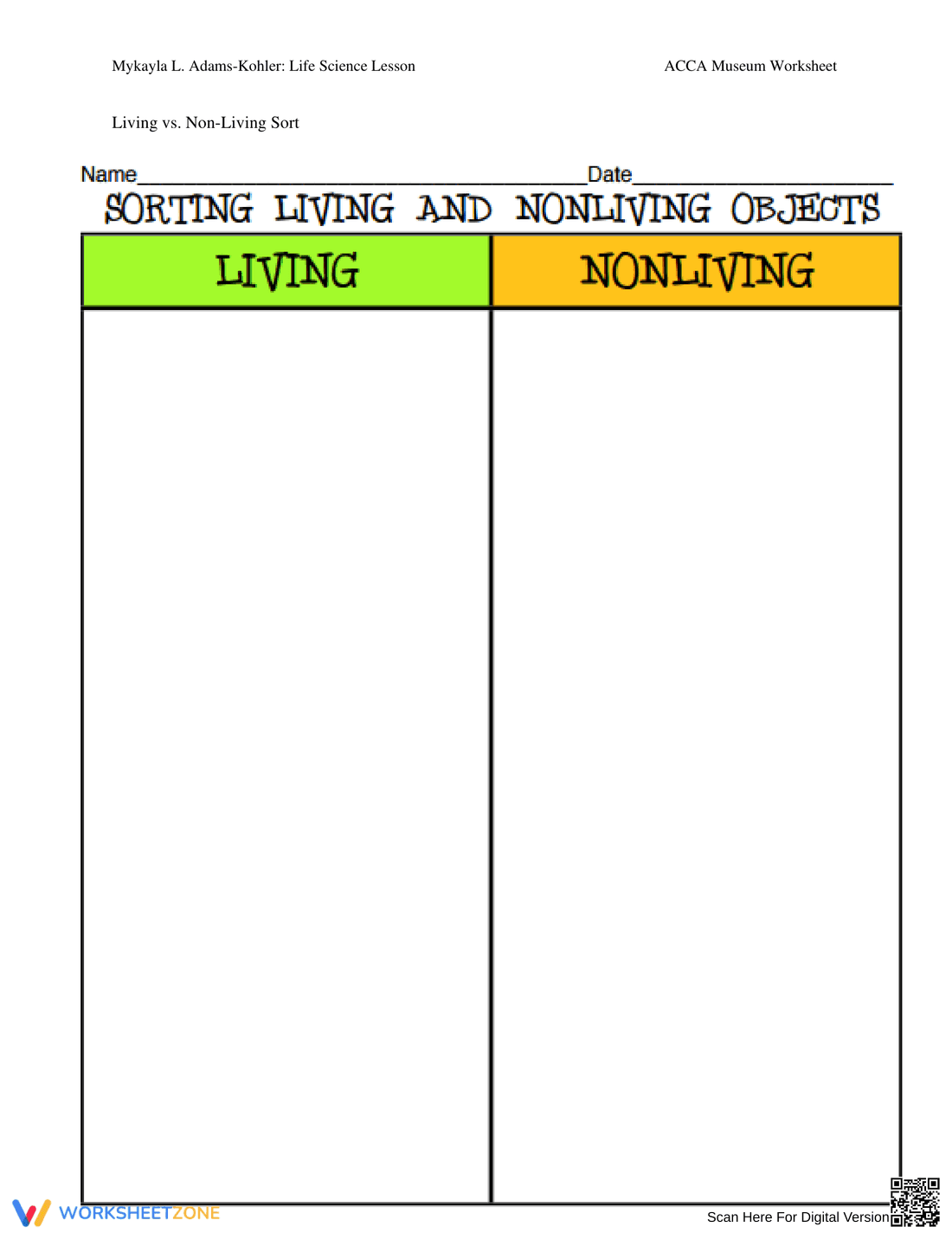
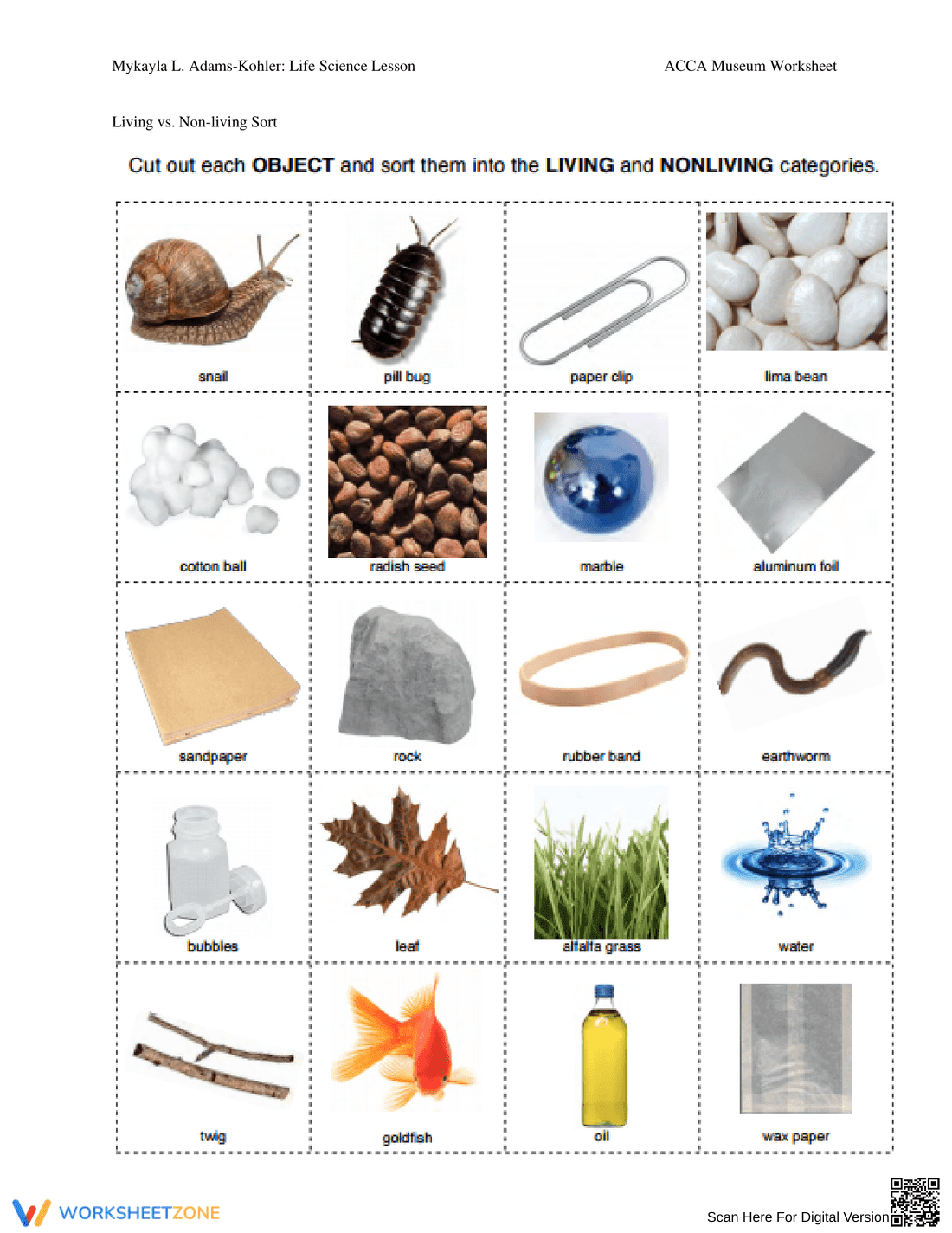
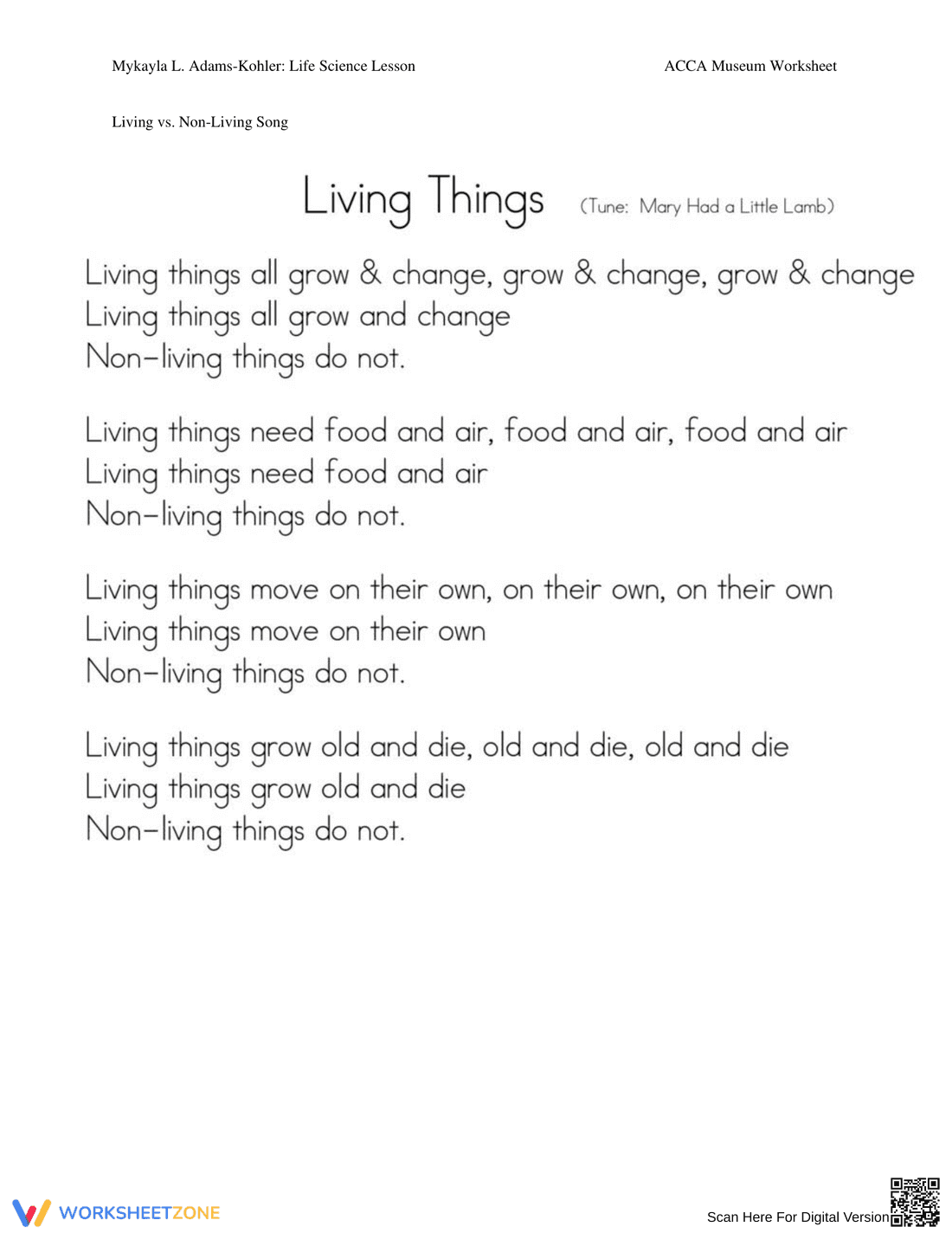
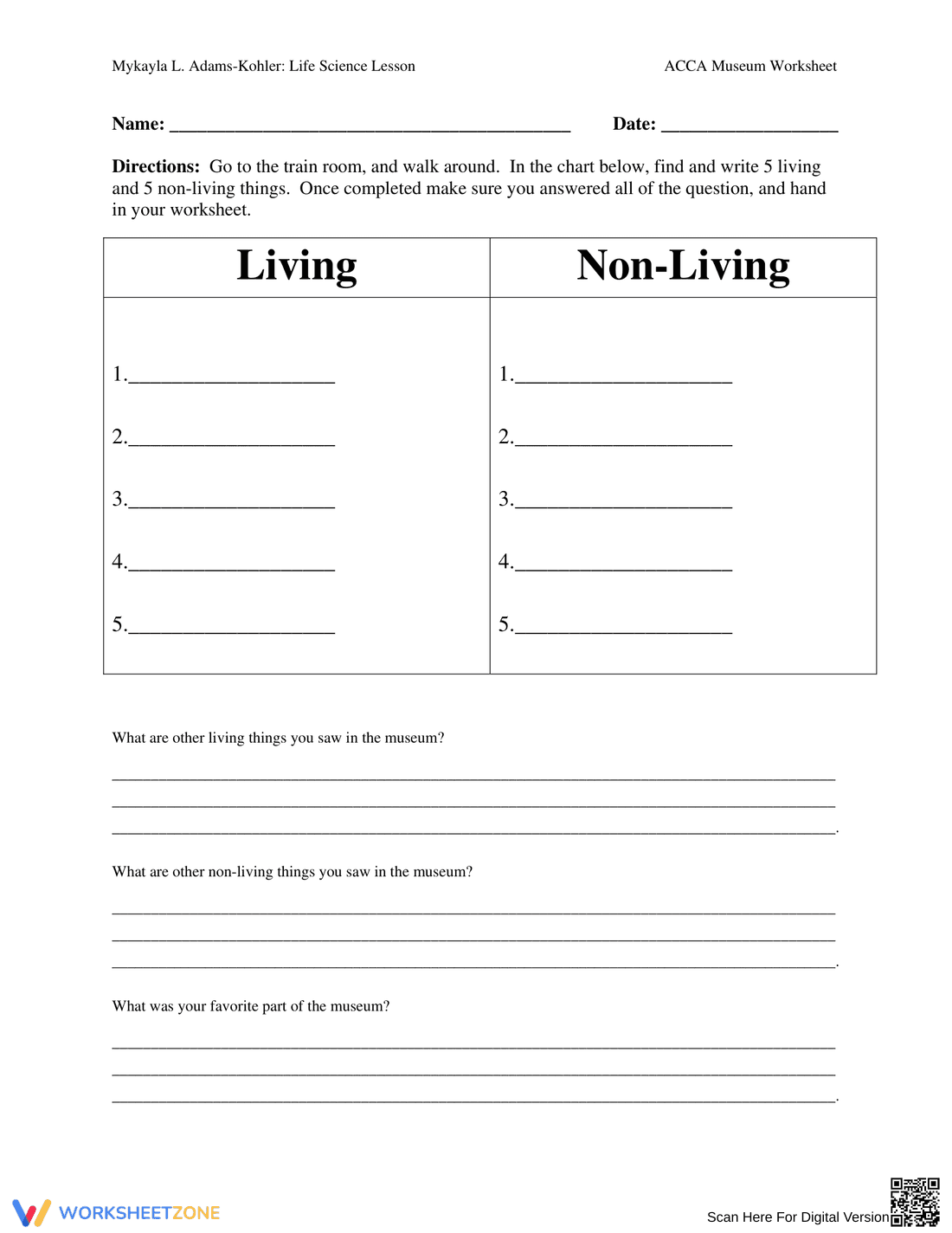
The packet contains a full instructional suite, including a detailed lesson plan with essential questions and vocabulary definitions. Students receive 20 high-quality visual sorting cards featuring items like snails, paper clips, and earthworms. The set also includes a blank sorting table, a mnemonic song set to a familiar tune, and a specialized observation worksheet designed for use in a museum or outdoor setting.
Zero-Prep Workflow
- Print: Select the sorting cards and observation logs for your specific lesson (1 minute).
- Distribute: Hand out materials and lead the "Living Things" song to activate prior knowledge (5 minutes).
- Review: Collect and evaluate the completed sorting tables or museum logs to assess student mastery (2 minutes).
This streamlined process makes the resource an ideal choice for emergency sub plans or high-engagement field trip activities where teacher prep time is limited.
Standards Alignment
This resource is aligned to the primary standard 3.1.3.A1: "Describe characteristics of living things that help to identify and classify them." It also supports 4.1.3.A regarding differentiation between living and non-living components in an environment. Both standard codes can be copied directly into lesson plans, IEP goals, or district curriculum mapping tools.
How to Use It
Use this resource during the "Explore" phase of a 5E lesson cycle. Start with the "Living Things" song to build engagement, then have students work in pairs to categorize the 20 sorting cards. As a formative assessment, observe students during the sorting process to see if they correctly identify seeds and twigs as living or once-living. The observation log is perfect for a 30-minute nature walk or museum visit.
Who It's For
This worksheet is designed for third-grade general education classrooms but is highly effective for English Language Learners (ELLs) due to the heavy use of visual aids and rhythmic song lyrics. It pairs naturally with an anchor chart on the "Needs of Living Things" or a direct instruction lesson on life cycles.
This resource aligns with the 3.1.3.A1 standard by requiring students to describe characteristics of living things to identify and classify them within a specific environment. According to research by Fisher & Frey (2014) on the gradual release of responsibility, providing multi-modal supports—such as the included "Living Things" song and visual sorting cards—helps solidify conceptual understanding before moving to independent observation tasks. The worksheet facilitates a structured transition from vocabulary acquisition to real-world application, which is critical for third-grade learners developing biological classification skills. By utilizing 20 distinct visual examples, students engage in comparative analysis that mirrors the scientific method. This comprehensive 8-page packet ensures that educators can provide high-quality, evidence-based instruction with minimal preparation. The integration of a field-trip observation log further bridges the gap between classroom theory and authentic scientific inquiry, supporting long-term retention of life science concepts across diverse student populations.


