


























Views
Downloads
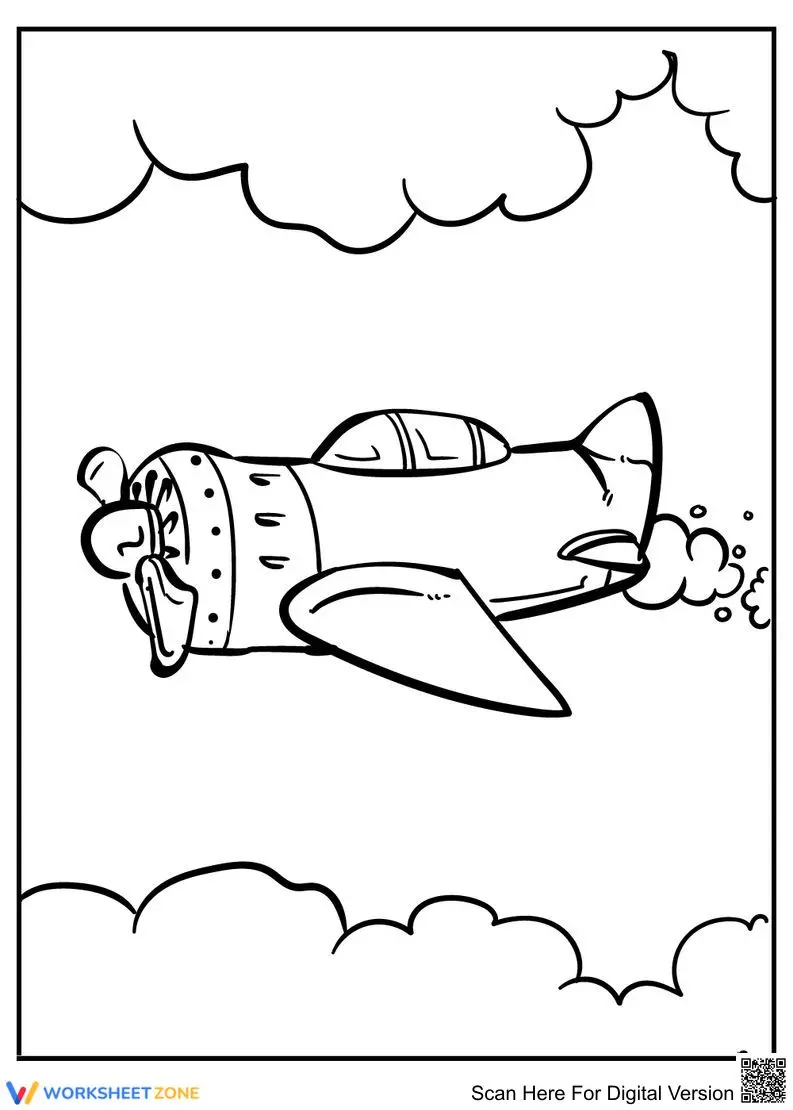

Little Airplane Coloring Page | Essential Grade K-5 Ready
Paste this activity's link or code into your existing LMS (Google Classroom, Canvas, Teams, Schoology, Moodle, etc.).
Students can open and work on the activity right away, with no student login required.
You'll still be able to track student progress and results from your teacher account.
This Little Airplane coloring worksheet provides a high-interest visual for students to practice fine motor control and color application. By engaging with transportation-themed imagery, learners strengthen the small muscle groups required for handwriting while reinforcing vocabulary related to flight and vehicles. It serves as a versatile tool for early childhood classrooms.
At a Glance
- Grade: K–5 · Subject: Arts & ELA
- Standard:
CCSS.ELA-LITERACY.L.K.6— Use words and phrases acquired through conversations and reading about vehicles- Skill Focus: Fine motor precision and vocabulary
- Format: 1 page · 1 task · No answer key needed · PDF
- Best For: Early finishers and transportation units
- Time: 10–15 minutes
What's Inside
This resource features a single-page, high-resolution PDF containing a "Little Airplane" illustration. The design includes a central aircraft with distinct sections—propeller, cockpit, and wings—set against a backdrop of fluffy clouds. The bold, thick outlines are specifically designed to help younger students stay within the lines, supporting visual-motor integration. No additional teacher setup or materials beyond standard coloring supplies are required.
Zero-Prep Workflow
The zero-prep workflow for this worksheet is designed for maximum efficiency in busy classrooms. First, print the single-page PDF (30 seconds). Second, distribute the sheets to students during a transition period or as part of a dedicated "Transportation" center (1 minute). Finally, review the completed work by having students name the parts of the plane or the colors they selected (1 minute). Total teacher preparation time is under 2 minutes, making it an ideal emergency sub plan or quiet-time activity.
Standards Alignment
This activity aligns with `CCSS.ELA-LITERACY.L.K.6`, which requires students to use words and phrases acquired through conversations, reading and being read to, and responding to texts. While primarily an artistic task, it facilitates the "responding to texts" component when paired with a story about flight. Both standard codes can be copied directly into lesson plans, IEP goals, or district curriculum mapping tools.
How to Use It
Use this worksheet as a formative assessment for fine motor development during the first weeks of school. Observe how students grip their crayons and their ability to navigate the propeller's smaller details. Alternatively, assign it as a calming activity following a high-energy lesson on physics or travel. Completion typically ranges from 10 to 15 minutes depending on the student's attention to detail.
Who It's For
This worksheet is tailored for Kindergarten through 2nd-grade students, though it remains accessible for older students in Grade 5 who benefit from therapeutic coloring. It is particularly effective for English Language Learners (ELLs) building basic nouns. Pair this resource with a picture book about aviation or a classroom anchor chart labeled with "Parts of an Airplane" to maximize the educational impact.
Research from the RAND AIRS 2024 report emphasizes that integrating fine motor activities like coloring into the early childhood curriculum is foundational for later academic success in writing and literacy. The act of coloring requires bilateral coordination and spatial awareness, which are cognitive precursors to letter formation and decoding. According to Fisher & Frey (2014), purposeful coloring tasks that are linked to thematic vocabulary—such as the `CCSS.ELA-LITERACY.L.K.6` focus on transportation terms—help solidify word-object associations in the developing brain. By providing a low-stakes environment for artistic expression, educators can monitor a student's visual-motor integration progress without the pressure of formal testing. This worksheet offers 1 specific task that bridges the gap between creative play and structured learning, ensuring that students remain engaged while developing the physical stamina necessary for longer writing assignments in subsequent grades.


