




























Views
Downloads
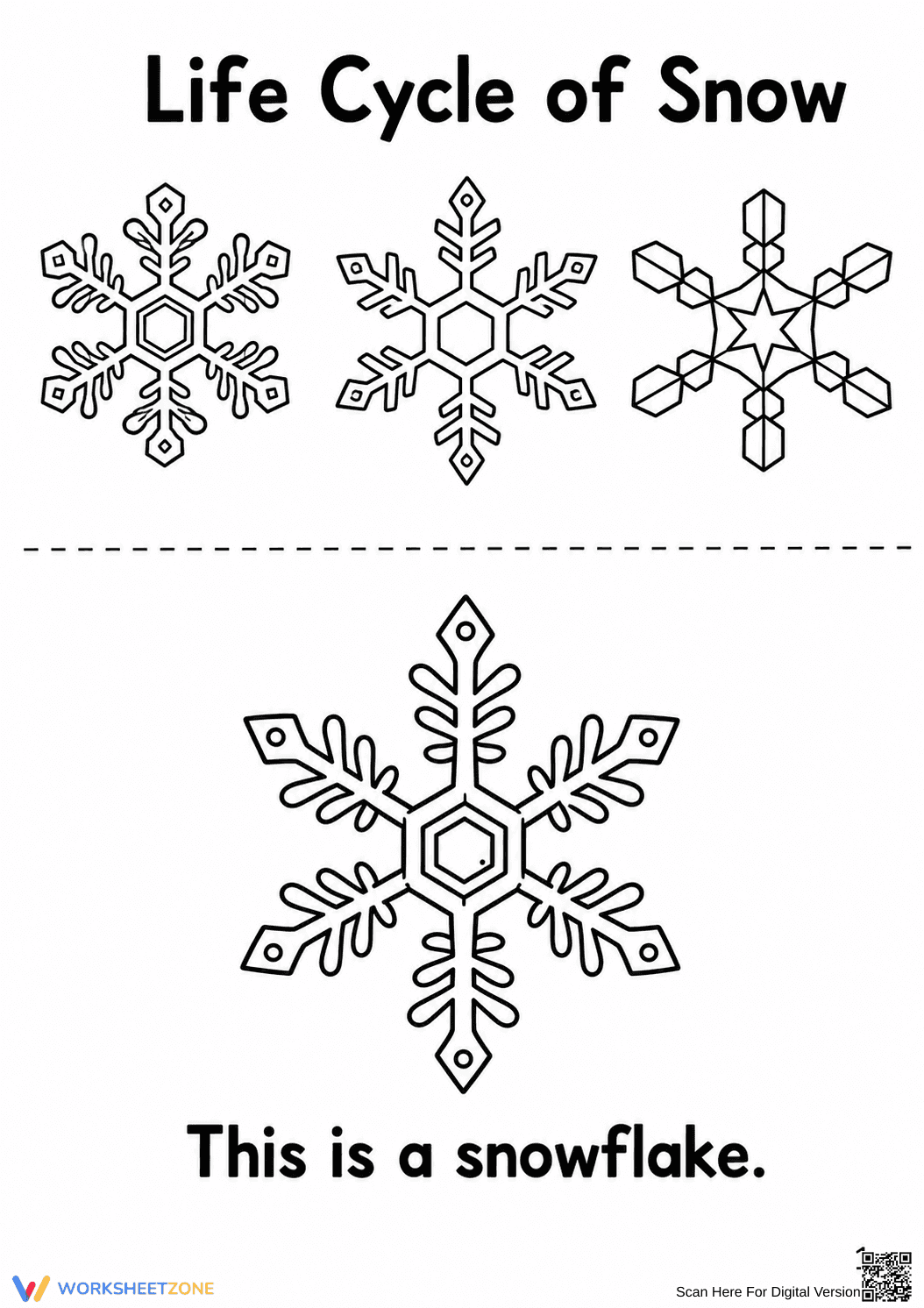
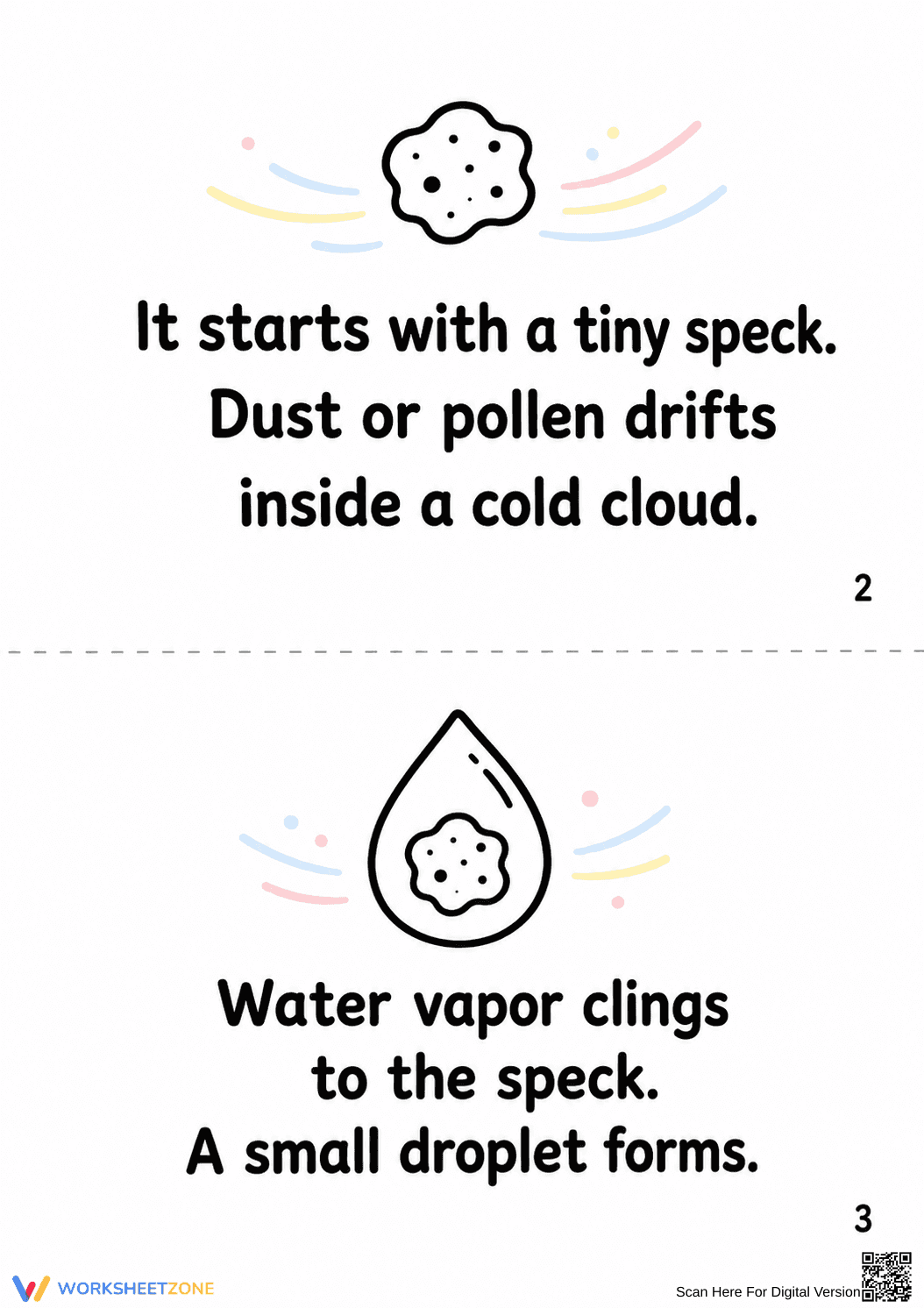
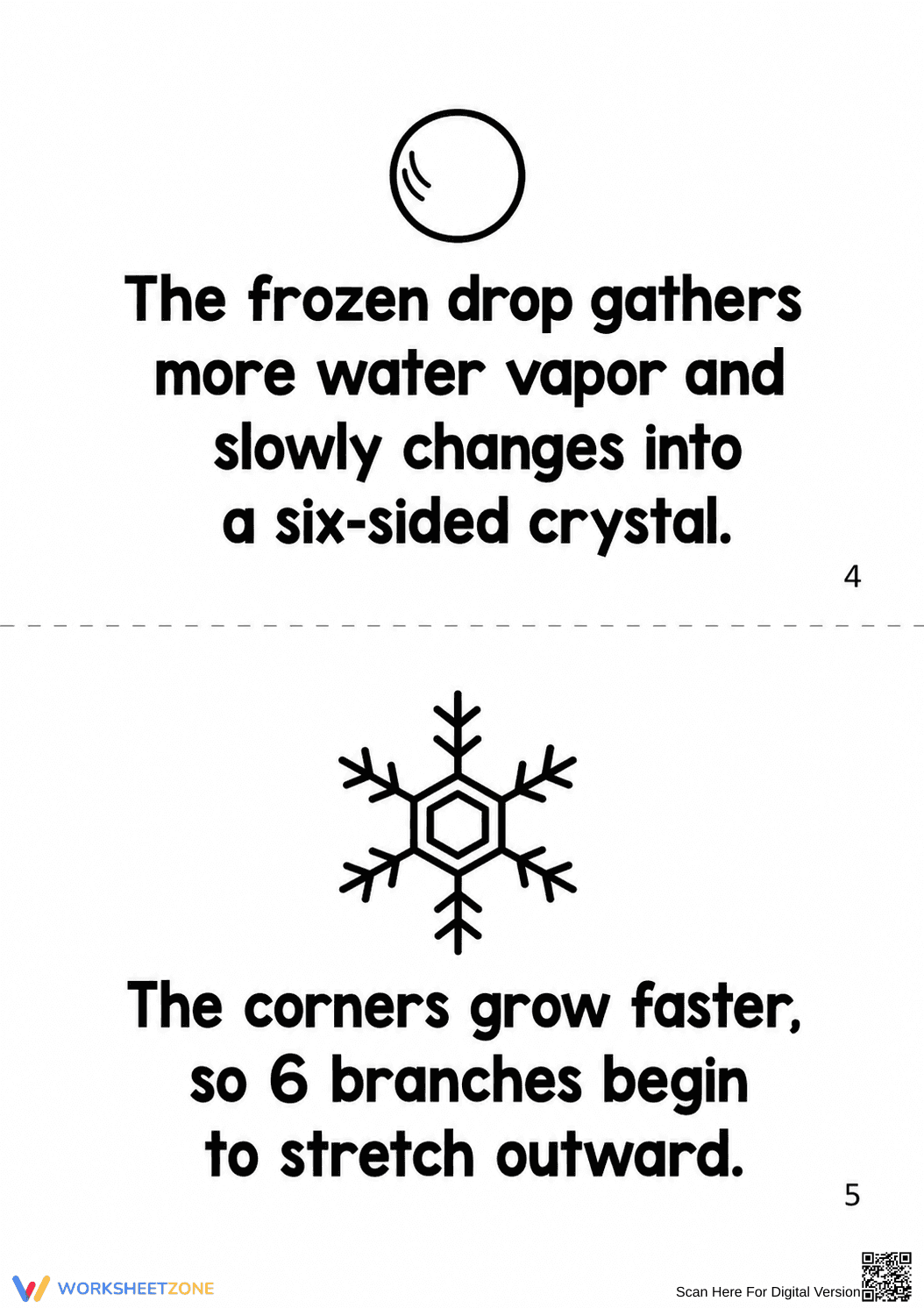
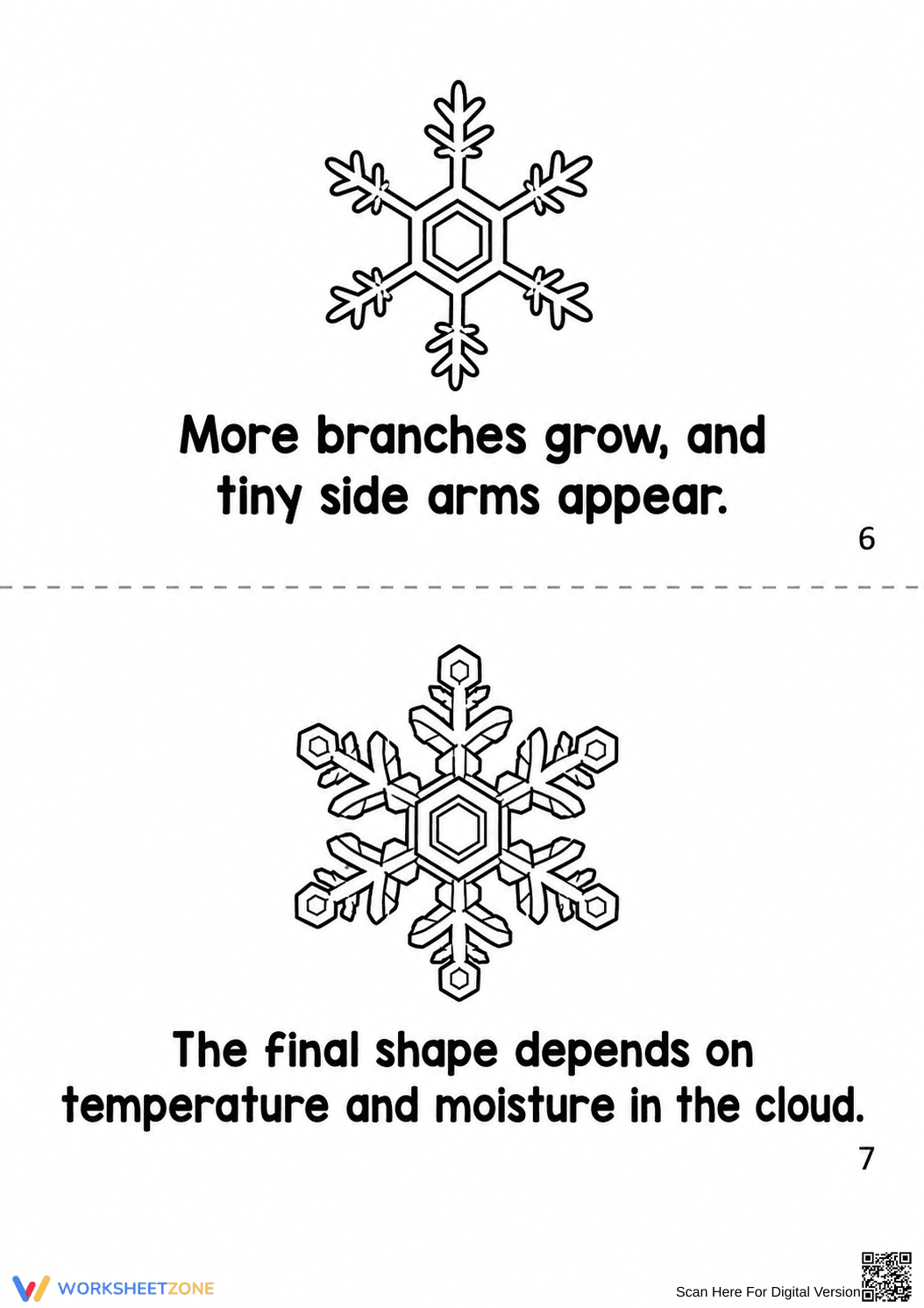
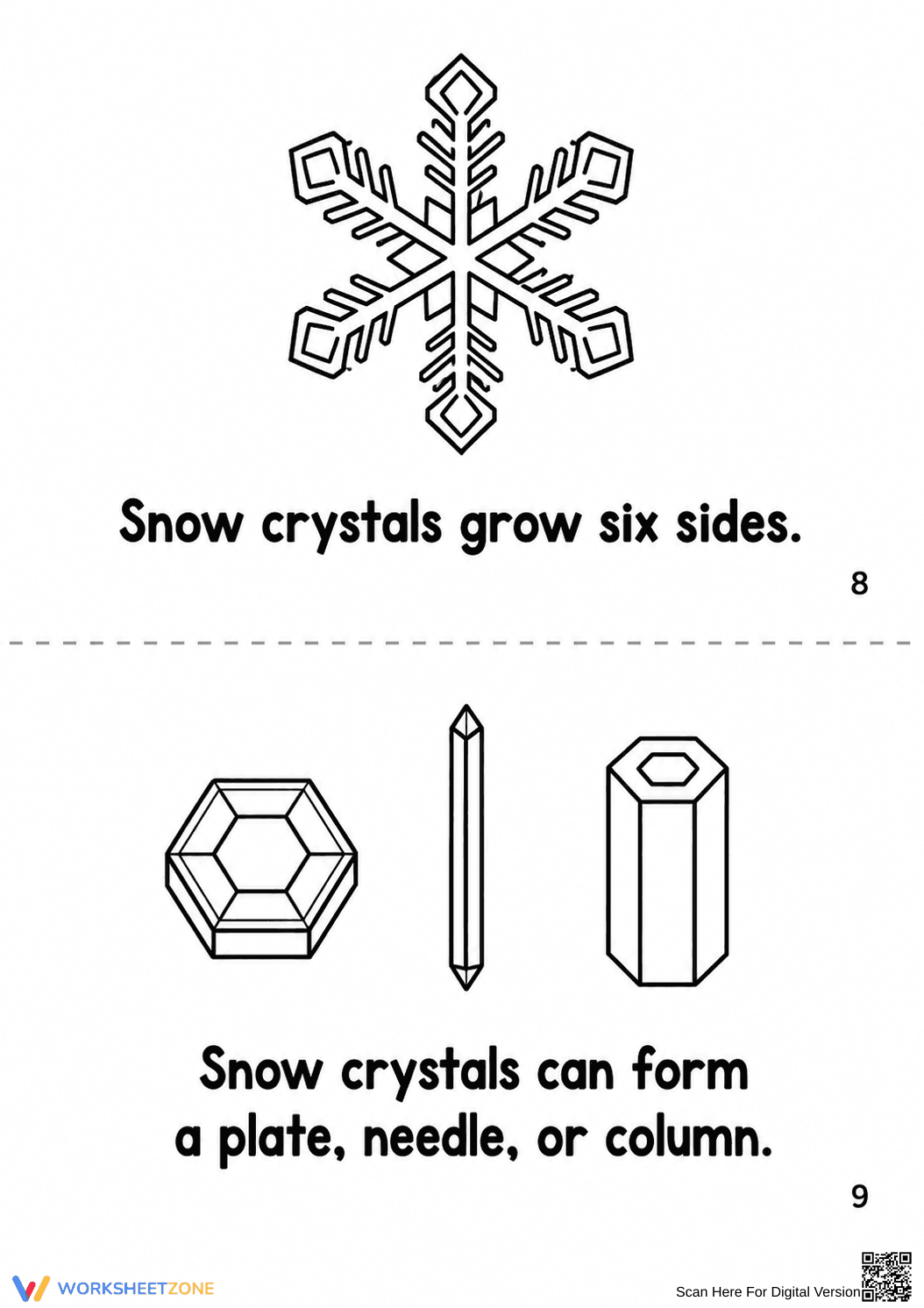
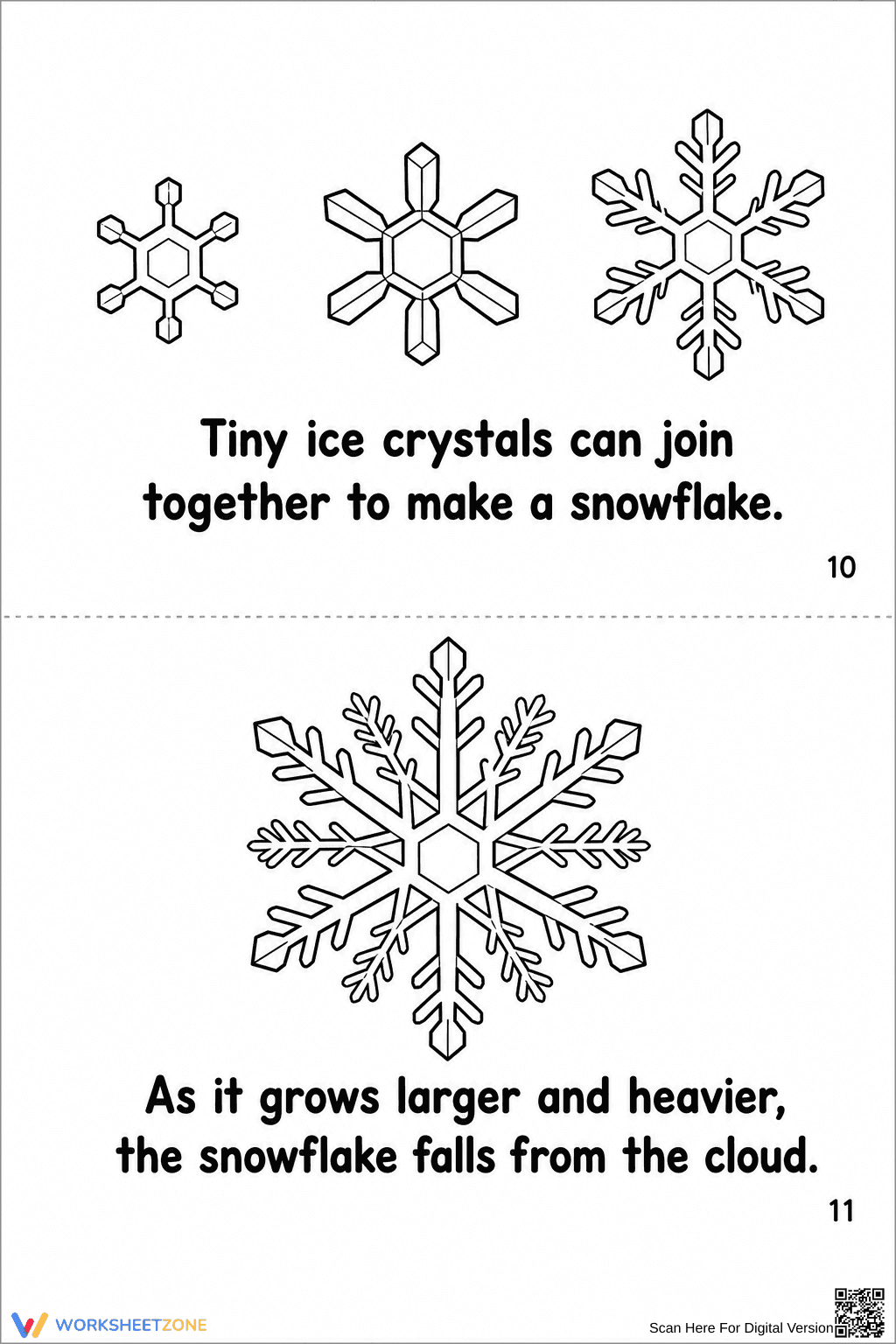
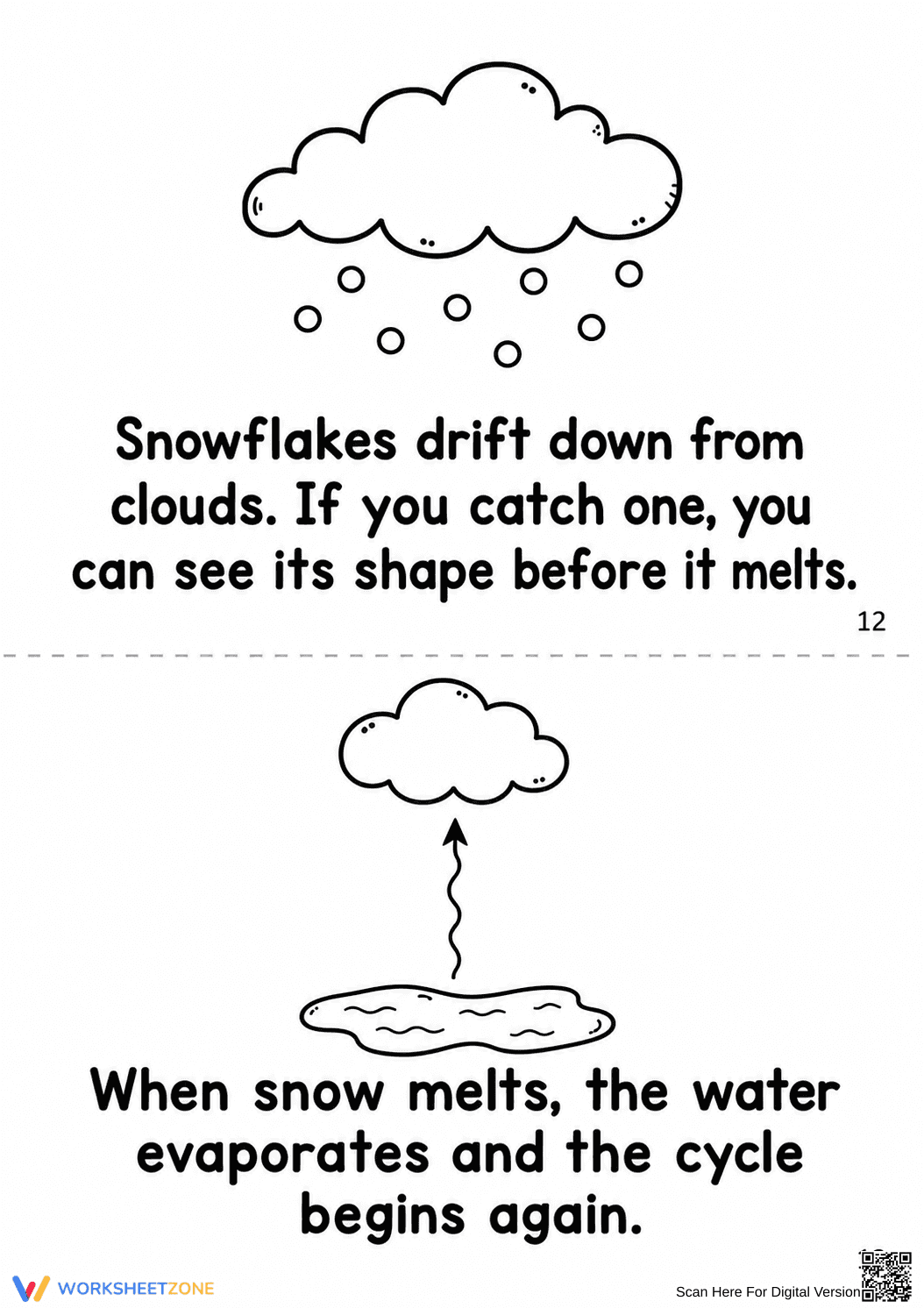

Grade 3 Snowflake Life Cycle — Printable No-Prep Booklet

Paste this activity's link or code into your existing LMS (Google Classroom, Canvas, Teams, Schoology, Moodle, etc.).
Students can open and work on the activity right away, with no student login required.
You'll still be able to track student progress and results from your teacher account.
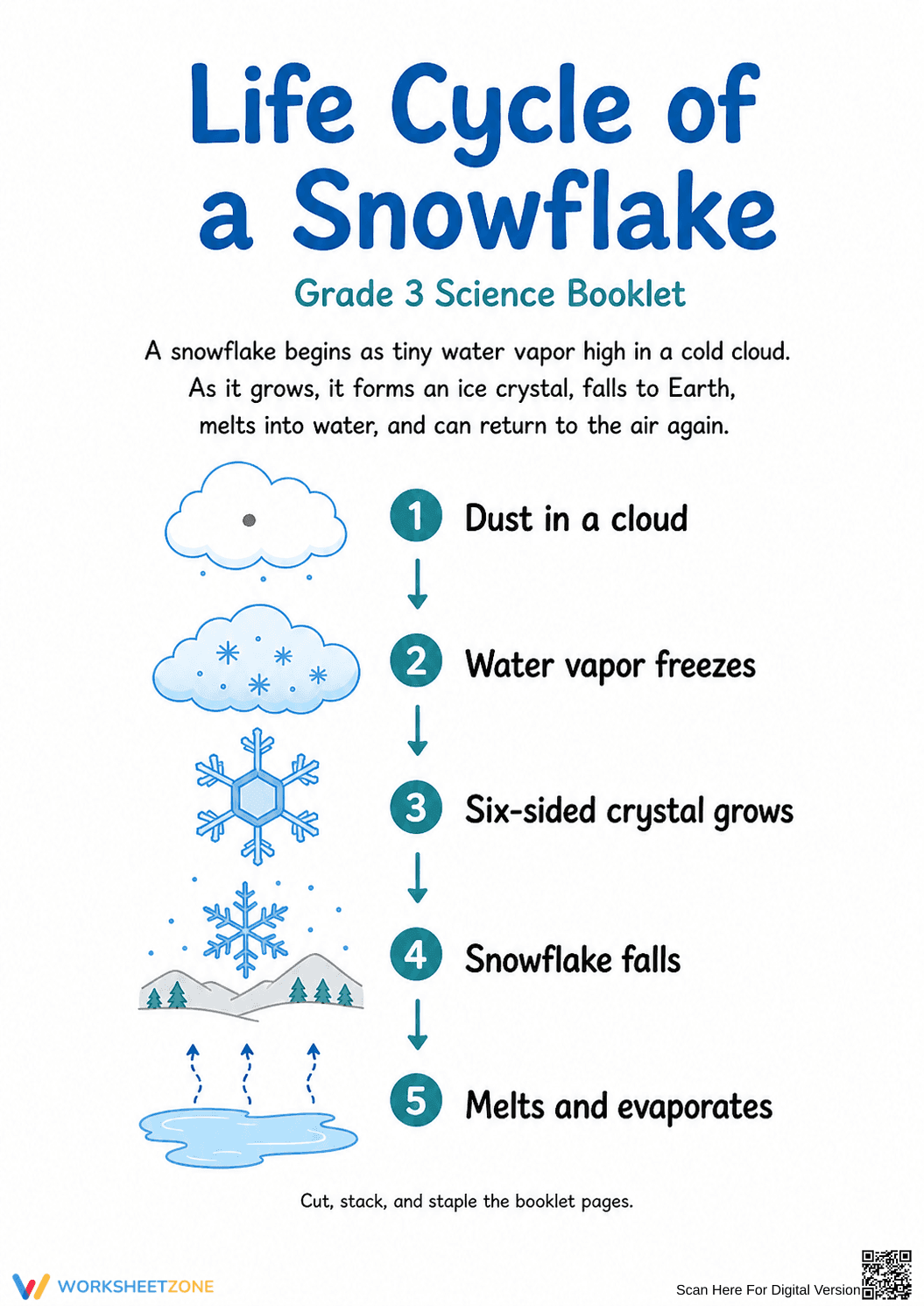
This printable informational booklet introduces students to the fascinating life cycle of a snowflake. By reading through the sequential steps of how a snowflake forms, falls, and melts, third-grade students build critical informational text comprehension skills while exploring foundational earth science concepts in an engaging, accessible format.
At a Glance
- Grade: 3 · Subject: Science
- Standard:
CCSS.ELA-LITERACY.RI.3.3— Describe the relationship between steps in a scientific process- Skill Focus: Reading Informational Text
- Format: 15 pages · 1 reading booklet · No answer key needed · PDF
- Best For: Independent reading or science centers
- Time: 15–20 minutes
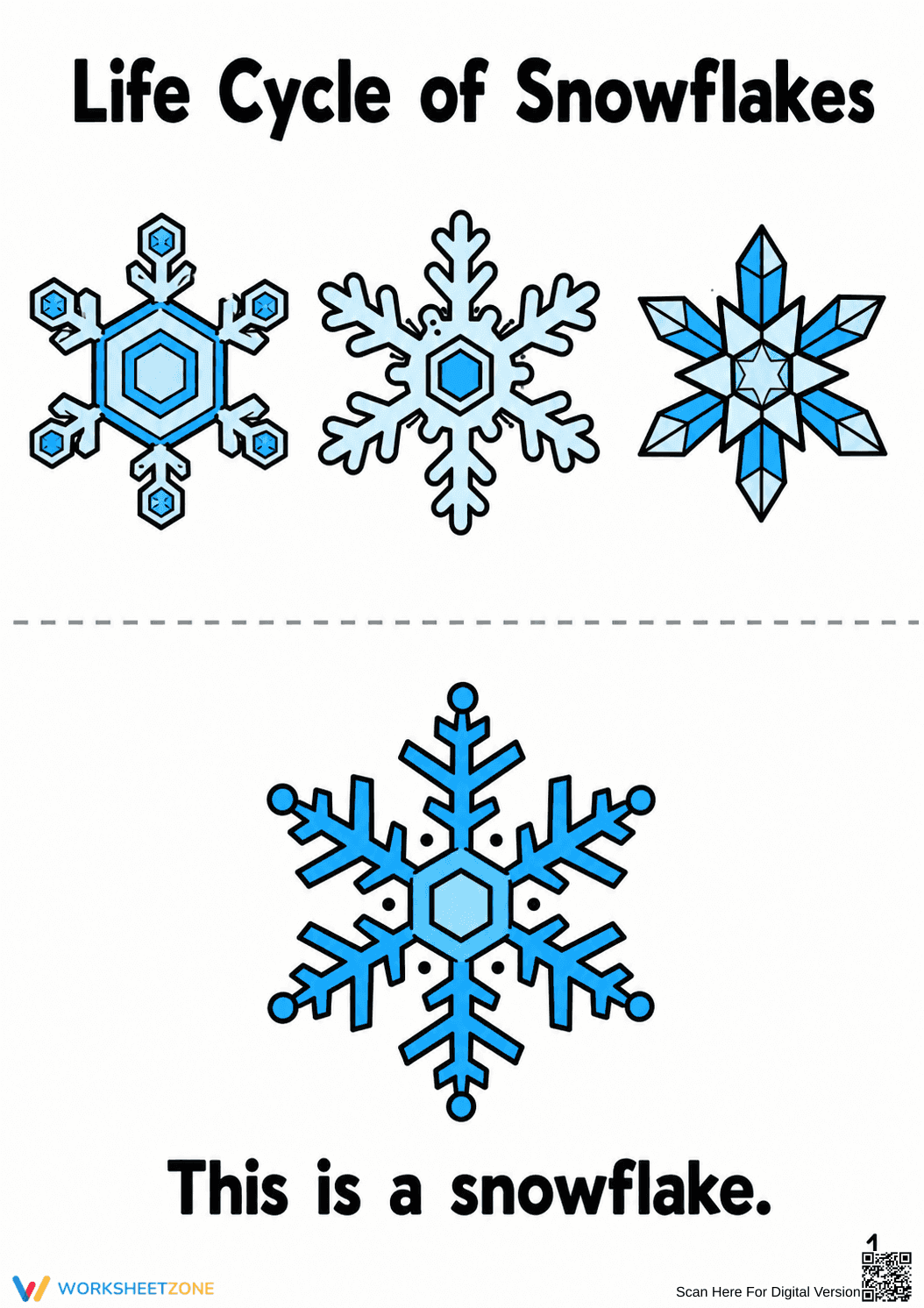
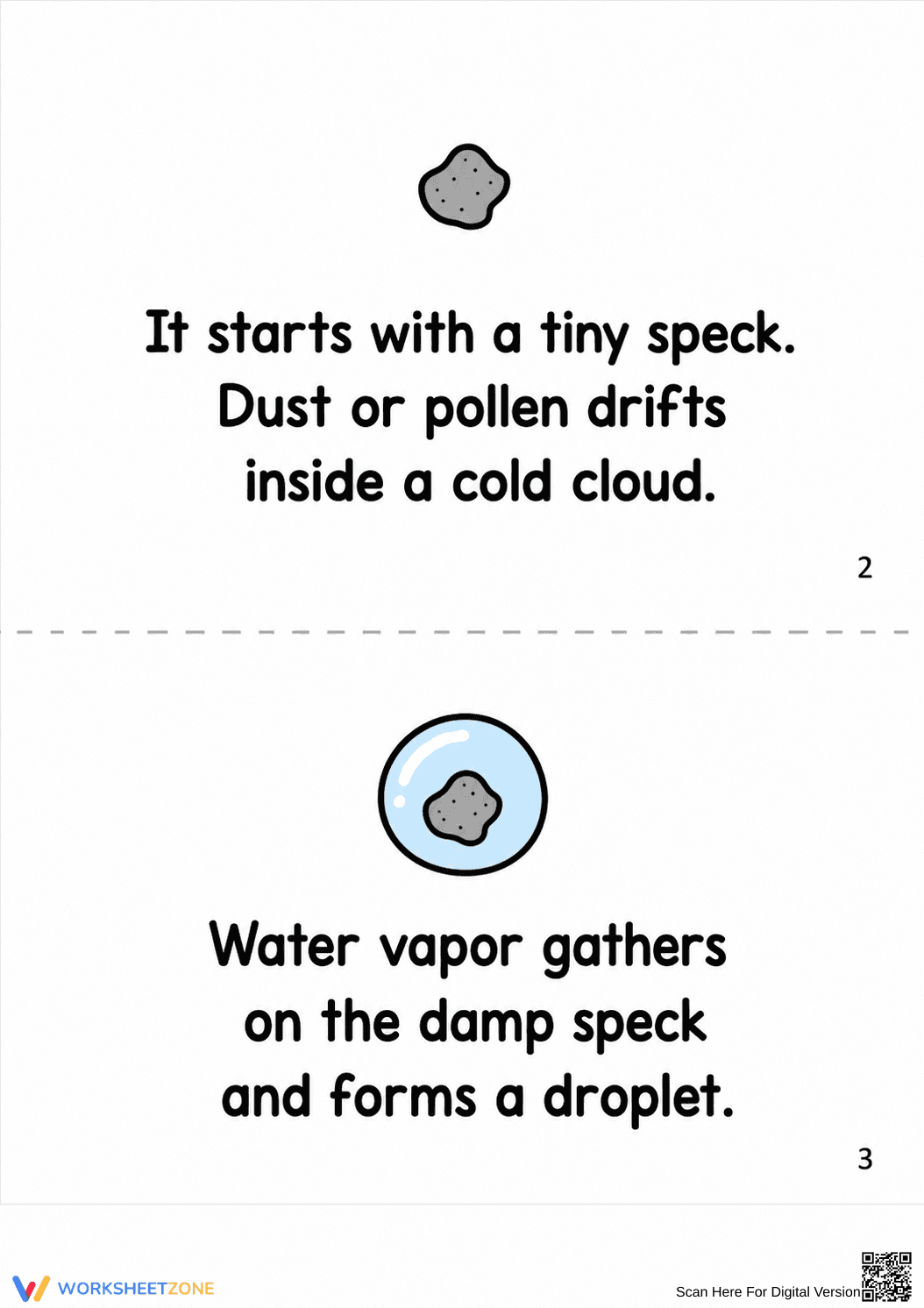
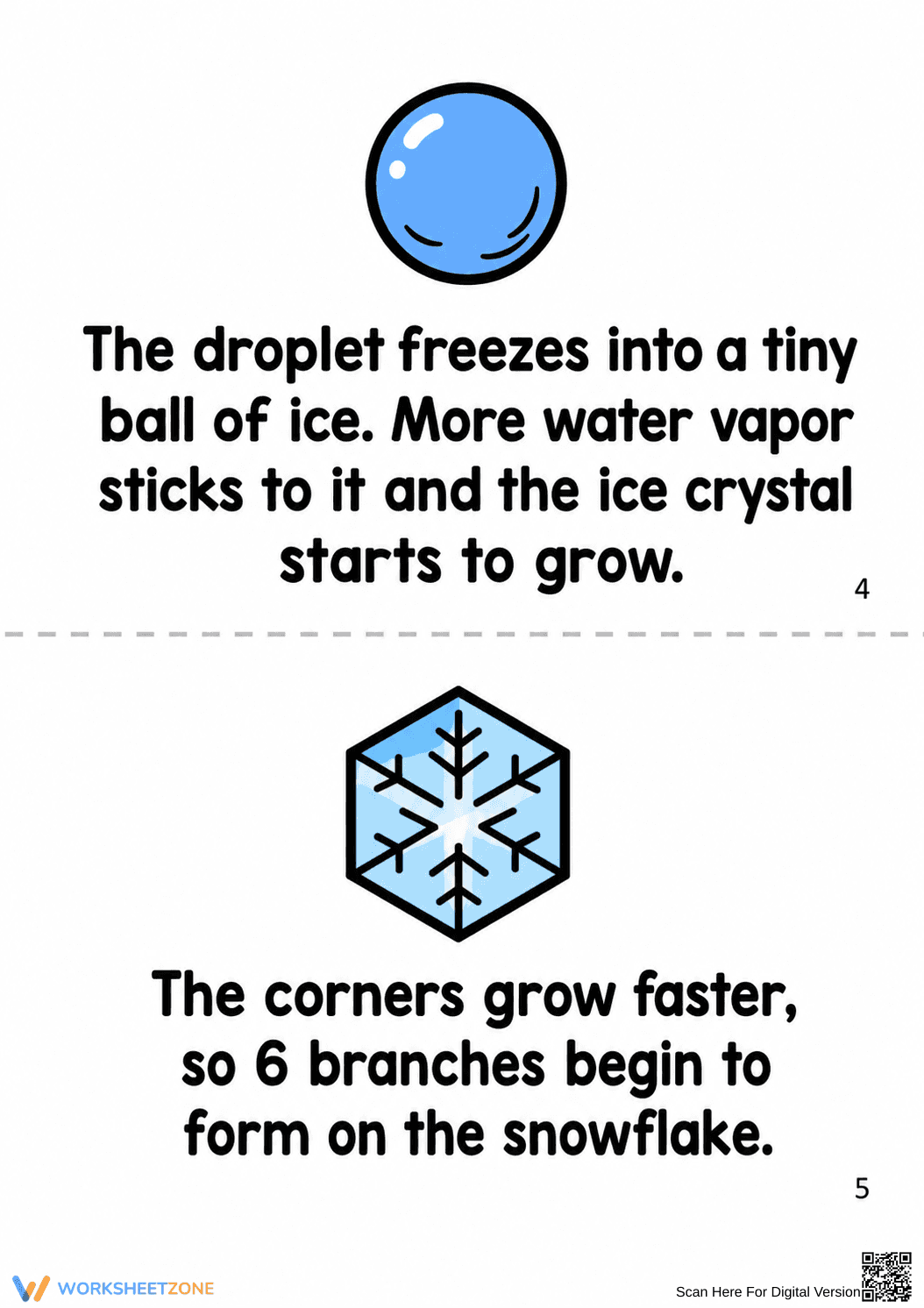
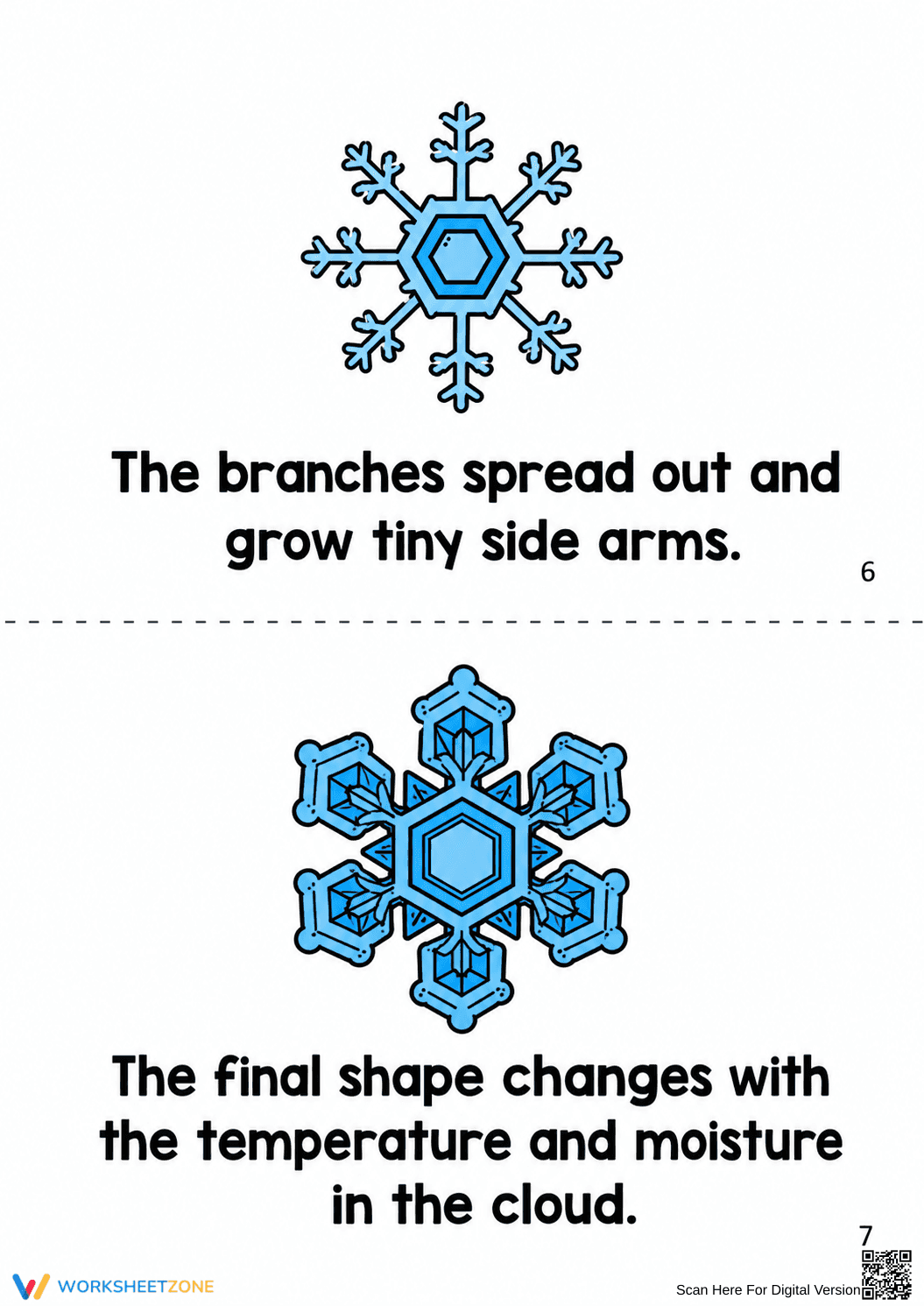
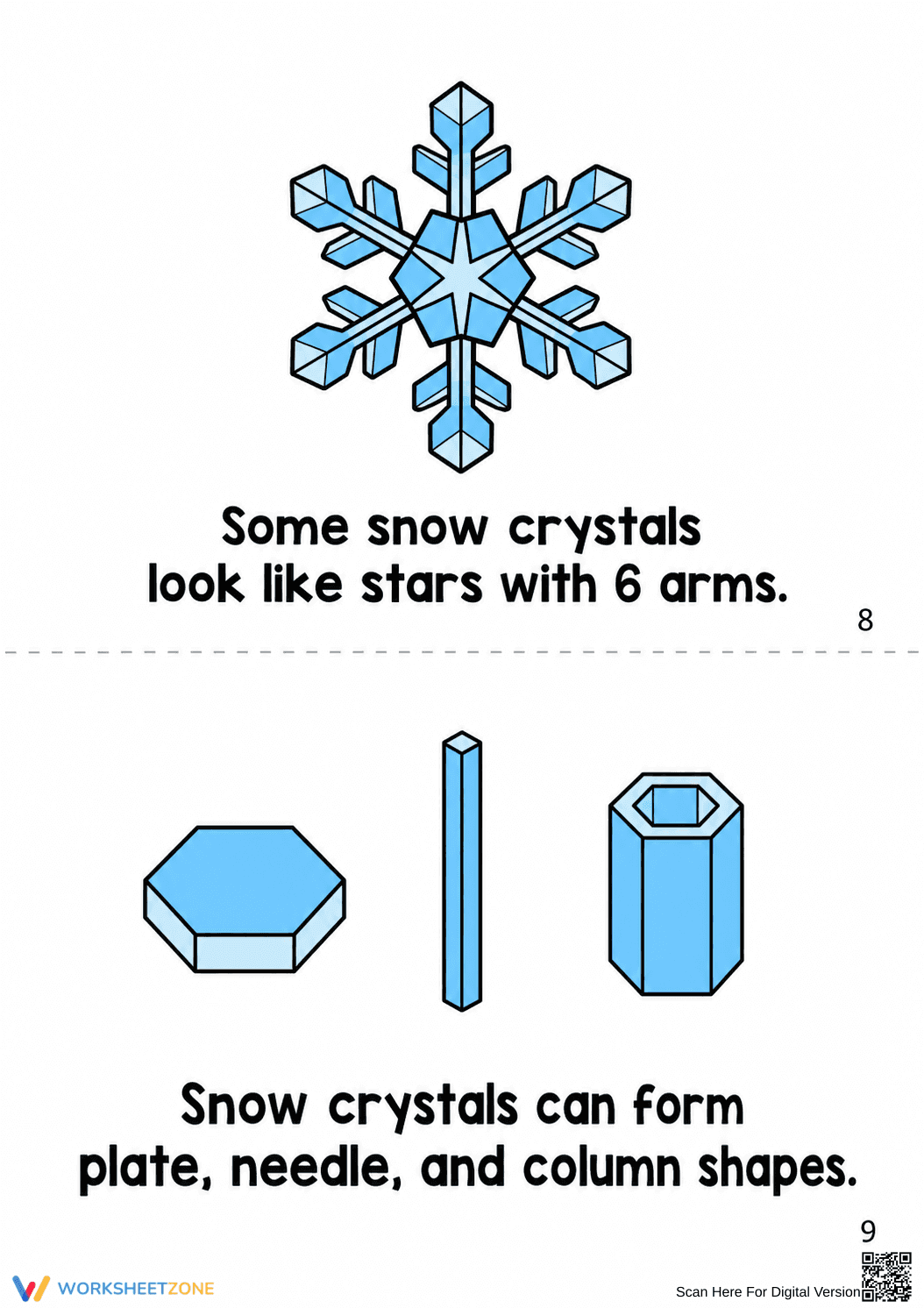
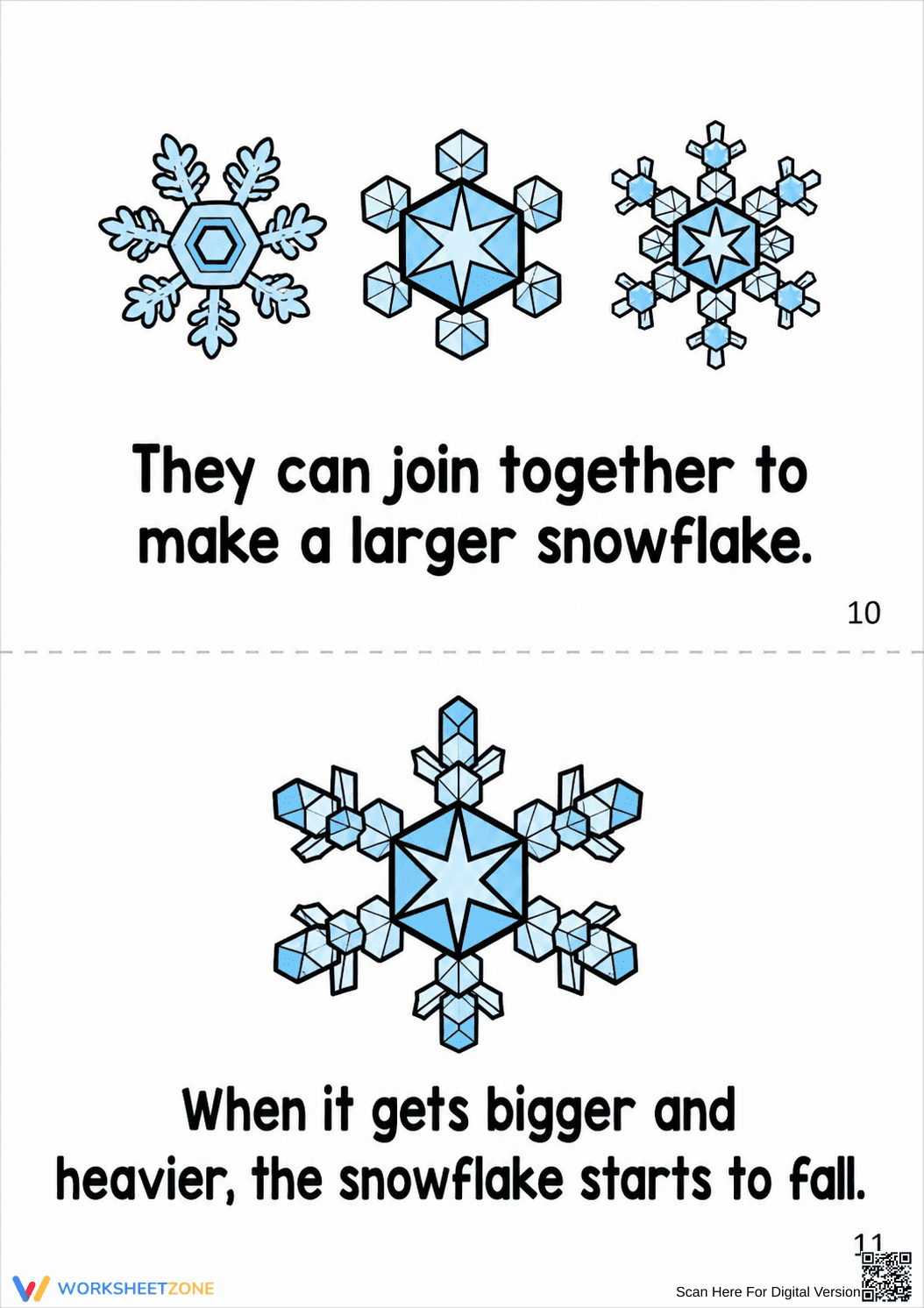
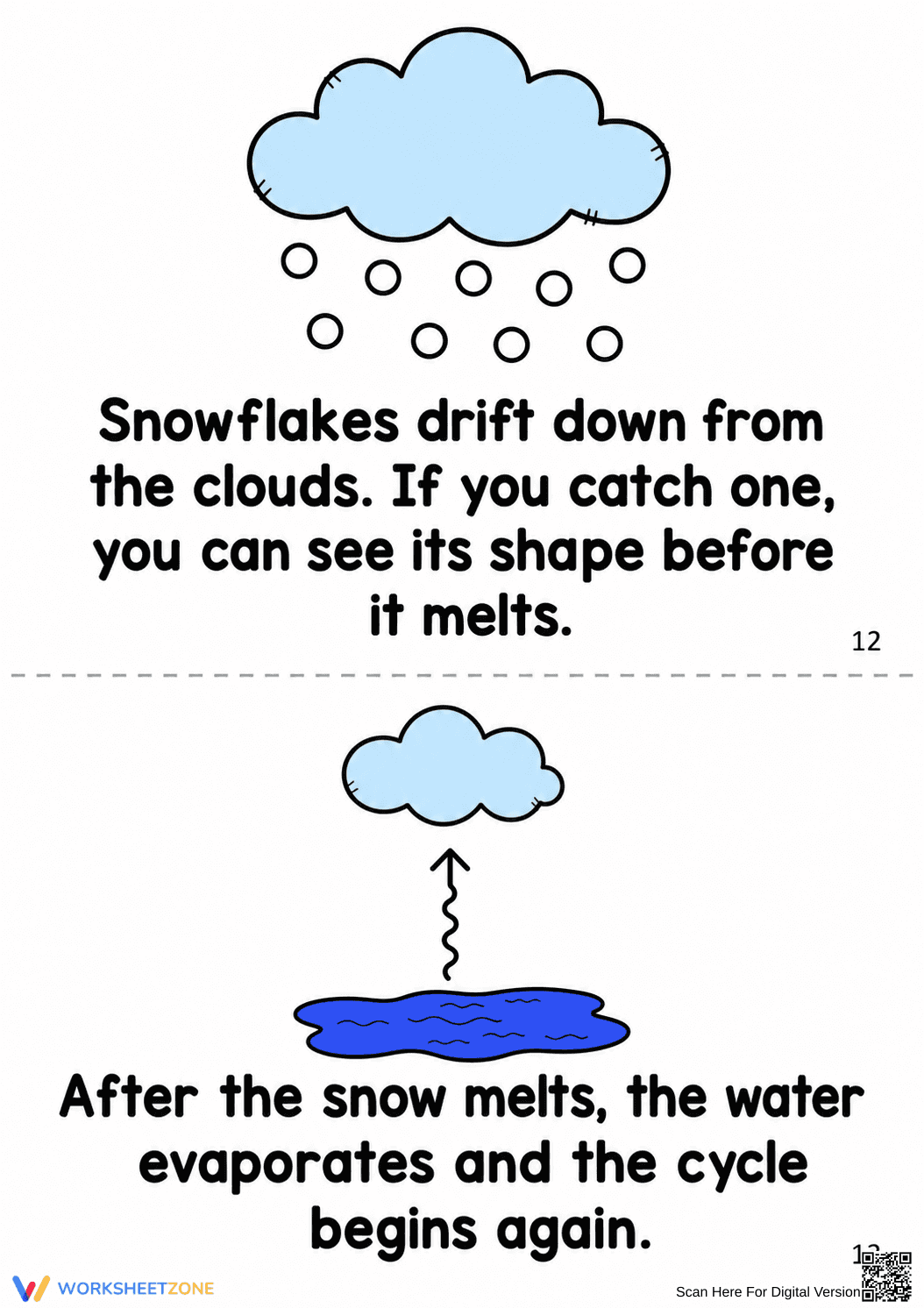
This resource includes a complete 15-page mini-booklet detailing the life cycle of snow, from a speck of dust to a six-sided ice crystal, and finally to evaporation. The download provides a full-color version for classroom libraries and a black-and-white version for students to color. Each page features clear text paired with helpful visual diagrams illustrating the scientific process.
This resource is designed for immediate classroom implementation with a streamlined workflow:
- Print (1 minute): Select either the color or black-and-white PDF version and print single-sided.
- Distribute (1 minute): Hand out the pages to students along with scissors and staplers.
- Review (15 minutes): Have students cut along the dotted lines, staple their booklets together, and read the text independently or in pairs.
With under two minutes of teacher prep time, this activity is highly suitable for emergency sub plans or spontaneous weather-related science lessons.
This booklet is aligned to CCSS.ELA-LITERACY.RI.3.3, which requires students to describe the relationship between a series of scientific ideas or steps in technical procedures in a text. It also supports cross-curricular connections to early elementary Earth Science standards regarding weather and the water cycle. Both standard codes can be copied directly into lesson plans, IEP goals, or district curriculum mapping tools.
Teachers can utilize this booklet in multiple instructional contexts. During a winter weather science unit, use it as an introductory text before a direct instruction lesson on the water cycle. Alternatively, place the black-and-white copies in an independent literacy center where students can read, color, and assemble their own books. As a formative assessment observation tip, listen to students read the booklet aloud to check their decoding of domain-specific vocabulary like "evaporates" and "crystal." Expected completion time is 15 to 20 minutes.
This resource is primarily designed for second and third-grade students developing their informational reading skills. The clear illustrations and short sentences provide excellent differentiation for English Language Learners and students reading below grade level, offering strong visual scaffolds for scientific concepts. It pairs naturally with a broader direct instruction lesson on states of matter or seasonal weather patterns.
Integrating cross-curricular reading materials into science instruction significantly enhances both literacy and content knowledge. According to a ScienceDirect TpT Analysis, providing students with structured, sequential informational texts improves their ability to comprehend complex natural phenomena. This resource directly supports CCSS.ELA-LITERACY.RI.3.3 by asking students to describe the relationship between steps in a scientific process. By tracing the journey of a snowflake from a microscopic dust particle to a falling ice crystal and eventually back to water vapor, learners practice identifying cause-and-effect relationships within a technical text. The inclusion of visual diagrams and descriptive language ensures that students can anchor their understanding of abstract earth science concepts in concrete representations, fostering deeper cognitive connections and long-term retention of the foundational material required for future scientific inquiry.


