




























Views
Downloads

Life Cycle of Snowflakes Printable Booklet | Grade 2-5

Paste this activity's link or code into your existing LMS (Google Classroom, Canvas, Teams, Schoology, Moodle, etc.).
Students can open and work on the activity right away, with no student login required.
You'll still be able to track student progress and results from your teacher account.
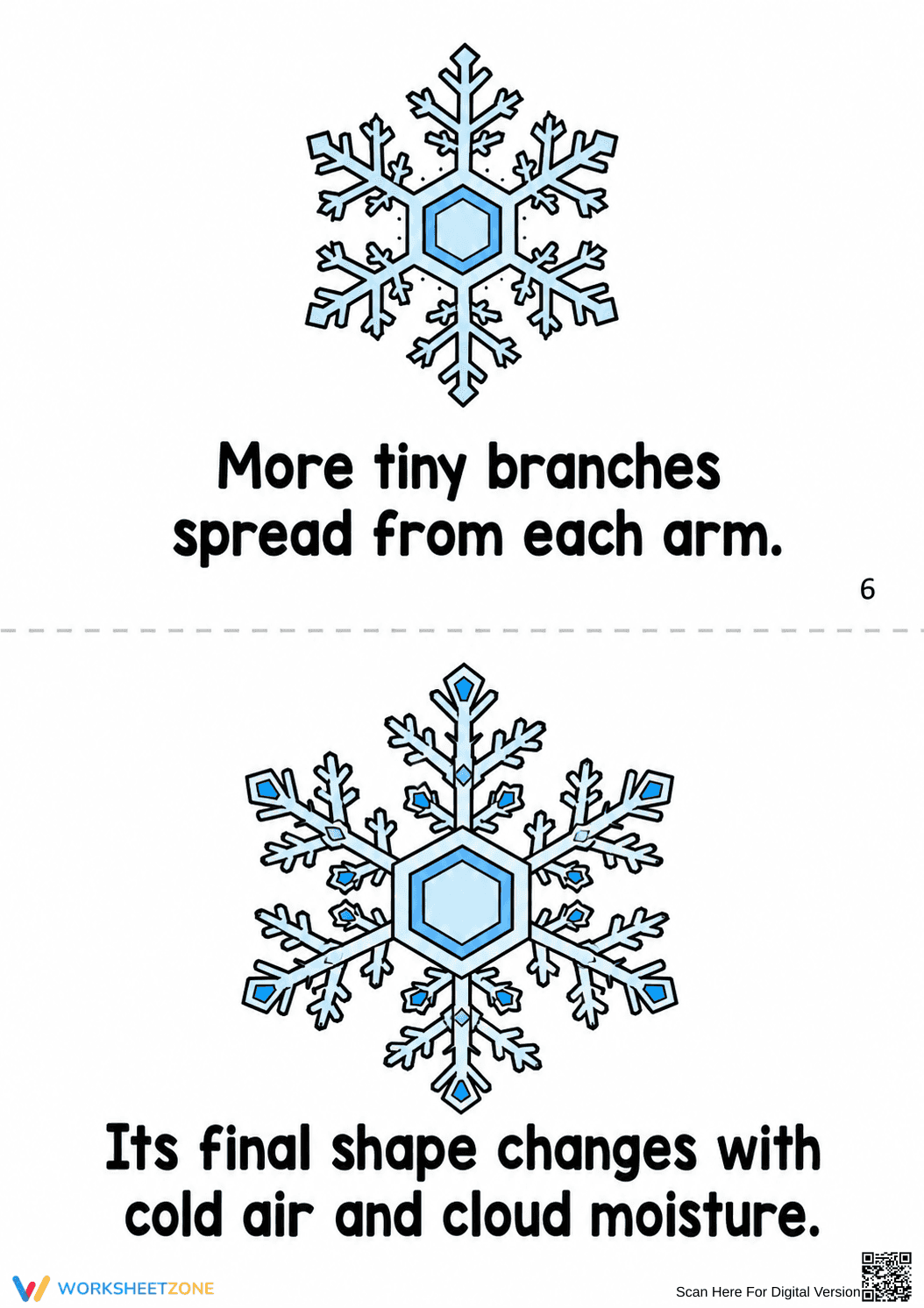
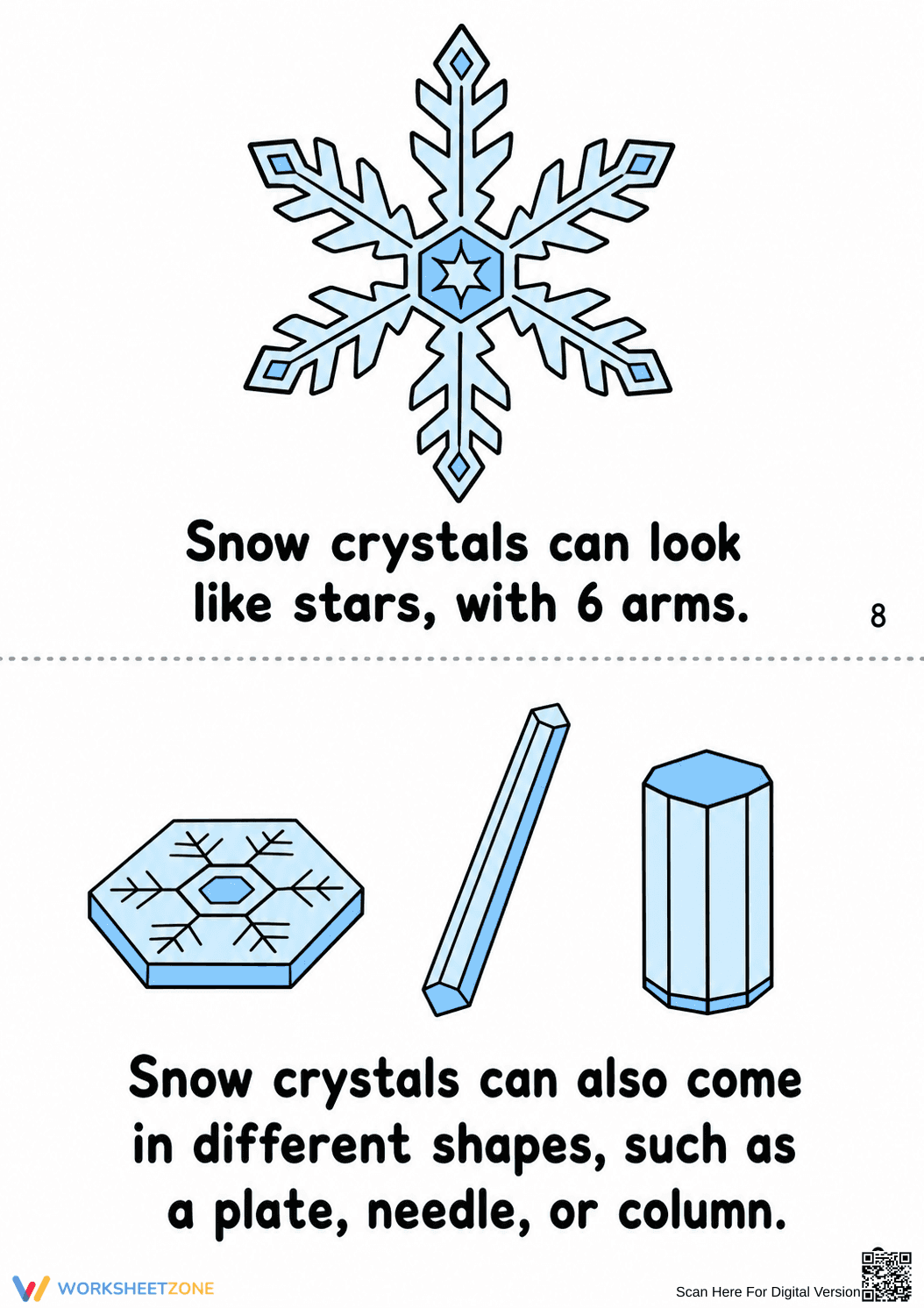
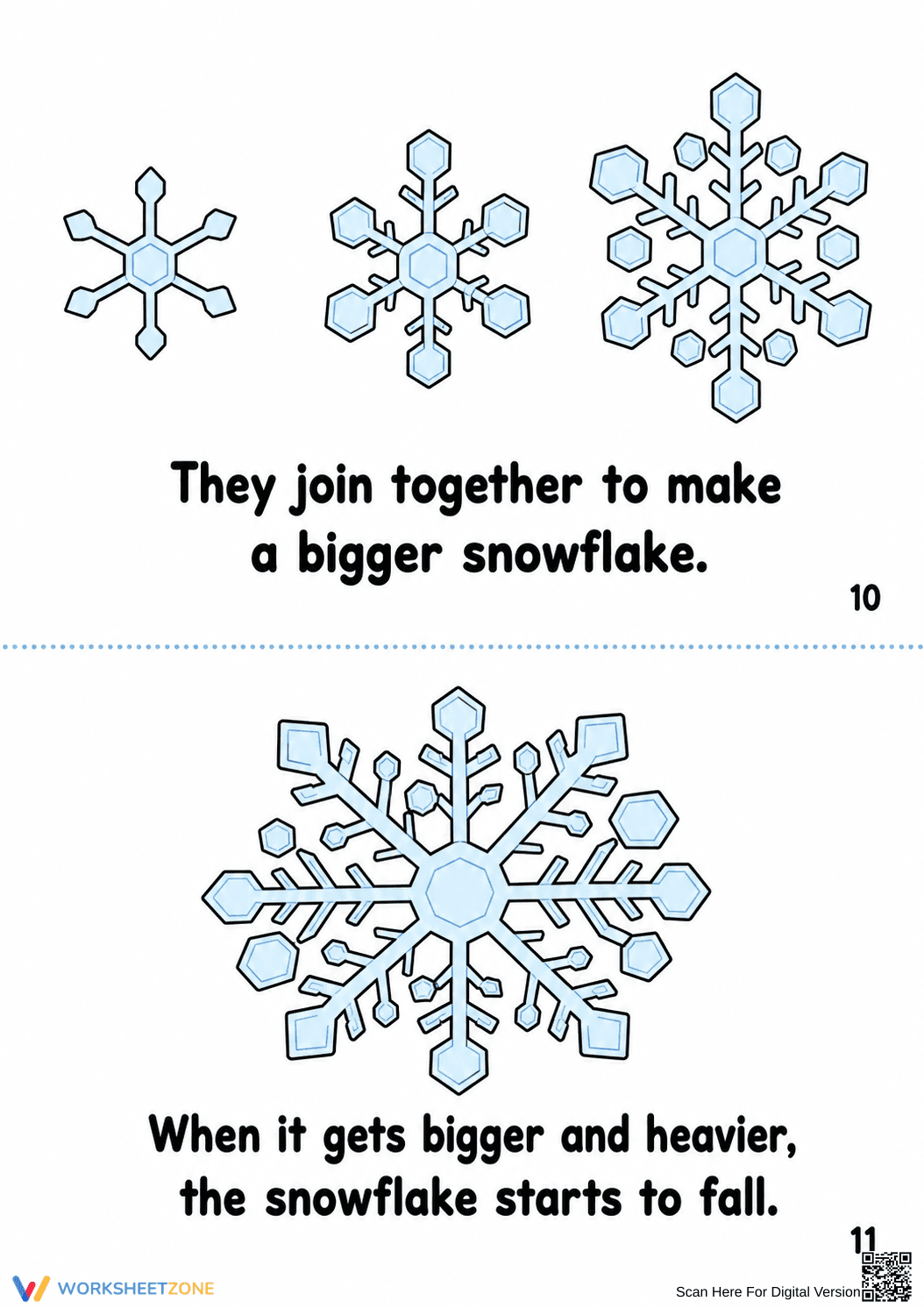
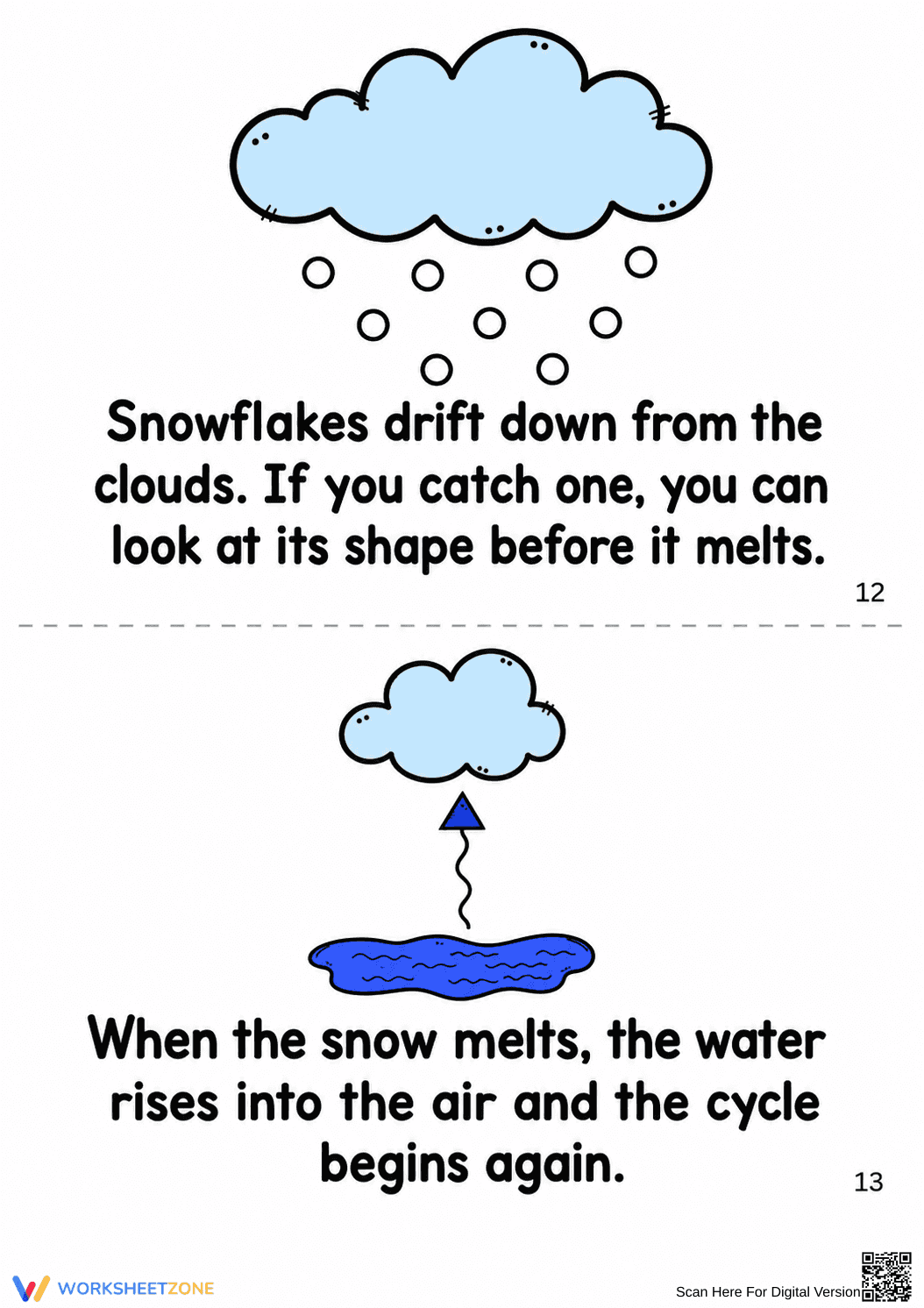
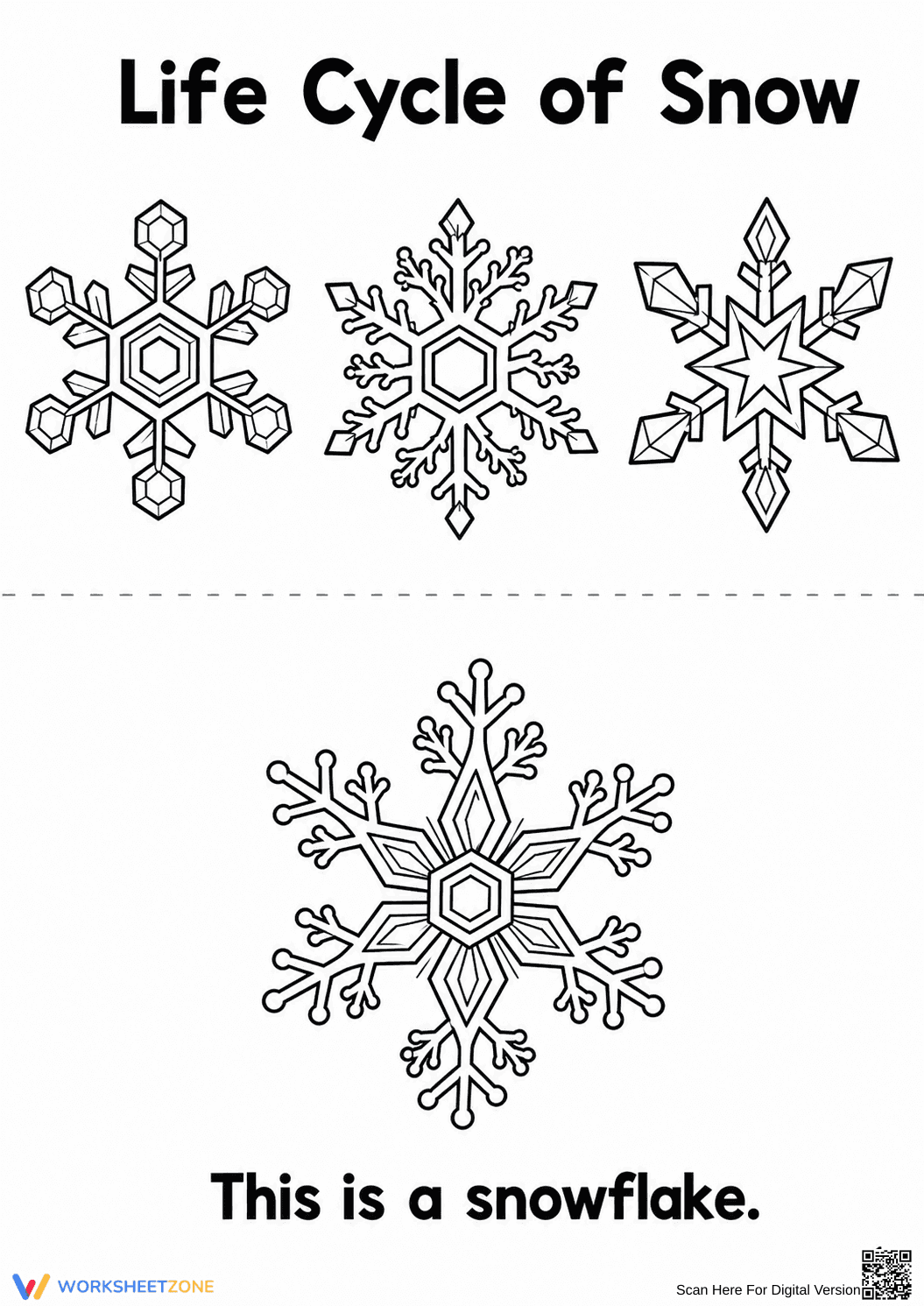
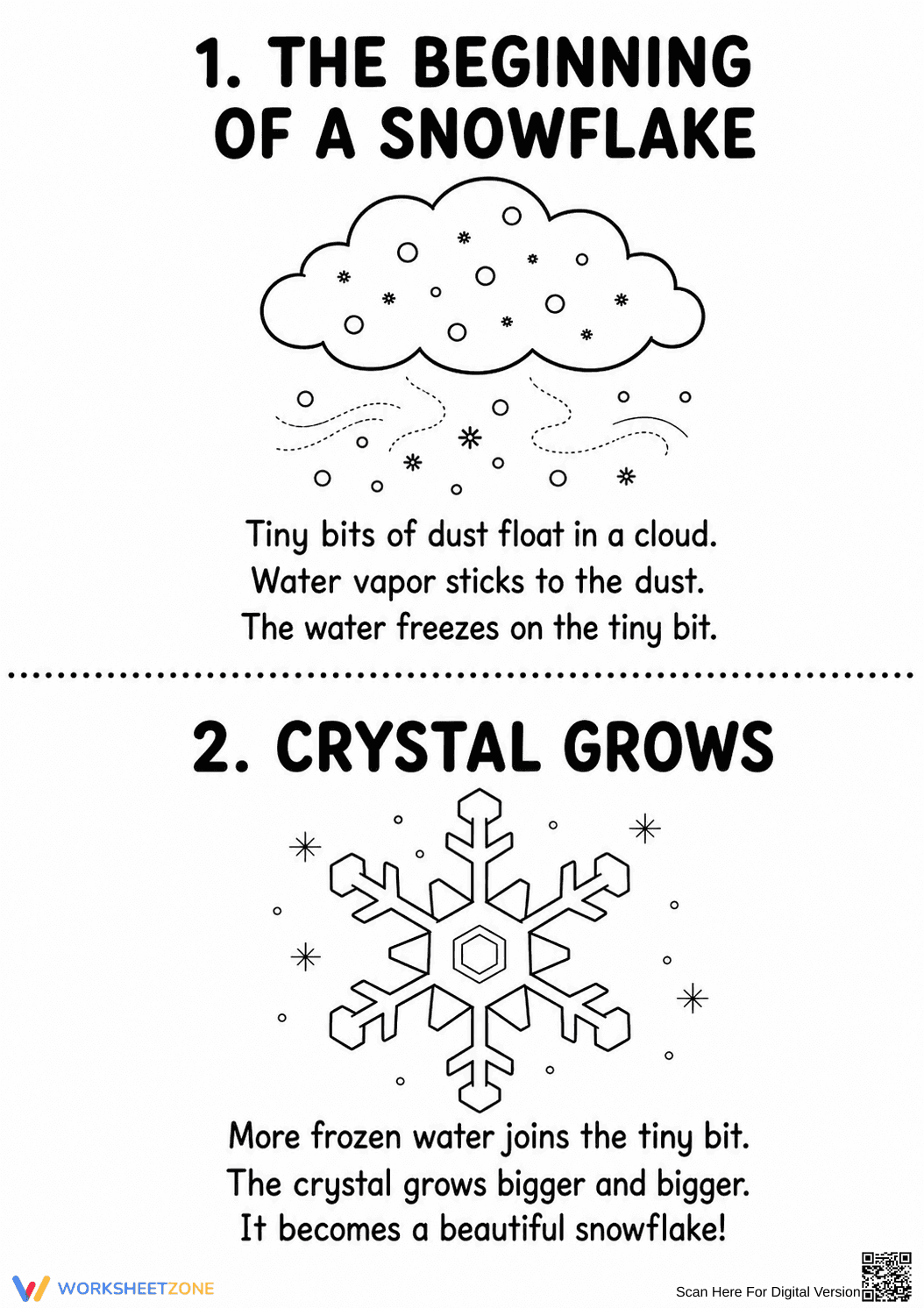
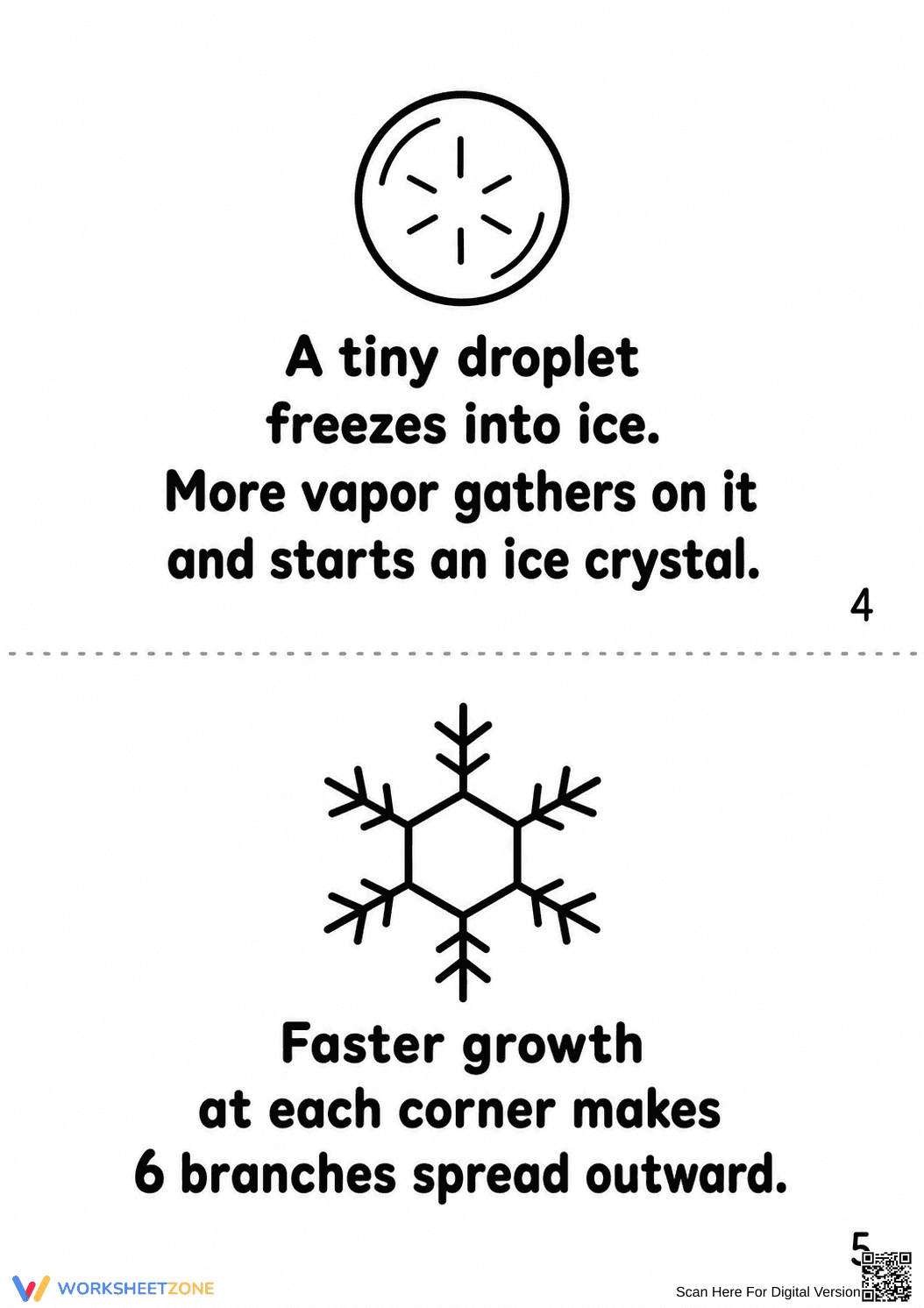
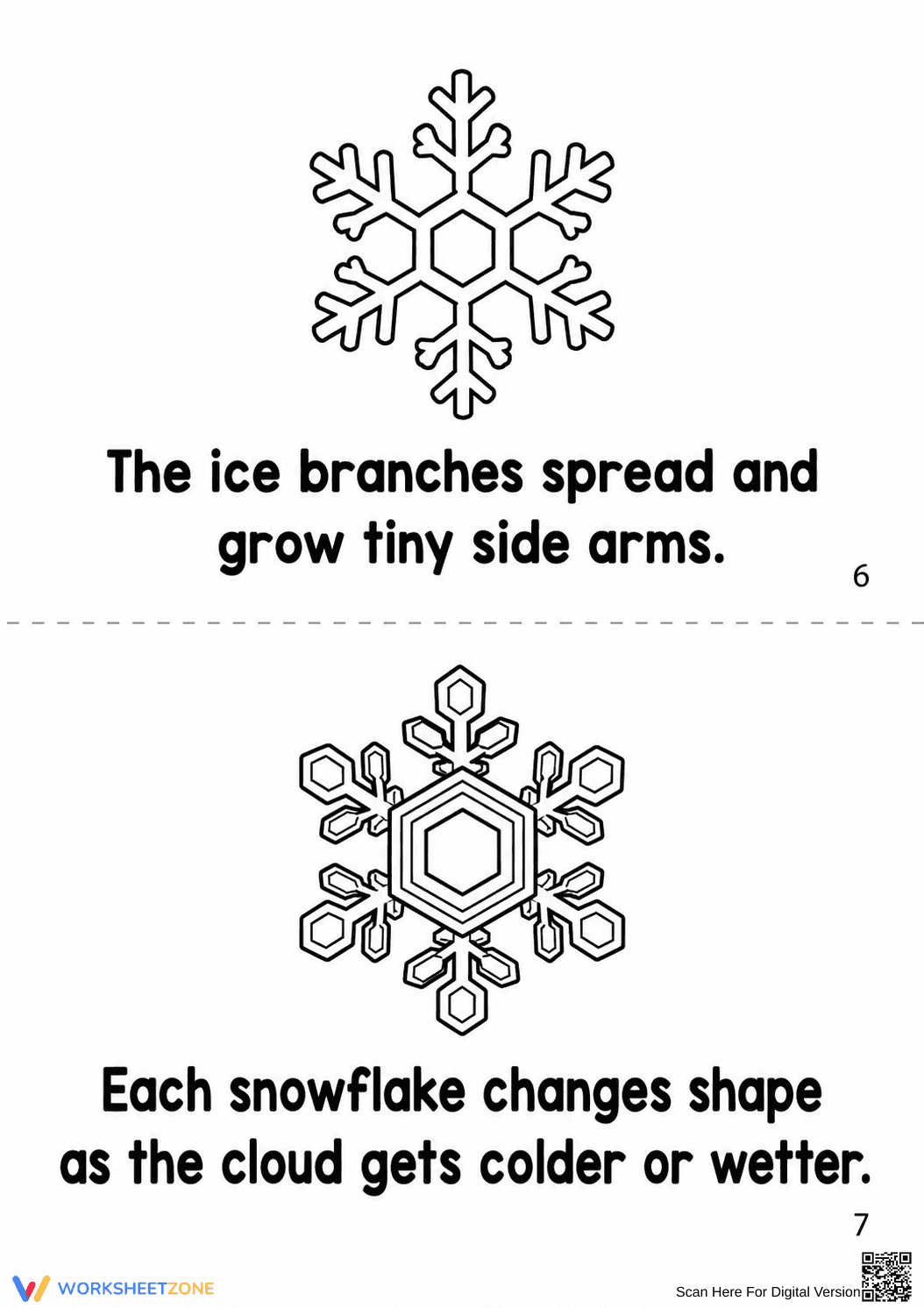
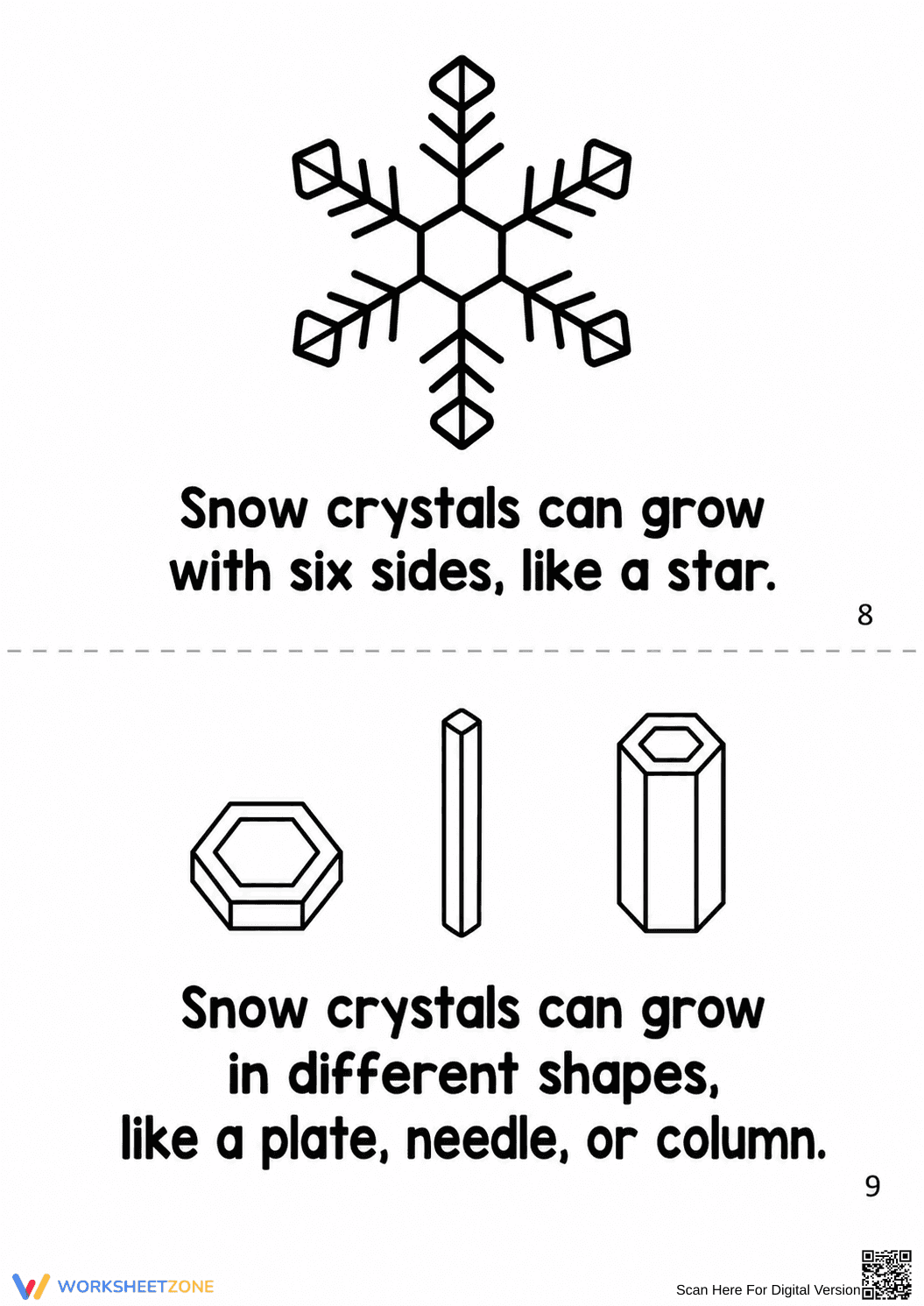
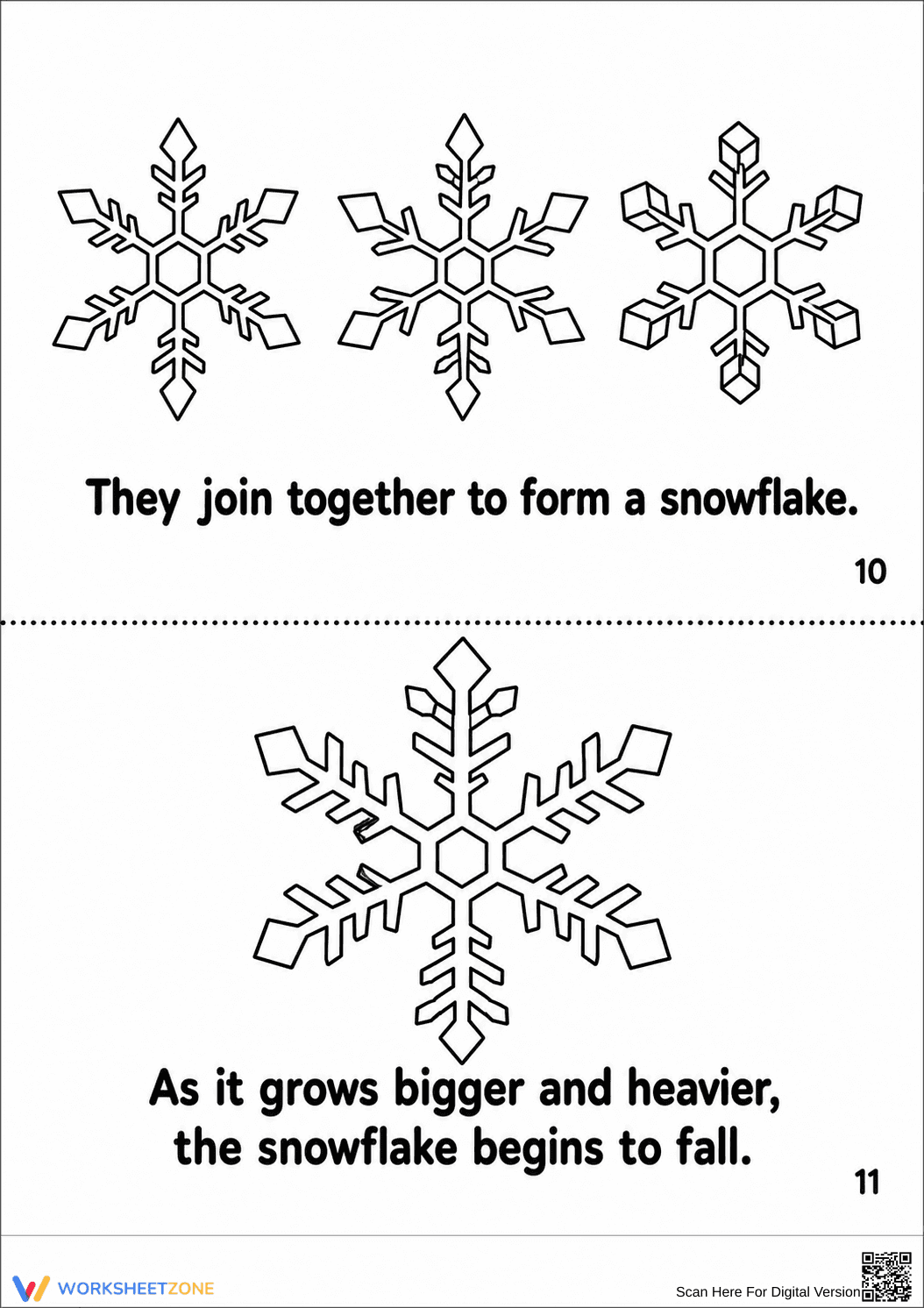
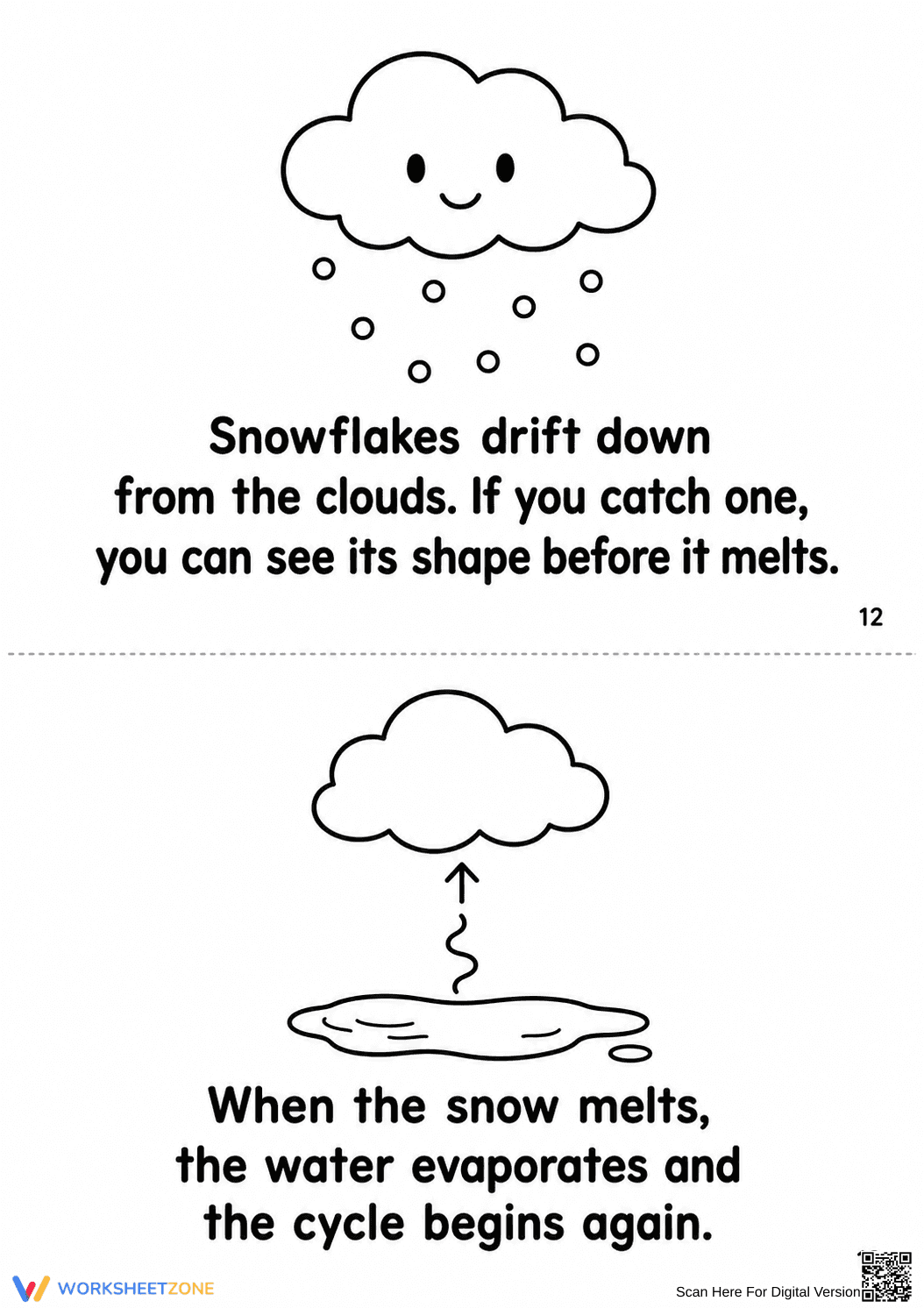
This snowflake life cycle booklet provides a comprehensive look at how snow crystals form from tiny specks of dust to complex six-armed stars. Students explore the physical changes water undergoes in the atmosphere while building a tangible science resource. It transforms abstract meteorological concepts into a clear, sequential narrative for elementary learners.
At a Glance
- Grade: 2-5 · Subject: Science
- Standard:
2-ESS2-3— Obtain information to identify where water is found on Earth and its states- Skill Focus: Snowflake formation and life cycle
- Format: 15 pages · 1 booklet · No-prep · PDF
- Best For: Winter science units and weather centers
- Time: 20–30 minutes
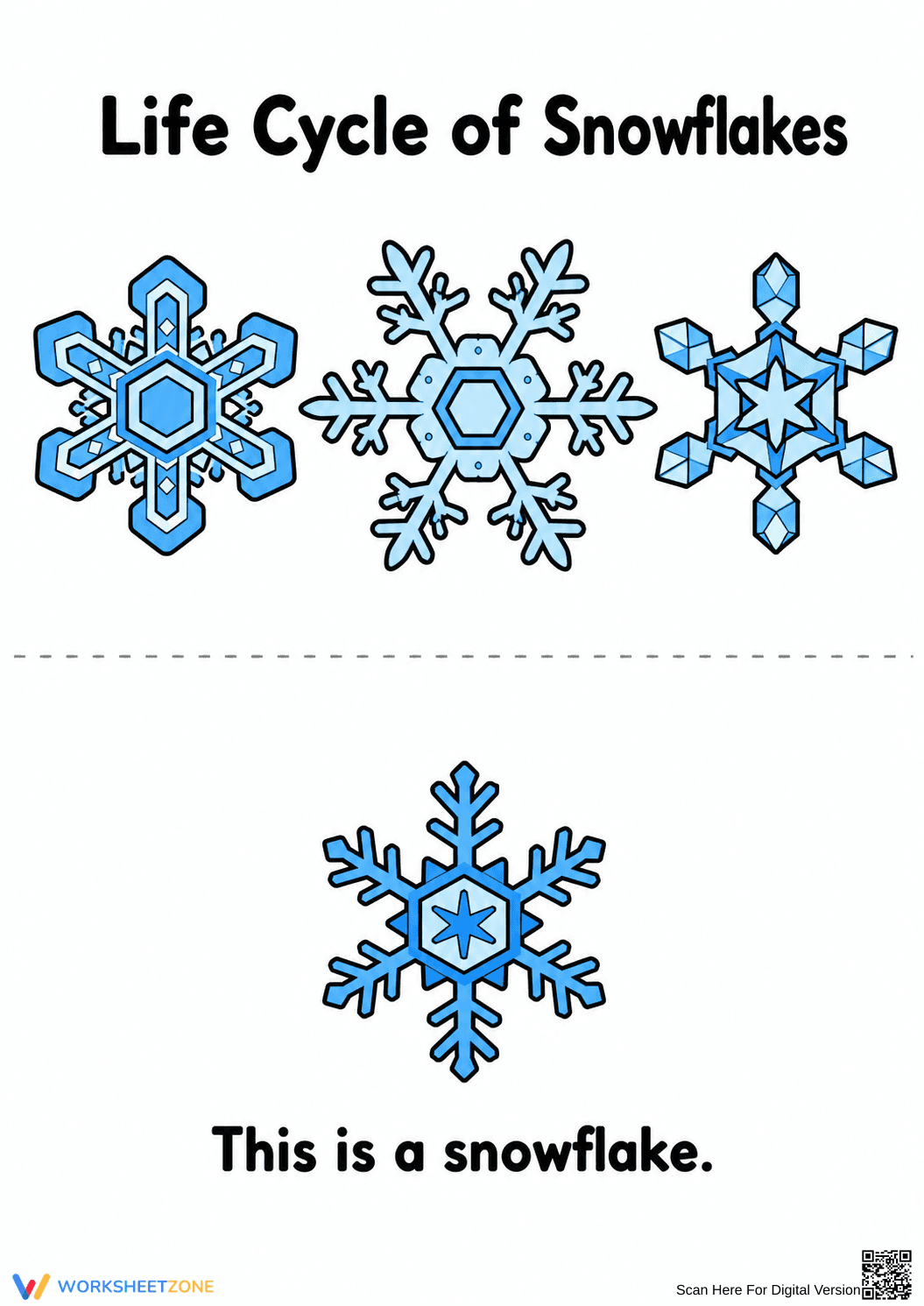
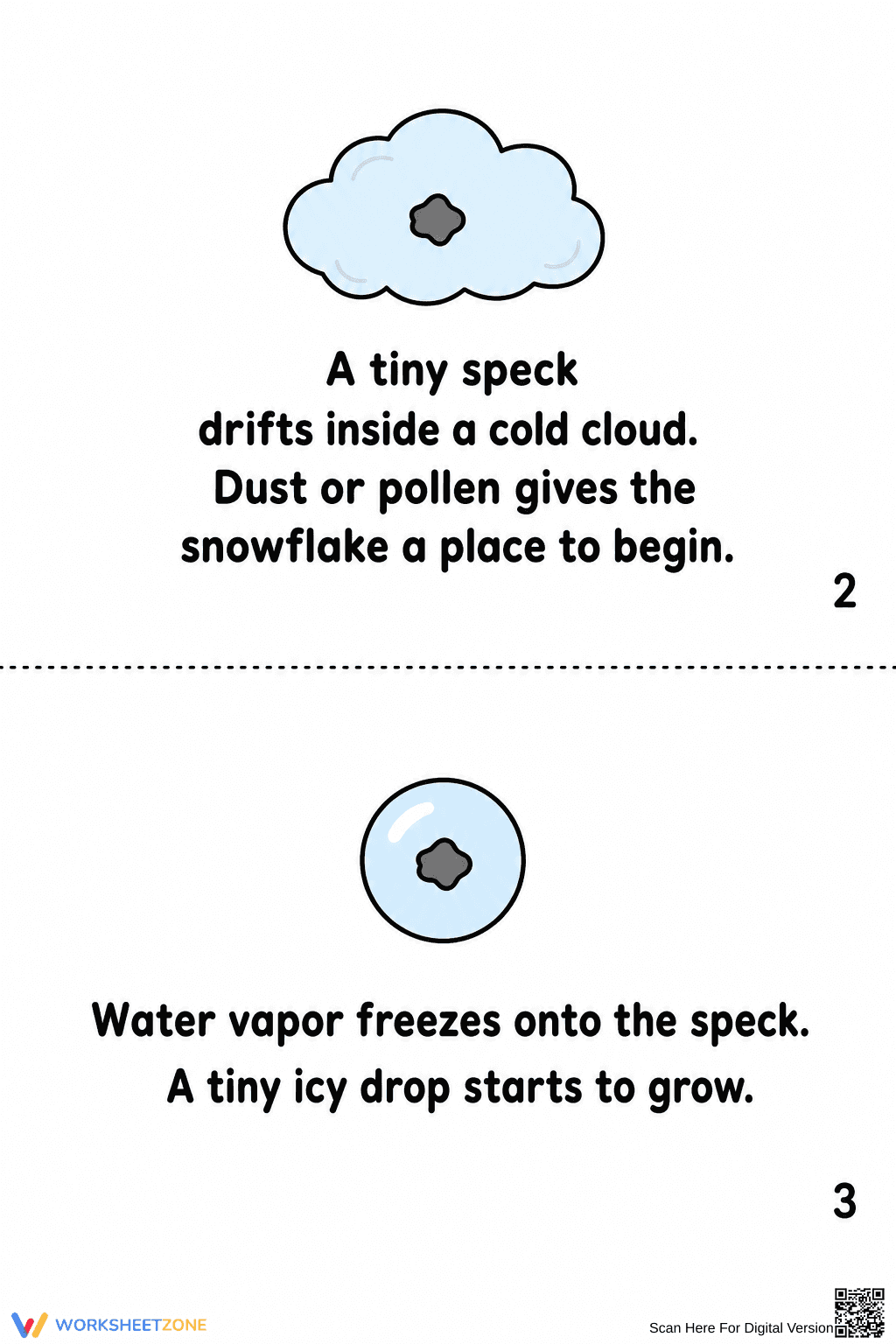
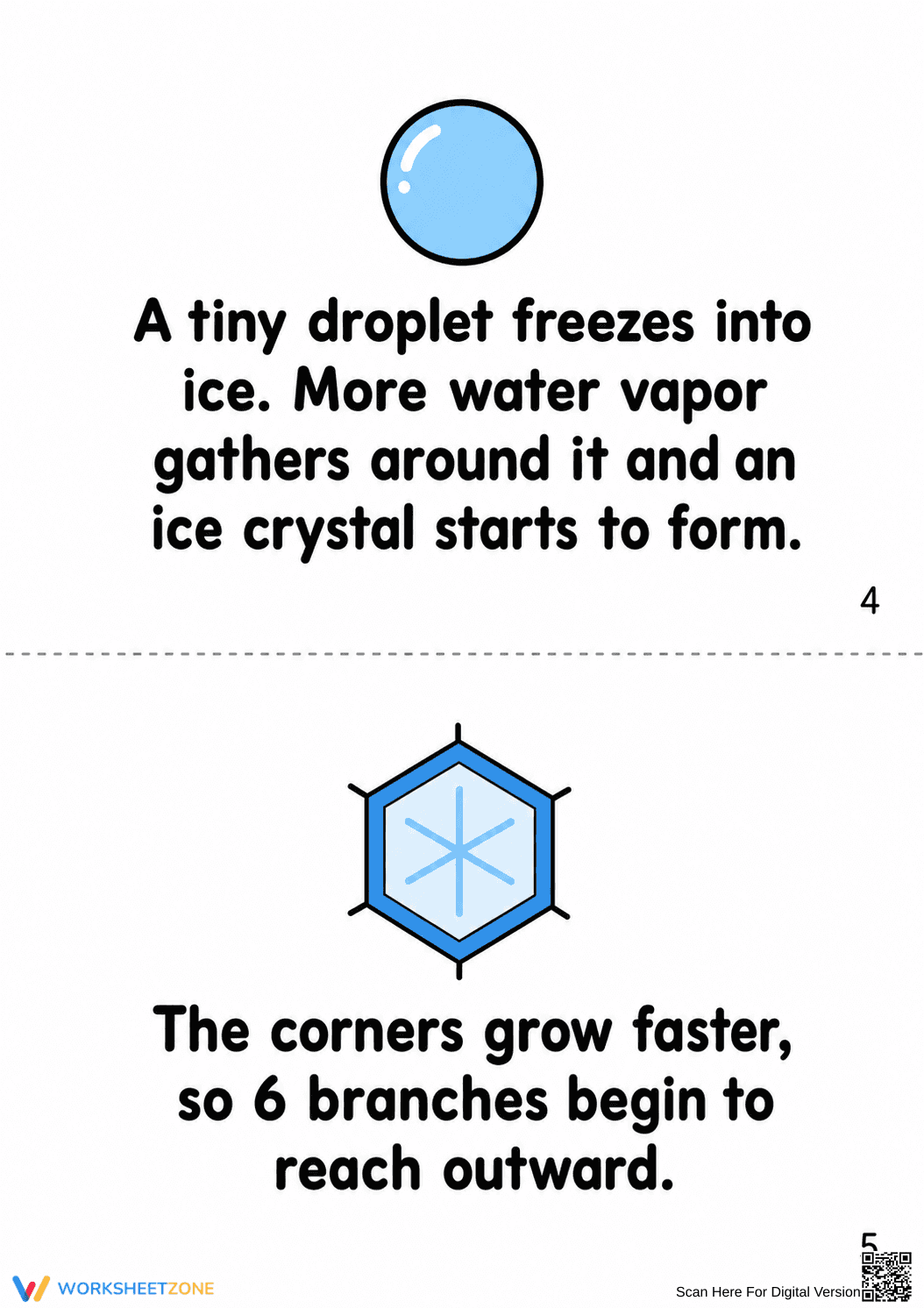
The resource includes 15 individual booklet pages designed for easy assembly. Each page features clear illustrations and concise text explaining stages like nucleation, crystal growth, and precipitation. The layout includes dotted lines for precise cutting and a dedicated cover page to keep the scientific sequence organized for every student.
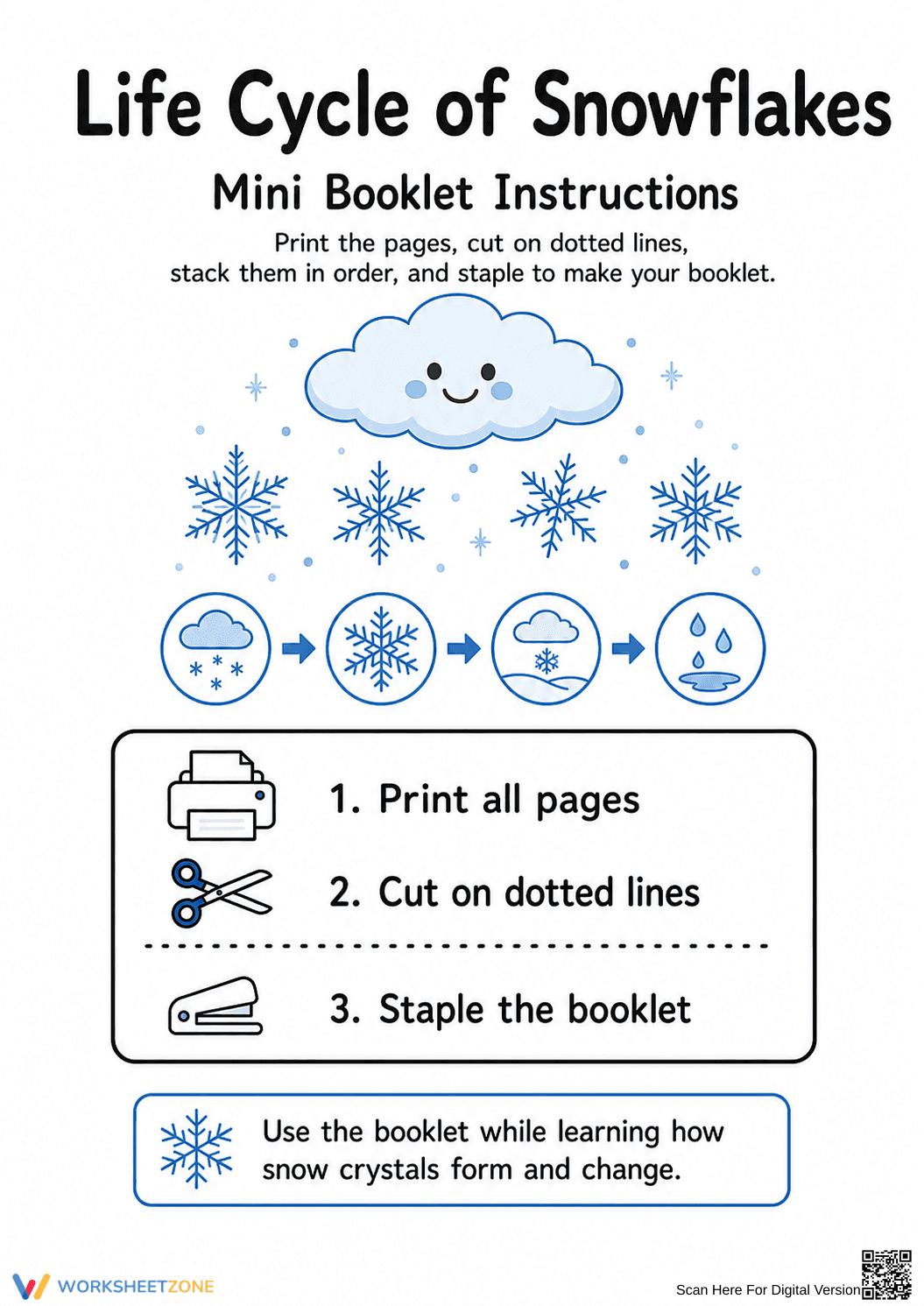
The zero-prep workflow is designed for maximum efficiency in the classroom. First, print the 15 pages for your class (1 minute). Second, distribute the sheets to students for cutting along the guided dotted lines (10 minutes). Third, have students stack and staple their booklets to create a permanent reference tool (5 minutes). This sequence requires less than 2 minutes of teacher preparation time.
Aligned to 2-ESS2-3, this activity helps students obtain information about the various forms water takes in the environment. It also supports 5-ESS2-1 by illustrating how the geosphere (dust) and hydrosphere (water vapor) interact to create weather phenomena. Both standard codes can be copied directly into lesson plans, IEP goals, or district curriculum mapping tools.
Use this booklet during a direct instruction lesson on the water cycle to provide a specific example of crystallization. It also serves as an excellent formative assessment tool; observe students as they sequence the pages to ensure they understand the chronological order of crystal growth. Expected completion typically takes 25 minutes from start to finish.
This resource is ideal for 2nd through 5th-grade students, particularly those who benefit from tactile, kinesthetic learning. It pairs naturally with the mentor text "The Story of Snow" by Mark Cassino or a classroom anchor chart detailing the states of matter. It is also a perfect addition to a winter-themed science center or as a sub plan activity.
The use of sequential booklets in science education is supported by Fisher & Frey (2014), who emphasize the importance of scaffolded reading and writing to help students internalize complex natural processes. By breaking the life cycle of a snowflake into 15 distinct, illustrated steps, this resource reduces cognitive load and allows students to focus on the specific vocabulary of meteorology, such as water vapor and nucleation. Research from the RAND AIRS 2024 report indicates that high-quality, printable science materials that encourage physical interaction—like cutting and stapling—improve retention of the 2-ESS2-3 standard compared to passive reading alone. This booklet provides the structured practice necessary for students to master the concept of physical change in the atmosphere while creating a portable reference they can use for future weather-related inquiries.


