


























Views
Downloads
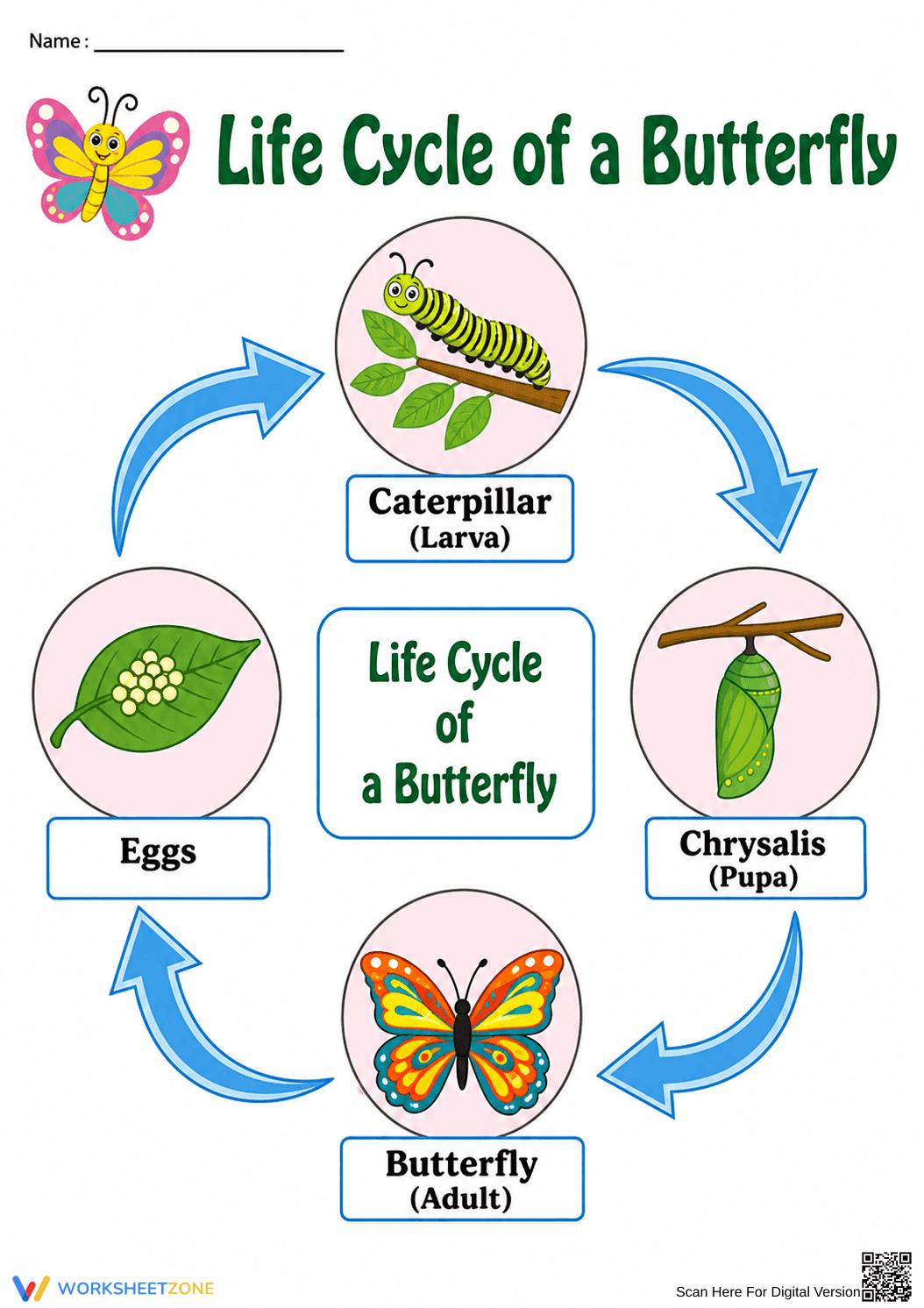

Printable Butterfly Life Cycle Chart | Grade 1 Science
Paste this activity's link or code into your existing LMS (Google Classroom, Canvas, Teams, Schoology, Moodle, etc.).
Students can open and work on the activity right away, with no student login required.
You'll still be able to track student progress and results from your teacher account.
This Kindergarten and Grade 1 science chart provides a clear, visual representation of the butterfly life cycle. Students observe the four distinct biological stages from egg to adult, building foundational knowledge of living things and growth patterns. This essential classroom resource ensures students master biological sequencing through vibrant illustrations.
At a Glance
- Grade: 1 · Subject: Science
- Standard:
K-LS1-1— Describe patterns of what plants and animals need to survive- Skill Focus: Biological Life Cycles
- Format: 1 page · 0 problems · No answer key · PDF
- Best For: Science center reference
- Time: 5–10 minutes
Inside this single-page PDF, you will find a professionally designed circular flow chart detailing the metamorphosis of a butterfly. The chart features labeled illustrations for four critical stages: Eggs, Caterpillar (Larva), Chrysalis (Pupa), and Butterfly (Adult). The high-contrast arrows clearly demonstrate the cyclical nature of life, making it an ideal visual aid and anchor chart for early learners.
This resource features a highly efficient zero-prep workflow for educators:
- Print (30 seconds): Simply print the single-page color chart directly from the PDF file.
- Distribute (1 minute): Hand out individual copies for student science folders or display the chart on an interactive whiteboard.
- Review (5 minutes): Walk the class through the four stages, pointing out the transition from larva to pupa.
Total teacher preparation requires under two minutes, making this visual reference highly suitable for emergency sub plans or quick science mini-lessons.
Standards Alignment
This resource aligns with K-LS1-1, which requires students to use observations to describe patterns in the natural world. By tracing the butterfly's growth, students identify predictable biological patterns and life stages. Both standard codes can be copied directly into lesson plans, IEP goals, or district curriculum mapping tools.
How to Use It
Use this chart during direct instruction by projecting it onto a screen to introduce biological vocabulary like metamorphosis and larva. For a formative assessment observation, provide students with a blank piece of paper and ask them to draw the stage that comes immediately after the caterpillar, using the chart as a self-checking reference. Expected completion time for a basic review session is 5 to 10 minutes.
Who It's For
This printable is designed for Kindergarten and Grade 1 students studying life sciences. It is particularly effective for visual learners and English Language Learners who benefit from the direct pairing of images with Tier 3 vocabulary. Pair this chart with a live butterfly observation kit or a non-fiction reading passage for a comprehensive science unit.
According to a RAND AIRS 2024 analysis of primary science education, visual aids that represent cyclical processes significantly improve retention of chronological sequencing in early learners. This Grade 1 Life Cycle of a Butterfly chart bridges the gap between abstract biological concepts and concrete observation. By providing a structured visual path through the four stages—egg, larva, pupa, and adult—the resource supports the development of academic language and observational skills required by NGSS frameworks. Integrating this printable into a living things unit provides a reliable scaffold for students to describe patterns of what plants and animals need to survive, ensuring mastery of the K-LS1-1 standard while fostering a deeper curiosity about the natural world. This evidence-based approach ensures that foundational science concepts are accessible and memorable for young students.


