


























Views
Downloads
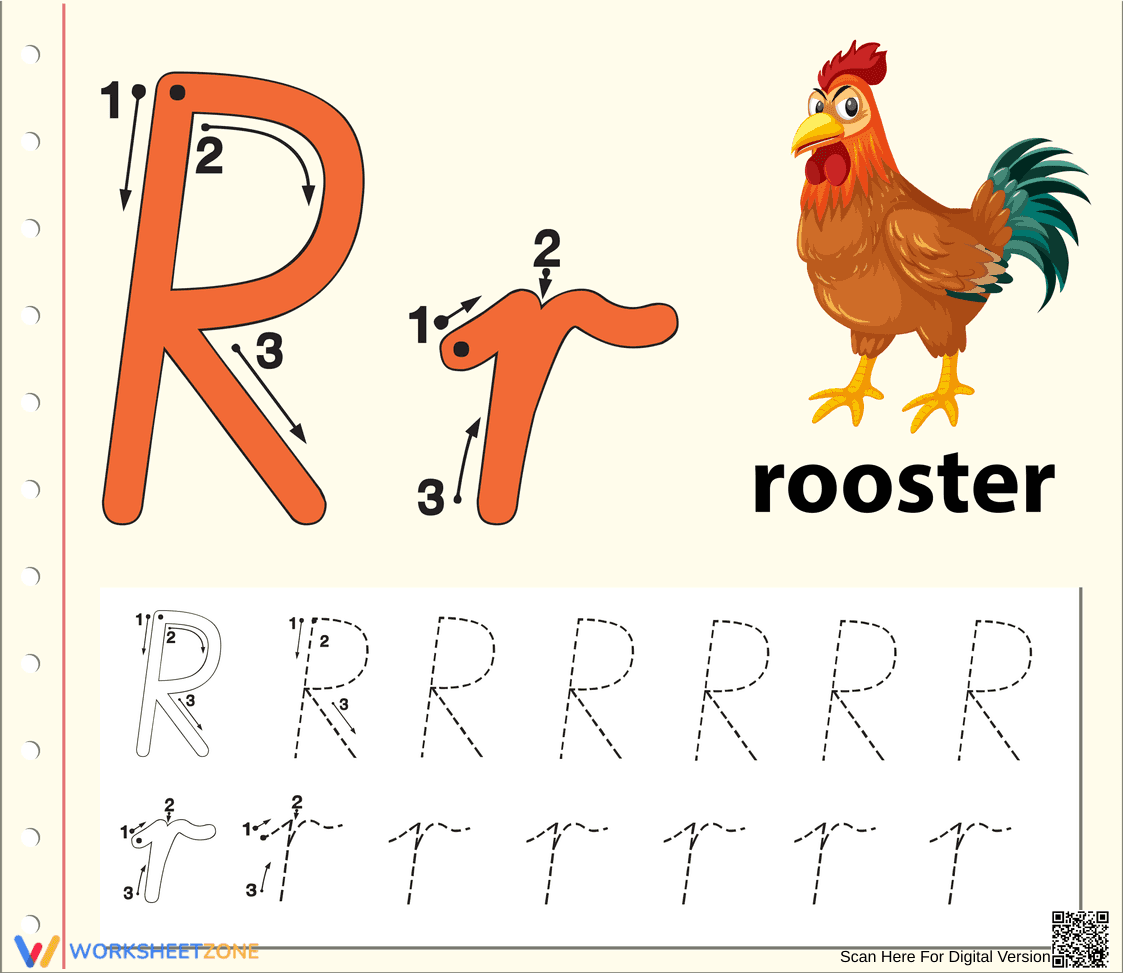

Grade 1 Letter R Tracing — Printable No-Prep Worksheet
Paste this activity's link or code into your existing LMS (Google Classroom, Canvas, Teams, Schoology, Moodle, etc.).
Students can open and work on the activity right away, with no student login required.
You'll still be able to track student progress and results from your teacher account.
This single-page handwriting resource helps young learners master the formation of the letter R. By providing clear, numbered stroke guides and structured tracing lines, the worksheet ensures students develop proper fine motor habits. Children practice both uppercase and lowercase forms to build foundational writing fluency.
At a Glance
- Grade: 1 · Subject: English
- Standard:
CCSS.ELA-LITERACY.L.1.1.A— Print all upper- and lowercase letters- Skill Focus: Letter tracing and stroke order
- Format: 1 page · 12 problems · No answer key needed · PDF
- Best For: Independent practice
- Time: 5–10 minutes
Inside this one-page printable, students find a color-coded instructional section featuring a rooster illustration to reinforce phonetic connections. The top demonstrates exact stroke order for uppercase and lowercase R using numbered arrows. Below, the worksheet provides two rows for tracing practice. The first row contains six uppercase letters, and the second contains six lowercase letters. Initial letters include faded arrows to scaffold the transition to independent tracing.
This resource is designed for a completely zero-prep workflow, requiring under two minutes of teacher setup. First, print the PDF (1 minute) directly from your device. Second, distribute the pages to students along with pencils or crayons (1 minute). Third, review the directional arrows briefly before letting students work independently. Because the visual instructions are self-explanatory, this activity is highly suitable for substitute teacher plans, morning work, or early finisher stations without requiring extensive verbal directions.
This handwriting practice is directly aligned to CCSS.ELA-LITERACY.L.1.1.A, which requires students to print all upper- and lowercase letters accurately. It also supports early phonics skills by associating the target letter with a familiar animal word. Both standard codes can be copied directly into lesson plans, IEP goals, or district curriculum mapping tools.
Use this worksheet during morning work routines to settle students into the day with a quiet, focused task. Alternatively, assign it as a targeted intervention activity during small group literacy centers after direct instruction on letter formation. As students trace, observe their pencil grip and starting points to ensure they are following the numbered arrows rather than drawing the letters backward. Expected completion time ranges from 5 to 10 minutes, depending on the child's fine motor development.
This resource is primarily designed for first-grade students refining their print handwriting, though it serves as excellent remedial practice for older students struggling with legibility. For students needing extra support, provide a textured surface underneath the paper to increase tactile feedback while tracing. Pair this worksheet with an alphabet anchor chart or a read-aloud book featuring words that start with the letter R to reinforce letter-sound correspondence.
Developing automaticity in handwriting is a critical component of early literacy that directly impacts later writing composition. According to Fisher & Frey (2014), explicit instruction in foundational skills, including letter formation, reduces cognitive load so students can eventually focus on generating ideas rather than the mechanics of writing. This targeted practice aligns with CCSS.ELA-LITERACY.L.1.1.A, ensuring students can print all upper- and lowercase letters efficiently. By guiding young learners through the specific stroke order of the letter R, this resource builds the essential muscle memory required for fluent writing. Consistent, structured tracing activities help solidify these motor patterns, preventing the development of inefficient habits that can hinder writing speed in upper grades. Educators can confidently rely on this evidence-based approach to support early literacy development and ensure students meet essential handwriting benchmarks.


