




























Views
Downloads
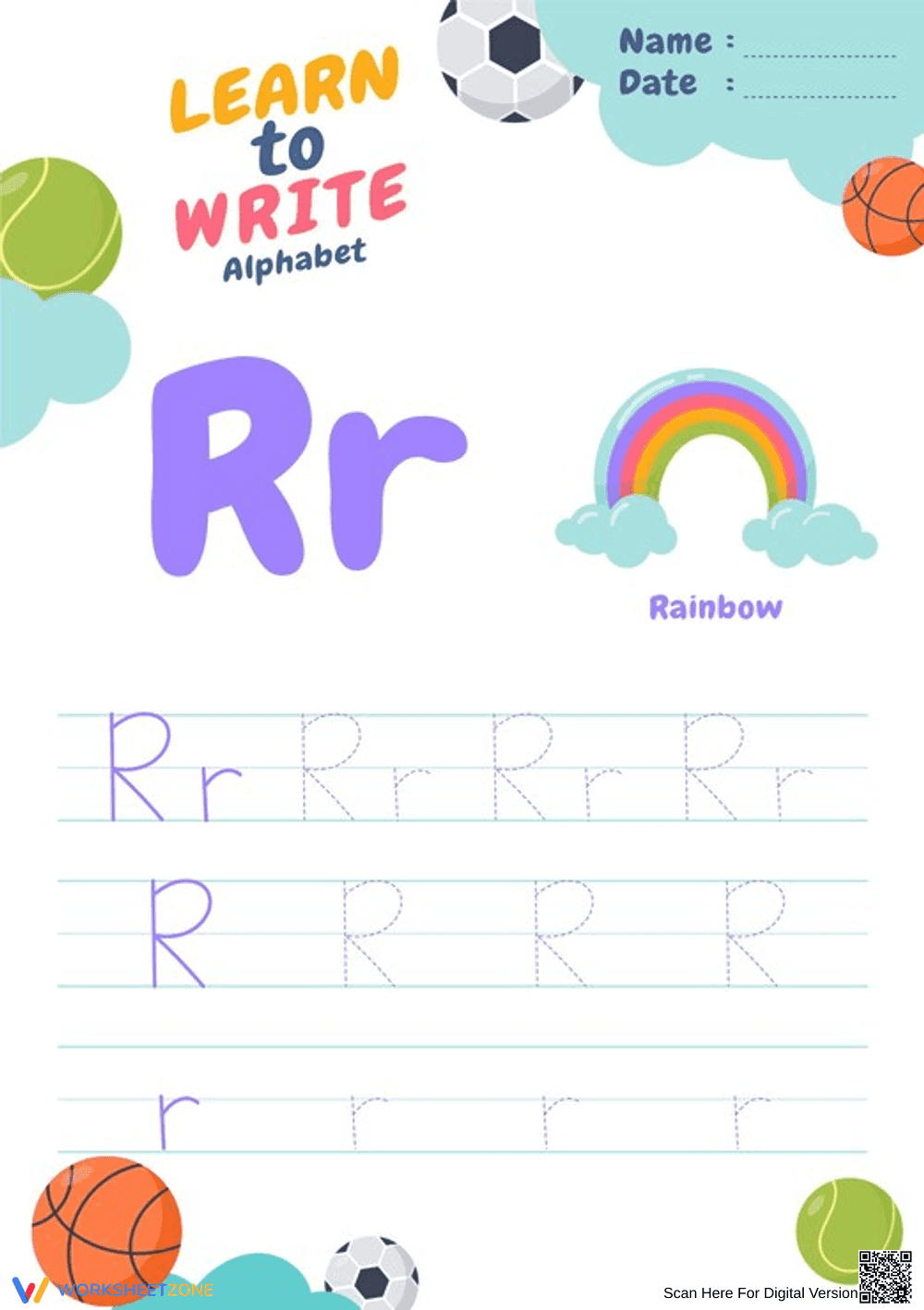

Letter R Tracing Worksheet | Grade K-1 Printable

Paste this activity's link or code into your existing LMS (Google Classroom, Canvas, Teams, Schoology, Moodle, etc.).
Students can open and work on the activity right away, with no student login required.
You'll still be able to track student progress and results from your teacher account.
This Kindergarten letter R tracing worksheet provides foundational handwriting practice for early learners. By focusing on both uppercase and lowercase forms, students develop the fine motor control necessary for legible writing. The rainbow-themed design keeps young children engaged while they master the specific strokes required for the eighteenth letter of the alphabet.
At a Glance
- Grade: Kindergarten · Subject: English
- Standard:
CCSS.ELA-LITERACY.L.K.1.A— Print many upper- and lowercase letters correctly- Skill Focus: Letter R formation
- Format: 1 page · 12 problems · Answer key included · PDF
- Best For: Daily morning work or literacy centers
- Time: 10–15 minutes
This single-page PDF features a clear, distraction-free layout designed for small hands. It includes four combined Rr tracing pairs, four standalone uppercase R tasks, and four lowercase r tasks. The worksheet uses standard primary lines with a midline to help students understand letter height and placement. A colorful rainbow graphic provides a visual mnemonic for the letter's sound, aiding in phonemic awareness alongside motor skill development.
The zero-prep workflow for this resource is designed for busy educators. First, print the single-page PDF in seconds. Second, distribute the sheets to students during your phonics block or as a quiet transition activity. Finally, review the letter formation by walking around the room to provide immediate corrective feedback on stroke order. Total teacher preparation time is under two minutes, making it an ideal choice for emergency sub plans or supplemental homework.
This resource is aligned with CCSS.ELA-LITERACY.L.K.1.A, which requires students to print many upper- and lowercase letters. It specifically targets the motor planning needed for the vertical and curved strokes of the letter R. This standard code can be copied directly into lesson plans, IEP goals, or district curriculum mapping tools to ensure compliance with state and national frameworks.
Use this worksheet during the independent practice phase of a gradual release lesson on the alphabet. It serves as an excellent formative assessment tool; observe if students start their strokes from the top down as instructed. It is also ideal for independent literacy centers where students can practice their handwriting while the teacher works with small groups. The 12 tasks provide enough repetition for reinforcement without causing fatigue.
This activity is tailored for Pre-K students ready for pencil-and-paper tasks, Kindergarteners mastering the alphabet, and Grade 1 students requiring remedial handwriting support. It pairs naturally with an alphabet anchor chart or a read-aloud book about rainbows to reinforce the initial r sound. The clean design ensures it is accessible for students with diverse learning needs who benefit from clear visual boundaries.
Handwriting remains a critical component of early literacy development, as the physical act of forming letters reinforces letter recognition and phonological awareness. According to Fisher & Frey (2014), purposeful practice in letter formation, such as tracing, provides the necessary scaffolding for students to move toward independent writing. This worksheet aligns with CCSS.ELA-LITERACY.L.K.1.A by offering 12 targeted opportunities for students to practice the specific motor movements required for the letter R. Research from the NAEP suggests that students who develop early fluency in handwriting are better equipped to focus on higher-level composition tasks in later grades. By integrating visual cues like the rainbow, this resource supports multi-sensory learning pathways. This structured approach ensures that students build the muscle memory needed for legible print, making it a reliable tool for any early childhood classroom or home learning environment.


