


























Views
Downloads
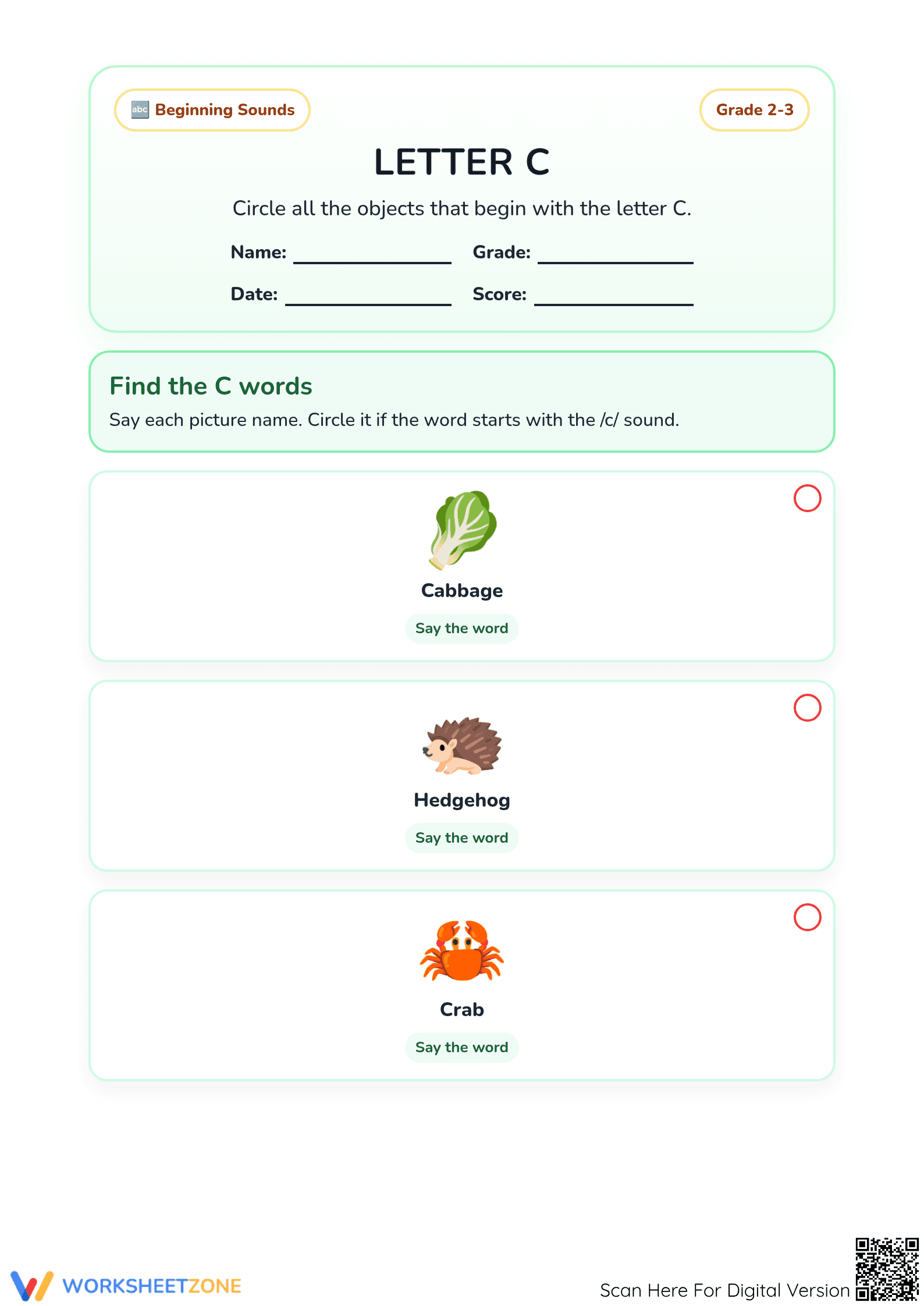
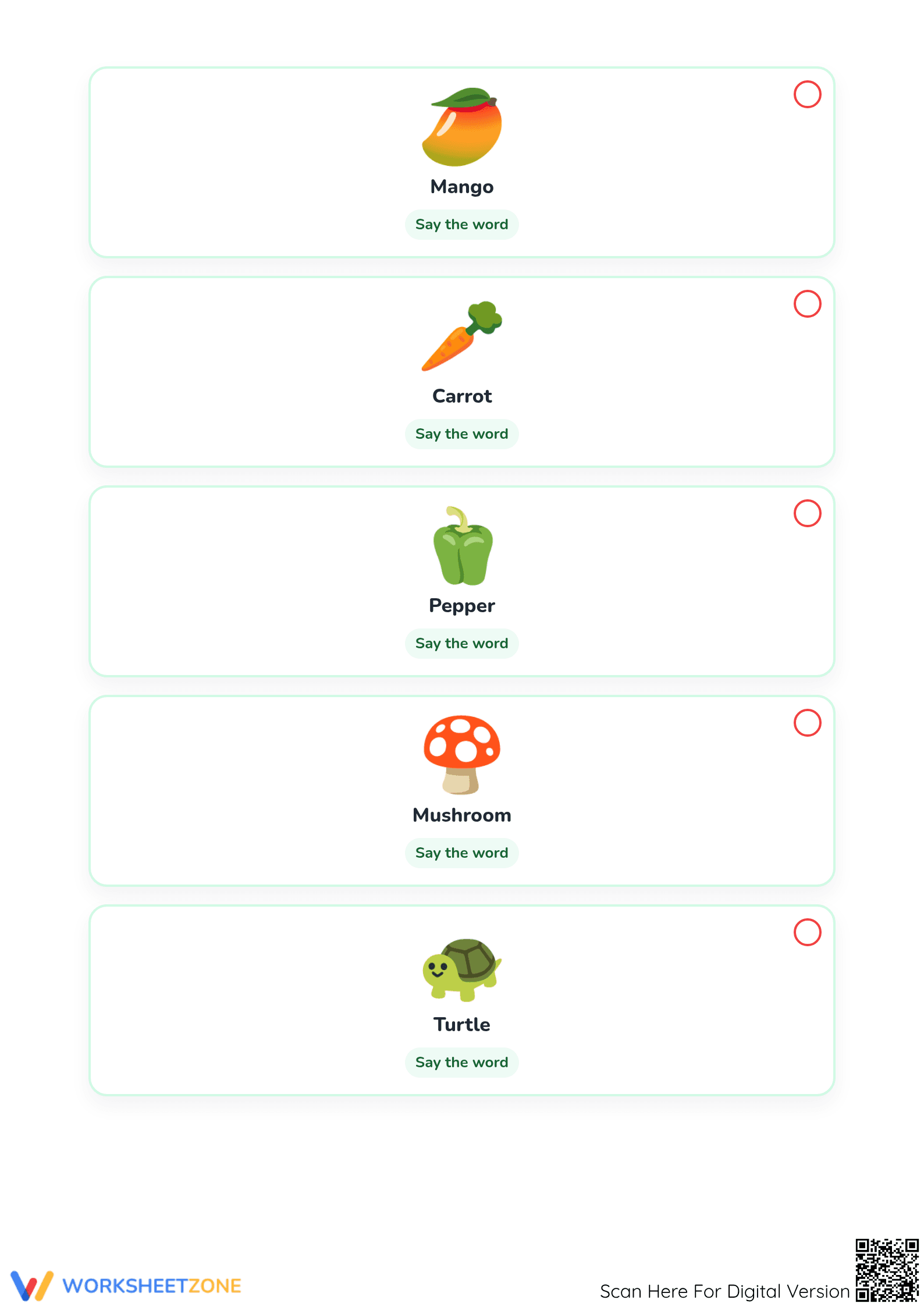
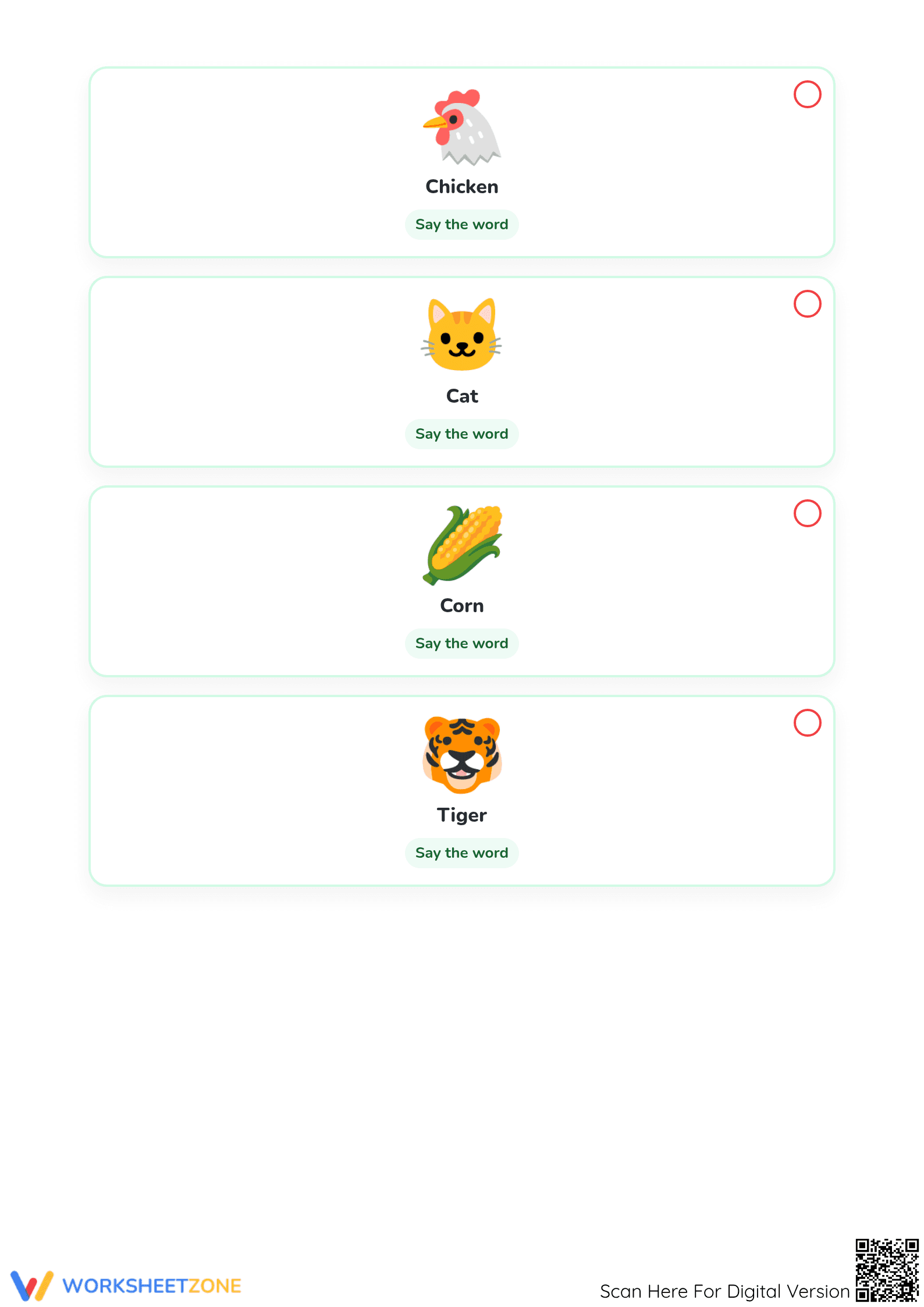

Printable Letter C Recognition Worksheet | Grade 2 Phonics
Paste this activity's link or code into your existing LMS (Google Classroom, Canvas, Teams, Schoology, Moodle, etc.).
Students can open and work on the activity right away, with no student login required.
You'll still be able to track student progress and results from your teacher account.
Mastering initial consonant sounds is a fundamental milestone for young readers transitioning from basic letter recognition to fluent word decoding. This Letter C Recognition Worksheet provides a structured, visually engaging environment for students to practice identifying the hard /c/ sound in a variety of common nouns, ensuring they build the phonemic awareness necessary for literacy success.
At a Glance
- Grade: 2 · Subject: English Language Arts
- Standard:
CCSS.ELA-LITERACY.RF.2.3— Apply grade-level phonics and word analysis skills to decode unfamiliar words- Skill Focus: Letter C beginning sounds
- Format: 3 pages · 12 problems · Answer key included · PDF
- Best For: Daily phonics review or literacy centers
- Time: 15–20 minutes
This comprehensive three-page PDF resource features twelve distinct identification tasks. Each problem presents a high-quality illustration of an object, such as a cabbage, crab, or carrot, accompanied by its printed name. Students are prompted to say the word aloud and circle the image if it begins with the target /c/ sound, providing a multi-sensory approach to phonemic development.
Skill Progression
- Guided Practice: Students engage in initial identification where the /c/ sound is dominant and clearly labeled with visual cues. (4 tasks)
- Supported Practice: The resource introduces auditory discrimination by mixing C-words with distractors like 'hedgehog' or 'pepper' to sharpen focus. (4 tasks)
- Independent Practice: Students demonstrate mastery across the final page by independently verifying phonemic matches without teacher scaffolding. (4 tasks)
This sequence ensures a gradual release of responsibility as students move from simple recognition to confident sound isolation.
Standards Alignment
The primary focus of this resource is CCSS.ELA-LITERACY.RF.2.3, which requires students to know and apply grade-level phonics and word analysis skills in decoding words. By focusing specifically on initial consonant sounds, the worksheet also supports foundational conventions of standard English language arts. Both standard codes can be copied directly into lesson plans, IEP goals, or district curriculum mapping tools.
How to Use It
Incorporate this worksheet during your morning routine to activate prior phonics knowledge or as a focused activity during literacy center rotations. For a more tailored approach, use it as a formative assessment tool during small-group instruction to observe how students handle auditory discrimination between similar phonemes. Expected completion time ranges from 15 to 20 minutes depending on the student's current proficiency level.
Who It's For
This resource is designed for Grade 2 and Grade 3 students who require additional reinforcement in phonics and letter-sound correspondence. It is an effective choice for English Language Learners (ELL) building foundational vocabulary or for students receiving Tier 2 literacy interventions. Consider pairing this worksheet with a short reading passage or an anchor chart for a more comprehensive phonics lesson.
According to the Fisher & Frey (2014) framework for gradual release of responsibility, phonemic awareness activities like identifying beginning sounds are critical for developing decoding fluency in early elementary grades. This worksheet targets the /c/ sound, requiring students to discriminate between phonemes through visual and auditory cues. By isolating the initial sound of twelve distinct objects, students strengthen their orthographic mapping capabilities, which is a prerequisite for advanced reading comprehension. The inclusion of clear labels alongside high-quality illustrations supports vocabulary acquisition while focusing on the specific phonemic goal of CCSS.ELA-LITERACY.RF.2.3. Educators can use these structured tasks to identify gaps in phonological processing, allowing for targeted intervention before students encounter more complex multi-syllabic words. This evidence-based approach ensures that learners build a robust foundation in phonics, facilitating a smoother transition from decoding individual letters to reading full sentences. The resource provides the necessary repetition to move from guided practice to independent mastery of the hard /c/ consonant sound.


