


























Views
Plays


Grade 1 Story Elements & Writing Essential Worksheet
Paste this activity's link or code into your existing LMS (Google Classroom, Canvas, Teams, Schoology, Moodle, etc.).
Students can open and work on the activity right away, with no student login required.
You'll still be able to track student progress and results from your teacher account.
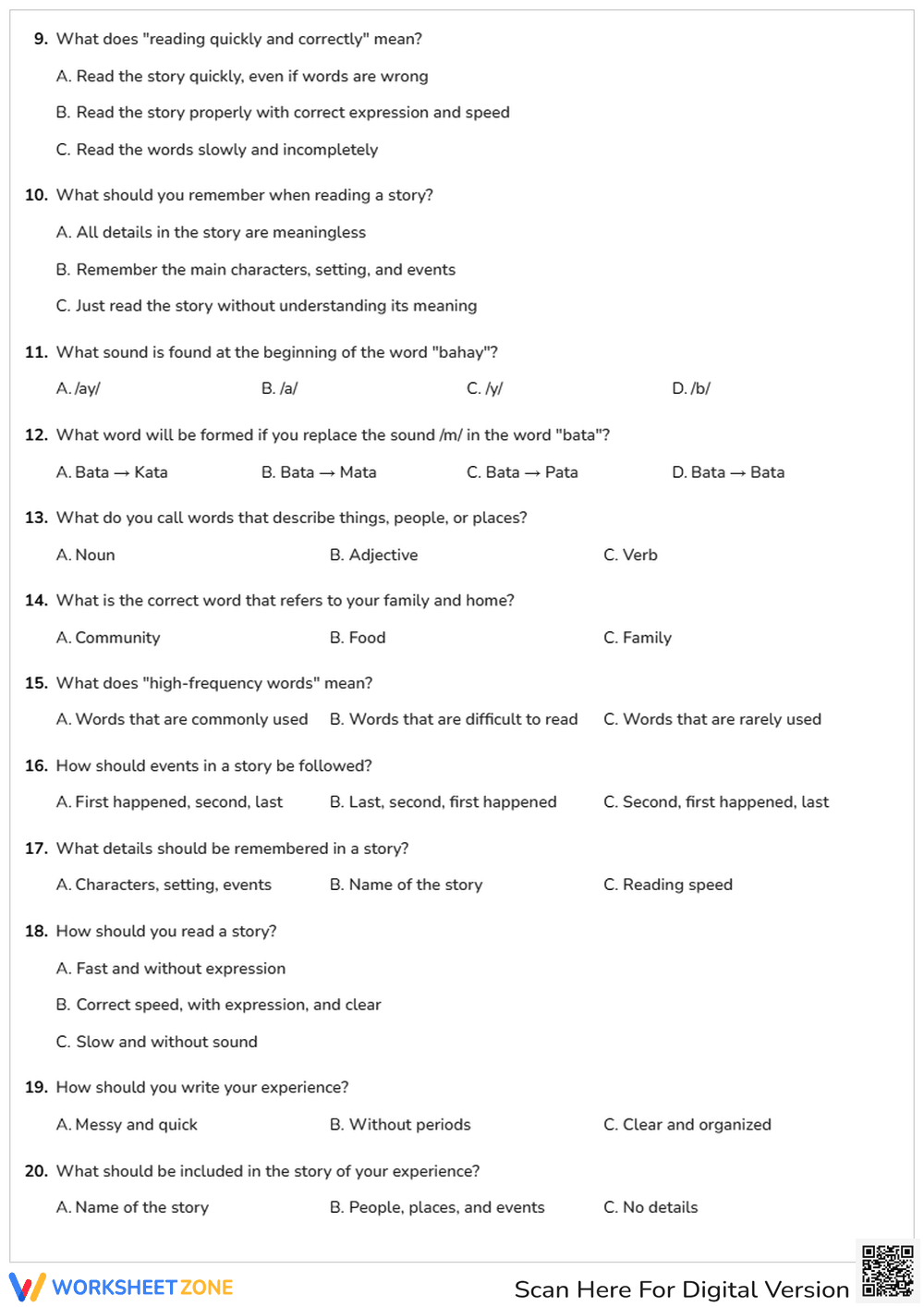
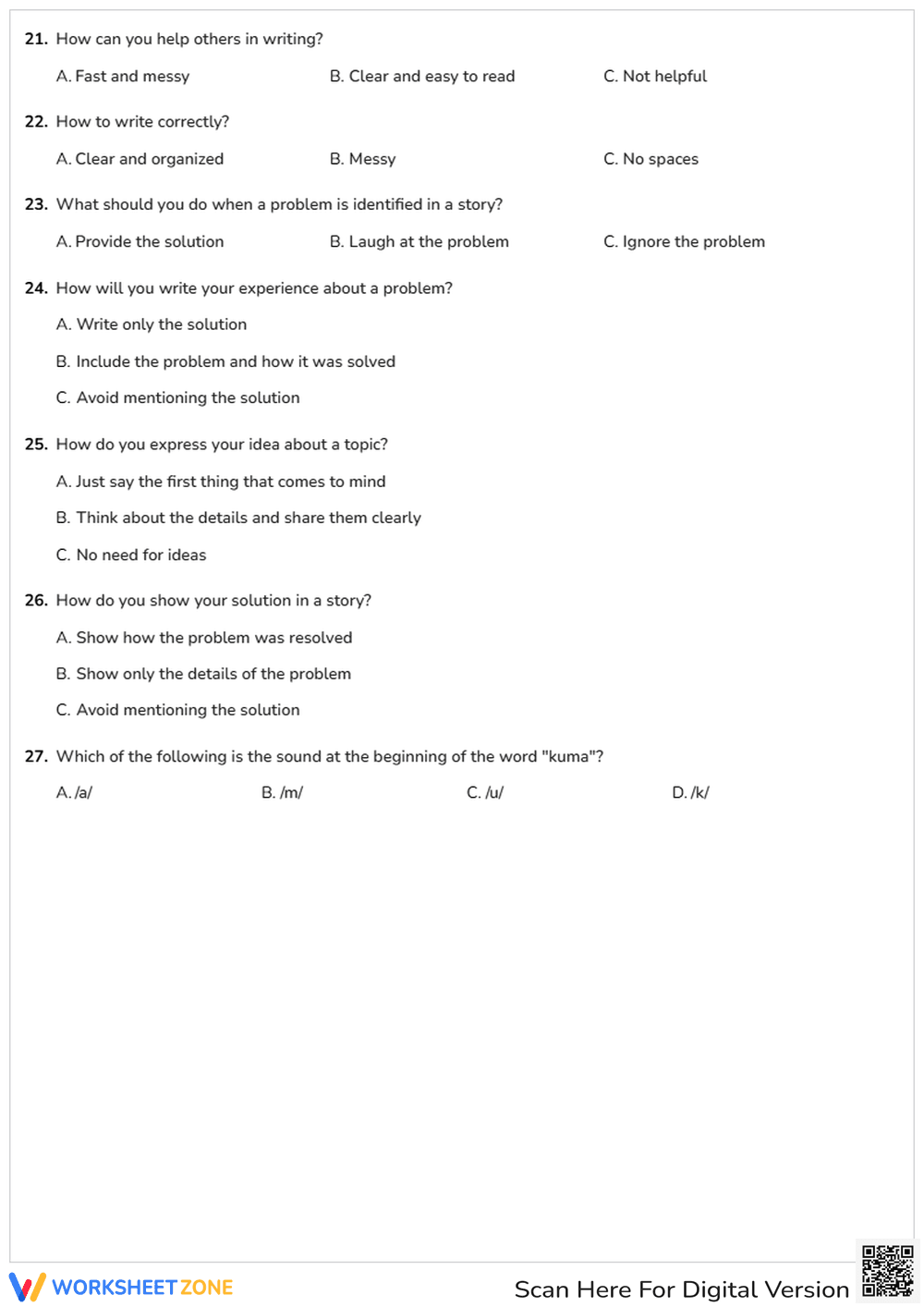
This Grade 1 ELA assessment worksheet provides a comprehensive review of foundational literacy skills, focusing on story elements and writing conventions. Students demonstrate their understanding of characters, settings, and plot sequences while reinforcing their knowledge of phonics and sentence structure. It is designed to ensure students can identify the core components of a narrative and apply basic grammar rules effectively.
At a Glance
- Grade: 1 · Subject: English Language Arts
- Standard:
CCSS.ELA-LITERACY.RL.1.3— Describe characters, settings, and major events in a story using key details- Skill Focus: Story structure, phonics, and writing mechanics
- Format: 3 pages · 27 problems · Answer key included · PDF
- Best For: End-of-unit assessment or substitute teacher plans
- Time: 30–45 minutes
What's Inside: This three-page PDF contains 27 multiple-choice questions that span the breadth of early elementary language arts. The tasks are organized to move from vocabulary and community concepts to specific story analysis and phonological awareness. The clear layout includes numbered questions with three to four options each, making it easy for young learners to track their progress through the assessment.
Zero-Prep Workflow: This resource is designed for immediate classroom implementation. First, print the three-page document (30 seconds). Next, distribute the packets to students and provide a brief overview of the multiple-choice format (1 minute). Finally, review the completed assessments using the included answer key to identify specific gaps in student understanding (5 minutes). This streamlined process makes it an ideal choice for emergency sub plans or busy Friday review sessions.
Standards Alignment: This worksheet is primarily aligned to `CCSS.ELA-LITERACY.RL.1.3`, requiring students to identify characters, settings, and events. It also supports `CCSS.ELA-LITERACY.L.1.1` by testing knowledge of writing conventions and parts of speech. Both standard codes can be copied directly into lesson plans, IEP goals, or district curriculum mapping tools to ensure instructional compliance and tracking.
How to Use It: Use this worksheet as a summative assessment after completing a unit on narrative structure. It serves as an excellent tool for identifying which students struggle with sequencing or identifying the problem and solution within a text. Alternatively, assign it as a guided review during small-group instruction to observe how students process phonics questions versus comprehension questions. Expect most first graders to complete the full set in 35 minutes.
Who It's For: This resource is tailored for Grade 1 students but is also appropriate for Kindergarten students ready for a challenge or Grade 2 students requiring intervention. It is particularly helpful for English Language Learners (ELLs) due to the straightforward language and clear options. Pair this worksheet with a favorite classroom picture book to provide a concrete reference for the story element questions.
According to research by Fisher & Frey (2014), the use of structured assessments that combine comprehension with foundational skills like phonics is vital for developing early literacy. This worksheet addresses that need by requiring students to toggle between decoding tasks and higher-order thinking about story structure. By providing 27 distinct data points, teachers can gain a clear picture of student mastery across multiple domains of the CCSS.ELA-LITERACY.RL.1.3 standard. The inclusion of writing convention questions ensures that students are not just reading stories but understanding the mechanics required to produce them. This dual focus supports the gradual release of responsibility by checking for understanding before moving into independent creative writing. The standardized format also prepares young learners for the testing environments they will encounter in later grades while maintaining age-appropriate content and vocabulary.


