


























Views
Downloads

Kid's Reward Chart Printable | Essential Behavior Tool
Paste this activity's link or code into your existing LMS (Google Classroom, Canvas, Teams, Schoology, Moodle, etc.).
Students can open and work on the activity right away, with no student login required.
You'll still be able to track student progress and results from your teacher account.
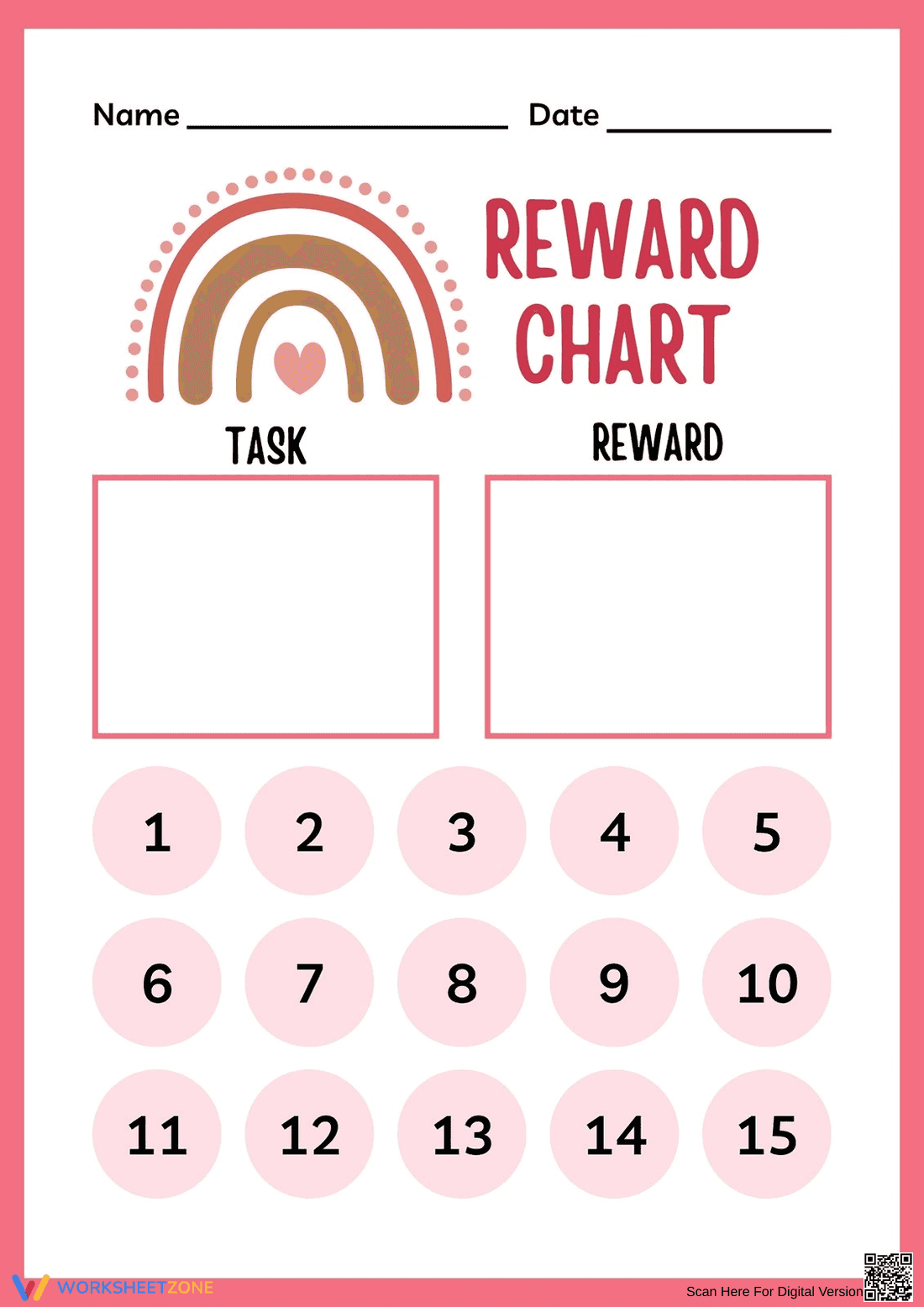
This printable reward chart provides a visual framework for Grade K-2 students to track progress toward specific behavioral or academic goals. By connecting daily tasks to tangible rewards, the worksheet fosters self-regulation and motivation. Students engage with a 15-step progression that builds consistency and accountability in any learning environment.
At a Glance
- Grade: K-2 · Subject: Social-Emotional Learning
- Standard:
CCSS.MATH.CONTENT.K.CC.A.1— Count and recognize numbers 1-15 to track behavioral or academic progress- Skill Focus: Goal tracking and positive reinforcement
- Format: 1 page · 15 tracking steps · No answer key needed · PDF
- Best For: Daily behavior management and habit building
- Time: 5–10 minutes daily
What's Inside
The worksheet features a clean, rainbow-themed layout designed for high visibility and student engagement. It includes a dedicated "Task" box for defining the target behavior and a "Reward" box for specifying the incentive. The core of the page consists of 15 numbered circles, allowing students to color, sticker, or cross off each successful instance of the target task as they work toward their goal.
Zero-Prep Workflow
- Print: Select the single-page PDF and print in color for maximum engagement. This takes less than 30 seconds.
- Distribute: Meet with the student to write the specific task and chosen reward in the provided boxes, ensuring the goal is attainable (1 minute).
- Review: Check the chart daily or after specific intervals to mark progress, requiring zero additional teacher preparation (1 minute daily).
This streamlined process makes the chart an ideal resource for busy classrooms or as a reliable sub plan component for maintaining behavioral expectations.
Standards Alignment
This resource aligns with CCSS.MATH.CONTENT.K.CC.A.1 by requiring students to count and recognize numbers 1 through 15 as they track their progress. Additionally, it supports broader SEL frameworks for self-management and responsible decision-making. Both standard codes can be copied directly into lesson plans, IEP goals, or district curriculum mapping tools.
How to Use It
Use this chart during the independent practice phase of a behavior intervention plan. It serves as a formative assessment tool; if a student struggles to reach the fifth circle, the teacher can observe and adjust the task difficulty. It is ideal for morning meetings or end-of-day reflections, typically taking 5 to 10 minutes to update and discuss progress with the student.
Who It's For
This tool is designed for early elementary students, particularly those needing visual scaffolds for behavior. It is an excellent resource for Special Education (SPED) settings or as a home-school communication tool. Pair it with a visual schedule or a direct instruction lesson on classroom expectations for a comprehensive support system.
According to research by Fisher & Frey (2014) on the gradual release of responsibility, visual scaffolds like this reward chart are critical for moving students toward self-regulated behavior. The chart utilizes the CCSS.MATH.CONTENT.K.CC.A.1 standard by integrating basic numeracy with behavioral tracking, ensuring that even non-academic moments reinforce foundational counting skills. By providing a clear 15-step path to a goal, the worksheet reduces cognitive load and helps students visualize the relationship between effort and outcome. Studies from the RAND AIRS 2024 report suggest that consistent use of positive reinforcement tools in early childhood settings correlates with higher levels of student engagement and a reduction in classroom disruptions. This printable serves as a structured intervention that can be easily integrated into existing classroom management systems without increasing teacher workload or requiring complex setup.


