


























Views
Downloads
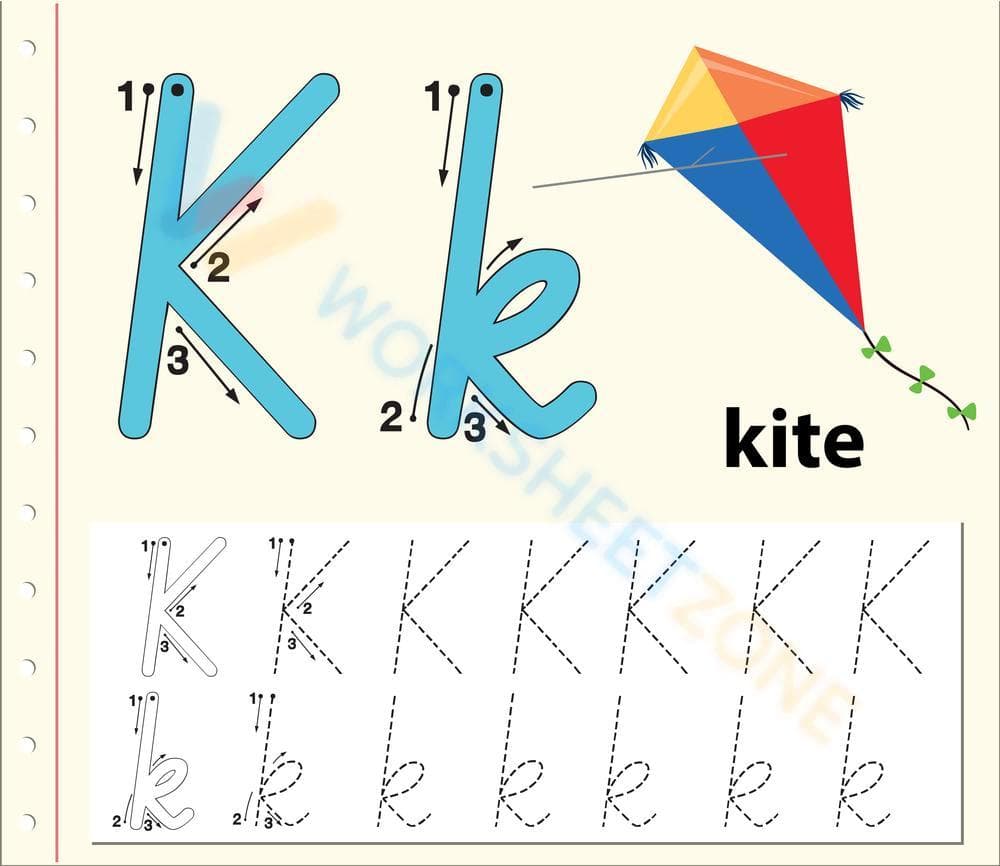

Grade K Letter K Tracing — Printable No-Prep Worksheet
Paste this activity's link or code into your existing LMS (Google Classroom, Canvas, Teams, Schoology, Moodle, etc.).
Students can open and work on the activity right away, with no student login required.
You'll still be able to track student progress and results from your teacher account.
This foundational handwriting worksheet helps early learners master the formation of the uppercase and lowercase letter K. By following guided directional arrows and practicing on dashed lines, students develop fine motor control and letter recognition skills essential for early literacy. The visual anchor of a kite reinforces beginning sound connections.
At a Glance
- Grade: K · Subject: ELA
- Standard:
CCSS.ELA-LITERACY.L.K.1.A— Print many upper- and lowercase letters- Skill Focus: Letter Formation and Tracing
- Format: 1 page · 14 problems · No answer key · PDF
- Best For: Independent practice and centers
- Time: 10–15 minutes
This single-page resource features two large, guided models of the letter K with numbered directional arrows to demonstrate proper stroke sequence. Below the models, students find two rows of dashed letters for independent tracing practice, totaling seven uppercase and seven lowercase letters. A colorful illustration of a kite alongside the printed word provides a helpful visual cue for phonics integration, making the handwriting task more engaging for young learners.
This worksheet is designed for immediate classroom implementation with absolutely zero teacher preparation required.
- Print (1 minute): Simply send the PDF to your school copier. The clear, high-contrast lines ensure perfect reproduction in black and white or color.
- Distribute (1 minute): Hand out the sheets along with pencils or crayons. The intuitive layout means students instantly understand the task.
- Review (1 minute): Quickly scan student work to check for proper stroke direction and line adherence.
With a total prep time of under two minutes, this resource is an ideal addition to emergency sub plans or morning work folders.
This activity aligns directly with CCSS.ELA-LITERACY.L.K.1.A: Print many upper- and lowercase letters. It provides the exact repetitive motor practice required to build muscle memory for standard letter formation. Both standard codes can be copied directly into lesson plans, IEP goals, or district curriculum mapping tools.
Deploy this worksheet during morning work to establish a calm, focused start to the school day. It also functions perfectly as an independent literacy center activity while the teacher conducts small group reading instruction. As students work, observe their pencil grip and stroke direction to provide immediate corrective feedback on their handwriting technique. Expect students to complete the tracing tasks within 10 to 15 minutes.
This resource is optimized for Kindergarten students developing basic handwriting skills. It also serves as an excellent intervention tool for first-grade students who need targeted remediation in letter formation or fine motor control. Pair this worksheet with a tactile alphabet anchor chart or a whole-class phonics lesson on the /k/ sound to maximize instructional impact.
Effective handwriting instruction requires explicit modeling followed by structured, repetitive practice to build automaticity. According to Fisher & Frey (2014), providing students with clear visual cues and guided practice opportunities significantly improves their ability to transfer isolated skills into independent writing tasks. This worksheet supports that pedagogical framework by offering numbered stroke directions before transitioning to dashed tracing lines. By aligning with CCSS.ELA-LITERACY.L.K.1.A to print many upper- and lowercase letters, the activity ensures students develop the fine motor pathways necessary for fluent written expression. Early mastery of letter formation reduces cognitive load during later composition tasks, allowing young writers to focus on meaning rather than mechanics. This targeted practice tool delivers the exact scaffolding required to build confident, capable early communicators in the classroom setting.


