


























Views
Downloads





High and Low Sounds Worksheet | Grade 1 Science Printable
Paste this activity's link or code into your existing LMS (Google Classroom, Canvas, Teams, Schoology, Moodle, etc.).
Students can open and work on the activity right away, with no student login required.
You'll still be able to track student progress and results from your teacher account.
This interactive science worksheet helps early elementary students master the concept of pitch by categorizing everyday noises. Students listen to specific audio cues and determine whether each represents a high or low sound, building foundational physical science skills while engaging in a hands-on sorting activity.
At a Glance
- Grade: 1 · Subject: Science
- Standard:
1-PS4-1— Understand that sounds have different properties like pitch.- Skill Focus: Differentiating high and low sounds
- Format: 2 pages · 12 problems · Answer key included · PDF
- Best For: Whole group listening activity
- Time: 20–30 minutes
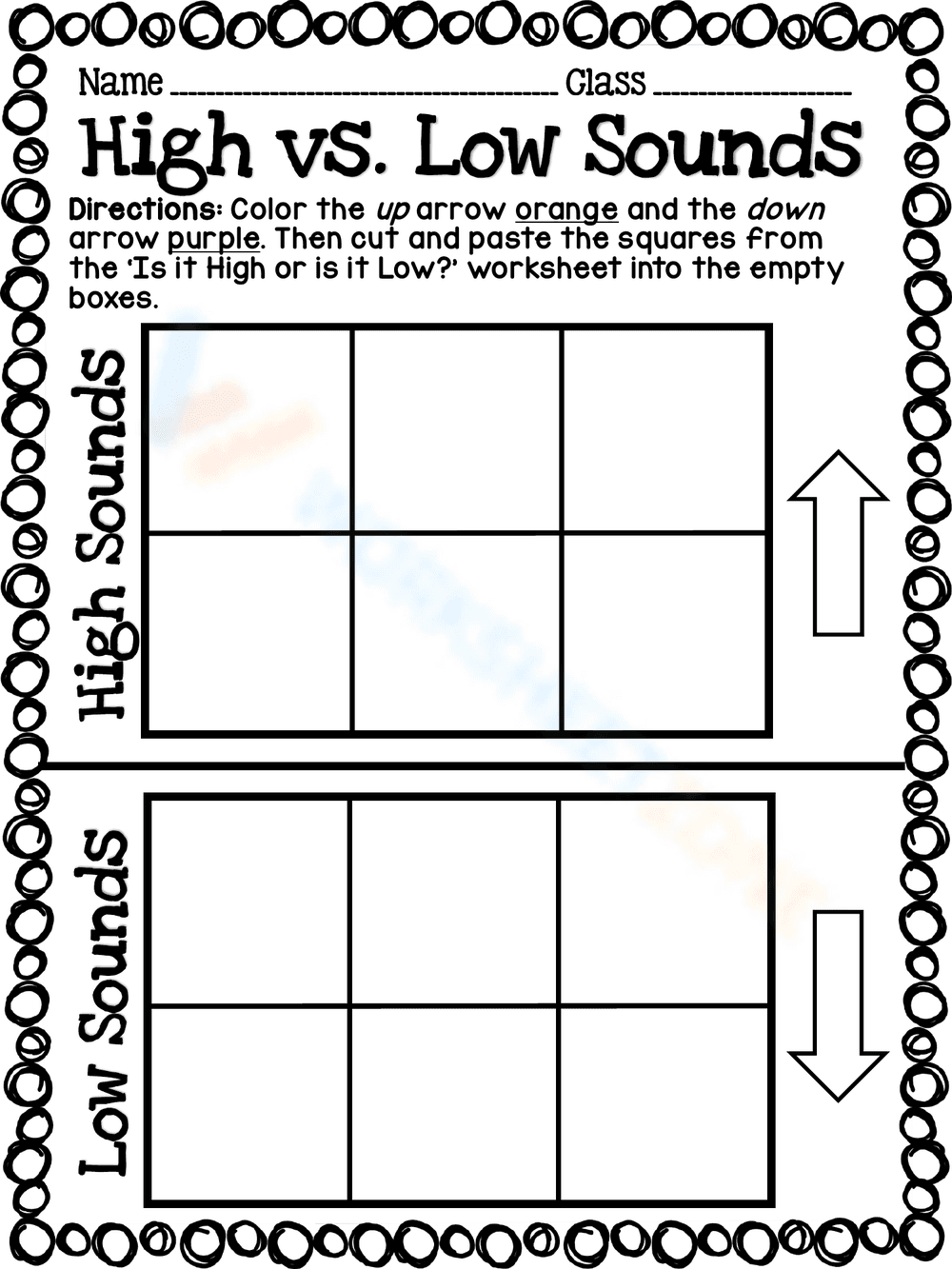
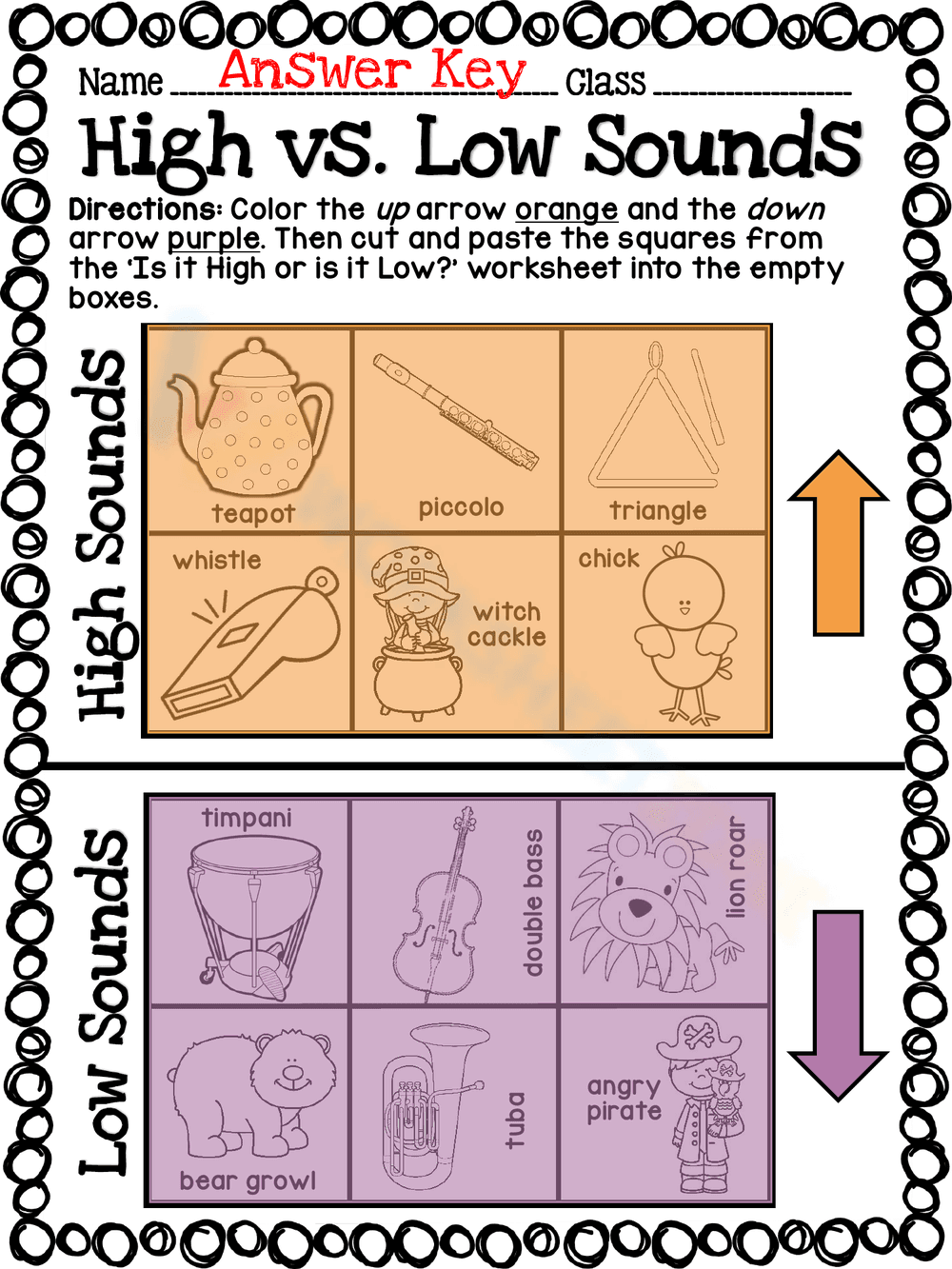
This resource includes two student activity pages and teacher directions. The first page features twelve illustrations of sound-producing objects and animals, like a piccolo and a tuba. Students color-code these images based on the pitch they hear during a listening exercise. The second page provides a sorting mat where learners cut and paste squares into high and low categories. Full answer keys are provided.
- Guided practice: The teacher plays specific audio clips for each of the 12 items, allowing the class to listen and discuss the pitch together before making a decision.
- Supported practice: Students use the provided color-coding system (orange for high, purple for low) to mark their initial auditory observations on the first page.
- Independent practice: Learners independently cut out the twelve squares and physically sort them onto the graphic organizer mat, reinforcing the concept through tactile engagement.
This gradual-release approach ensures students confidently grasp auditory concepts before moving to independent sorting tasks.
This activity aligns with primary science frameworks, specifically supporting 1-PS4-1 by helping students observe and categorize the properties of sound. While the core standard focuses on vibration, distinguishing pitch is a critical supporting skill for understanding how different materials produce varying sound waves. Both standard codes can be copied directly into lesson plans, IEP goals, or district curriculum mapping tools.
This worksheet is highly effective as a guided whole-class activity during a science unit on sound. Teachers play audio clips while students listen actively, turning an abstract concept into a concrete sorting game. As a formative assessment tip, observe which students struggle to differentiate between the tuba and double bass to identify needs for further auditory practice. Expect completion to take 20 to 30 minutes.
This resource is designed for first and second-grade general education students, but it is also highly beneficial for auditory processing interventions and special education classrooms. The visual supports and hands-on cutting tasks provide excellent scaffolding for diverse learners. Pair this sorting activity with a direct instruction lesson on sound waves or a read-aloud book about musical instruments to deepen student comprehension.
Developing early auditory discrimination skills is a critical component of primary science education. By engaging with standard 1-PS4-1, students learn to understand that sounds have different properties like pitch and volume. Research highlights the importance of combining auditory input with tactile activities to solidify abstract physical science concepts for young learners. According to a ScienceDirect TpT Analysis, multi-sensory instructional materials that require students to listen, color-code, and physically sort information significantly improve long-term retention rates in early elementary classrooms. When young learners actively categorize high and low pitches using visual aids and graphic organizers, they build a stronger cognitive framework for future physics concepts. This structured approach ensures that foundational science vocabulary is not just memorized, but genuinely understood through experiential learning, guided observation, and active participation.


