


























Views
Downloads
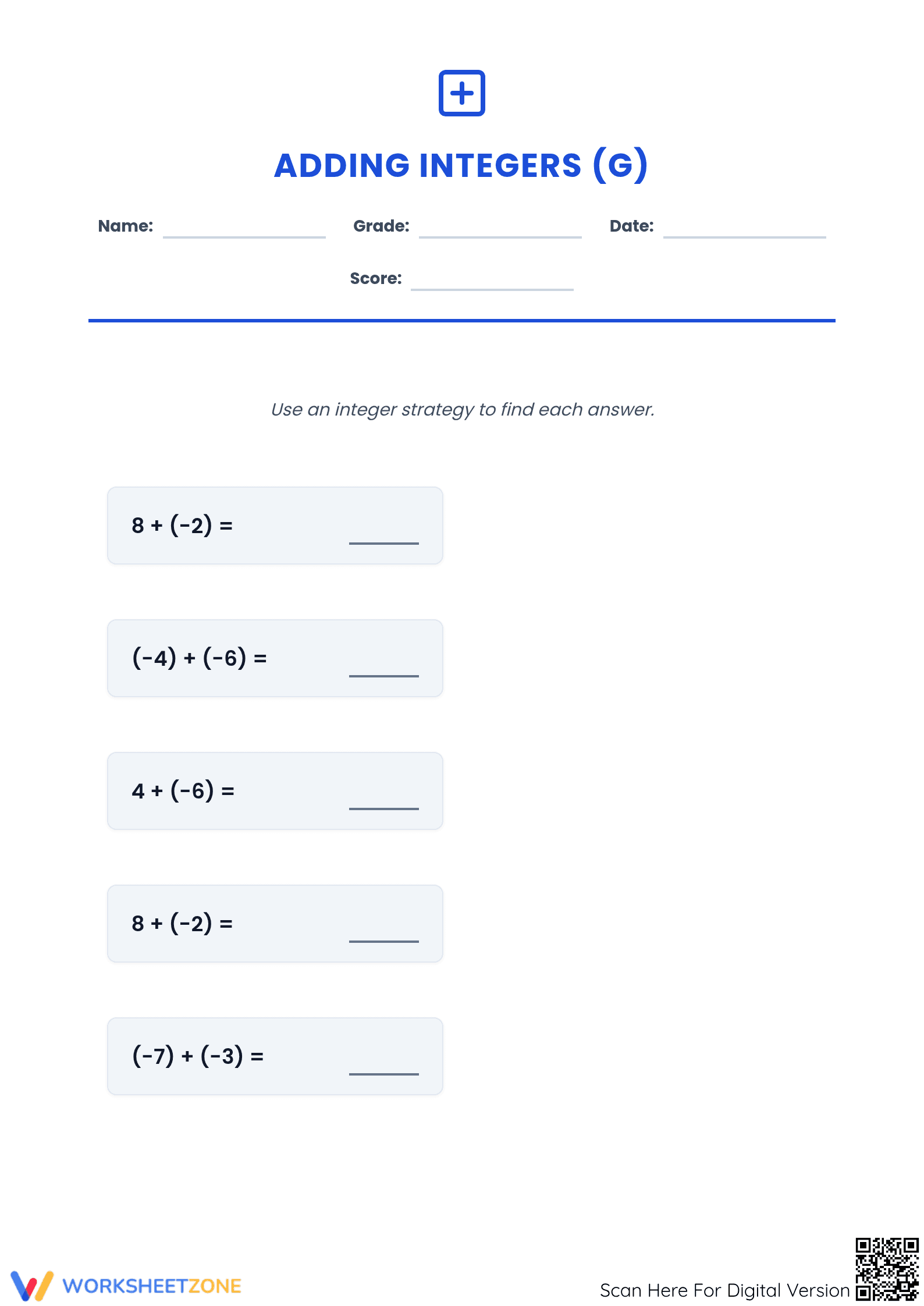
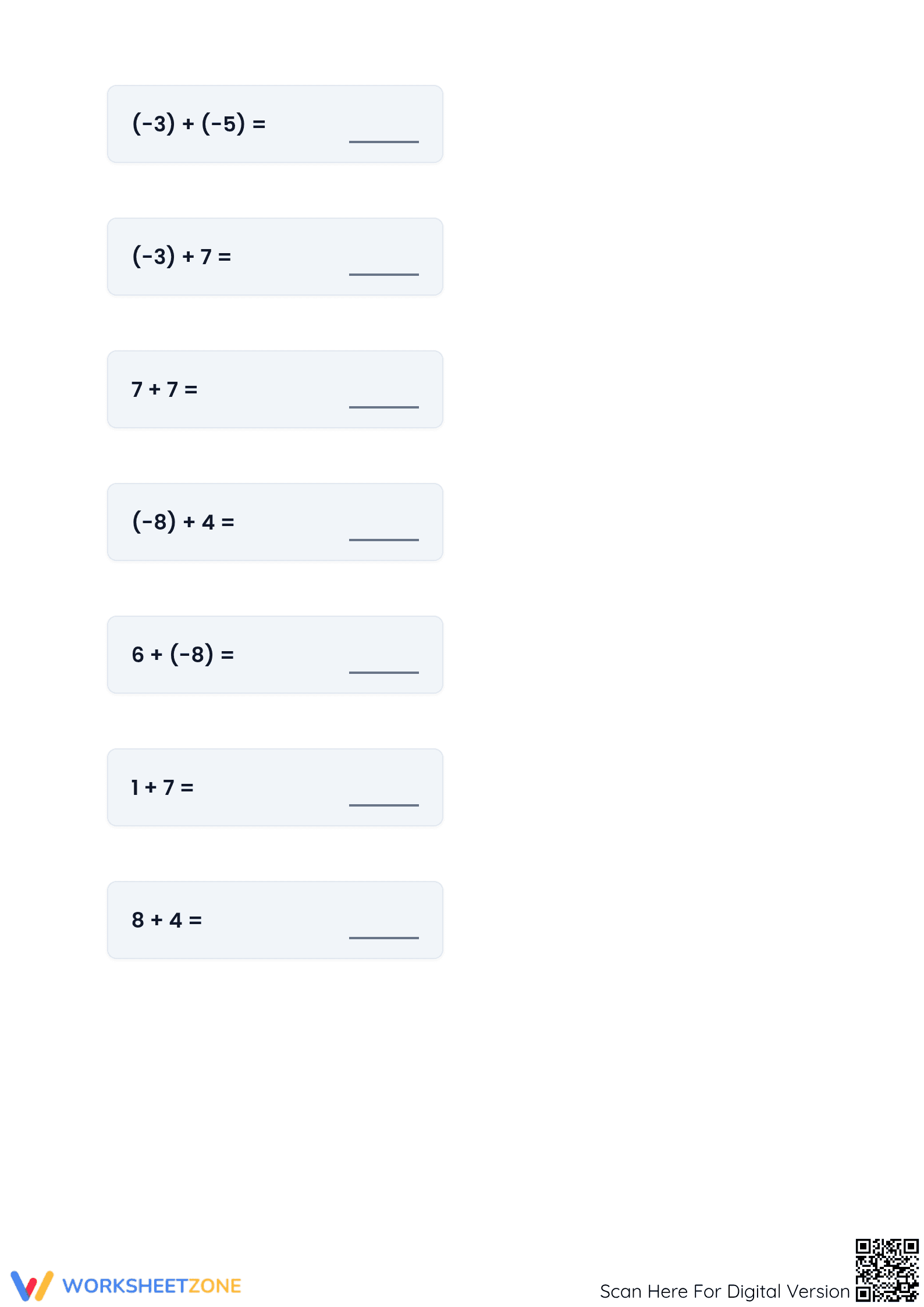
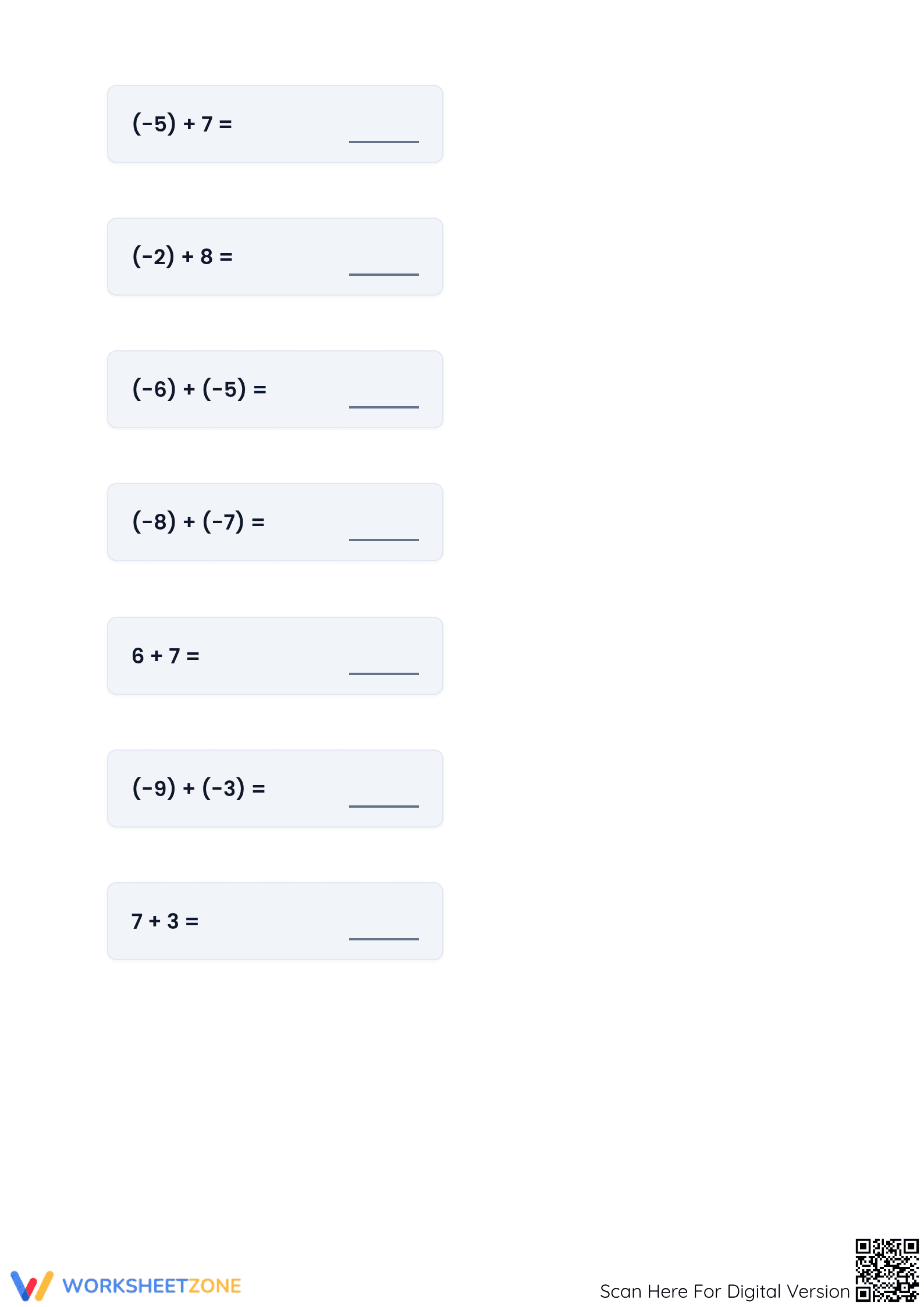
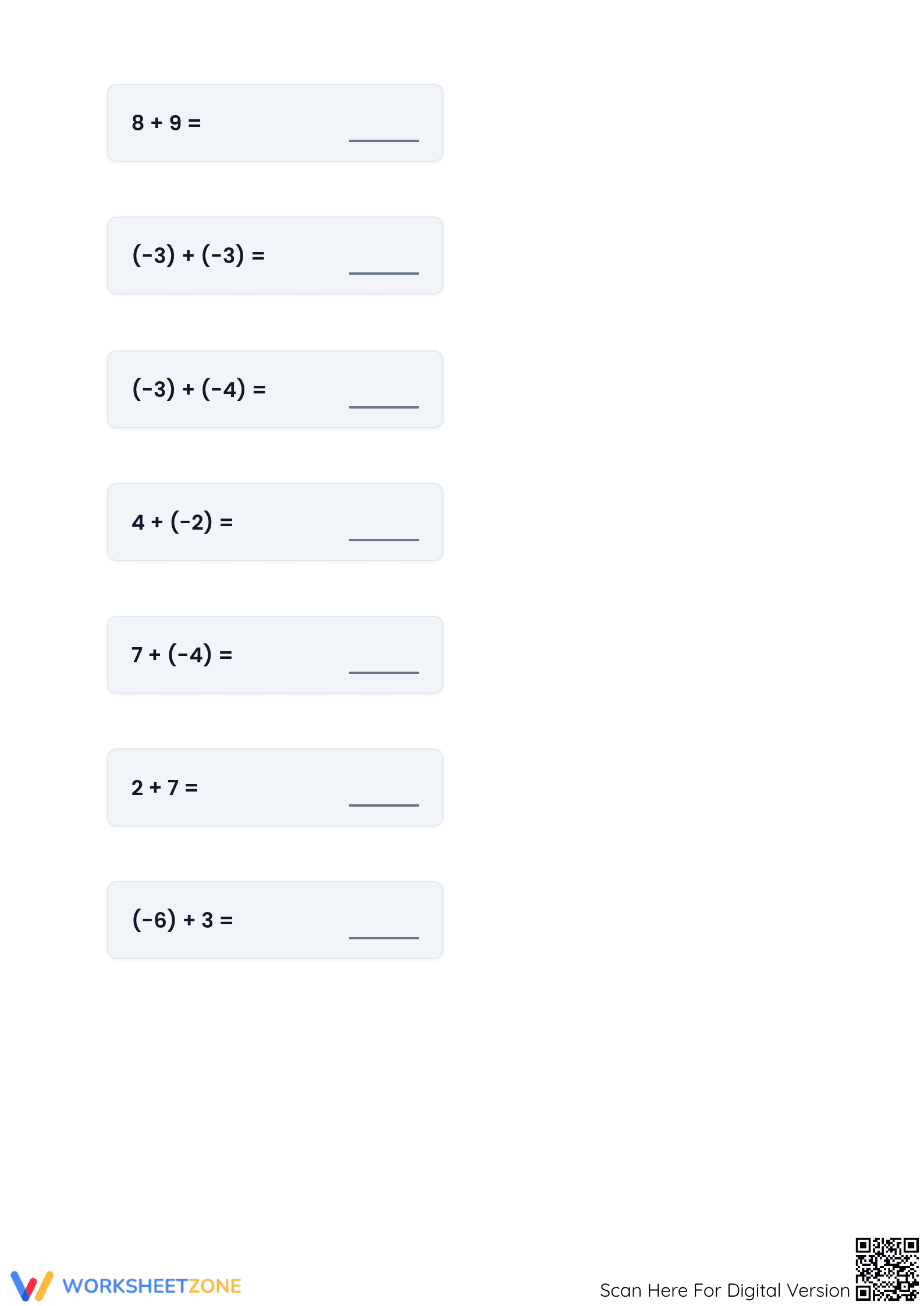
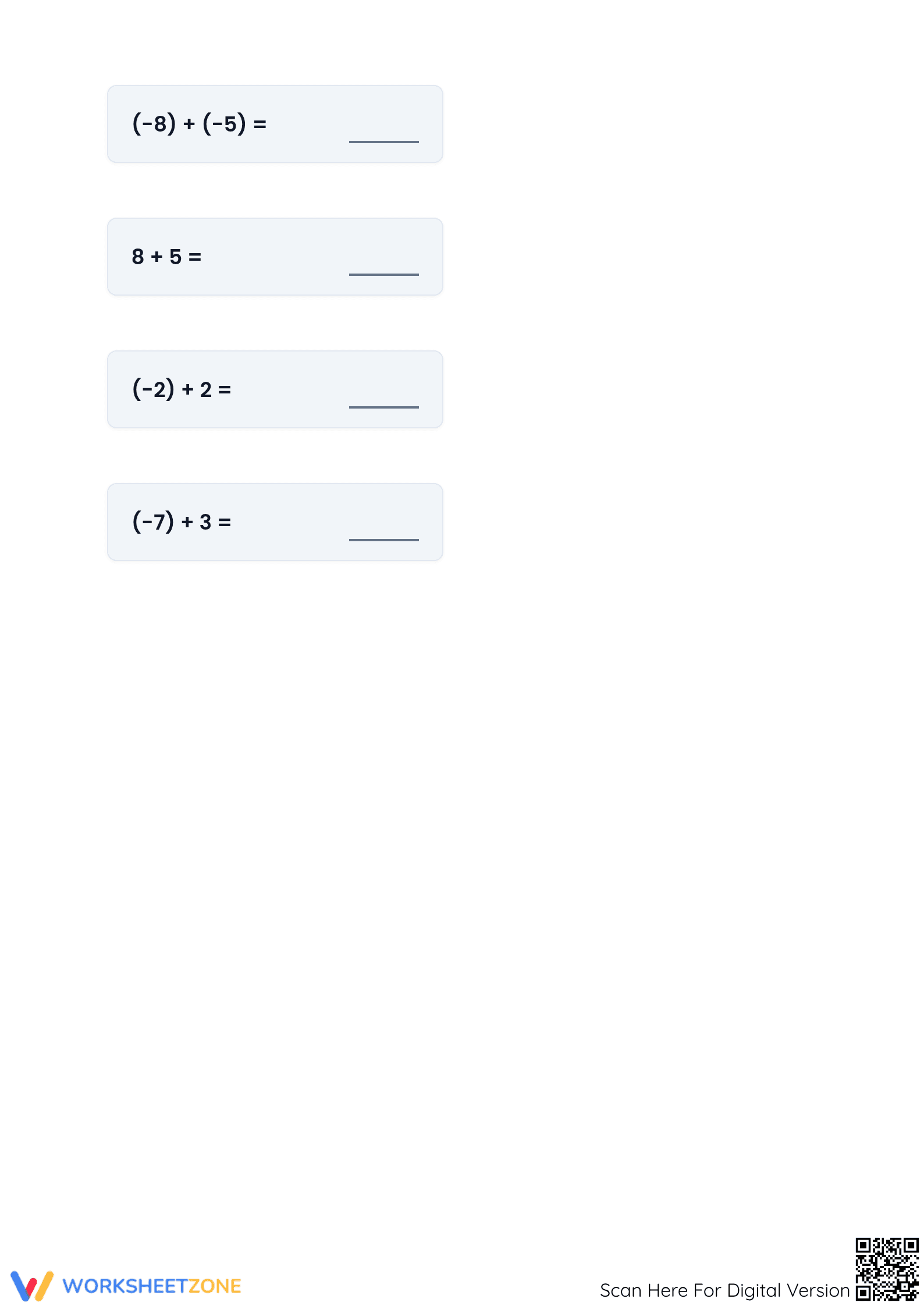

Essential Adding Integers Worksheet | Grades 6-8 Printable
Paste this activity's link or code into your existing LMS (Google Classroom, Canvas, Teams, Schoology, Moodle, etc.).
Students can open and work on the activity right away, with no student login required.
You'll still be able to track student progress and results from your teacher account.
Building fluency with signed numbers is essential for middle school students. This worksheet provides targeted practice in adding integers, focusing on equations involving negative numbers and parentheses. Students will develop mental strategies to calculate sums accurately within the range of -9 to 9, ensuring a solid foundation for algebraic success.
At a Glance
- Grade: 7 · Subject: Math
- Standard:
CCSS.MATH.CONTENT.7.NS.A.1— Apply understandings of addition to add rational numbers and represent on number lines.- Skill Focus: Integer addition with negative values
- Format: 5 pages · 30 problems · Answer key included · PDF
- Best For: Fluency drills and independent practice sets
- Time: 20–30 minutes
This 5-page PDF contains 30 integer addition problems. The layout is clean, providing white space for students to show work or use number line strategies. A complete answer key is provided for rapid grading or student self-assessment during classroom or home study sessions.
Skill Progression
- Guided Practice: Initial problems on page one help students recall basic integer rules and absolute value concepts.
- Supported Practice: Middle pages introduce complex variations with parentheses to denote negative addends, requiring careful sign attention.
- Independent Practice: Final sections provide mixed problems that challenge students to apply strategies without repetitive patterns.
This structured approach ensures students move from basic recognition to fluent computation.
Standards Alignment
This resource aligns to CCSS.MATH.CONTENT.7.NS.A.1, requiring students to extend addition understandings to rational numbers. It specifically addresses using properties of operations as strategies to add integers. This standard code can be copied directly into lesson plans, IEP goals, or district curriculum mapping tools.
How to Use It
Use this worksheet during the independent practice phase or as a formative assessment tool. Assign the first page after instruction to observe if students correctly apply sign rules. The expected completion time for the full set of 30 problems is approximately 25 minutes.
Who It's For
Designed for Grade 6-7 students encountering signed numbers and Grade 8 students needing a refresher. It pairs naturally with a number line anchor chart or a lesson on sign rules, providing necessary repetition for long-term skill retention and procedural fluency.
According to the RAND AIRS 2024 report on mathematics instructional materials, consistent practice with small-integer operations is a primary predictor of success in high school algebraic reasoning. This worksheet addresses that need by providing 30 focused problems on integer addition within the -9 to 9 range, specifically targeting the use of parentheses with negative numbers. This alignment with CCSS.MATH.CONTENT.7.NS.A.1 ensures that students are practicing the exact skills identified by national standards as essential for mathematical literacy. By isolating the operation of addition, the resource allows students to cement their understanding of sign rules without the cognitive load of multi-digit computation. This type of high-repetition practice is supported by NAEP findings which suggest that procedural fluency in basic operations directly correlates with higher-level problem-solving capabilities in later grades.


