


























Views
Downloads
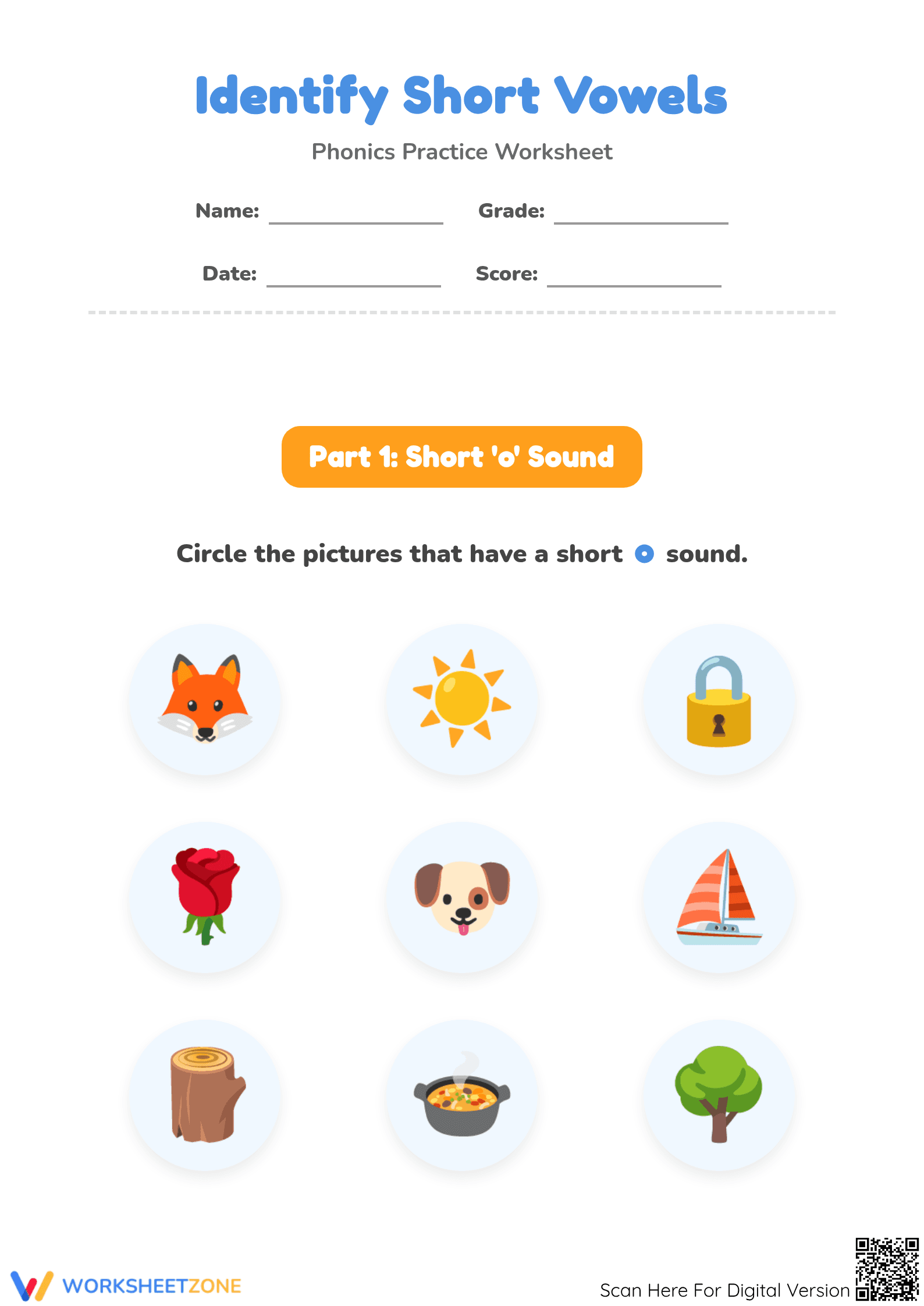
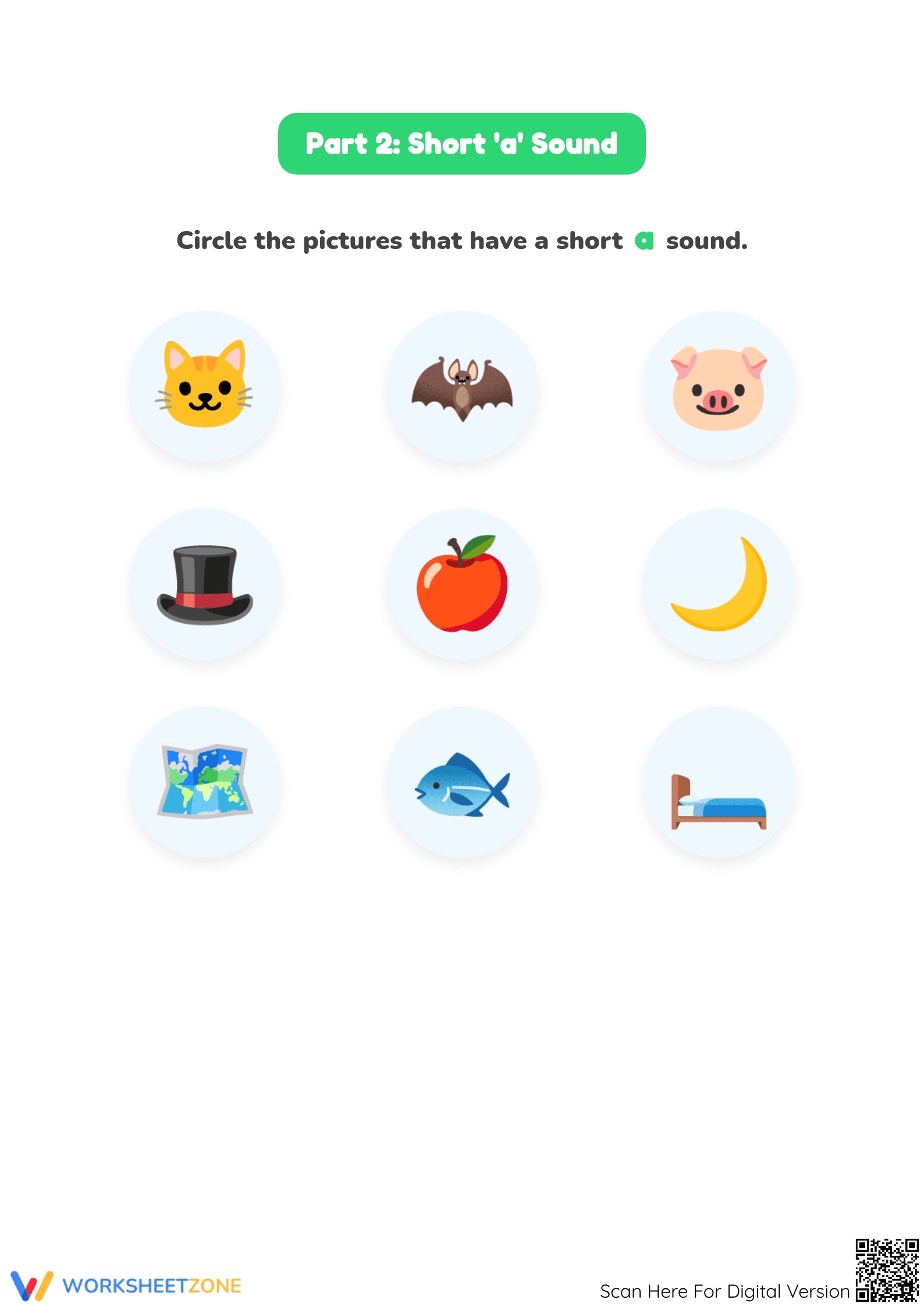
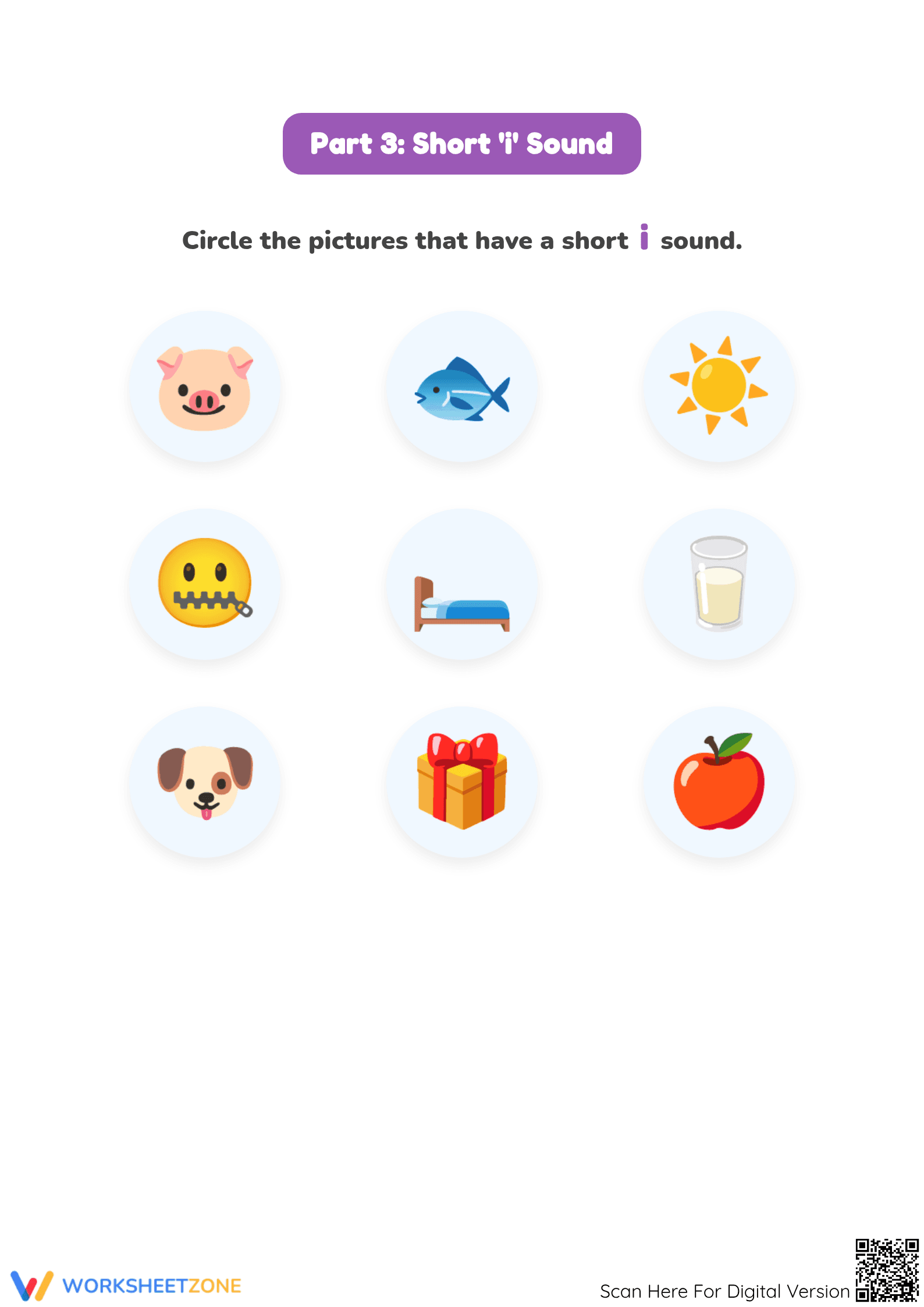
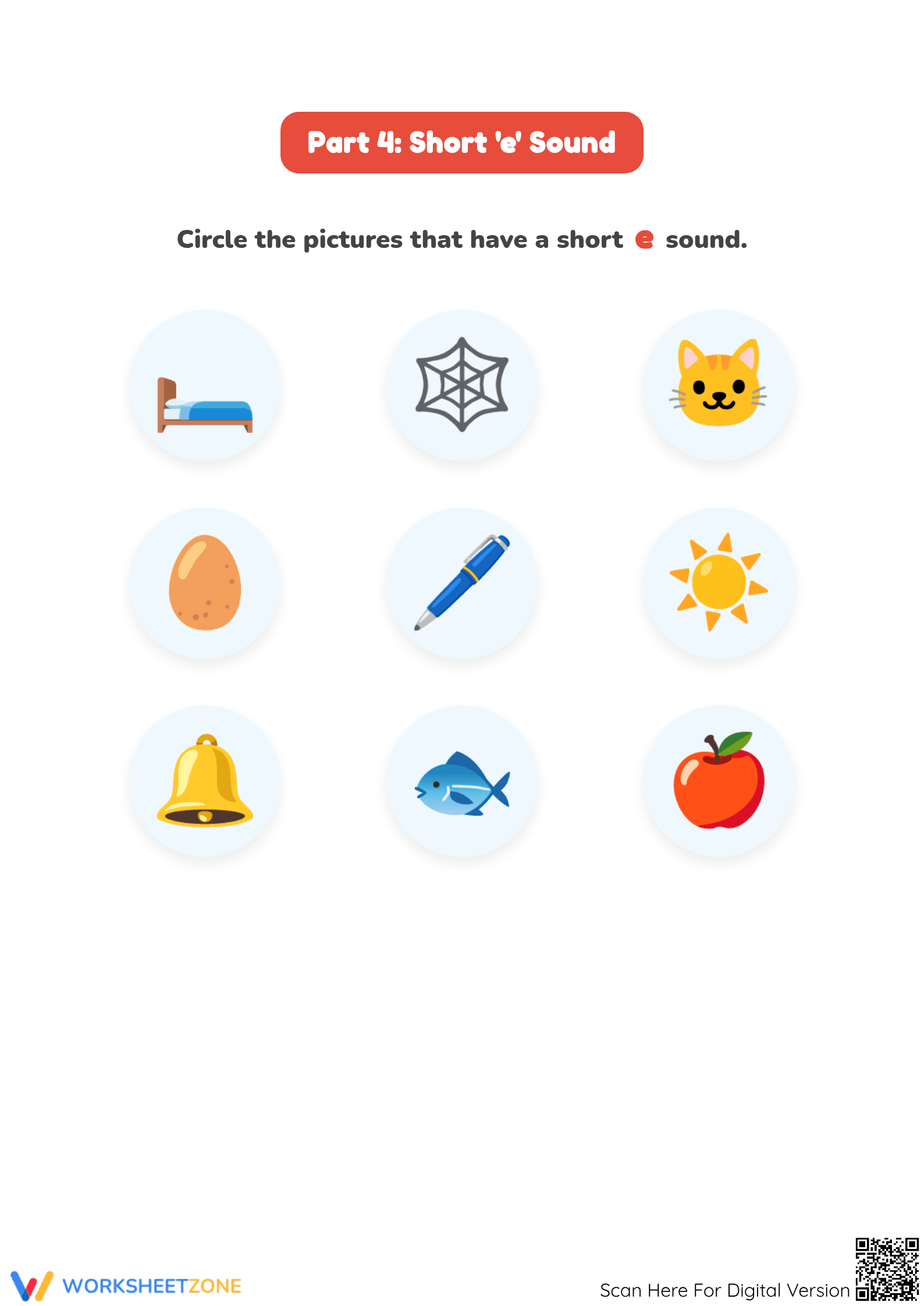

Essential Short Vowel Practice Worksheet | Grade K-1
Paste this activity's link or code into your existing LMS (Google Classroom, Canvas, Teams, Schoology, Moodle, etc.).
Students can open and work on the activity right away, with no student login required.
You'll still be able to track student progress and results from your teacher account.
Identifying short vowel sounds is a foundational milestone in early literacy development. This comprehensive phonics resource helps students master medial vowel sounds by connecting auditory recognition with clear visual representations. Students will strengthen their phonemic awareness as they isolate and identify the specific short vowel sounds within common CVC words and objects.
At a Glance
- Grade: K–1 · Subject: ELA Phonics
- Standard:
CCSS.ELA-LITERACY.RF.K.2.D— Isolate and pronounce medial vowel sounds in three-phoneme words- Skill Focus: Short Vowel Identification (a, e, i, o)
- Format: 4 pages · 36 problems · Answer key included · PDF
- Best For: Independent phonics practice or morning work
- Time: 15–20 minutes
This 4-page collection provides targeted practice for four major short vowel sounds. Each page is dedicated to a specific vowel, featuring nine high-quality icons that represent various objects. Students are tasked with circling only the images that contain the target short vowel sound. The clean layout and recognizable graphics ensure that young learners can focus entirely on the phonological task without unnecessary distractions.
Zero-Prep Workflow
- Print: Select the specific vowel page (a, e, i, or o) that aligns with your current phonics lesson. Total prep time is under 30 seconds.
- Distribute: Hand out the worksheets for independent desk work, literacy centers, or as a quick formative assessment during small group instruction.
- Review: Use the included visual answer keys to provide immediate feedback or allow students to self-check their progress in under 2 minutes.
This resource is strictly aligned to CCSS.ELA-LITERACY.RF.K.2.D, which requires students to isolate and pronounce the initial, medial vowel, and final sounds in spoken single-syllable words. It also supports RF.1.2.C as students progress into more complex decoding. Both standard codes can be copied directly into lesson plans, IEP goals, or district curriculum mapping tools.
To use this worksheet effectively, assign it after a direct instruction lesson on a specific vowel sound. For example, after introducing the short 'o' sound, use the first page as a quick check for understanding. Teachers should observe if students are vocalizing the names of the objects to hear the medial sound, which is a key indicator of phonemic processing. Completion typically takes 15 to 20 minutes depending on the student's familiarity with the icons.
This resource is designed for Kindergarten and Grade 1 students, but it is also highly effective for Preschoolers showing early reading readiness or English Language Learners (ELLs) who need visual support to build their phonics vocabulary. It pairs naturally with letter tiles, sound boxes, or anchor charts that display the short vowel mouth positions.
Fisher & Frey (2014) emphasize the importance of phonemic awareness in early reading development. This resource aligns with CCSS.ELA-LITERACY.RF.K.2.D by requiring students to isolate medial vowel sounds in CVC-patterned images. Research from the RAND AIRS 2024 report suggests that high-quality, targeted phonics practice significantly improves decoding skills in primary learners. By focusing on the "a, e, i, and o" sounds across 36 distinct visual tasks, this worksheet provides the repetition necessary for neural mapping of phoneme-grapheme correspondences. The systematic approach ensures that foundational literacy gaps are addressed early, providing a stable platform for future reading fluency and comprehension. This printable tool is an essential component of a balanced literacy framework for early childhood educators.


