


























Views
Downloads
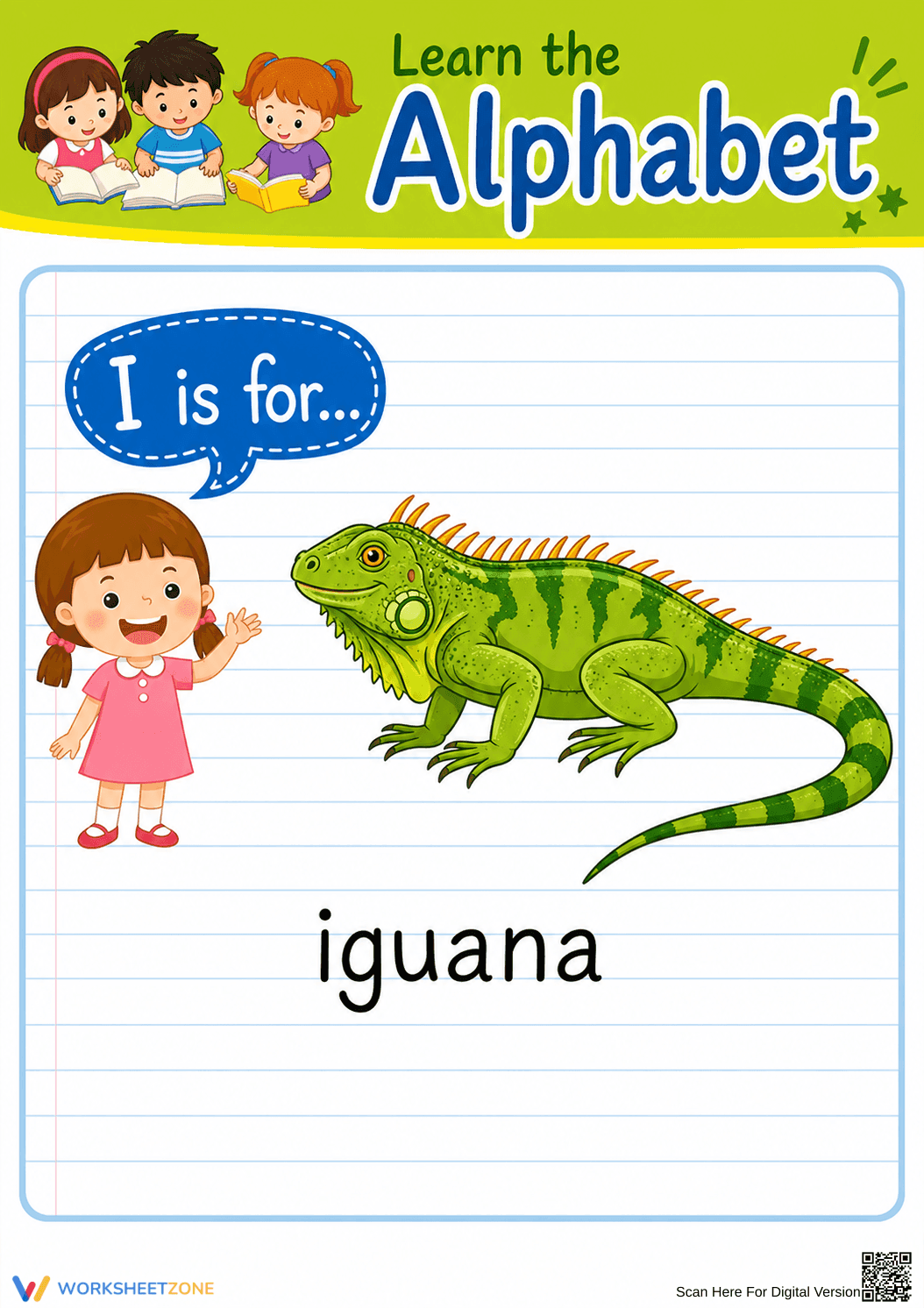

Printable Letter I Beginning Sound Worksheet | Grade K
Paste this activity's link or code into your existing LMS (Google Classroom, Canvas, Teams, Schoology, Moodle, etc.).
Students can open and work on the activity right away, with no student login required.
You'll still be able to track student progress and results from your teacher account.
This foundational phonics resource introduces early learners to the short vowel sound of the letter I. By connecting the visual letter to a familiar animal, students build essential letter-sound correspondence. This simple, engaging page helps kindergarteners recognize and vocalize beginning sounds with confidence.
At a Glance
- Grade: K · Subject: ELA
- Standard:
CCSS.ELA-LITERACY.RF.K.3.B— Associate sounds with common spellings for vowels- Skill Focus: Letter I Beginning Sound
- Format: 1 page · 1 visual task · No answer key needed · PDF
- Best For: Whole group introduction
- Time: 5–10 minutes
This single-page resource features a clear, large-print "I is for..." speech bubble alongside a vibrant illustration of an iguana. The target word is printed clearly at the bottom, providing a strong visual anchor for early readers. The uncluttered layout ensures students focus entirely on the target letter and its corresponding initial sound without unnecessary distractions.
This resource is designed for immediate classroom application with a streamlined zero-prep workflow:
- Print (1 minute): Generate the PDF and print copies for the class or display it on a smartboard.
- Distribute (1 minute): Hand out the pages to students for their phonics folders or coloring time.
- Review (3 minutes): Guide the class in chorally reading the letter and the word "iguana."
With under two minutes of teacher preparation, this page is highly suitable for quick morning work, phonics warm-ups, or emergency sub plans.
This material aligns directly with CCSS.ELA-LITERACY.RF.K.3.B, requiring students to associate the long and short sounds with common spellings (graphemes) for the five major vowels. It provides a concrete example of the short "i" sound. The standard code can be copied directly into lesson plans, IEP goals, or district curriculum mapping tools.
Teachers can use this page during direct instruction as an anchor chart to introduce the letter I. Alternatively, it serves well as a transition activity where students color the iguana while practicing the short vowel sound. As a formative assessment tip, listen to individual students pronounce the word "iguana" to check their articulation of the initial vowel. Expected completion time is brief, typically taking five to ten minutes.
This resource is primarily designed for kindergarten students beginning their phonics journey. It also supports preschool learners needing early exposure and first-grade students requiring a quick review of short vowel sounds. For differentiation, teachers can pair this visual with a tactile activity, such as tracing the letter in sand, or a direct instruction lesson on other short "i" words like "igloo" or "insect."
Establishing strong letter-sound correspondence is a critical milestone in early literacy development. According to Fisher & Frey (2014), explicit phonics instruction that pairs visual symbols with familiar vocabulary significantly accelerates decoding skills in young readers. This resource directly targets CCSS.ELA-LITERACY.RF.K.3.B, helping students associate sounds with common spellings for vowels. By focusing on the Letter I beginning sound through a clear, engaging visual of an iguana, educators provide the necessary scaffolding for phonemic awareness. Consistent exposure to these foundational elements reduces cognitive load during later reading tasks, allowing students to focus on reading comprehension rather than basic decoding. Integrating targeted visual aids into daily phonics routines ensures that all learners, including those requiring additional support, build a robust phonetic foundation essential for future academic success and reading fluency.


