


























Views
Downloads

Printable Homeostasis Worksheet | Grade 9-10 Biology
Paste this activity's link or code into your existing LMS (Google Classroom, Canvas, Teams, Schoology, Moodle, etc.).
Students can open and work on the activity right away, with no student login required.
You'll still be able to track student progress and results from your teacher account.
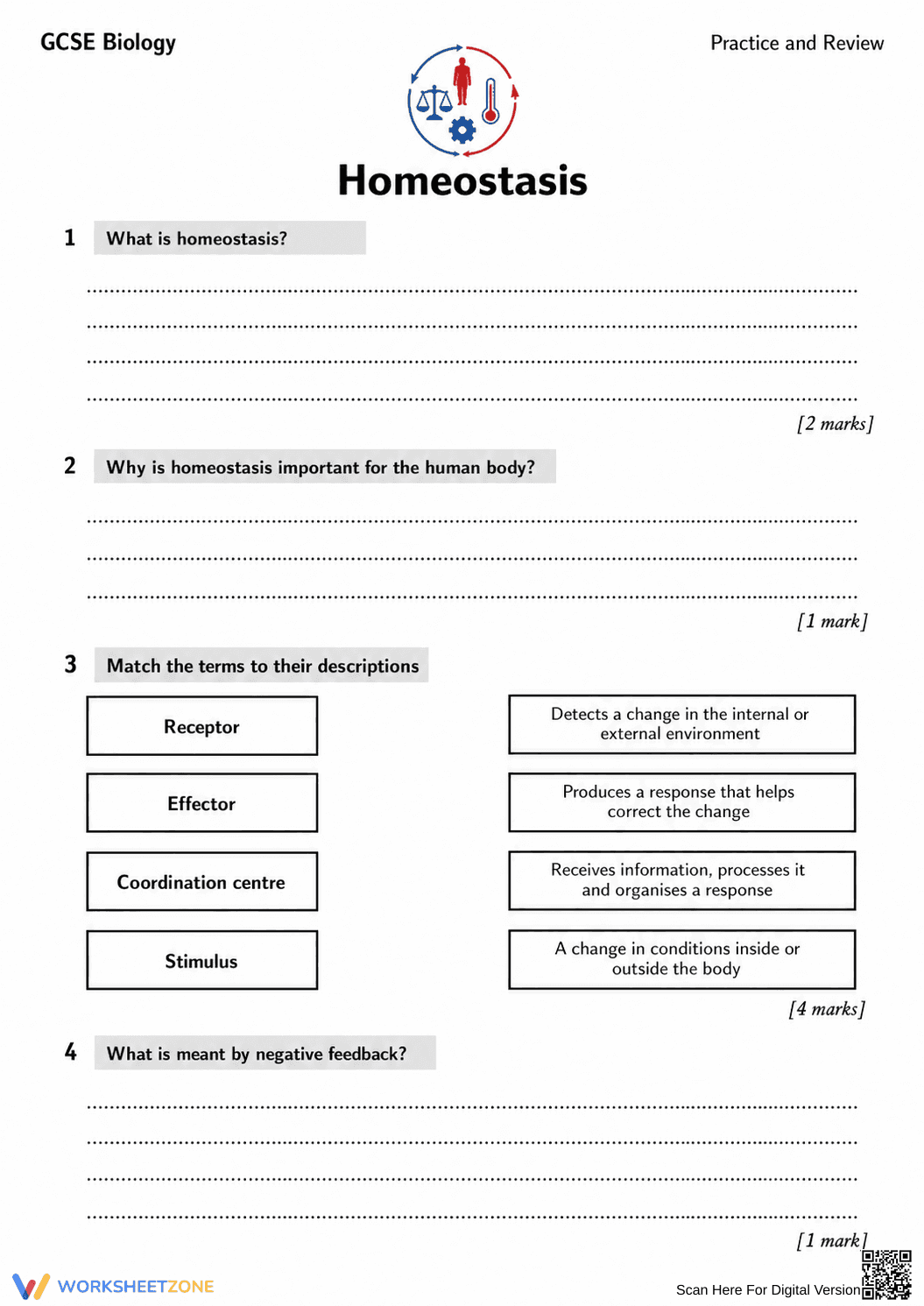
This high school biology worksheet gives students focused practice on the core concepts of homeostasis and negative feedback. By defining key terms and identifying the roles of receptors and effectors, students build a foundational understanding of how the human body maintains internal balance.
At a Glance
- Grade: 9-10 · Subject: Biology
- Standard:
HS-LS1-3— Understand how feedback mechanisms maintain internal balance- Skill Focus: Homeostasis and negative feedback
- Format: 2 pages · 6 problems · Answer key included · PDF
- Best For: Independent practice or review
- Time: 15–20 minutes
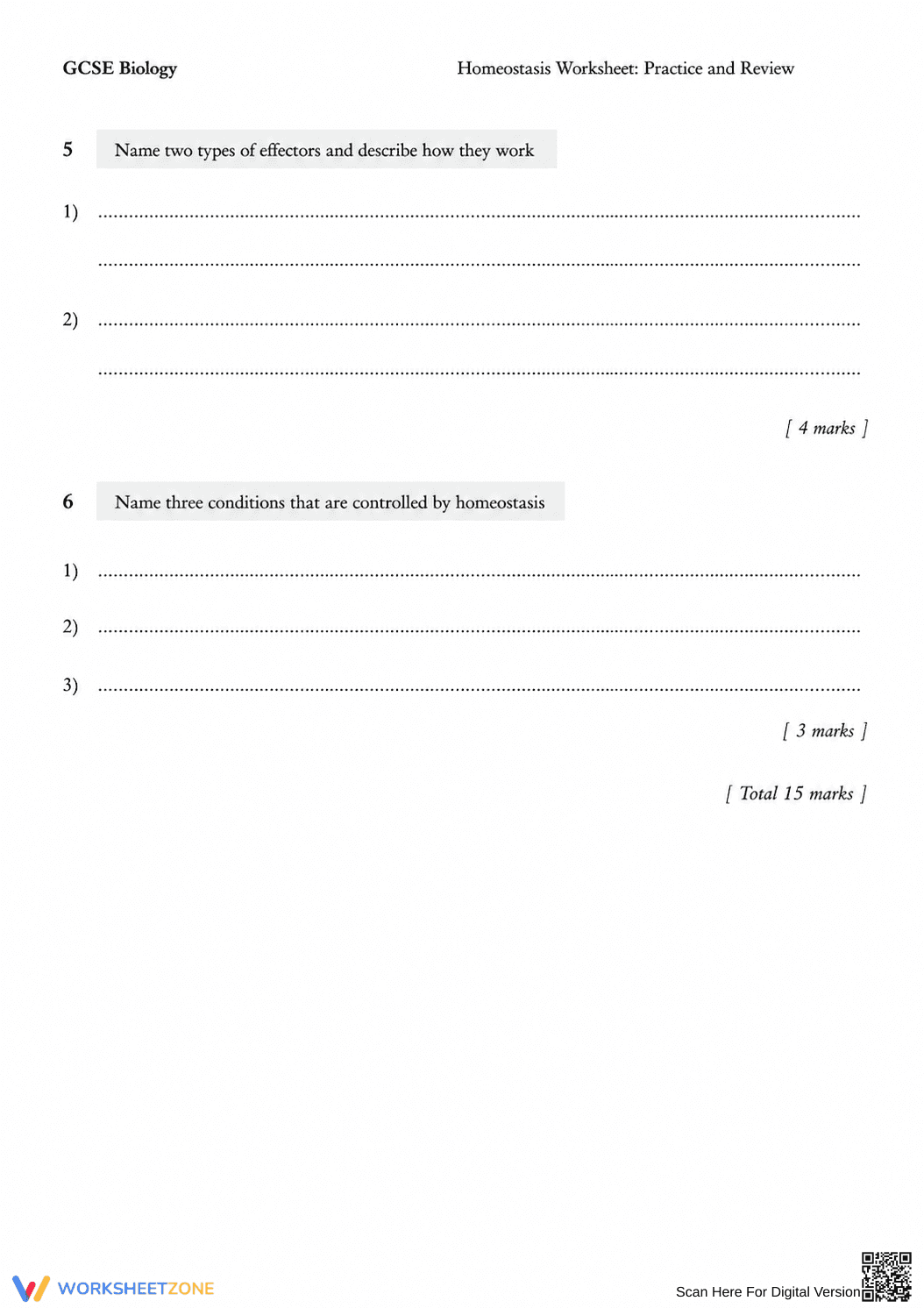
Inside this resource, educators will find a streamlined, two-page assessment covering essential regulatory processes. The layout features six distinct tasks, including short-answer definitions, a four-part vocabulary matching section for stimulus-response components, and targeted questions on effectors and controlled conditions. A complete answer key is provided to ensure accurate and efficient grading.
This resource is designed for immediate classroom implementation with a zero-prep workflow:
- Print (1 minute): Download the PDF and print copies for your biology roster. The clean formatting saves ink.
- Distribute (1 minute): Hand out the two-page packet as a warm-up, homework assignment, or sub-plan activity.
- Review (3 minutes): Use the included answer key to quickly check student comprehension of negative feedback loops.
Total teacher preparation requires under two minutes, making it an ideal emergency substitute plan or quick formative assessment.
This material aligns with HS-LS1-3, requiring students to understand how feedback mechanisms maintain homeostasis. It supports foundational knowledge needed to plan and conduct investigations regarding biological regulation. Both standard codes can be copied directly into lesson plans, IEP goals, or district curriculum mapping tools.
Deploy this worksheet immediately following direct instruction on the human body's regulatory systems to solidify new vocabulary. Alternatively, assign it as a comprehensive unit review before a summative exam. While students work, teachers can circulate and use the matching activity as a quick formative assessment to identify misconceptions about coordination centers versus effectors. Expected completion time ranges from 15 to 20 minutes.
This practice sheet is optimized for high school biology students, specifically those in grades 9 and 10 encountering physiological feedback loops for the first time. The clear, uncluttered layout provides built-in scaffolding for students who benefit from structured response spaces. It pairs perfectly with an introductory lecture or a textbook chapter on human body systems.
Mastering biological regulation requires explicit vocabulary instruction and structured recall. This resource directly targets HS-LS1-3, helping students understand how feedback mechanisms maintain internal balance within the human body. According to a 2024 report by EdReports, science curricula that integrate targeted vocabulary practice alongside conceptual application questions significantly improve student retention of complex physiological processes. By requiring learners to actively match terms like receptor, stimulus, and effector to their precise functional definitions, this worksheet reinforces the cognitive links necessary for higher-order scientific application. The strategic combination of short-answer explanations and direct matching tasks ensures that students do not merely memorize isolated terms, but fully comprehend their critical role within the broader context of negative feedback loops. This evidence-based approach effectively bridges the gap between basic memorization and the analytical skills required for advanced scientific inquiry and laboratory investigations.


