


























0
Views
0
Downloads

0.0
0
Save
0 Likes
Share
Hispanic Heritage Month Bingo for Classrooms
0 Views
0 Downloads
Paste this activity's link or code into your existing LMS (Google Classroom, Canvas, Teams, Schoology, Moodle, etc.).
Students can open and work on the activity right away, with no student login required.
You'll still be able to track student progress and results from your teacher account.
Information
Description
What It Is:
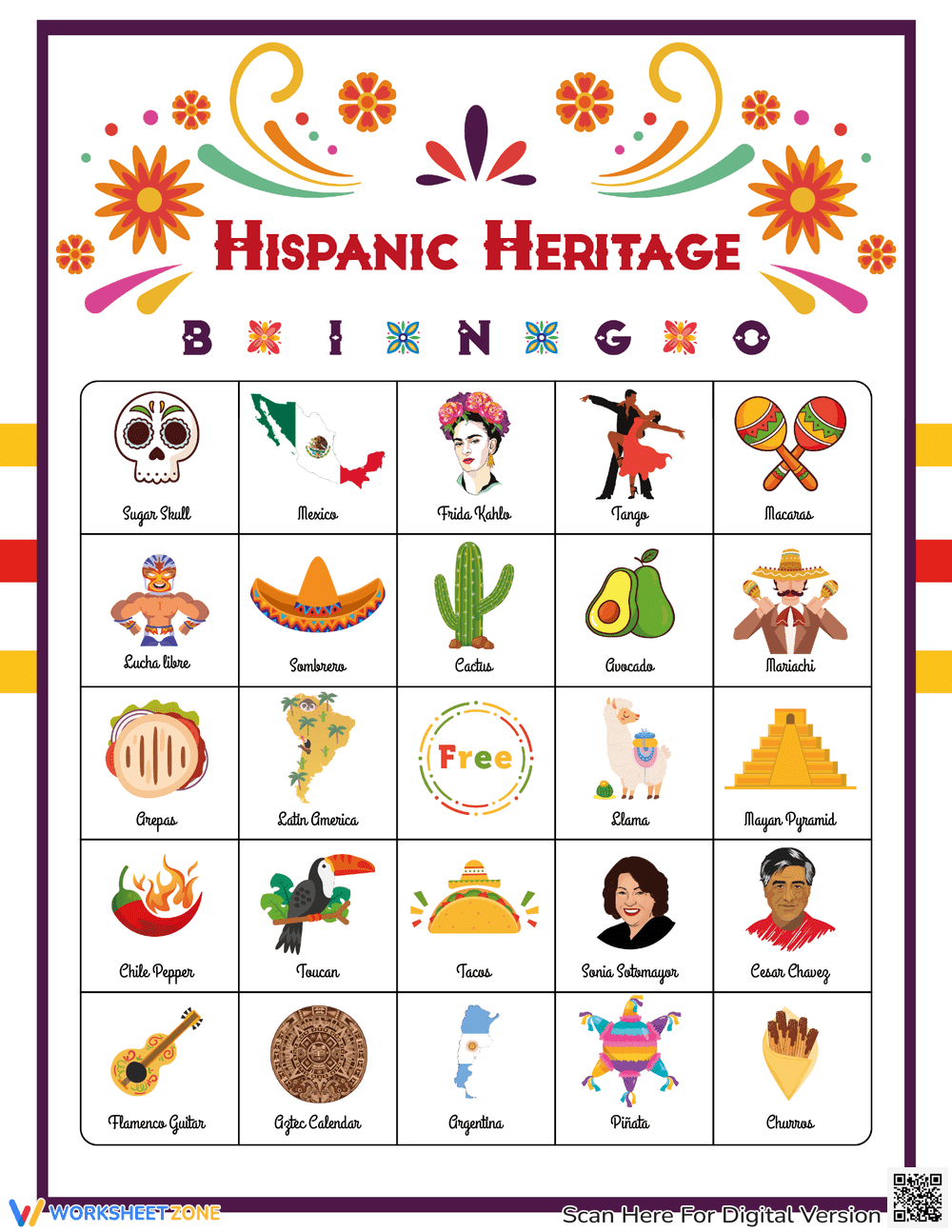
This is a Hispanic Heritage Bingo worksheet. It features images related to Hispanic culture, including a sugar skull, the flag of Mexico, Frida Kahlo, tango dancers, maracas, a luchador, a sombrero, a cactus, an avocado, a mariachi, pupusas, a map of Latin America, a llama, a Mayan pyramid, a chili pepper, a toucan, tacos, Sonia Sotomayor, Cesar Chavez, a flamenco guitar, Aztec calendar, Argentina, a piñata, and churros. The bingo card is organized into columns labeled B, I, N, G, and O.
Grade Level Suitability:
This worksheet is suitable for elementary school students (Grades 1-5). The images and concepts are generally accessible and the bingo format is engaging for this age group. It could also be used in older grades (6-8) as a fun introductory activity.
Why Use It:
This worksheet introduces students to various aspects of Hispanic culture, including traditions, food, landmarks, and influential figures. It promotes visual recognition and vocabulary development in a fun, interactive way. It can also be used to celebrate and learn about Hispanic Heritage Month.
How to Use It:
To use this worksheet, call out the name of each image. Students mark the corresponding image on their bingo card. The first student to get bingo (a line horizontally, vertically, or diagonally) wins. A 'free' space is already marked.
Target Users:
This worksheet is designed for elementary school students, ESL students, and anyone interested in learning about Hispanic culture. It can be used by teachers in the classroom or by parents at home.
This is a Hispanic Heritage Bingo worksheet. It features images related to Hispanic culture, including a sugar skull, the flag of Mexico, Frida Kahlo, tango dancers, maracas, a luchador, a sombrero, a cactus, an avocado, a mariachi, pupusas, a map of Latin America, a llama, a Mayan pyramid, a chili pepper, a toucan, tacos, Sonia Sotomayor, Cesar Chavez, a flamenco guitar, Aztec calendar, Argentina, a piñata, and churros. The bingo card is organized into columns labeled B, I, N, G, and O.
Grade Level Suitability:
This worksheet is suitable for elementary school students (Grades 1-5). The images and concepts are generally accessible and the bingo format is engaging for this age group. It could also be used in older grades (6-8) as a fun introductory activity.
Why Use It:
This worksheet introduces students to various aspects of Hispanic culture, including traditions, food, landmarks, and influential figures. It promotes visual recognition and vocabulary development in a fun, interactive way. It can also be used to celebrate and learn about Hispanic Heritage Month.
How to Use It:
To use this worksheet, call out the name of each image. Students mark the corresponding image on their bingo card. The first student to get bingo (a line horizontally, vertically, or diagonally) wins. A 'free' space is already marked.
Target Users:
This worksheet is designed for elementary school students, ESL students, and anyone interested in learning about Hispanic culture. It can be used by teachers in the classroom or by parents at home.


