




























Views
Downloads
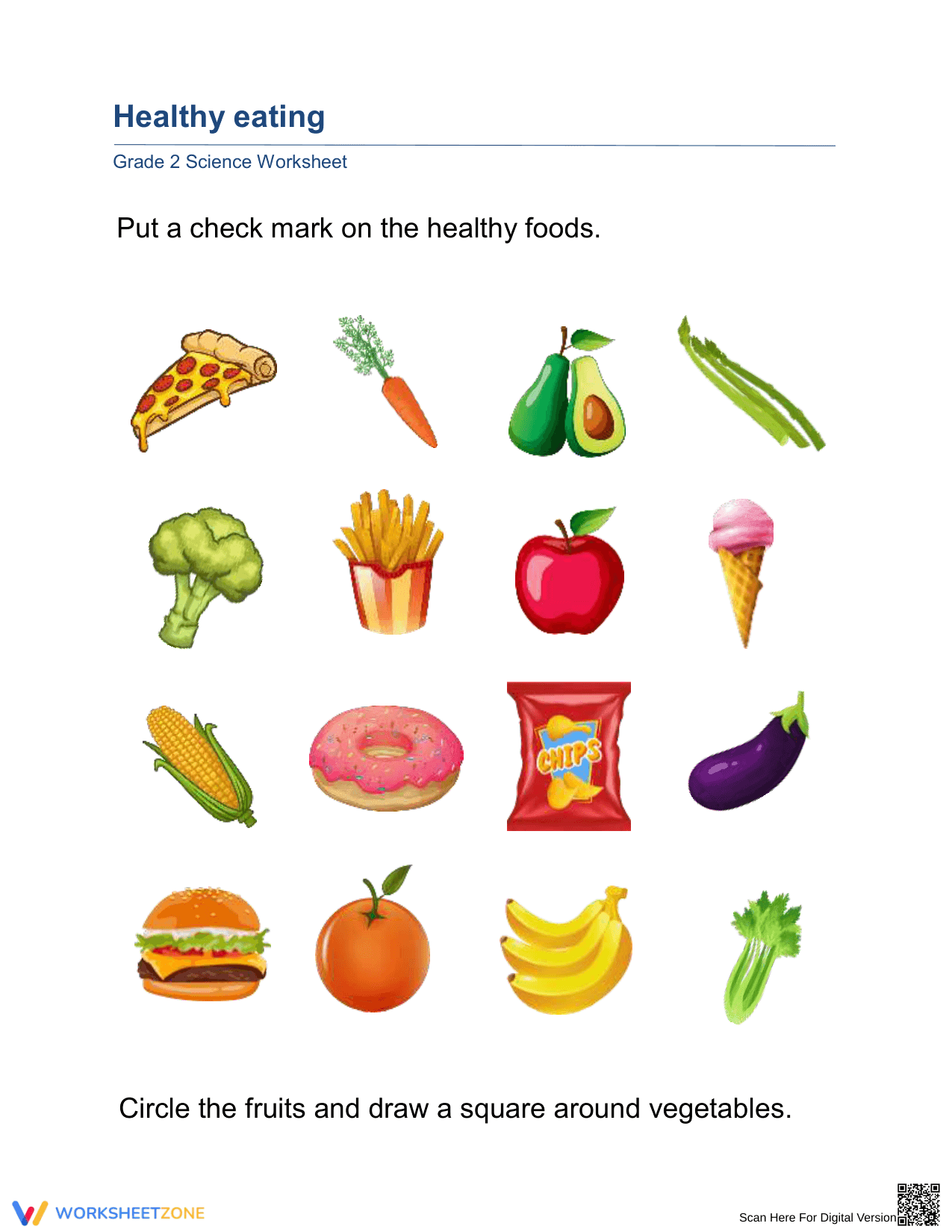


Essential Healthy Eating Worksheet | Grade 2 Science

Paste this activity's link or code into your existing LMS (Google Classroom, Canvas, Teams, Schoology, Moodle, etc.).
Students can open and work on the activity right away, with no student login required.
You'll still be able to track student progress and results from your teacher account.
This interactive Grade 2 healthy eating worksheet helps young learners differentiate between nutritious food choices and occasional treats. Students engage with colorful visuals to identify healthy options while categorizing fruits and vegetables into specific groups. It is a foundational tool for teaching wellness, nutrition, and the importance of a balanced diet through active identification and sorting tasks.
At a Glance
- Grade: 2 · Subject: Science / Health
- Standard:
CCSS.ELA-LITERACY.L.2.5— Identify real-life connections between words and their use through categorizing foods.- Skill Focus: Nutrition and Food Group Classification
- Format: 2 pages total · 16 individual problems · Answer key included · Printable PDF
- Best For: Primary health lessons, science center rotations, and nutrition assessments.
- Time: 15–20 minutes of classroom instruction
What's Inside
The resource consists of a single-page student activity and a corresponding comprehensive answer key. Students are presented with sixteen high-quality illustrations of common food items, ranging from fresh produce like carrots and avocados to snacks like chips and donuts. The worksheet features three distinct instruction sets: checking healthy foods, circling fruits, and drawing squares around vegetables to ensure engagement with the content.
Zero-Prep Workflow
This classroom-ready PDF is designed for immediate implementation with minimal teacher intervention. The three-step workflow is simple: print the required copies, distribute them for independent work, and use the included answer key for rapid review. Total preparation time remains under two minutes, making it ideal for busy mornings or sudden substitute teacher plans.
Standards Alignment
The primary alignment is to `CCSS.ELA-LITERACY.L.2.5`, which requires students to demonstrate understanding of word relationships and nuances in word meanings. By identifying real-life connections between food items and their nutritional categories, students build essential vocabulary and conceptual frameworks for health education. This standard code can be copied directly into lesson plans, IEP goals, or district curriculum mapping tools.
How to Use It
Use this worksheet as a formative assessment after a direct instruction lesson on nutrition. During the activity, circulate the room to observe if students can distinguish between sometimes foods and everyday foods. It also serves as a perfect entry task or a quiet activity during health center rotations, typically requiring twenty minutes for completion.
Who It's For
This resource is tailored for Grade 1 through Grade 3 students beginning their journey into health education and biology. It offers built-in differentiation for visual learners who benefit from clear, recognizable imagery rather than dense text. The worksheet pairs naturally with a "Nutrition for Kids" reading passage or a classroom anchor chart displaying the different food groups and their benefits.
According to the National Assessment of Educational Progress (NAEP), early childhood health literacy is a critical predictor of long-term academic success and physical well-being. This worksheet addresses the CCSS.ELA-LITERACY.L.2.5 standard by requiring students to apply categorization skills to the essential real-world domain of nutrition. Research from Fisher & Frey (2014) emphasizes that visual scaffolds and categorization tasks are vital for reinforcing academic vocabulary and conceptual mastery in the primary grades. By engaging with these sixteen diverse food items, students develop the ability to classify information based on specific criteria—a core competency across both Science and English Language Arts frameworks. This printable resource provides a structured environment for students to practice identifying healthy habits while building the cognitive flexibility needed for more complex scientific inquiry. Educators can use these results to gauge student readiness for deeper discussions regarding nutrients and body systems.


