




























Views
Downloads

Grade 1 Name Tracing — Printable No-Prep Worksheet

Paste this activity's link or code into your existing LMS (Google Classroom, Canvas, Teams, Schoology, Moodle, etc.).
Students can open and work on the activity right away, with no student login required.
You'll still be able to track student progress and results from your teacher account.
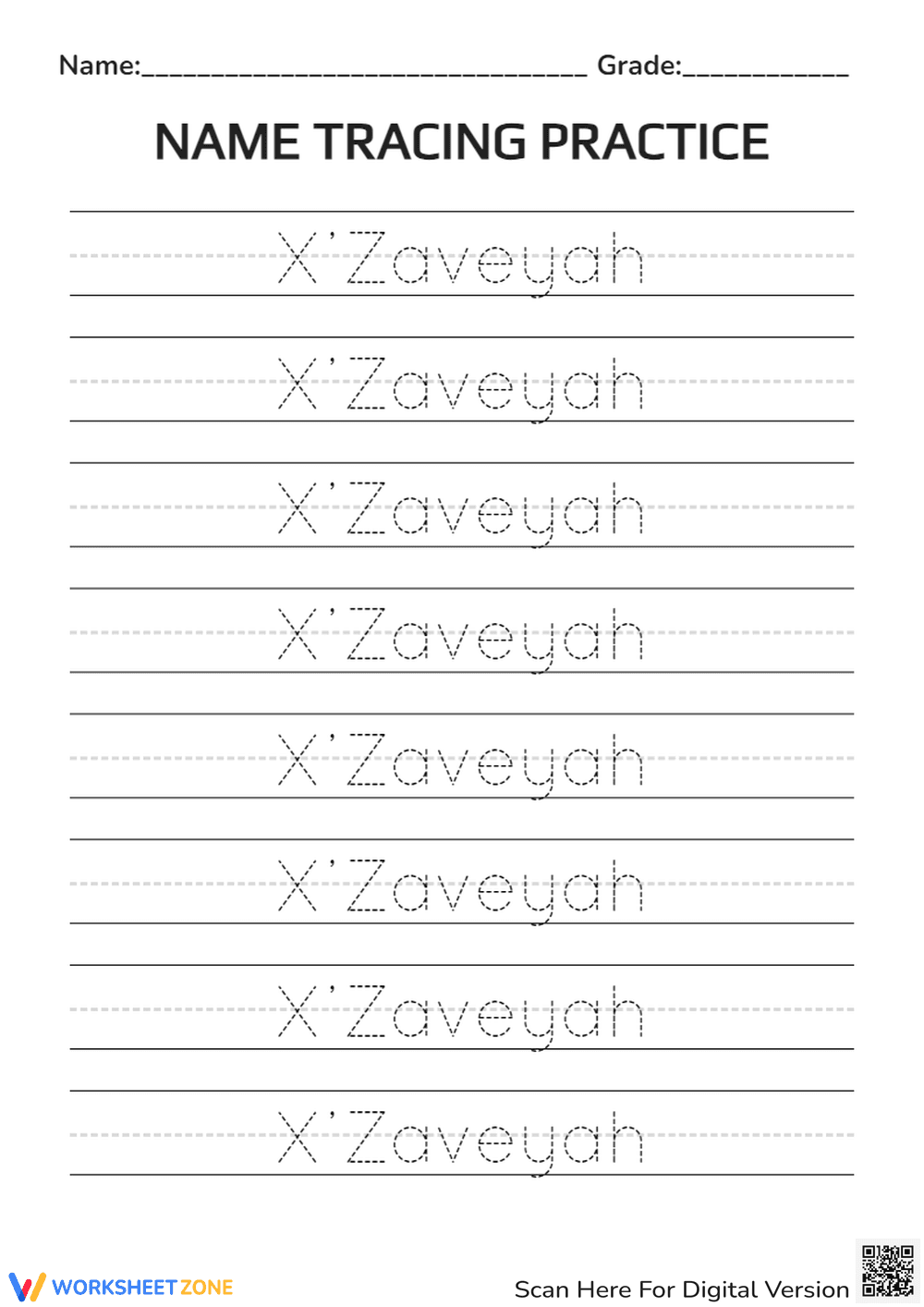
This Grade 1 handwriting worksheet helps students develop fine motor skills and letter recognition through focused name tracing practice. By tracing the custom name "X'Zaveyah" on primary lines, early learners build muscle memory and proper letter formation, setting a strong foundation for independent writing and early literacy success.
At a Glance
- Grade: 1 · Subject: Handwriting
- Standard:
CCSS.ELA-LITERACY.L.1.1.A— Print all upper- and lowercase letters- Skill Focus: Name Tracing
- Format: 2 pages · 8 problems · No answer key · PDF
- Best For: Morning work and handwriting practice
- Time: 10–15 minutes
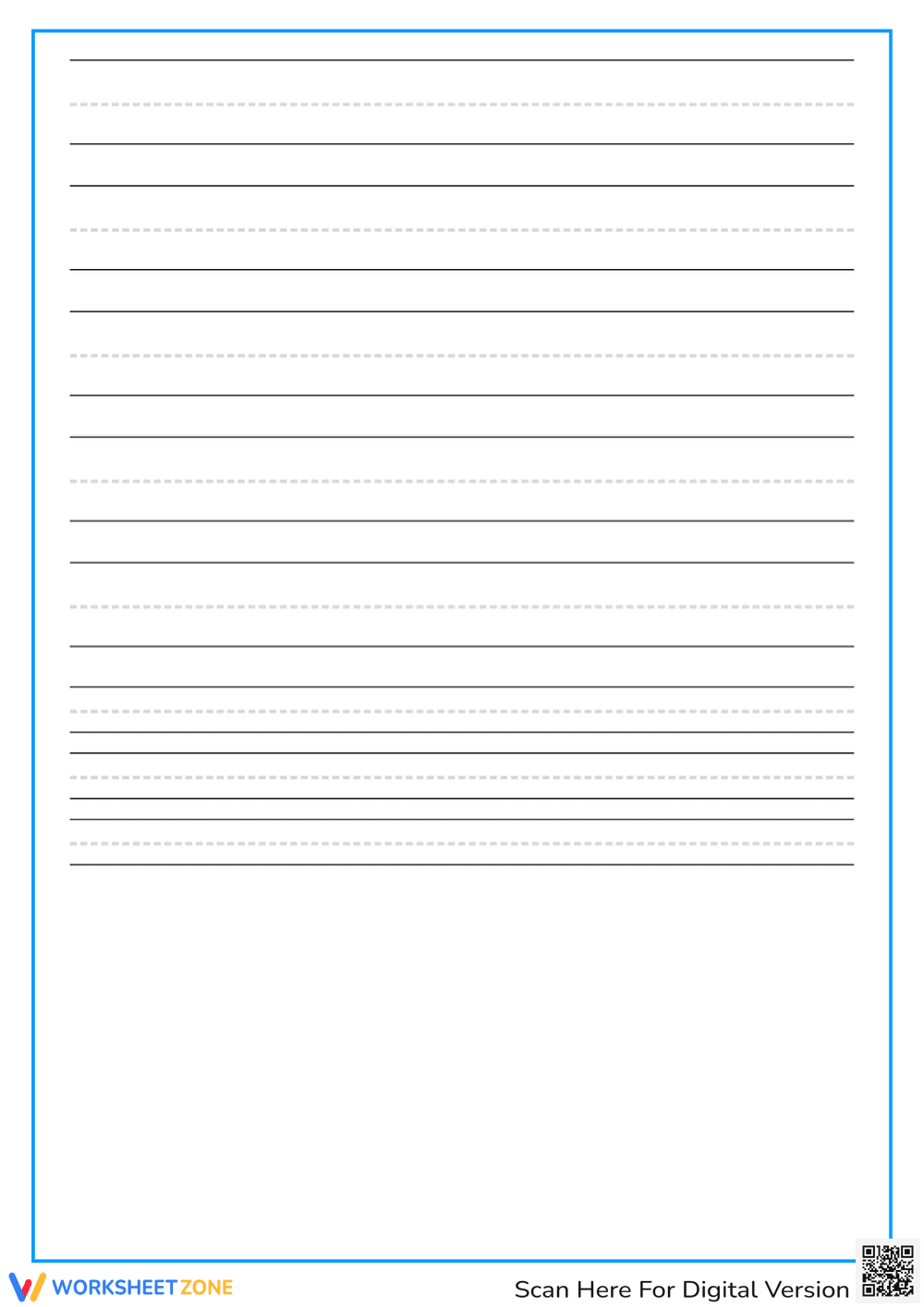
This two-page printable resource features a dedicated tracing page and a blank practice page. The first page includes eight rows of dotted-line text for the name "X'Zaveyah," perfectly sized on primary writing lines with a dashed middle line to guide letter height. The second page provides blank primary lines, allowing students to transition from guided tracing to independent writing practice without needing additional materials.
This resource is designed for immediate classroom use with a simple zero-prep workflow.
- Print (1 minute): Simply download the PDF and print the two-page set for your student.
- Distribute (1 minute): Hand out the worksheet along with pencils or fine-tip markers.
- Review (1 minute): Quickly check the student's grip and starting points before they begin tracing.
Total teacher prep time is under two minutes, making this an ideal activity for morning work, literacy centers, or even a quick addition to a substitute teacher plan.
This worksheet aligns with CCSS.ELA-LITERACY.L.1.1.A, which requires students to print all upper- and lowercase letters. By practicing a specific name with a mix of capital and lowercase letters, as well as punctuation like an apostrophe, students reinforce their understanding of proper letter formation and spacing. Both standard codes can be copied directly into lesson plans, IEP goals, or district curriculum mapping tools.
Teachers can use this worksheet as a daily morning warm-up before direct instruction in phonics or writing. It also serves as an excellent independent center activity while the teacher works with small groups. As a formative assessment tip, observe the student's pencil grip and stroke direction while they trace the first few letters to ensure they are not forming letters backward. Expected completion time is 10 to 15 minutes.
This resource is primarily designed for Grade 1 and Grade 2 students who are refining their handwriting and fine motor skills. It is easily differentiated by having students trace with a pencil first, then trace over it again with a colored marker for extra practice. This worksheet pairs naturally with alphabet anchor charts or a direct instruction lesson on proper letter sizing and spacing.
Developing automaticity in handwriting is a critical component of early literacy that directly impacts a student's ability to express ideas in writing. This worksheet supports CCSS.ELA-LITERACY.L.1.1.A by helping students print all upper- and lowercase letters accurately. According to Fisher & Frey (2014), providing structured, repetitive practice with familiar words—such as a student's own name—significantly reduces the cognitive load required for letter formation. This allows young writers to eventually focus their mental energy on content and vocabulary rather than the mechanics of writing. By utilizing guided tracing lines before moving to independent practice, educators can ensure that students build the correct muscle memory. Regular, targeted handwriting practice remains an essential instructional strategy for fostering confident, fluent writers in the primary grades.


