


























Views
Downloads
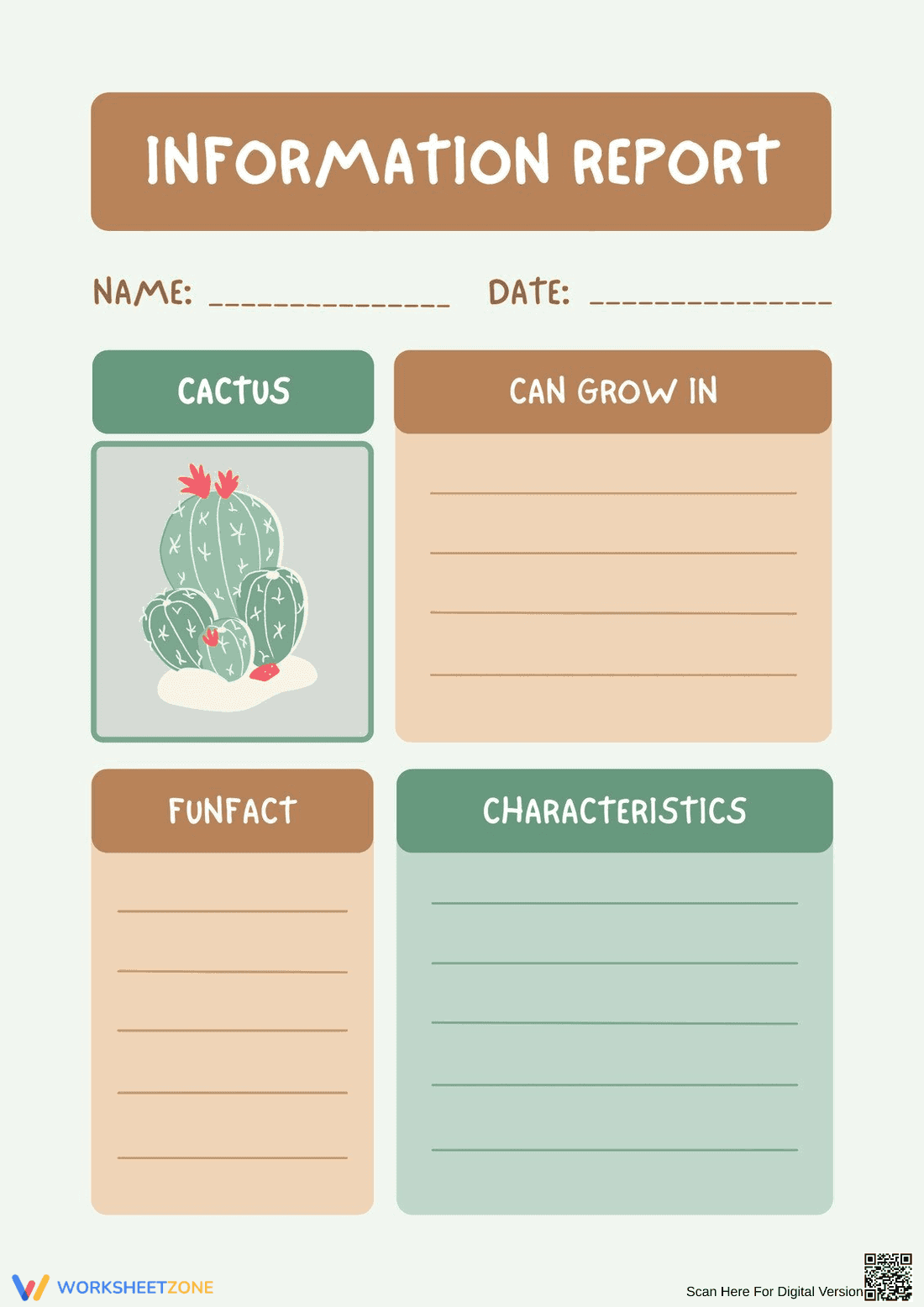

Cactus Information Report Printable | Grade 2 ELA
Paste this activity's link or code into your existing LMS (Google Classroom, Canvas, Teams, Schoology, Moodle, etc.).
Students can open and work on the activity right away, with no student login required.
You'll still be able to track student progress and results from your teacher account.
This Grade 2 informational writing worksheet gives students a structured graphic organizer to research and record facts about cacti. By breaking down the writing process into manageable sections, young learners can easily categorize their findings on habitat, characteristics, and fun facts before drafting a complete report.
At a Glance
- Grade: 2 · Subject: ELA
- Standard:
CCSS.ELA-LITERACY.W.2.2— Write informative texts using facts to develop points- Skill Focus: Informational Writing and Fact Organization
- Format: 1 page · 3 writing tasks · No answer key · PDF
- Best For: Independent research practice
- Time: 20–30 minutes
Inside this single-page resource, teachers will find a minimalist graphic organizer with a cactus theme. It features three writing zones: "Can Grow In" for habitat, "Characteristics" for physical traits, and a "Fun Fact" section. The spacious, lined sections provide ample room for early elementary handwriting, while clear headings guide students to categorize facts effectively.
Zero-Prep Workflow
This graphic organizer is designed for immediate classroom implementation. The workflow is simple:
- Print (1 minute): Generate the single-page PDF for your entire class. No special formatting or double-sided printing is required.
- Distribute (1 minute): Hand out the worksheets alongside classroom library books or safe digital research links about desert plants.
- Review (1 minute): Briefly explain the three categories and let students begin their independent research.
With a total teacher prep time of under 3 minutes, this resource is highly suitable for emergency sub plans or spontaneous science-literacy integration blocks.
Standards Alignment
This worksheet aligns directly with CCSS.ELA-LITERACY.W.2.2, which requires students to write informative or explanatory texts in which they introduce a topic, use facts and definitions to develop points, and provide a concluding statement or section. By using this organizer, students practice the critical pre-writing step of gathering and categorizing those facts. Both standard codes can be copied directly into lesson plans, IEP goals, or district curriculum mapping tools.
How to Use It
This resource works well during the independent practice phase of a writing workshop. After a mini-lesson on finding facts, students use this worksheet to extract specific details about cacti. Alternatively, it serves as a cross-curricular activity during a science unit on desert habitats. As students work, teachers can use this time for formative assessment by observing whether learners write complete sentences or list keywords. Expected completion time ranges from 20 to 30 minutes.
Who It's For
This worksheet is designed for second-grade students developing informational writing skills, though it adapts easily for advanced first graders. To differentiate for students requiring support, teachers can pre-fill one section or provide a targeted word bank. It pairs perfectly with a read-aloud of a non-fiction picture book about desert ecosystems.
Developing strong pre-writing habits is essential for early elementary students tackling informational texts. When students practice how to write informative texts using facts to develop points, as outlined in CCSS.ELA-LITERACY.W.2.2, they build critical cognitive frameworks for organizing complex information. According to a recent EdReports 2024 analysis on foundational literacy practices, providing students with structured graphic organizers significantly reduces cognitive load, allowing them to focus on content comprehension and fact retrieval rather than formatting. This cactus-themed information report worksheet directly supports that pedagogical approach by offering clear, categorized spaces for habitat, characteristics, and interesting facts. By isolating the fact-gathering stage from the drafting stage, educators can ensure students master the underlying research skills necessary for later academic success. This targeted practice helps solidify the connection between reading non-fiction and producing structured, fact-based writing.


