


























Views
Downloads
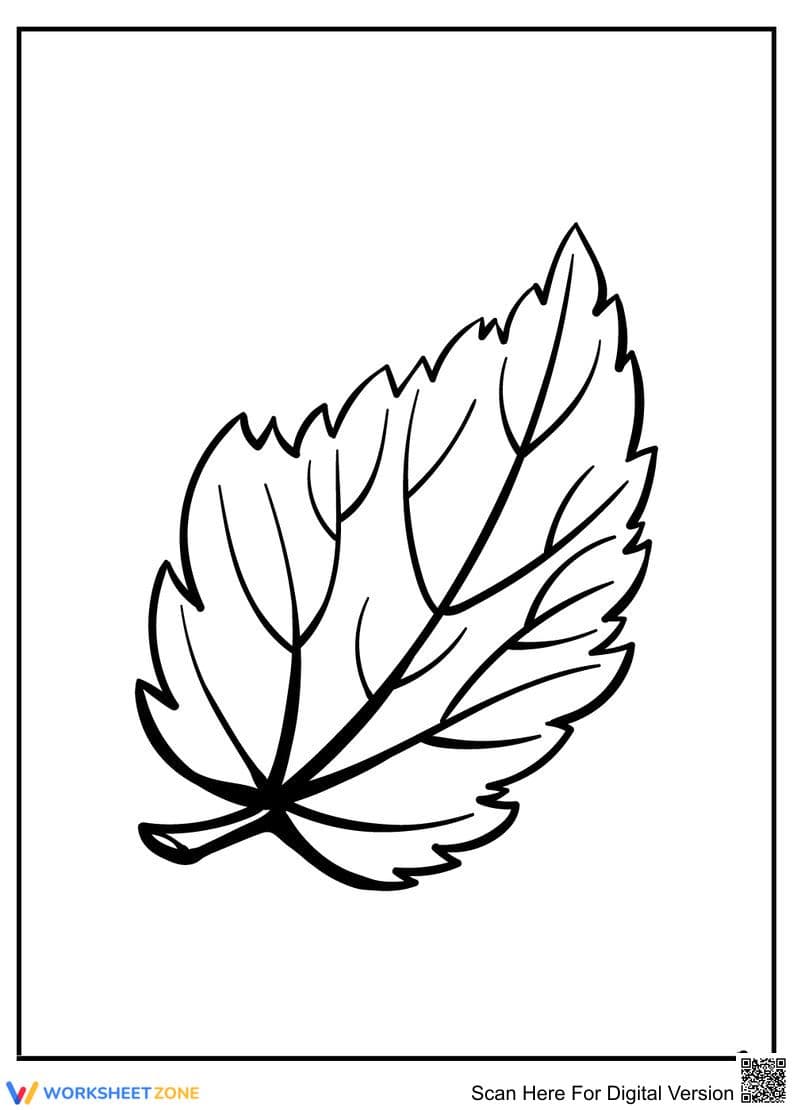

Printable Leaf Coloring Page | Grade K-5 Nature Art
Paste this activity's link or code into your existing LMS (Google Classroom, Canvas, Teams, Schoology, Moodle, etc.).
Students can open and work on the activity right away, with no student login required.
You'll still be able to track student progress and results from your teacher account.
This printable leaf coloring worksheet provides a simple yet effective way for students to engage with nature while developing essential fine motor skills. By focusing on a single, detailed leaf outline, children can practice color selection and boundary control, making it an ideal resource for early childhood classrooms and elementary art centers.
At a Glance
- Grade: K–5 · Subject: Arts & Nature
- Standard:
K-LS1-1— Use observations to describe patterns of what plants and animals need to survive- Skill Focus: Fine motor control and botanical observation
- Format: 1 page · 1 task · No answer key needed · PDF
- Best For: Morning work or nature study supplement
- Time: 10–15 minutes
This resource features a high-resolution, single-page PDF containing one large, detailed leaf illustration. The clean lines are designed to accommodate various coloring mediums, including crayons, colored pencils, or watercolors. There are no complex instructions, allowing students to focus entirely on the creative process and the physical act of coloring within the lines.
The zero-prep workflow for this worksheet is designed for maximum efficiency. First, print the single-page PDF in about 30 seconds. Next, distribute the sheets along with coloring supplies to your students in under a minute. Finally, review the completed work by having students describe the colors they chose and why. Total teacher preparation time is under two minutes, making it a perfect last-minute addition to any lesson.
This worksheet aligns with `K-LS1-1`, as it encourages students to observe the physical structures of plants. By identifying the veins and stem of the leaf, students begin to recognize the patterns inherent in living organisms. This standard code can be copied directly into lesson plans, IEP goals, or district curriculum mapping tools.
Use this worksheet as a quiet-time activity following a nature walk or as a formative assessment of fine motor grip and control. Teachers can observe how students handle their coloring tools and their ability to stay within the defined borders. It typically takes 10 to 15 minutes to complete, depending on the medium used and the student's age.
This activity is perfect for preschool through fifth-grade students, particularly those needing extra practice with hand-eye coordination. It pairs naturally with a botanical anchor chart or a read-aloud book about the changing seasons and plant life cycles. It is also an excellent choice for a substitute teacher folder.
According to the RAND AIRS 2024 report, integrating simple artistic tasks like coloring into the primary curriculum supports the development of executive function and spatial awareness. This worksheet, aligned to the K-LS1-1 standard, allows students to engage in botanical observation while refining the small muscle movements necessary for later writing proficiency. Research from Fisher & Frey (2014) emphasizes that low-stakes creative tasks can reduce cognitive load, making them excellent transitions between high-intensity instructional blocks. By providing a clear, uncluttered visual, this resource ensures that students are not overwhelmed, allowing them to focus on the specific skill of color application and boundary recognition. This 1-page printable serves as a versatile tool for both general education and special education settings, offering a high-success task that builds student confidence in their artistic and observational abilities.


