


























Views
Downloads

Alphabetical Order Worksheet | Printable Grade 1 ELA
Paste this activity's link or code into your existing LMS (Google Classroom, Canvas, Teams, Schoology, Moodle, etc.).
Students can open and work on the activity right away, with no student login required.
You'll still be able to track student progress and results from your teacher account.
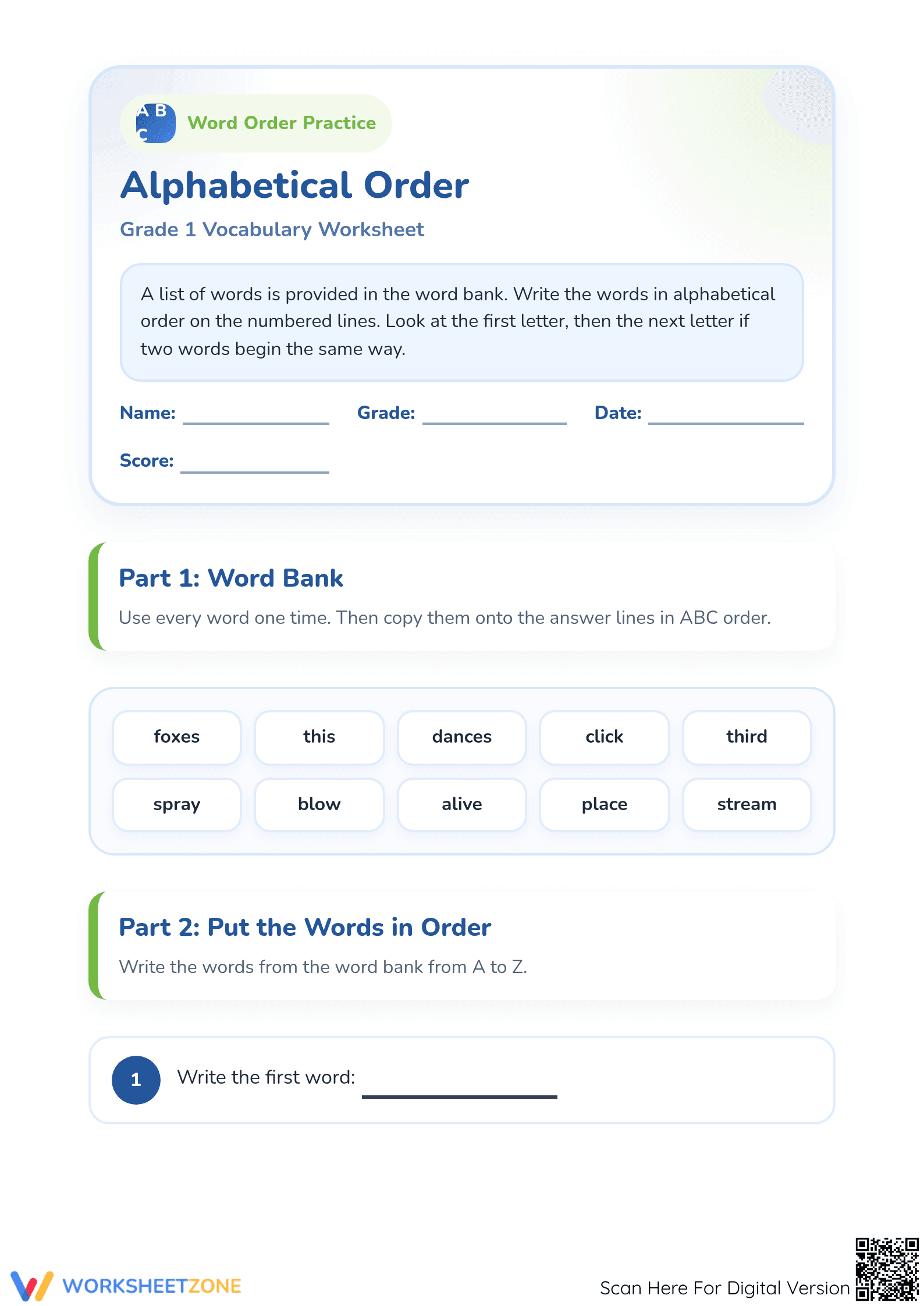
Mastering alphabetical order is a foundational literacy skill that streamlines vocabulary acquisition and dictionary navigation. This Grade 1 worksheet provides structured practice in organizing words from A to Z, requiring students to analyze initial and secondary letter placements. By completing these exercises, learners develop the visual scanning habits essential for advanced reading and information retrieval tasks.
At a Glance
At a Glance
- Grade: 1 · Subject: English Language Arts
- Standard:
CCSS.ELA-LITERACY.L.1.1— Demonstrate command of the conventions of standard English grammar and usage when writing.- Skill Focus: Alphabetizing to the first and second letter
- Format: 4 pages · 14 tasks · Answer key included · PDF
- Best For: Independent vocabulary practice and morning work
- Time: 20–30 minutes
What's Inside
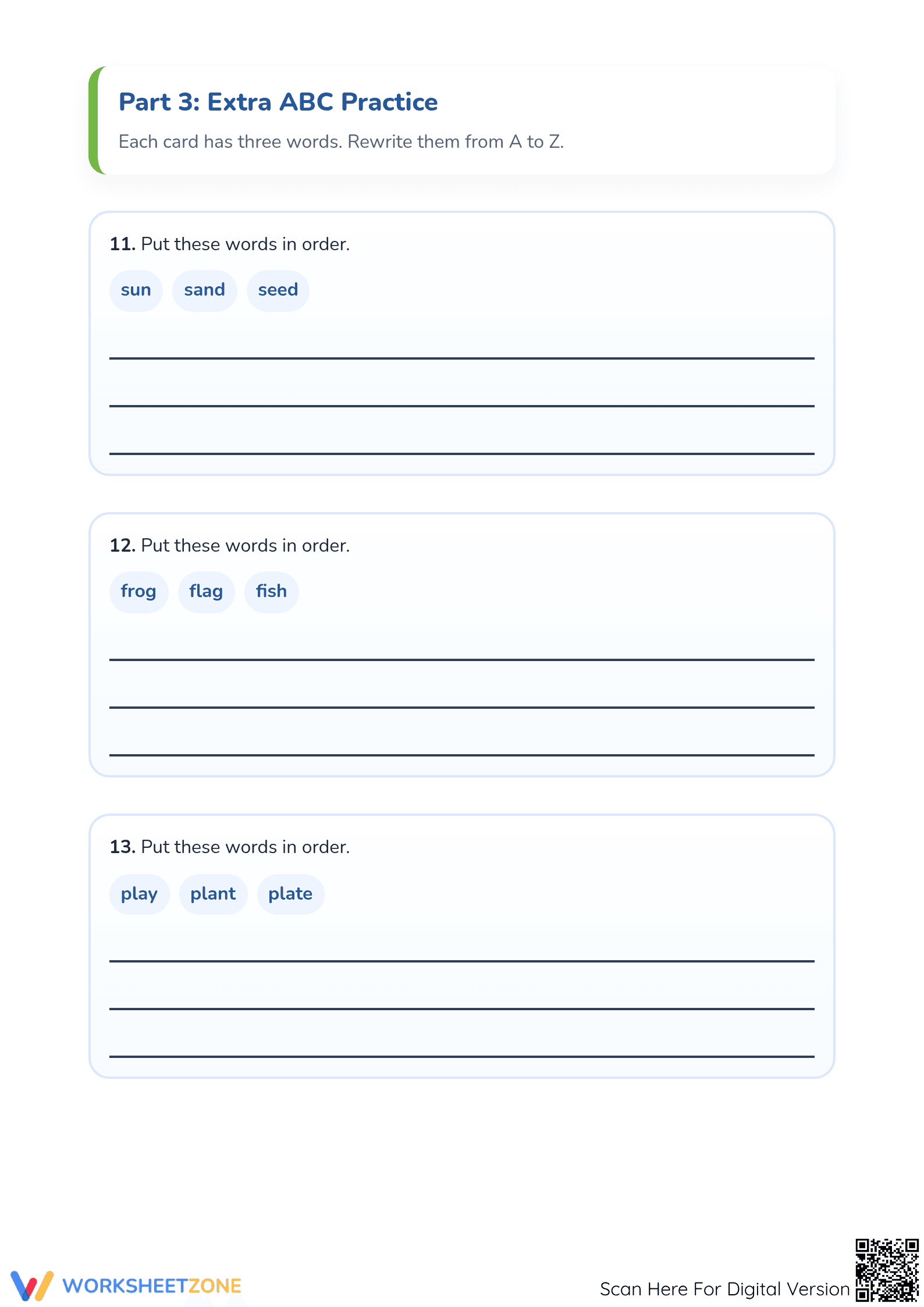
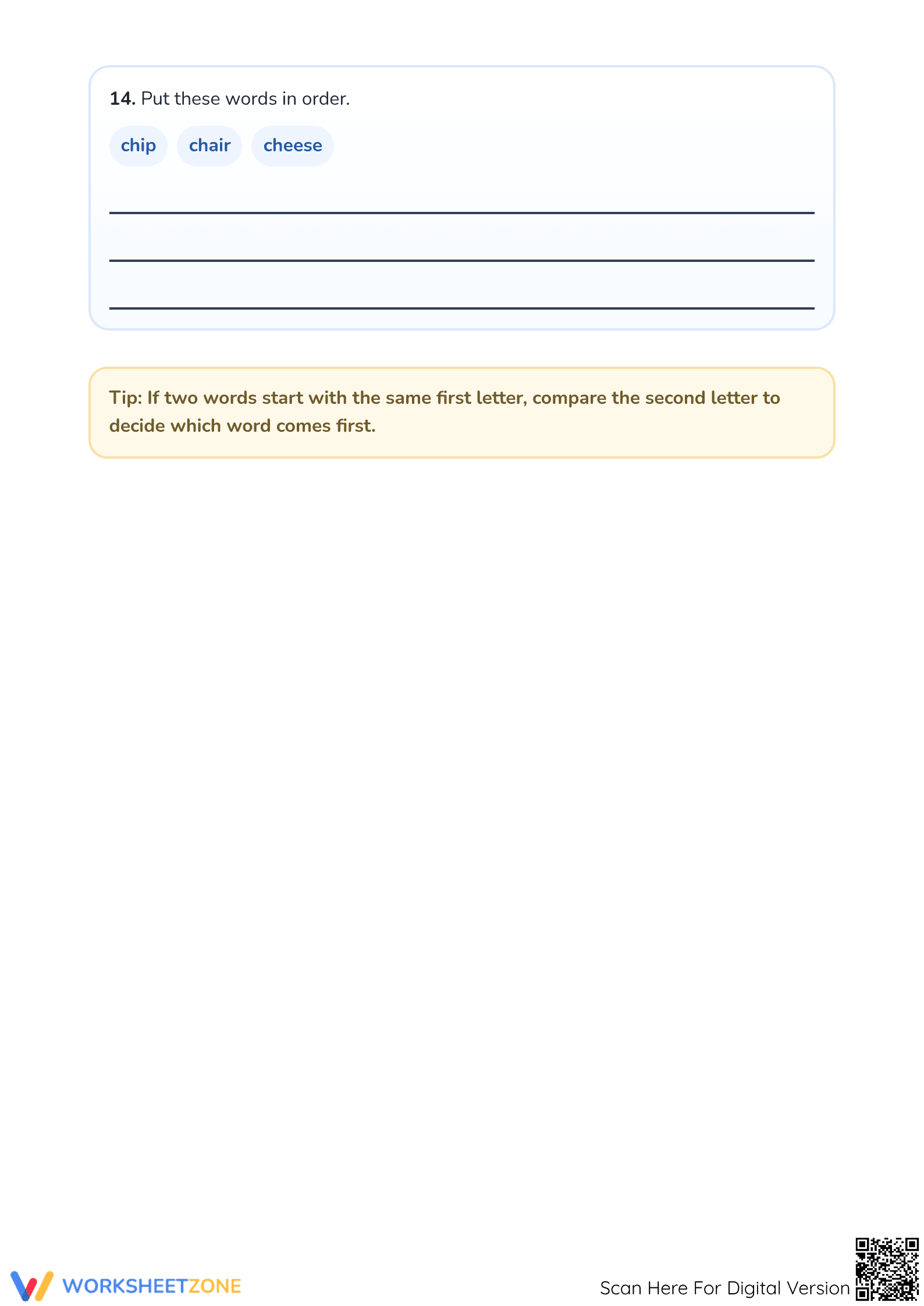
This comprehensive four-page PDF resource contains two distinct practice sections designed to build confidence in word ordering. Students first interact with a ten-word bank featuring diverse vocabulary such as foxes, dances, and alive. The second section introduces Extra ABC Practice, where learners tackle four sets of words that require alphabetizing to the second letter, providing a necessary challenge for advancing Grade 1 students.
Skill Progression
- Guided Practice: The worksheet begins with a word bank where students identify the first word to set a baseline for the alphabetical sequence.
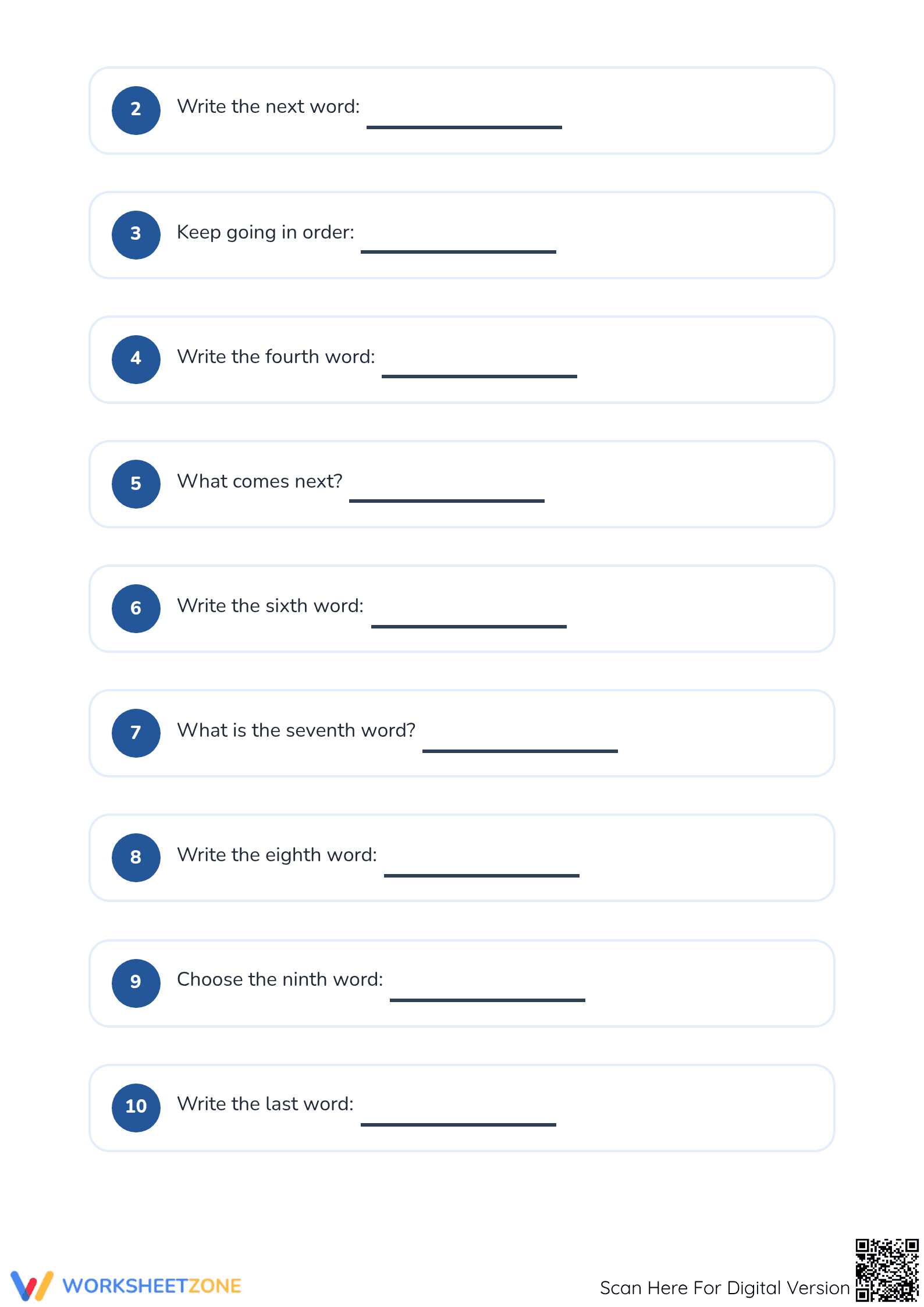
- Supported Practice: Students complete a full ten-word list using a structured numbered format to ensure every word is categorized without omission.
- Independent Practice: The final section challenges students with four Extra ABC sets where they must independently distinguish between words with matching initial letters.
The layout utilizes a gradual-release model, moving from basic recognition to complex discrimination across the 14 included tasks.
Standards Alignment
The primary focus is CCSS.ELA-LITERACY.L.1.1, which requires students to demonstrate command of standard English conventions. While alphabetizing is a mechanical skill, it supports CCSS.ELA-LITERACY.L.1.4 by facilitating the use of reference materials to determine the meaning of unknown words. Both standard codes can be copied directly into lesson plans, IEP goals, or district curriculum mapping tools.
How to Use It
Use this worksheet as a formative assessment during a unit on dictionary skills or as a print-and-go center activity. During direct instruction, teachers can observe if students are correctly identifying the second letter when the first letters match—a common stumbling block. This resource typically takes 25 minutes to complete and serves as an excellent check for understanding after a whole-group alphabet lesson.
Who It's For
This resource is designed for Grade 1 students, though it provides excellent review for Grade 2 learners who need to reinforce their alphabetizing skills. It is particularly effective for students requiring visual scaffolds, such as the included word bank and numbered lines. Pair this worksheet with a classroom alphabet anchor chart or a short reading passage to see these skills applied in context.
According to research in Fisher & Frey (2014) regarding the gradual release of responsibility, structured practice in foundational skills like alphabetizing is critical for developing cognitive automaticity in young readers. This Grade 1 vocabulary worksheet aligns with CCSS.ELA-LITERACY.L.1.1 by requiring students to apply English conventions to 14 tasks, ranging from basic ABC order to complex second-letter discrimination. By interacting with a curated word bank and multiple practice sets, students transition from simple recognition to active categorization. Data from EdReports 2024 suggests that high-quality, focused practice sheets help bridge the gap between phonics and vocabulary acquisition. This resource provides the necessary scaffolding to support diverse learners as they build the organizational skills required for successful dictionary and index use in later elementary grades. It serves as a reliable tool for classroom teachers and interventionists seeking to verify student mastery of alphabetical sequence.


