


























Views
Downloads

Printable 1st Grade Alphabetical Order Worksheet | Essential
Paste this activity's link or code into your existing LMS (Google Classroom, Canvas, Teams, Schoology, Moodle, etc.).
Students can open and work on the activity right away, with no student login required.
You'll still be able to track student progress and results from your teacher account.
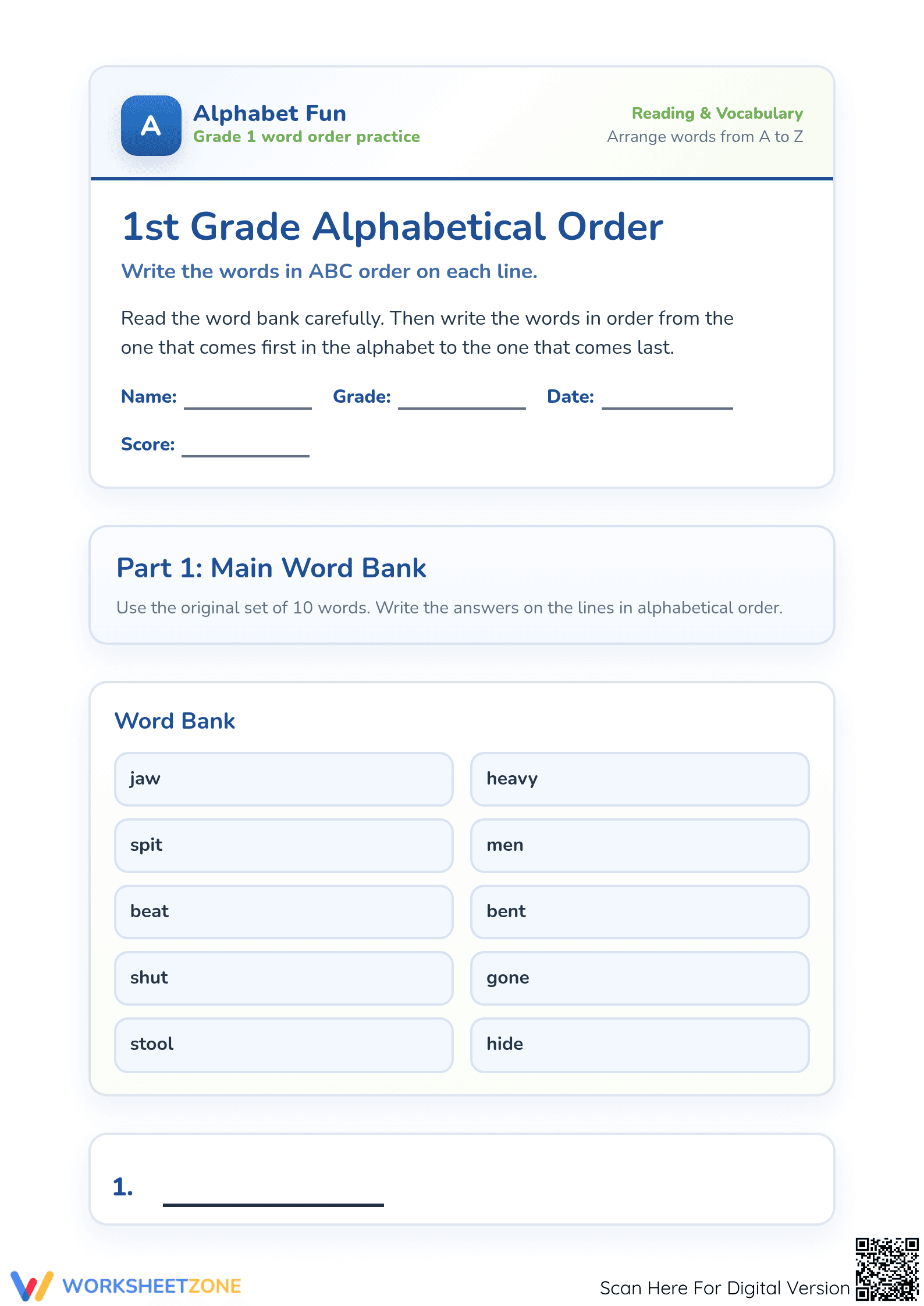
This Essential Grade 1 alphabetical order worksheet provides students with 16 structured opportunities to master the sequence of the alphabet using common high-frequency words. By organizing terms into ABC order, learners strengthen their foundational literacy skills and prepare for future dictionary and reference work. The included word banks ensure all students can find success independently.
At a Glance
- Grade: 1 · Subject: English Language Arts (ELA)
- Standard:
CCSS.ELA-LITERACY.L.1.1— Demonstrate command of the conventions of standard English grammar and usage- Skill Focus: Alphabetical Order to the First Letter
- Format: 4 pages · 16 problems · Answer key included · PDF
- Best For: Independent practice, sub plans, and literacy centers
- Time: 15–25 minutes
What's Inside
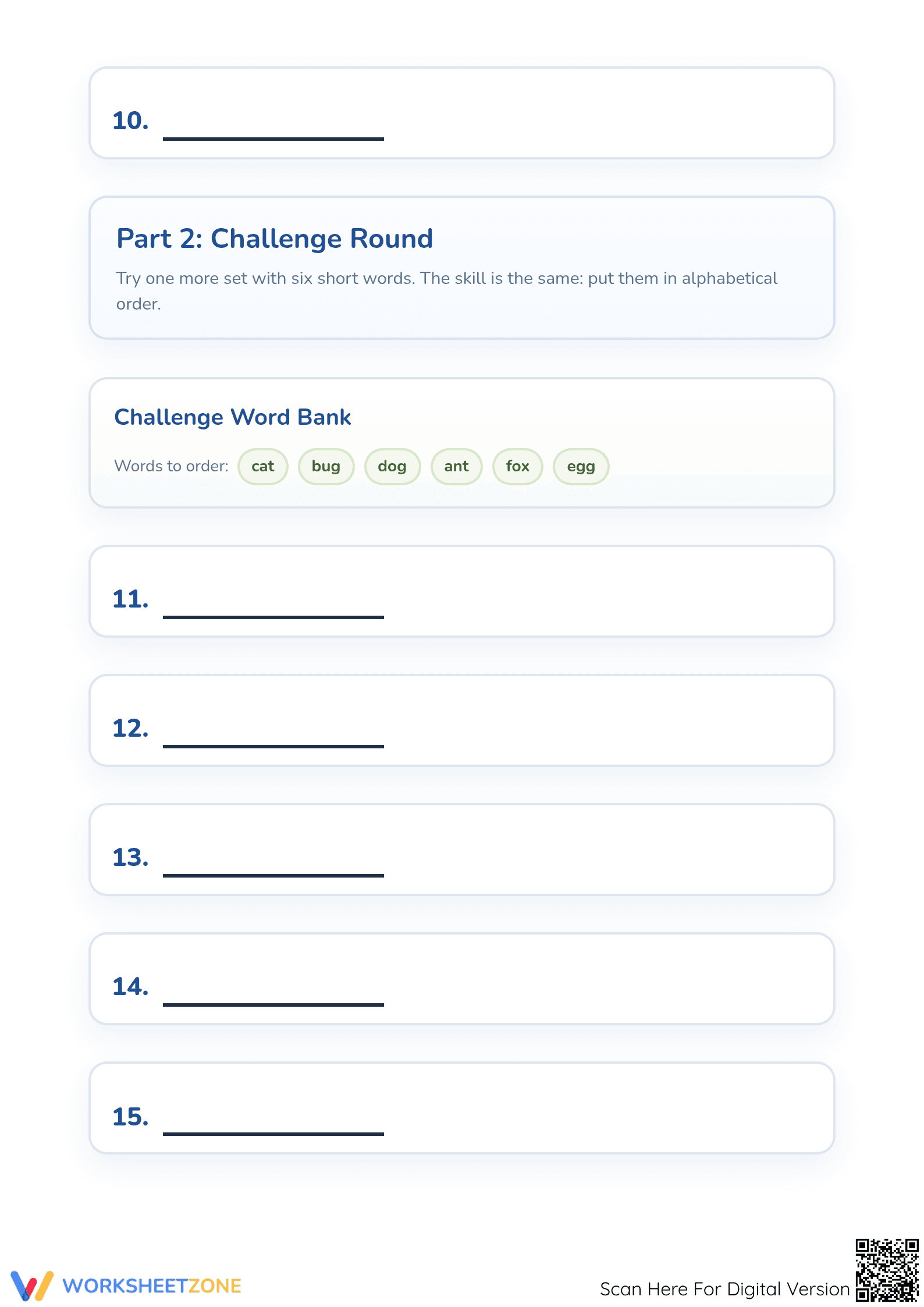
This comprehensive 4-page resource is divided into two distinct sections to support gradual mastery. Part 1 features a main word bank with 10 varied terms, while Part 2 offers a "Challenge Round" with 6 shorter words to test retention. The layout is clean and spacious, providing ample room for young writers to practice letter formation while they organize their answers. A full answer key is provided for rapid grading.
Zero-Prep Workflow
Designed for maximum teacher efficiency, this resource features a zero-prep workflow. Simply print the four-page document, distribute to students who can use the clearly labeled word banks without additional verbal instructions, and quickly grade with the included answer key. Total preparation time is approximately 2 minutes, making it ideal for emergency sub plans or last-minute literacy station rotations.
Standards Alignment
Aligned to CCSS.ELA-LITERACY.L.1.1, this resource helps students master standard English grammar and usage conventions. By improving word order skills, learners develop prerequisites for advanced reference tasks in later grades. Standard codes can be directly integrated into lesson plans, IEP goals, or curriculum mapping tools.
How to Use It
Most effective as independent practice after direct instruction on alphabet sequencing. For formative assessment, observe students during the Challenge Round (Part 2) to gauge their alphabetizing strategies. The 16 problems typically take 20 minutes, fitting perfectly into a standard ELA block or morning work routine.
Who It's For
Tailored for first-grade students, this resource also serves as a remedial tool for second graders or enrichment for advanced kindergarteners. It pairs well with alphabet desk strips or anchor charts. For extra support, encourage students to cross off words in the word bank to manage cognitive load.
Systematic alphabetical order practice is crucial for early literacy development, as emphasized by the RAND AIRS 2024 report. This worksheet directly addresses CCSS.ELA-LITERACY.L.1.1, requiring students to apply alphabet knowledge to organize 16 words across two difficulty levels. Research from Fisher & Frey (2014) highlights that "word study" activities like ABC order are vital for phonological awareness and cognitive flexibility essential for fluent reading. With its structured word bank and progressive challenge, this resource helps Grade 1 learners achieve independent mastery of alphabetical conventions, supporting long-term retention of letter-sequence knowledge vital for efficient use of reference materials.


