


























Views
Downloads
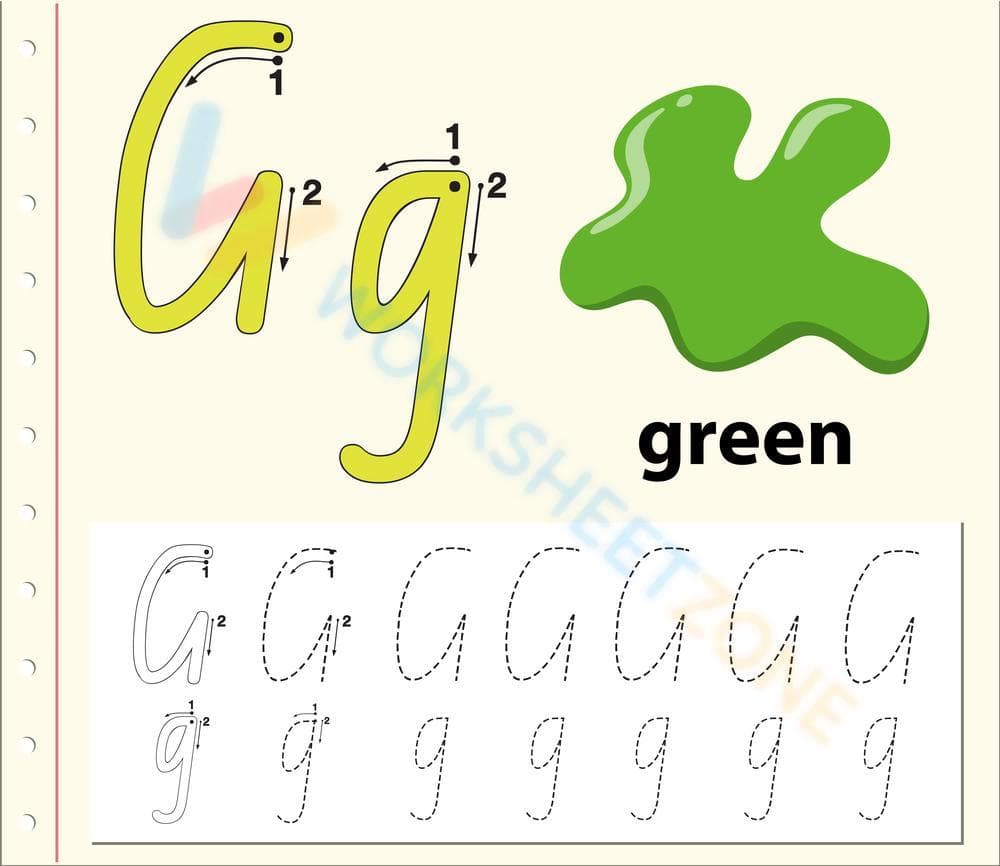

Kindergarten Letter G Tracing — Printable No-Prep Worksheet
Paste this activity's link or code into your existing LMS (Google Classroom, Canvas, Teams, Schoology, Moodle, etc.).
Students can open and work on the activity right away, with no student login required.
You'll still be able to track student progress and results from your teacher account.
This printable letter G tracing worksheet helps early learners master uppercase and lowercase letter formation while connecting the letter to its beginning sound. Students trace the letters following guided stroke arrows and associate the letter G with the color green. This resource builds essential fine motor skills and letter recognition.
At a Glance
- Grade: Kindergarten · Subject: English Language Arts
- Standard:
CCSS.ELA-LITERACY.RF.K.1.D— Recognize and name lowercase and uppercase letters of the alphabet- Skill Focus: Letter G formation and recognition
- Format: 1 page · 14 tasks · No answer key needed · PDF
- Best For: Morning work or independent phonics practice
- Time: 10–15 minutes
What's Inside
This single-page PDF features large, clear models of uppercase G and lowercase g with numbered directional arrows to guide proper stroke order. Below the large models, a dedicated tracing section provides seven uppercase and seven lowercase tracing opportunities. A prominent green paint splat graphic reinforces the beginning sound association, making the learning experience visual and memorable.
Zero-Prep Workflow
This resource requires minimal preparation. Follow these three steps to integrate it into your routine:
- Print (1 minute): Print the single-page PDF for your class.
- Distribute (1 minute): Hand out sheets with pencils and green crayons.
- Review (5 minutes): Monitor pencil grip and stroke direction during independent work.
With under two minutes of setup, this worksheet is ideal for sub plans or centers.
Standards Alignment
This activity directly aligns with the Common Core State Standard CCSS.ELA-LITERACY.RF.K.1.D, which requires students to recognize and name all upper- and lowercase letters of the alphabet. Additionally, it supports phonics development by linking the letter shape to its initial sound. Both standard codes can be copied directly into lesson plans, IEP goals, or district curriculum mapping tools.
How to Use It
Use this worksheet during your phonics block immediately after direct instruction on the letter G. Introduce the letter sound, point to the green splat, and model the stroke order on the board. As students trace, observe their starting points; early writers often start from the bottom, so redirecting them early ensures correct muscle memory. Expect completion within ten to fifteen minutes.
Who It's For
This worksheet is designed for kindergarten students learning letter formation, but it also serves as an excellent intervention tool for first-grade students needing extra handwriting support. Pair this activity with a read-aloud book about the color green or a physical letter-tracing tray filled with green sand to create a multi-sensory learning experience.
According to the ScienceDirect TpT Analysis, structured handwriting practice combined with visual phonics cues significantly improves letter recognition and recall in early childhood education. This worksheet targets standard CCSS.ELA-LITERACY.RF.K.1.D by integrating explicit stroke guidance with beginning sound association. Research indicates that tracing activities with clear directional arrows help young learners build the fine motor control necessary for fluent writing. By practicing both uppercase and lowercase forms of the letter G, students develop a comprehensive understanding of alphabet mechanics. The inclusion of the visual anchor "green" reinforces phonemic awareness, helping students connect the grapheme to its corresponding phoneme. This evidence-based design ensures that students transition smoothly from guided tracing to independent letter production, establishing a strong foundation for future reading and writing success. Teachers can confidently implement this resource knowing it aligns with proven pedagogical strategies for early literacy development.


