


























Views
Downloads

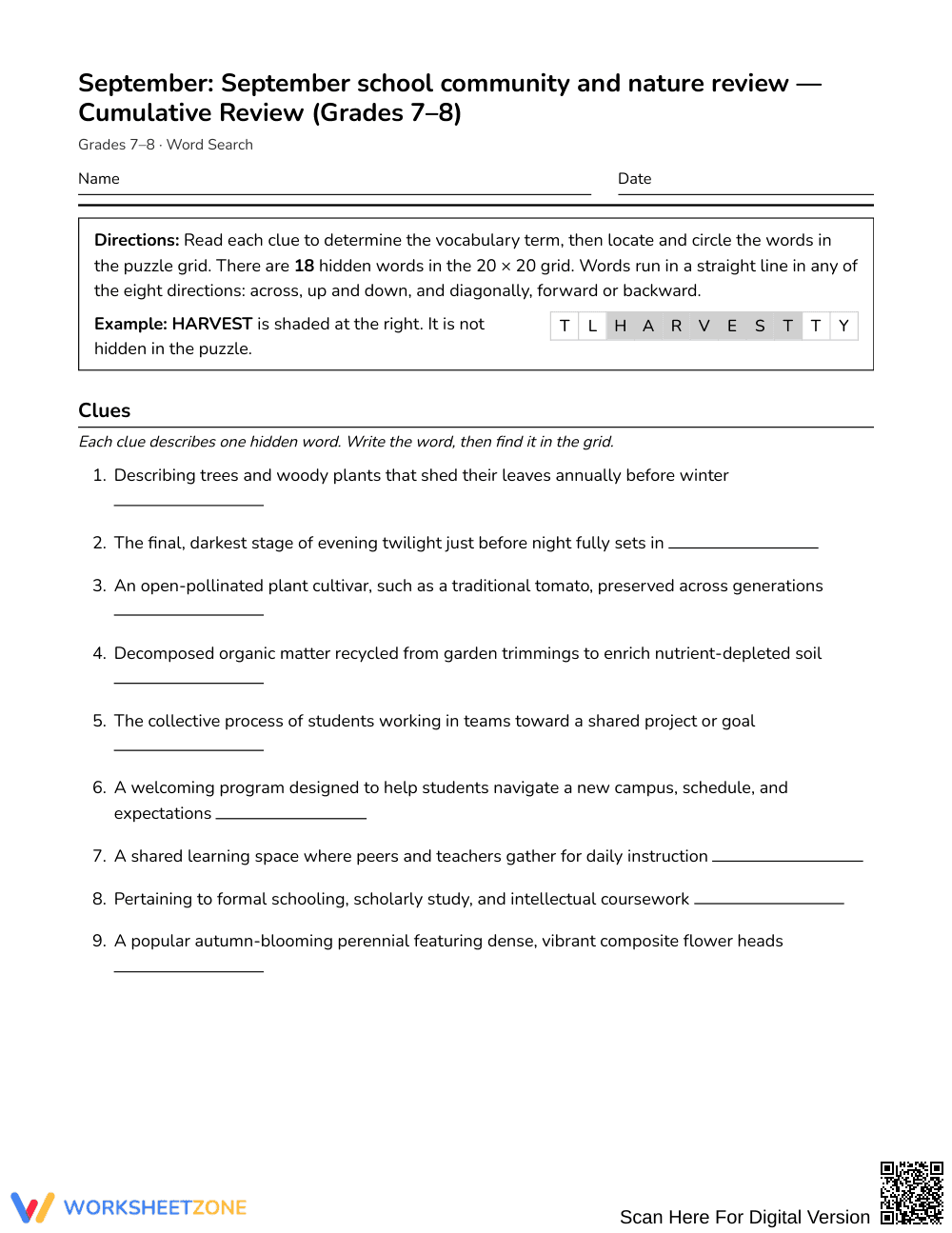
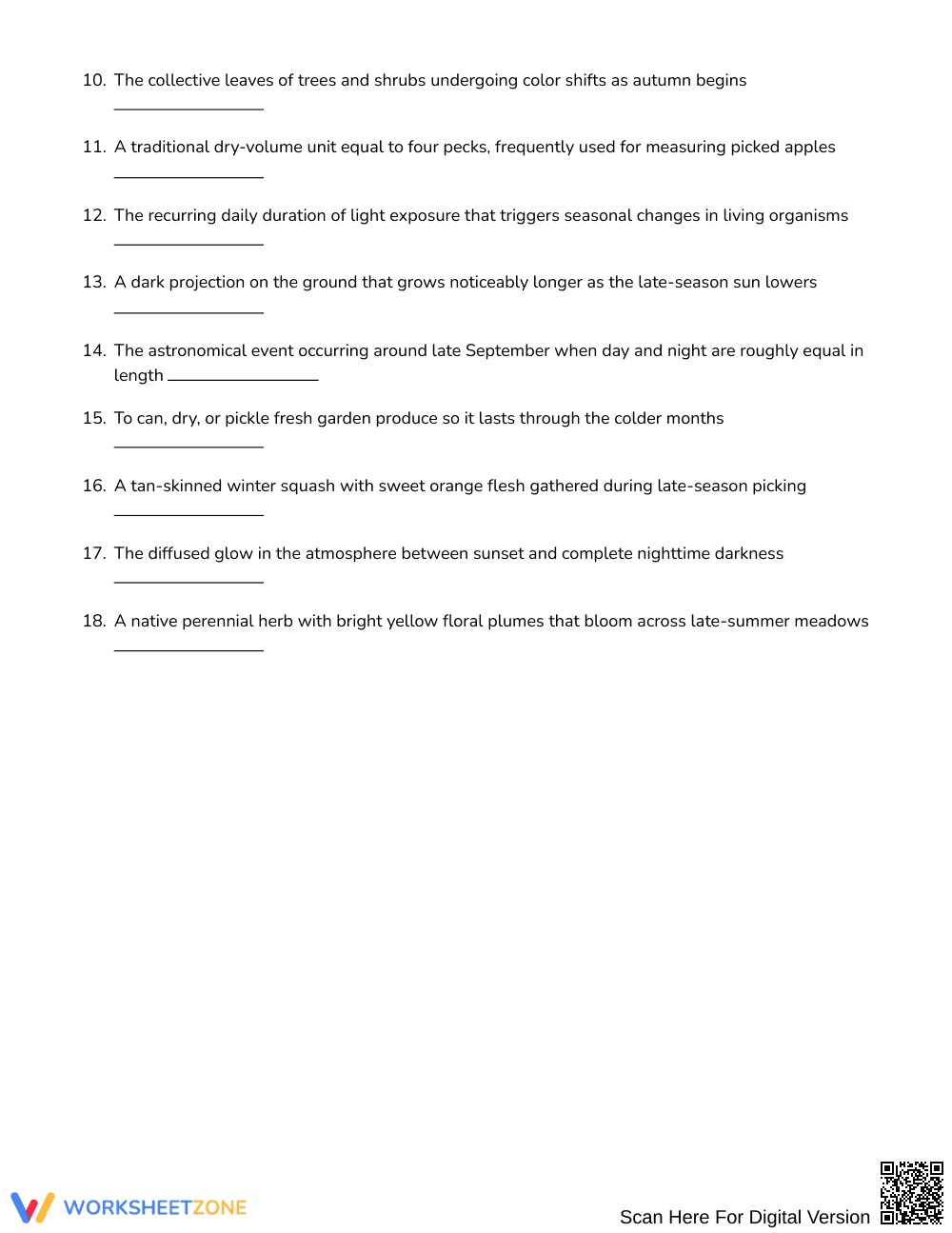


Free Sept School Nature Review Word Search | Grades 7–8 ELA
Paste this activity's link or code into your existing LMS (Google Classroom, Canvas, Teams, Schoology, Moodle, etc.).
Students can open and work on the activity right away, with no student login required.
You'll still be able to track student progress and results from your teacher account.
Students will boost their September school‑community and nature vocabulary by hunting for 18 hidden terms in a 20 × 20 word search. The activity reinforces spelling, meaning, and contextual connections, giving learners a fun, focused review before the end‑of‑year assessments and confidence.
At a Glance
- Grade: Grades 7–8 · Subject: English Language Arts
- Standard:
Not standards-assessed — vocabulary enrichment— Find and circle terms about school community and autumn nature- Skill Focus: Vocabulary enrichment and deep contextual understanding
- Format: 3 pages · 18 hidden words · Answer key included · printable PDF
- Best For: Quick, engaging review or enrichment activity during homeroom, transition, or after‑school club
- Time: 10–15 minutes
What's Inside
Inside the 3‑page PDF you’ll find a 20 × 20 grid where words run in all eight compass directions—N, NE, E, SE, S, SW, W, and NW. The shuffled word bank lists 18 target terms, each paired with a concise clue that reinforces meaning. An answer‑key page provides the completed grid for quick verification, making scoring effortless. Students can use the clues to connect each term to the September school community and nature theme, deepening contextual vocabulary.
Zero‑Prep Workflow
- Print: Open the PDF and print the 3‑page packet (about 30 seconds).
- Distribute: Hand each student a copy of the word search and clue sheet (about 30 seconds).
- Review: After 10–15 minutes of searching, collect the answer‑key page and quickly check accuracy (about 30 seconds).
Total teacher preparation is under two minutes, making the activity ideal for a sub‑plan or a quick transition slot.
Standards Alignment
Because this activity is designed for vocabulary enrichment rather than assessment, it is not tied to any state or district standard. It simply offers engaging practice that supports the broader language‑arts goals of building word knowledge and reading comprehension.
How to Use It
- Warm‑up before a unit on autumn ecosystems: give students the word search to activate prior knowledge; observe which terms they miss to inform targeted mini‑lessons.
- Formative review after a community‑building lesson: let learners complete the puzzle, then discuss the clues and meanings; use the quick observation of missed words as an informal assessment of vocabulary retention.
Students typically finish in 10–15 minutes.
Who It's For
This word search is perfect for Grades 7–8 ELA learners who need a focused, enjoyable way to reinforce September‑theme vocabulary. While the activity is ready‑to‑use for the whole class, it can also be given individually for differentiated practice. Pair it with a seasonal nature anchor chart or the September community newsletter for added context.
Vocabulary enrichment activities like this word search have been shown to improve word‑recognition speed and retention. Fisher & Frey (2014) emphasize that repeated exposure to target words in varied contexts supports automaticity and deeper comprehension. By coupling concise clues with an engaging puzzle format, the activity aligns with recommendations for multimodal vocabulary instruction. The 18 September‑theme terms give students repeated practice with spelling and meaning, while the answer key enables immediate feedback. This approach mirrors the proven benefits of low‑stakes, game‑like tasks that keep learners motivated and provide teachers with formative data. Incorporating such enrichment tools into regular ELA routines can boost both confidence and academic language growth. Research from EdReports (2024) also notes that interactive word puzzles increase student engagement and can be smoothly integrated into lessons without sacrificing instructional time. When teachers use the answer key for swift correction, they gain actionable insights to differentiate subsequent instruction, ensuring that all learners progress toward stronger vocabulary mastery.


