


























Views
Downloads


Grade 4 Printable Worksheet: Comparing Fractions and Decimals
Paste this activity's link or code into your existing LMS (Google Classroom, Canvas, Teams, Schoology, Moodle, etc.).
Students can open and work on the activity right away, with no student login required.
You'll still be able to track student progress and results from your teacher account.
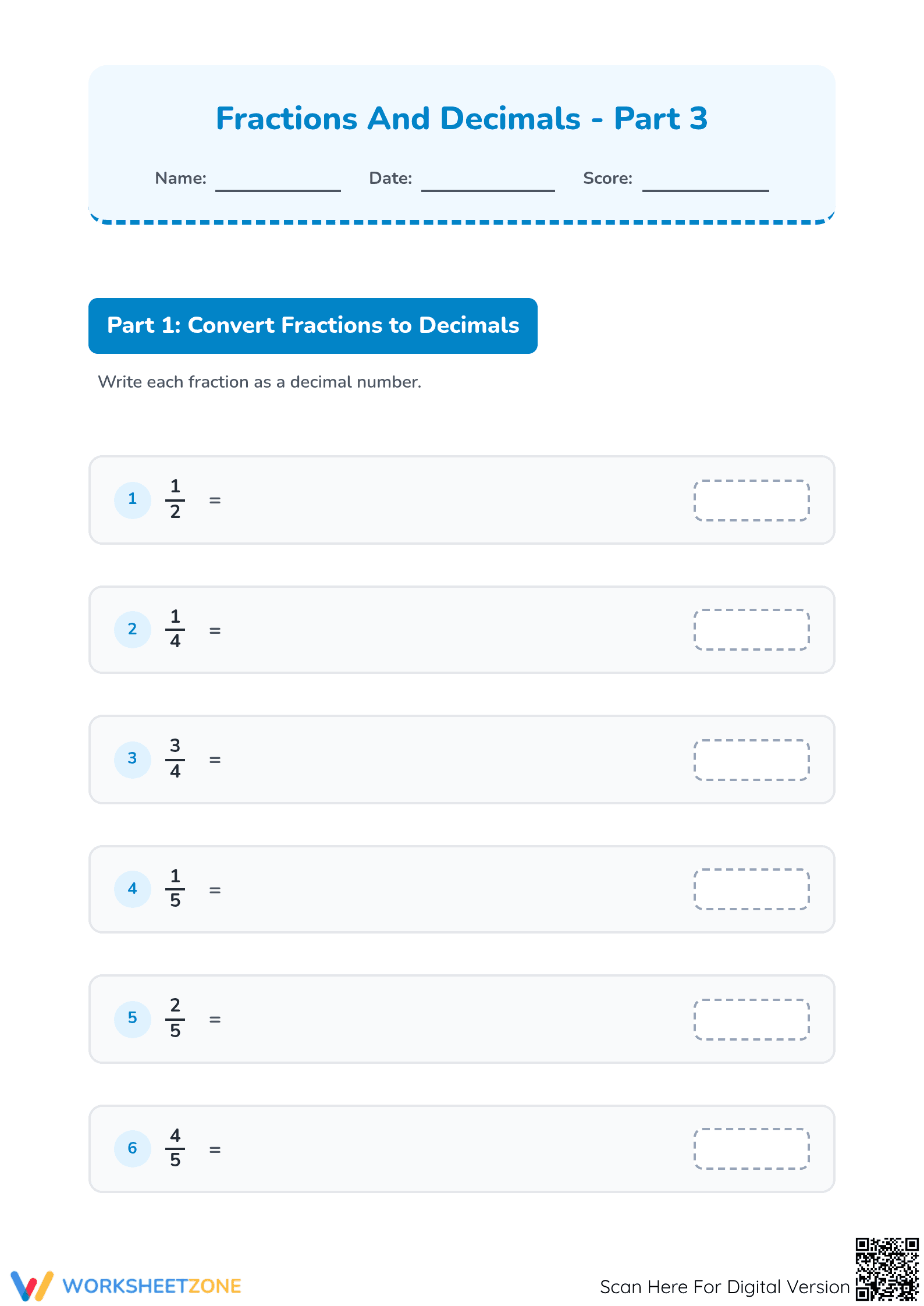
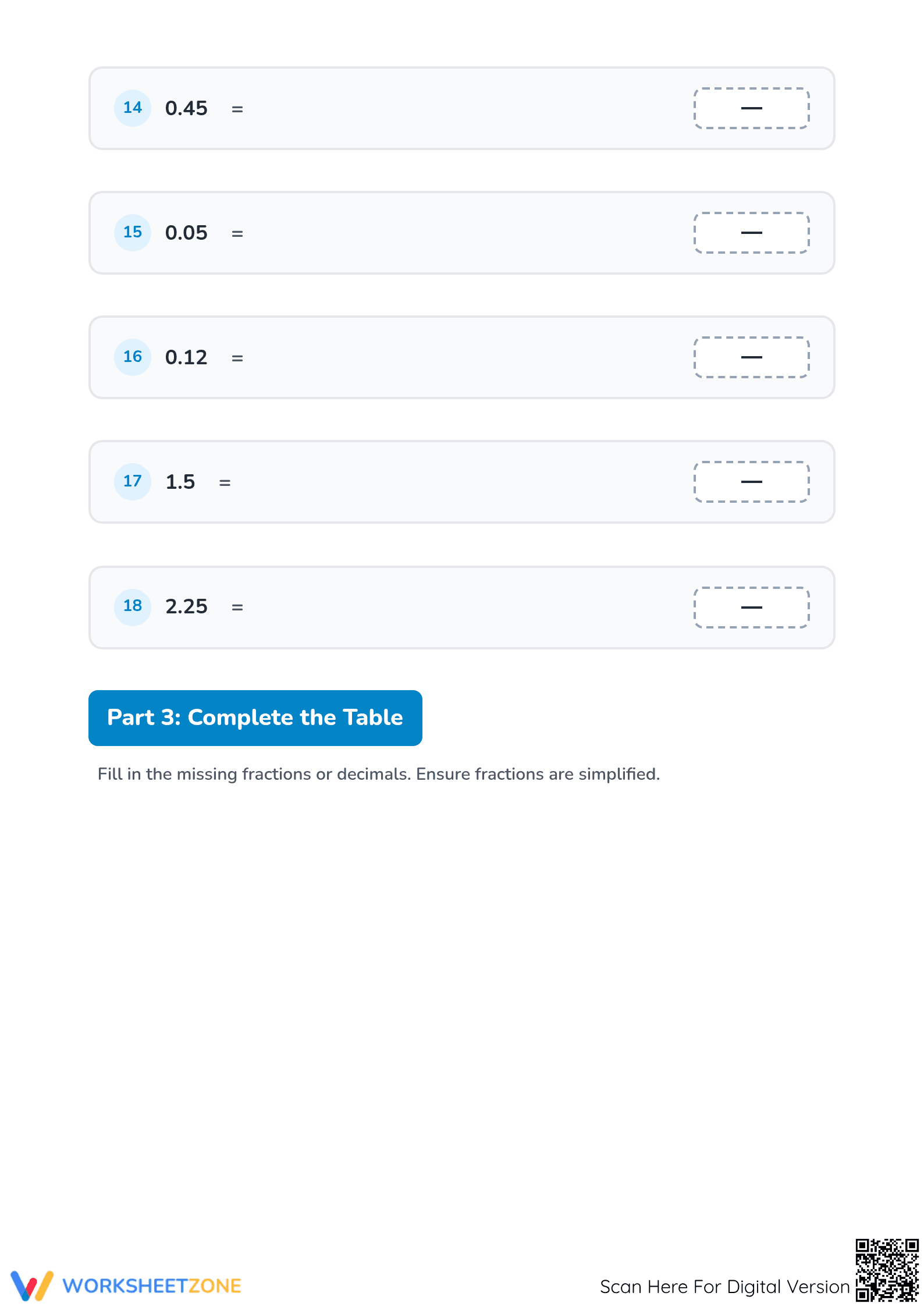
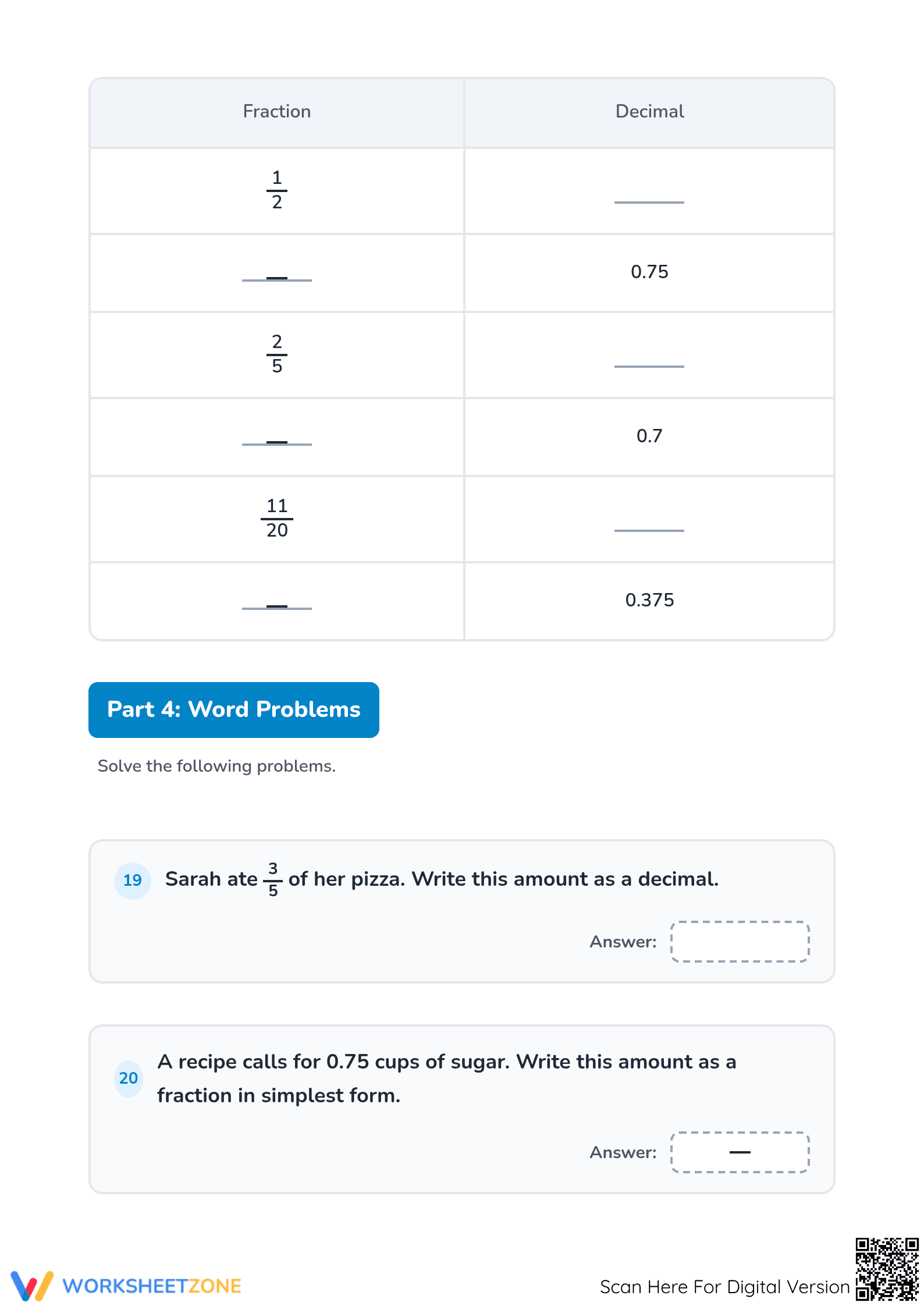
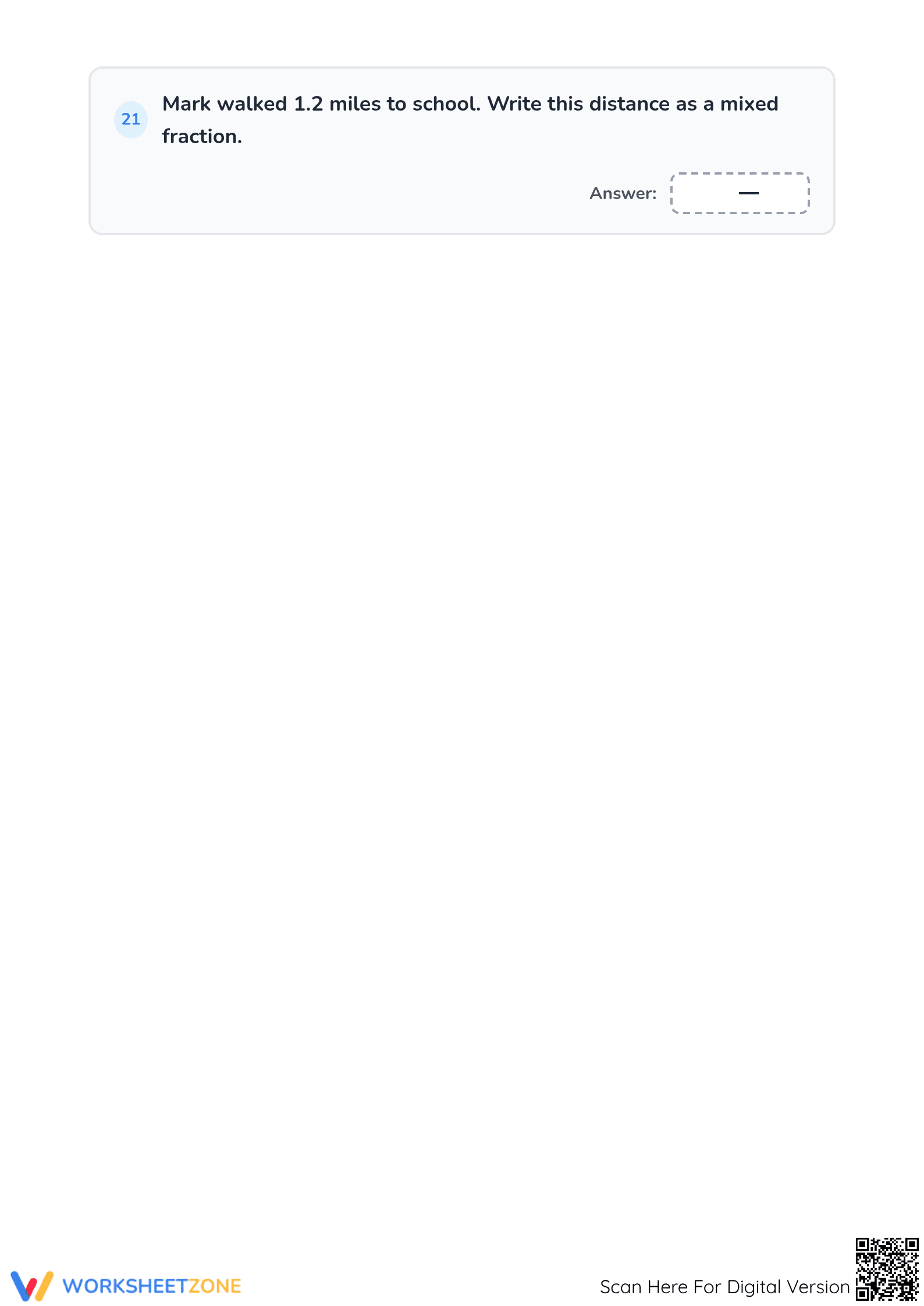
This Grade 4 math worksheet provides comprehensive practice for comparing fractions and decimals using inequality symbols. Students evaluate 90 unique problems to determine if a value is greater than, less than, or equal to its counterpart. This focused approach helps learners master the conceptual bridge between decimal notation and fractional representation for accurate comparison across multiple formats.
At a Glance
- Grade: 4 · Subject: Math
- Standard:
CCSS.MATH.CONTENT.4.NF.C.7— Compare two decimals to hundredths by reasoning about their size- Skill Focus: Comparing fractions and decimals
- Format: 5 pages · 90 problems · Answer key included · PDF
- Best For: High-volume mastery and fluency practice
- Time: 30–45 minutes
What's Inside
This five-page packet contains 90 comparison problems, with 18 tasks per page. Each problem presents a fraction and a decimal and requires students to insert the correct symbol (>, <, or =). The clean layout minimizes cognitive load, allowing students to focus entirely on mathematical conversion and comparison logic. A complete five-page answer key is included for rapid grading or student self-check sessions.
Zero-Prep Workflow
The zero-prep design follows a simple three-step workflow. First, print the necessary pages for your class (30 seconds). Second, distribute the worksheets for independent practice or a timed fluency drill (1 minute). Third, use the included answer key for immediate feedback or peer-grading sessions (2 minutes). Total teacher preparation time is under two minutes, making it an ideal choice for busy classrooms or substitute plans.
Standards Alignment
The primary alignment is CCSS.MATH.CONTENT.4.NF.C.7, which focuses on comparing two decimals to hundredths by reasoning about their size. It also supports CCSS.MATH.CONTENT.4.NF.C.6 regarding the relationship between decimals and fractions. Both standard codes can be copied directly into lesson plans, IEP goals, or district curriculum mapping tools for administrative compliance.
How to Use It
Assign this worksheet during the independent practice phase of a gradual release lesson. It works exceptionally well as a daily warm-up, assigning one page per day to build long-term retention of place value concepts. Teachers should observe whether students are converting decimals to fractions or vice-versa to identify which representation requires further scaffolding. Completion typically takes 8 to 12 minutes per page.
Who It's For
This resource is designed for Grade 4 and Grade 5 students mastering the relationship between tenths, hundredths, and fractions. It provides necessary practice for students who need repetitive tasks to gain confidence in their comparison skills. Naturally pair this worksheet with a visual fraction-decimal number line or a place value anchor chart to support struggling learners during independent work time.
Citation Capsule: This Grade 4 math resource targets the essential skill of comparing fractions and decimals, a critical component of CCSS.MATH.CONTENT.4.NF.C.7. Mastery of this standard is a significant predictor of success in middle school rational number operations. According to Fisher & Frey (2014), the use of high-volume, structured practice is vital for moving students from surface-level understanding to fluency. This worksheet addresses that need by providing 90 repetitions across five pages, allowing for the consistent application of comparison logic. Research indicates that when students can fluidly move between fractional and decimal representations, they demonstrate significantly higher accuracy in multi-step word problems involving measurement and data. By utilizing this zero-prep packet, educators can ensure that students receive the spaced practice necessary for long-term memory consolidation of place value concepts. This summary can be used as a standalone professional justification for curriculum adoption or IEP documentation.


