


























Views
Downloads
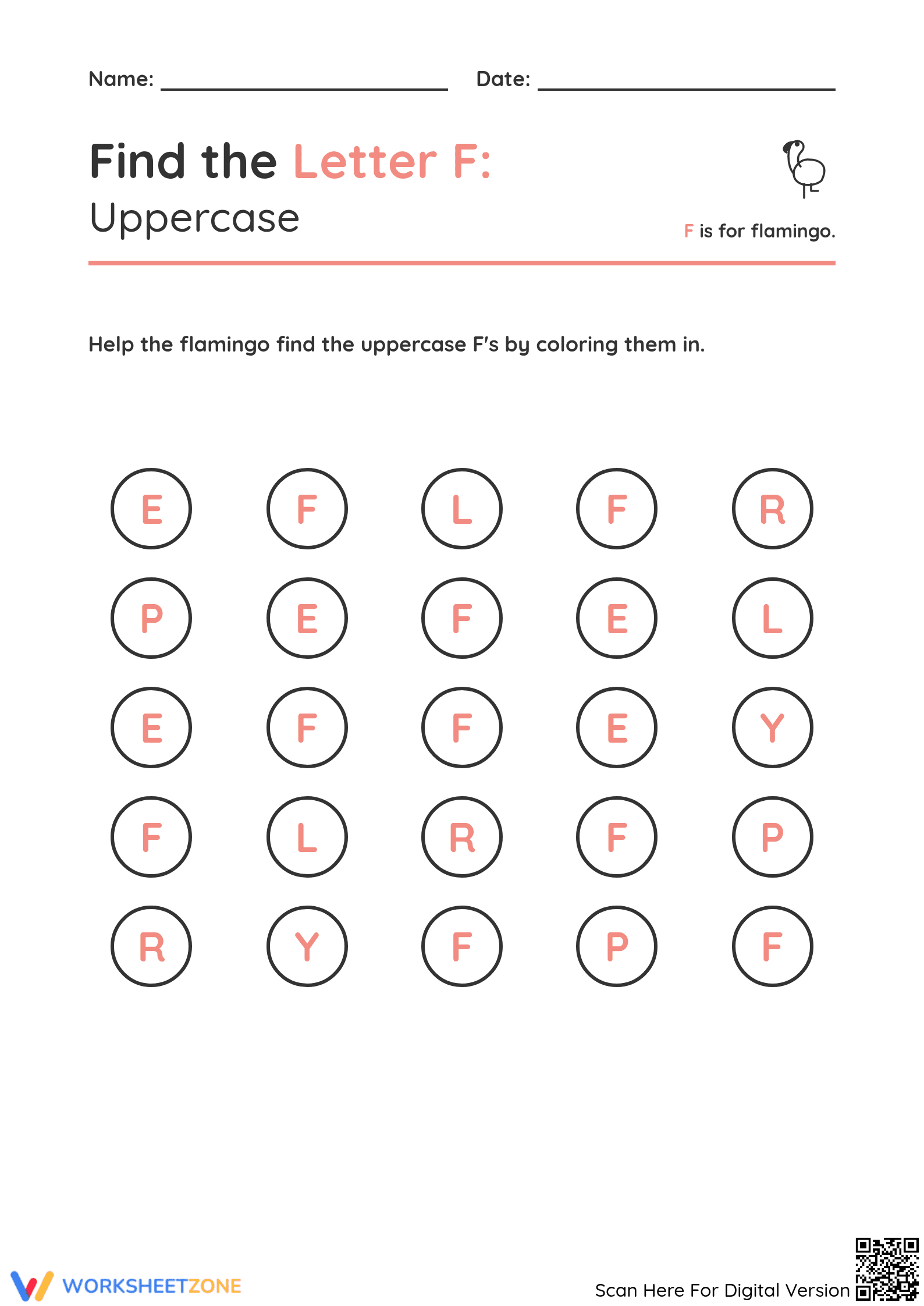

Printable Letter F Worksheet | Grade K ELA
Paste this activity's link or code into your existing LMS (Google Classroom, Canvas, Teams, Schoology, Moodle, etc.).
Students can open and work on the activity right away, with no student login required.
You'll still be able to track student progress and results from your teacher account.
This foundational reading worksheet helps early learners master uppercase letter recognition by focusing specifically on the letter F. Students will visually scan a grid of similar letters to identify and color the target letter, building essential visual discrimination skills required for fluent reading and writing development.
At a Glance
- Grade: Kindergarten · Subject: ELA
- Standard:
CCSS.ELA-LITERACY.RF.K.1.D— Recognize and name all uppercase letters- Skill Focus: Uppercase Letter Recognition
- Format: 1 page · 25 problems · Answer key included · PDF
- Best For: Independent practice or centers
- Time: 5–10 minutes
This printable resource features a single, focused activity page with a flamingo theme. The worksheet presents a structured grid of 25 uppercase letters enclosed in circles. Students are tasked with finding and coloring the 10 uppercase F's hidden among distractor letters like E, L, P, R, and Y. A complete answer key is provided to ensure quick and accurate grading for teachers or self-checking for students.
Zero-Prep Workflow
This resource requires zero teacher preparation. The workflow is simple:
- Print (1 minute): Print copies for your reading groups directly from the PDF.
- Distribute (1 minute): Hand out the worksheets and crayons.
- Review (3 minutes): Use the answer key to quickly verify student work.
With a total teacher prep time of under two minutes, this activity is an excellent addition to emergency sub plans or morning work routines.
Standards Alignment
This activity is directly aligned to CCSS.ELA-LITERACY.RF.K.1.D, which requires students to recognize and name all upper- and lowercase letters of the alphabet. By isolating the letter F and placing it among visually similar distractor letters, the task ensures rigorous practice of this foundational standard. Both standard codes can be copied directly into lesson plans, IEP goals, or district curriculum mapping tools.
How to Use It
This worksheet serves as an excellent independent practice activity during literacy centers after direct instruction on the letter F. Alternatively, it can be used as a quick morning work assignment to activate prior knowledge as students settle into the classroom. While students are working, teachers can conduct formative assessments by observing which distractor letters (such as E or P) cause hesitation, indicating a need for targeted visual discrimination review. Students typically complete this task in 5 to 10 minutes.
Who It's For
This resource is primarily designed for preschool and kindergarten students who are actively building their alphabet knowledge. The clear, uncluttered layout makes it highly accessible for early learners and students receiving special education support for basic literacy skills. It pairs perfectly with a read-aloud book featuring a flamingo or other F-vocabulary words, as well as classroom alphabet anchor charts.
Mastering alphabet knowledge, specifically through targeted visual discrimination tasks, is a critical predictor of later reading success. According to a comprehensive EdReports 2024 analysis of foundational literacy programs, explicit instruction and repeated practice in letter recognition significantly improve phonemic awareness and decoding speed. This worksheet directly supports CCSS.ELA-LITERACY.RF.K.1.D by requiring students to recognize and name all uppercase letters. By isolating the letter F among visually similar distractors like E and P, the activity forces learners to attend to the specific structural features of the letter. This focused repetition helps solidify the neural pathways necessary for rapid letter identification, which is essential before students can successfully map sounds to symbols. Providing structured, low-stakes practice opportunities ensures that early learners build the automaticity required to transition from simply recognizing letters to actively reading words.


