


























Views
Downloads
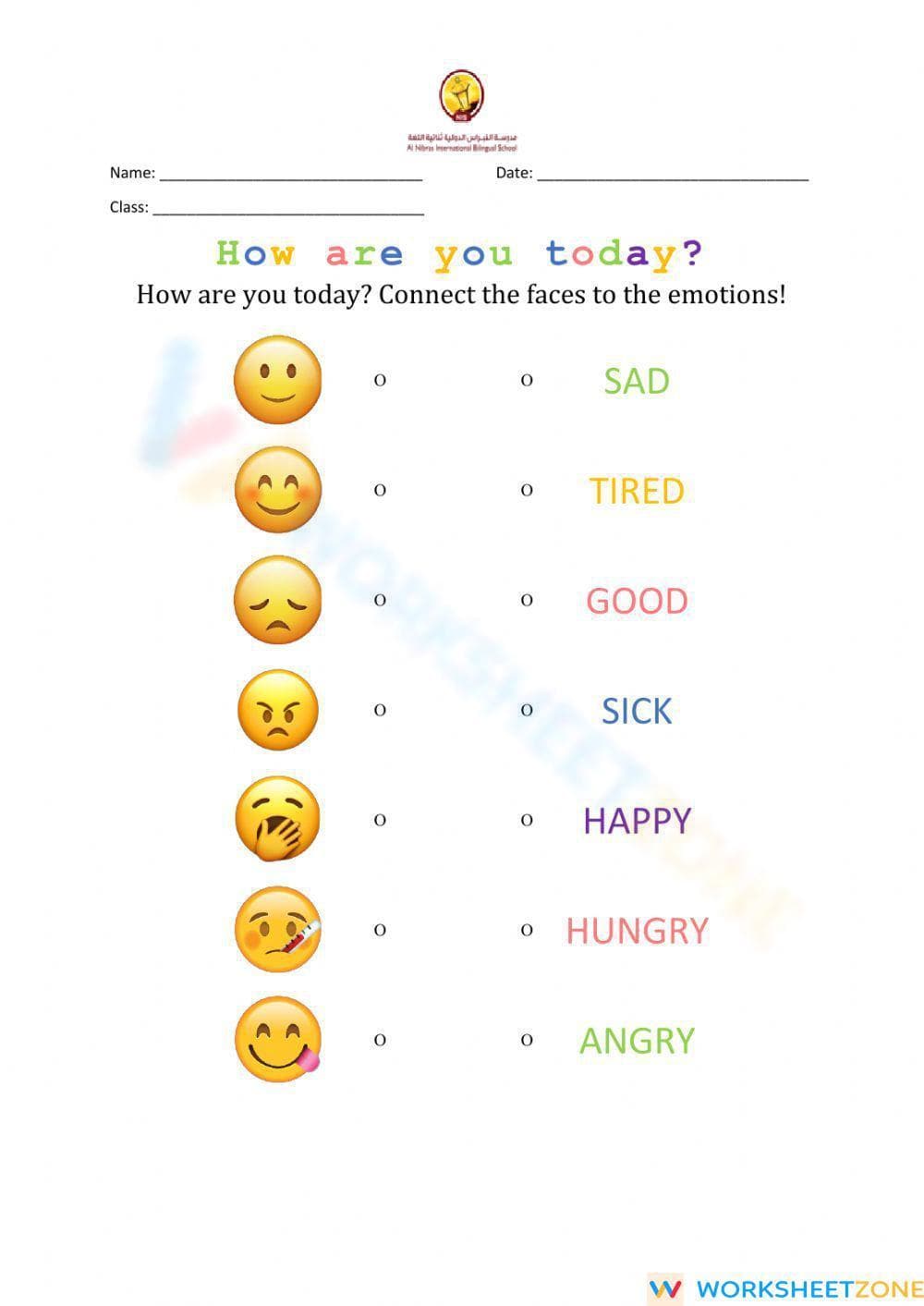

Grade 1 Feelings — Printable No-Prep Worksheet
Paste this activity's link or code into your existing LMS (Google Classroom, Canvas, Teams, Schoology, Moodle, etc.).
Students can open and work on the activity right away, with no student login required.
You'll still be able to track student progress and results from your teacher account.
Building Emotional Vocabulary
This worksheet provides Grade 1 students with clear, foundational practice in social-emotional vocabulary. Learners connect pictorial representations of emotions with the corresponding feeling words. It’s an ideal tool for introducing or reinforcing basic ELA and interpersonal skills, helping students build the language to describe their feelings.
At a Glance
- Grade: 1 · Subject: ELA, Social-Emotional Learning
- Standard:
CCSS.ELA-LITERACY.RL.1.4— Identify words that suggest feelings.- Skill Focus: Identifying Feelings & Emotion Vocabulary
- Format: 1 page · 7 problems · Answer key included · PDF
- Best For: Morning work, independent practice, sub plans
- Time: 5–10 minutes
What's Inside
This single-page resource features a straightforward matching activity. On one side, seven clear emoji-style faces depict common emotions. On the other, a list of feeling words (e.g., happy, sad, angry) is provided. Students draw a line to connect each face to the correct word. An answer key is included for quick checking.
A Zero-Prep Workflow
Designed for maximum efficiency, this worksheet can be deployed in under a minute. The zero-prep workflow is simple:
- Print (30 seconds): The resource is a single, printer-friendly PDF page.
- Distribute (30 seconds): Hand out the worksheet to students for immediate engagement. The instructions are self-contained at the top of the page.
- Review (1 minute): Use the included answer key to quickly review answers with the class or check work individually.
This streamlined process makes it a reliable tool for morning work, quick assessments, or an emergency sub plan activity.
Standards Alignment
This activity supports CCSS.ELA-LITERACY.RL.1.4, which requires students to "Identify words and phrases...that suggest feelings." By matching words to facial expressions, students build the foundational vocabulary necessary to recognize these concepts in texts. The standard code can be copied directly into lesson plans, IEP goals, or curriculum maps.
How to Use It
Use this worksheet as a warm-up before a reading lesson to prime students for identifying character emotions. It also serves as an excellent independent practice activity after a direct instruction lesson on feelings. For a formative assessment, observe which emotions students identify quickly and which cause hesitation, noting any common misconceptions. Most students will complete this activity in 5 to 10 minutes, making it a flexible addition to any lesson block.
Who It's For
This resource is designed for first-grade students but is also suitable for second graders needing reinforcement or advanced kindergarteners. The clear visuals support English Language Learners and students with language-based learning differences. Pair this worksheet with a read-aloud of a book focused on emotions, like "The Color Monster" by Anna Llenas, to extend the learning.
This worksheet provides targeted practice for a key early literacy skill: identifying words that convey feelings, a component of standard CCSS.ELA-LITERACY.RL.1.4. Building this foundational emotional vocabulary is crucial for developing reading comprehension and social awareness. Research consistently shows that a student's ability to understand and label emotions is linked to better academic outcomes and social competence. As noted in multiple analyses, including the RAND AIRS 2024 report on early learning, explicit instruction in social-emotional concepts provides a necessary scaffold for young learners. This print-and-go resource gives teachers a tool to directly address this need, linking visual cues to the specific language of feelings. It serves as a practical application of research-backed principles, preparing students to better understand characters' internal states and, by extension, their own.


