


























Views
Downloads

Essential K.OA.A.1 Math Assessment — Grade K-1
Paste this activity's link or code into your existing LMS (Google Classroom, Canvas, Teams, Schoology, Moodle, etc.).
Students can open and work on the activity right away, with no student login required.
You'll still be able to track student progress and results from your teacher account.
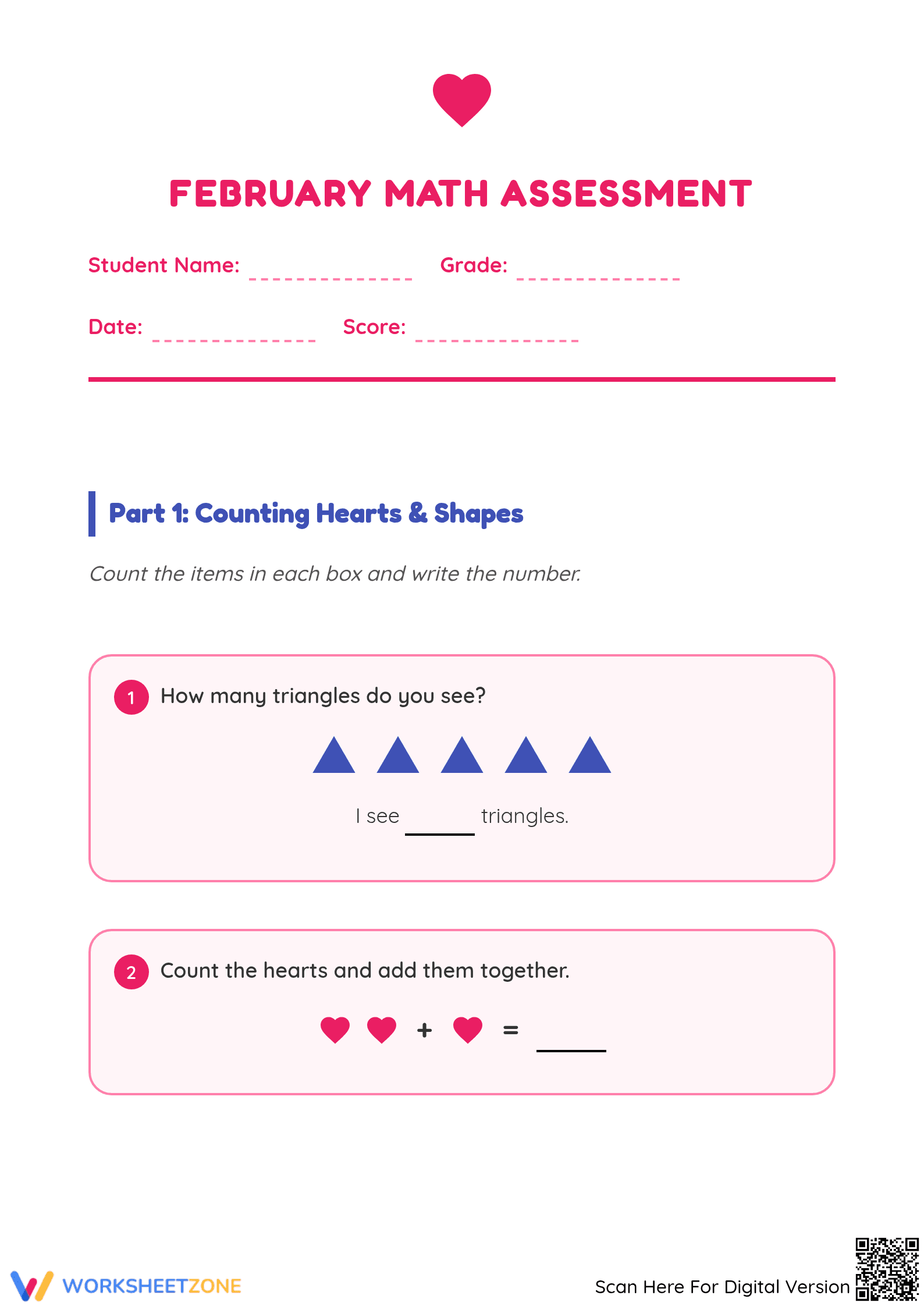
This Kindergarten math assessment provides a comprehensive mid-year check of addition, subtraction, and geometric foundations. Students demonstrate understanding through counting, identifying operations, and solving word problems. This essential tool allows educators to gauge progress toward core standards while identifying specific areas for instructional reinforcement or enrichment.
At a Glance
- Grade: Kindergarten · Subject: Math
- Standard:
CCSS.MATH.CONTENT.K.OA.A.1— Represent addition and subtraction with objects, drawings, and expressions to show understanding- Skill Focus: Addition, Subtraction, and Geometry
- Format: 5 pages · 12 problems · Answer key included · PDF
- Best For: Mid-year progress monitoring and assessment
- Time: 20–30 minutes
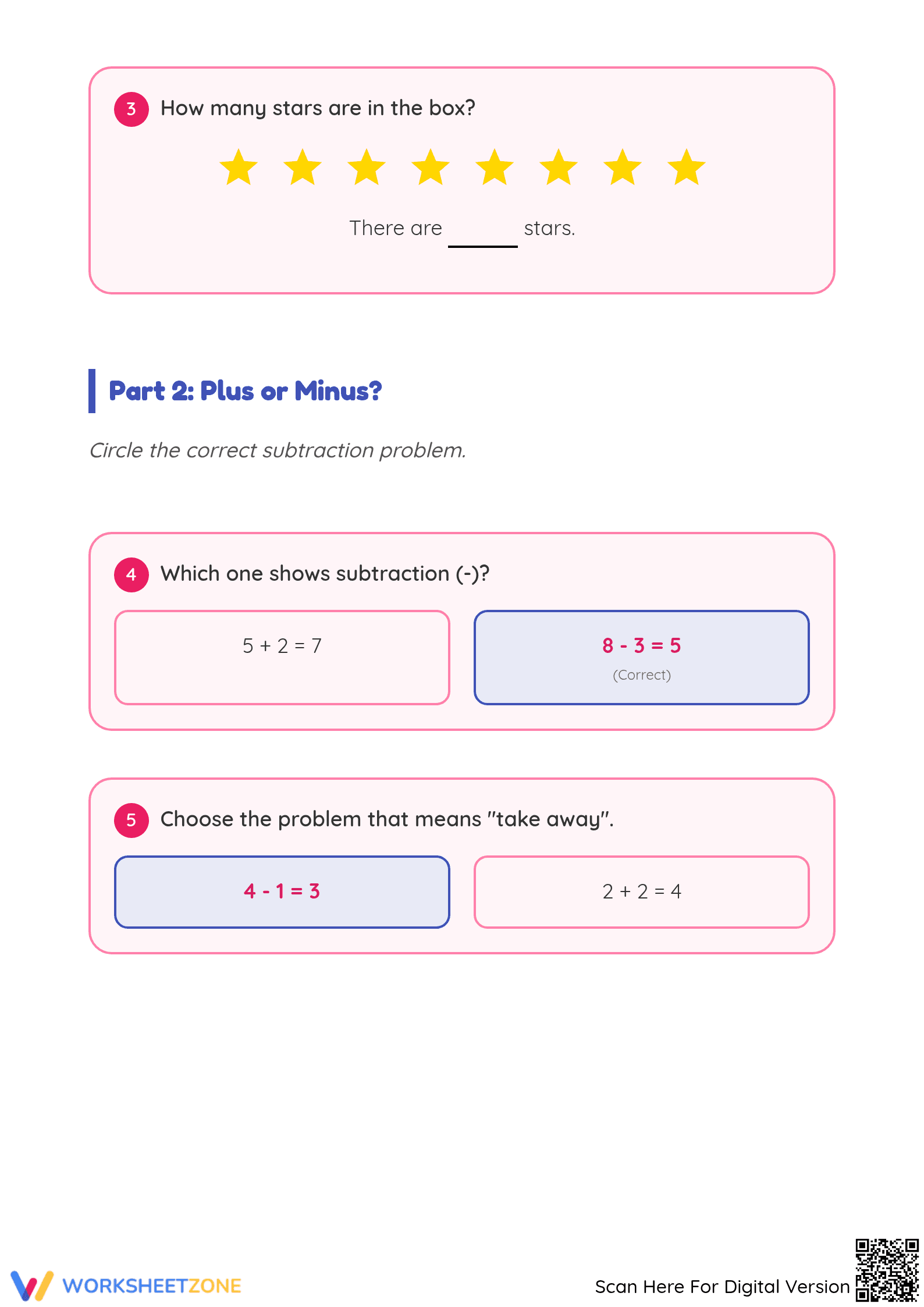
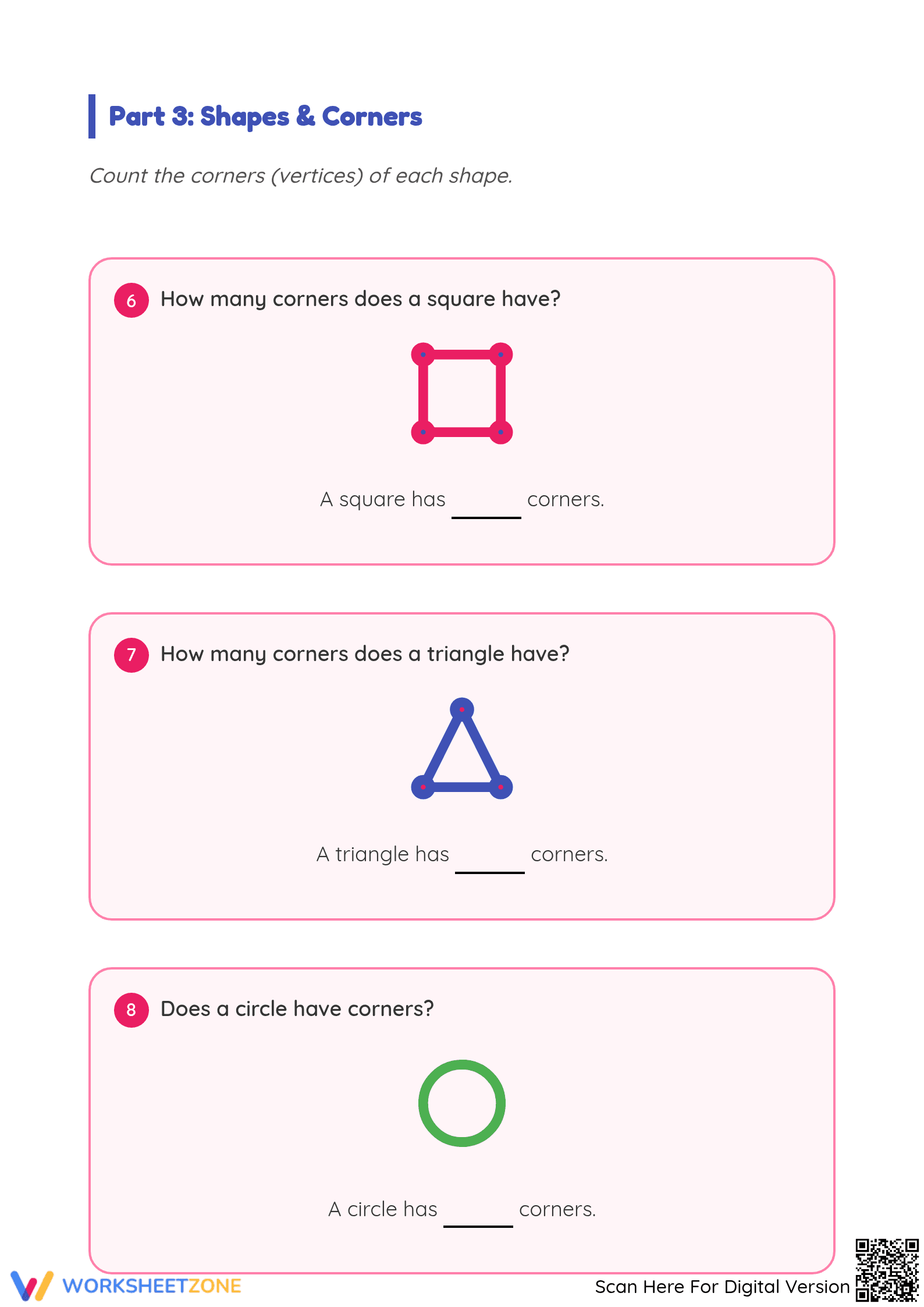
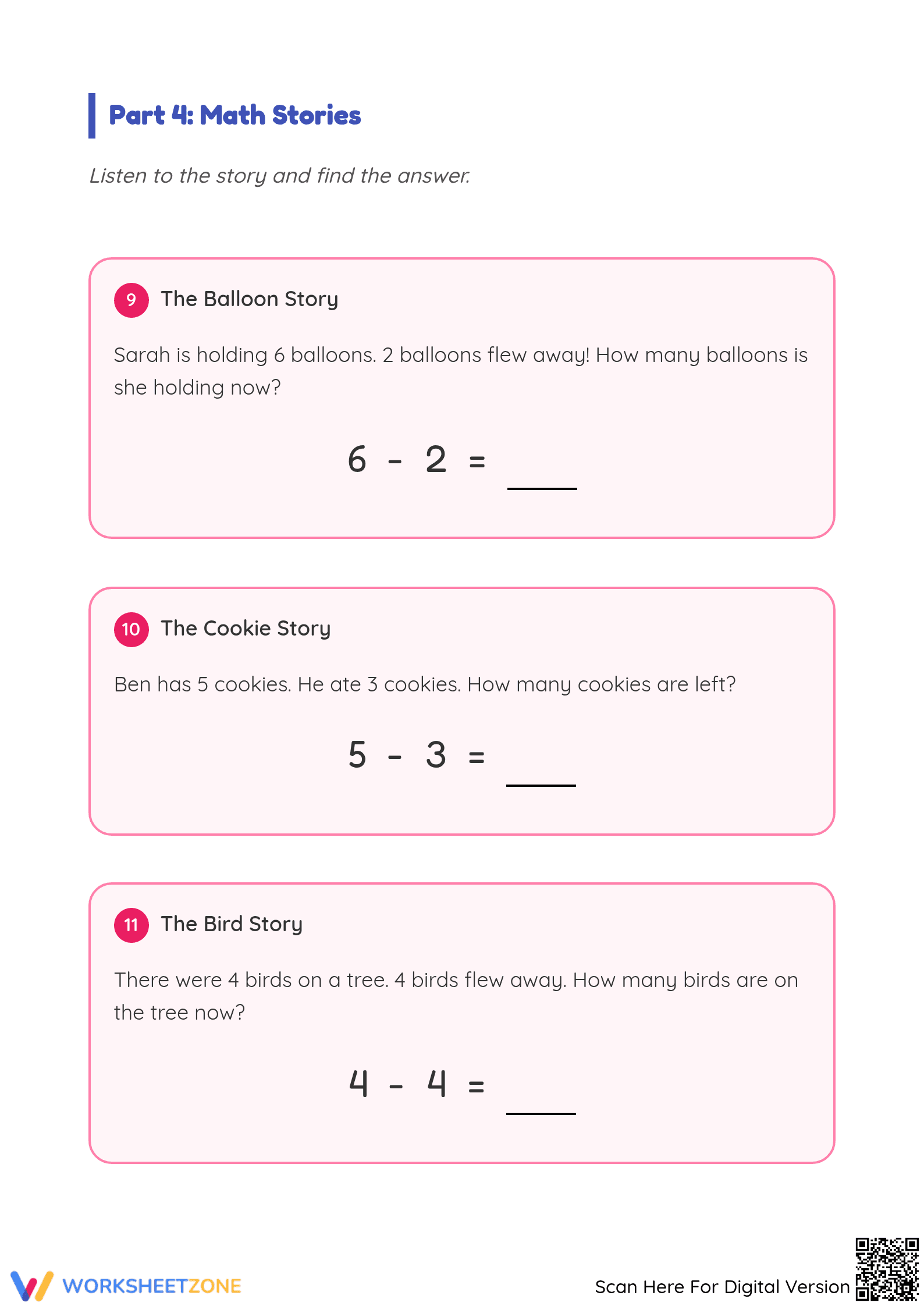
This five-page assessment includes twelve tasks designed to probe mathematical competencies. The packet features visual counting using shapes, identification of subtraction symbols, and vertex counting. It also incorporates three "Math Stories" transitioning students from concrete objects to abstract problem-solving. A full answer key is provided for quick grading and consistent evaluation.
The assessment provides clear evidence of mastery across multiple domains. Each task maps to sub-skills within the operations and algebraic thinking framework. Teachers can utilize results to categorize performance into tiers based on accuracy in visual and word-based problems. Scores can be entered into gradebooks or used for IEP progress notes and differentiated groups.
The primary focus is CCSS.MATH.CONTENT.K.OA.A.1, representing addition and subtraction with objects and drawings. The geometry portion supports CCSS.MATH.CONTENT.K.G.B.4 regarding analyzing two-dimensional shapes. Both standard codes can be copied directly into lesson plans, IEP goals, or district curriculum mapping tools to ensure alignment across the primary grade levels.
Use this assessment as a summative unit check or a formative mid-year benchmark. During administration, observe how students interact with "Math Stories"—noting whether they count individual objects or recognize the subtraction pattern. This observation provides insight into their transition from concrete to representational thinking. Most learners will complete the entire five-page assessment within 20 to 30 minutes.
This resource is designed for Kindergarten students but serves as an excellent review for Grade 1 learners. It is effective for students who benefit from visual scaffolding and clear, segmented tasks. Pair this assessment with a direct instruction lesson on "take away" concepts or a shared reading of a math-themed storybook for context.
According to the NAEP framework for early mathematics, the ability to transition between multiple representations—such as drawings, verbal stories, and formal symbols—is a critical predictor of long-term arithmetic success. This assessment aligns with CCSS.MATH.CONTENT.K.OA.A.1 by requiring students to count objects, interpret "Math Stories," and identify correct expressions for "take away" scenarios. Research from Fisher & Frey (2014) emphasizes that targeted checks for understanding allow teachers to bridge the gap between guided instruction and independent mastery through the gradual release of responsibility. By evaluating both geometric vertex counting and operational fluency, this packet ensures a balanced view of a child's mathematical development. The inclusion of a drawing task specifically addresses the representational requirements of the standard, ensuring that students can express mathematical relationships visually. This data-driven approach supports evidence-based instruction and provides a reliable baseline for calculating student growth throughout the academic year.


