































Essential Weather Preparedness Word Search | Grades 4–5 ELA

Paste this activity's link or code into your existing LMS (Google Classroom, Canvas, Teams, Schoology, Moodle, etc.).
Students can open and work on the activity right away, with no student login required.
You'll still be able to track student progress and results from your teacher account.
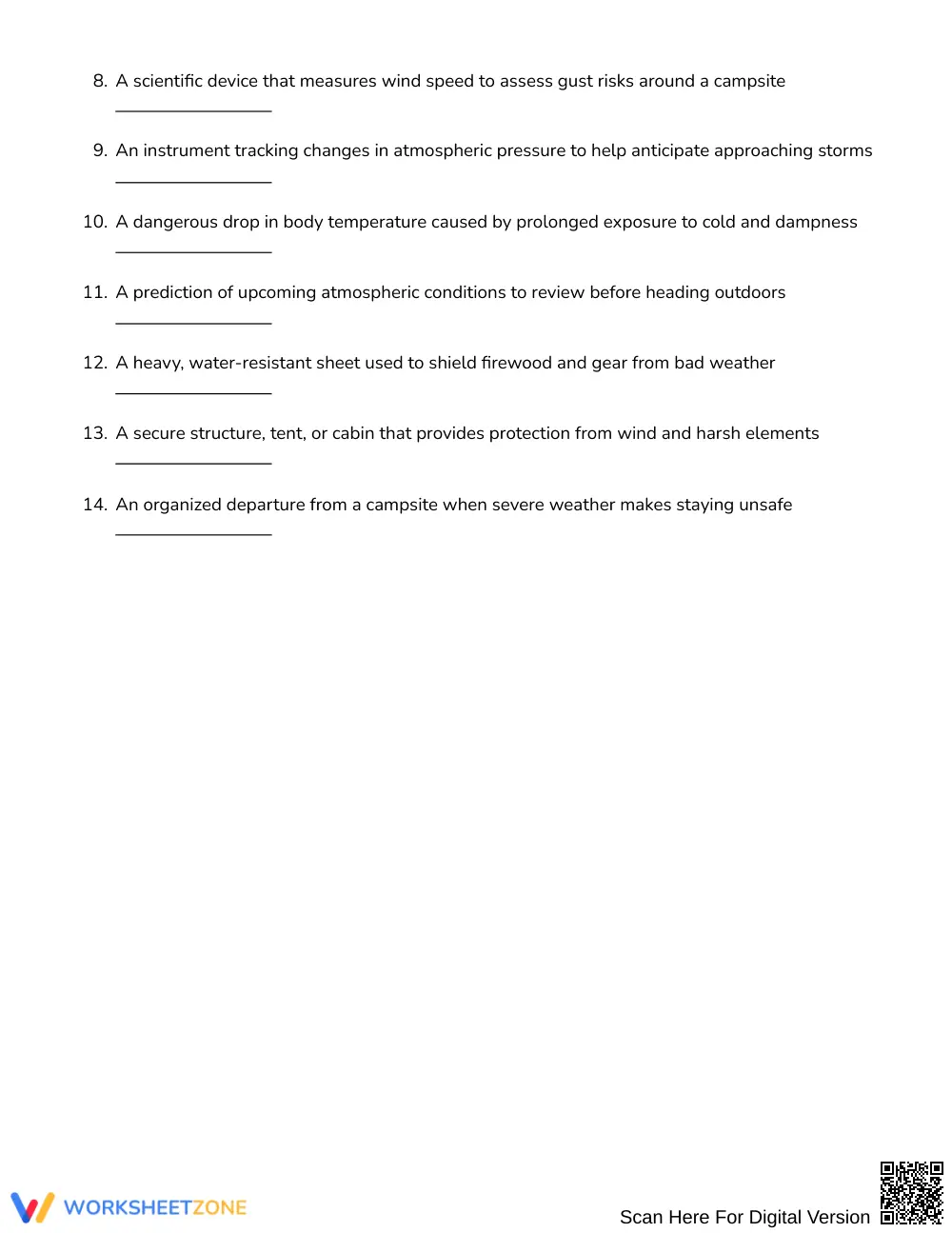
Equip upper elementary learners with vital safety language using this camping weather preparedness word search. Students decode 14 domain-specific vocabulary terms by solving descriptive clues before searching the letter grid. This activity reinforces outdoor science and emergency readiness concepts while expanding reading comprehension and spelling proficiency.
At a Glance
- Grade: Grades 4–5 · Subject: English Language Arts (ELA)
- Standard: Not standards-assessed — vocabulary enrichment
- Skill Focus: Weather preparedness vocabulary
- Format: 3 pages · 14 words · Answer key included · PDF
- Best For: Vocabulary review and emergency preparedness enrichment
- Time: 20–30 minutes
This 3-page printable set includes a student puzzle sheet, a full-size solution key, and an organized clue reference list. Rather than scanning a simple list, students read 14 contextual definitions for critical terms like hypothermia, barometer, anemometer, and tarpaulin. Learners identify the target term from the clue before seeking it out, reinforcing active recall over passive letter matching.
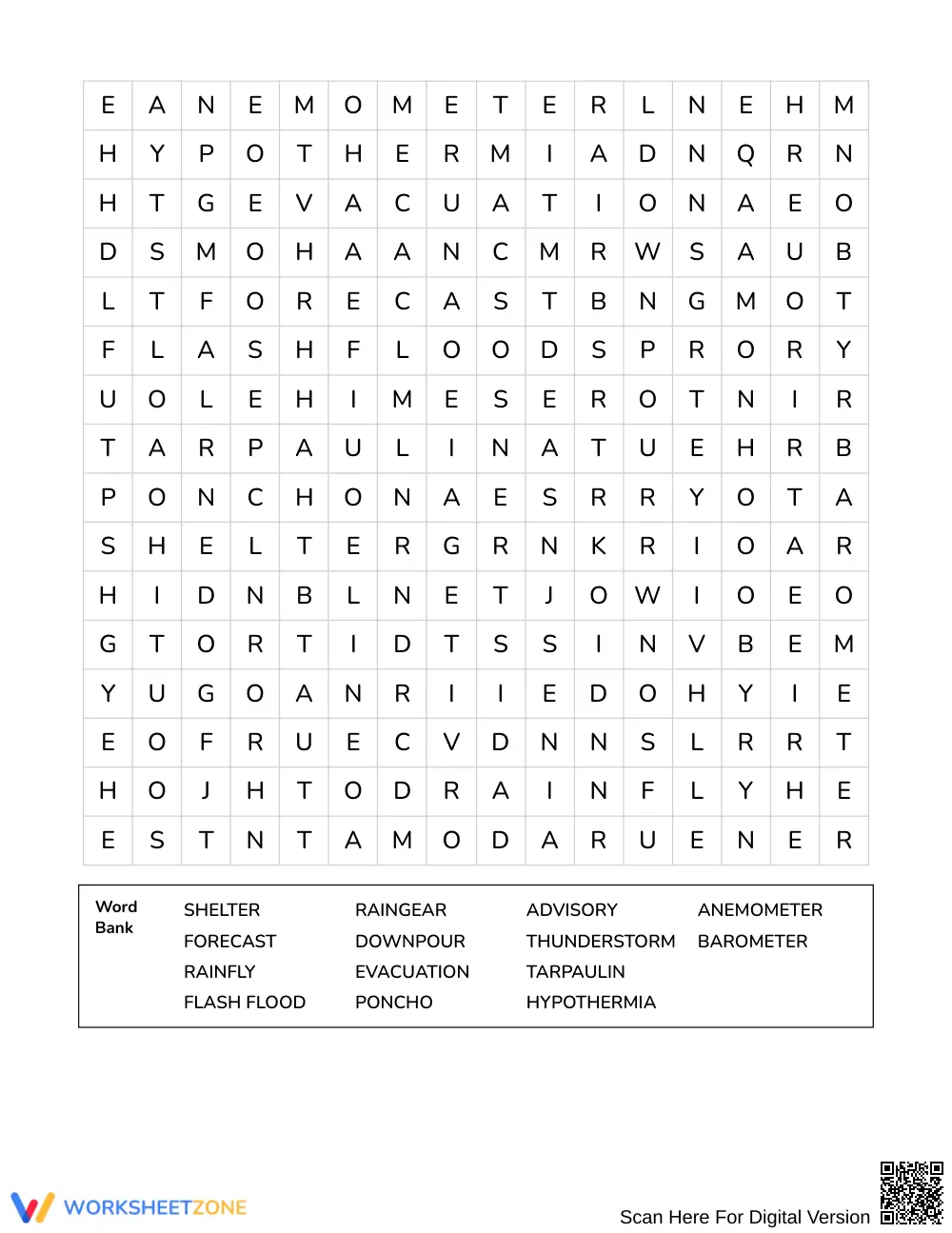
The puzzle features a focused 16 × 16 letter grid designed to challenge Grades 4–5 students without causing visual fatigue. Words are hidden in four specific directions: northeast, east, southeast, and south. A shuffled word bank provides reference support, while the clue-detective layout requires students to demonstrate conceptual understanding of storms, shelter gear, and evacuation protocols before tracing letters across the grid.
This activity serves as dedicated vocabulary enrichment and is not aligned to a specific state or national standard. It supports cross-curricular literacy by connecting informational science terms to practical outdoor survival situations. Educators can integrate this vocabulary builder into general English Language Arts blocks or upper elementary earth science units without modifying existing curriculum maps.
Use this puzzle as an engaging introductory exercise before a severe weather informational reading unit or as an independent fast-finisher activity during writing stations. For best instructional timing, distribute the sheet directly after introducing weather monitoring instruments and outdoor safety guidelines. To formatively assess retention, observe whether students identify the terms from memory before cross-checking the clue definitions. Students typically complete the 14-word puzzle in 20 to 30 minutes.
Designed specifically for learners in Grades 4–5, this activity offers targeted support for developing readers who benefit from clear context clues and contextualized spelling practice. English language learners gain exposure to practical multi-syllable compound words and scientific terminology. Pair this word search naturally with an informational camping passage, outdoor safety anchor charts, or a non-fiction read-aloud about storm preparedness.
Vocabulary acquisition research highlights the instructional value of pairing contextual clues with active word recognition. According to Fisher & Frey (2014), intentional word study that connects definitions to authentic thematic domains strengthens orthographic mapping and reading comprehension for intermediate learners. When students in Grades 4–5 analyze domain-specific terms such as evacuation, anemometer, and downpour, they bridge conversational speaking and academic discourse. Solving descriptive clues prior to scanning letter arrangements prevents passive puzzle solving and requires students to engage in semantic retrieval. This cognitive process reinforces long-term lexical memory and improves decoding accuracy across complex texts. Providing structured opportunities to manipulate 14 targeted tier-two and tier-three terms ensures students build foundational background knowledge essential for comprehending non-fiction science passages, emergency safety protocols, and outdoor recreation safety manuals across diverse educational settings.


