
































Essential The Godfather Elements Word Search | Adults ELA

Paste this activity's link or code into your existing LMS (Google Classroom, Canvas, Teams, Schoology, Moodle, etc.).
Students can open and work on the activity right away, with no student login required.
You'll still be able to track student progress and results from your teacher account.
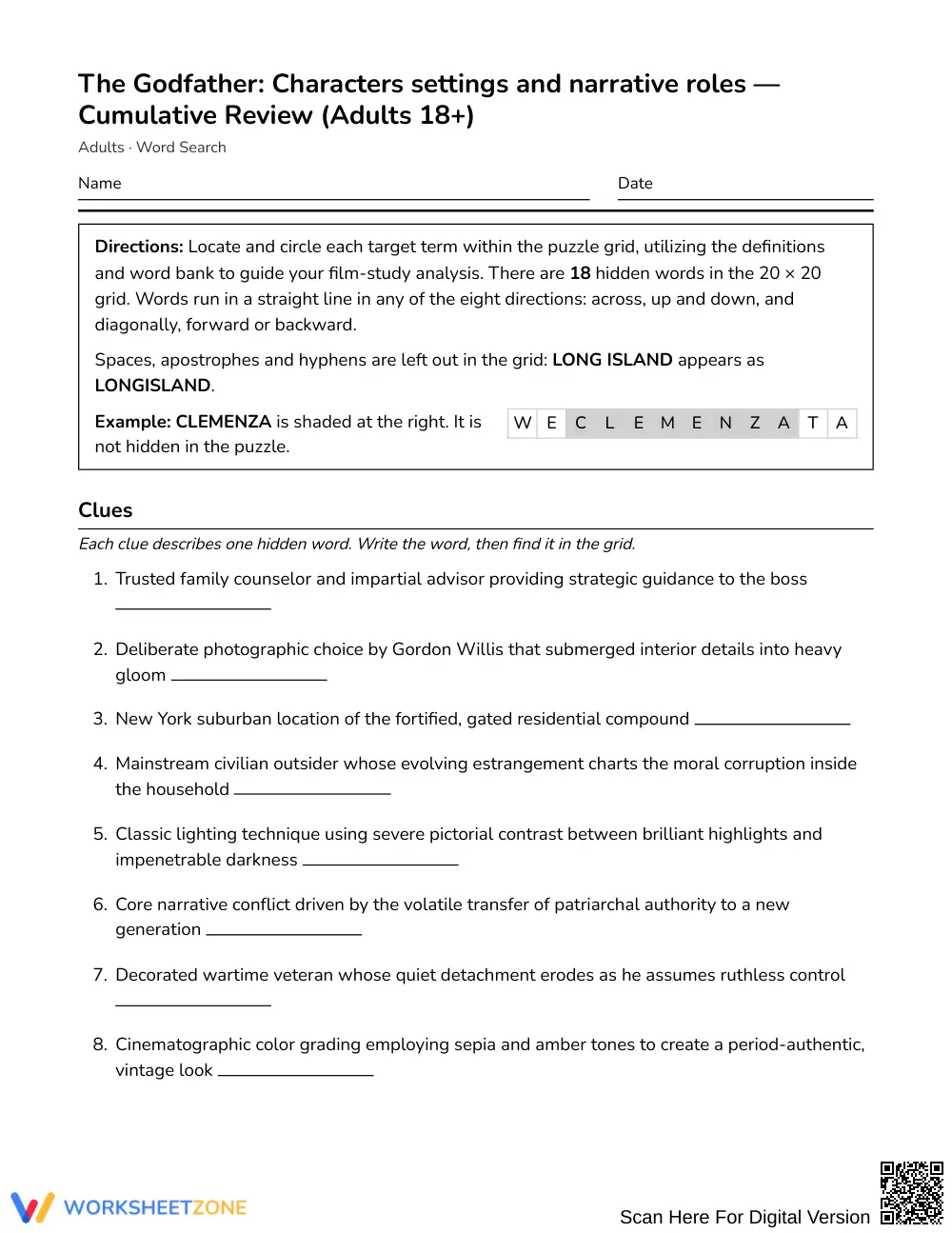
This film-study word search reinforces key narrative roles, iconic settings, and cinematography terminology from Francis Ford Coppola's The Godfather. Designed for adult learners, this activity builds critical viewing vocabulary by pairing analytical clue definitions with targeted word discovery, allowing participants to examine patriarchal conflict and thematic motifs through focused text-based review.
At a Glance
- Grade: Adults · Subject: English Language Arts (ELA)
- Standard: Not standards-assessed — vocabulary enrichment
- Skill Focus: Characters, settings, and narrative roles
- Format: 3 pages · 18 words · Answer key included · PDF
- Best For: Adult film study vocabulary review
- Time: 25–35 minutes
What's Inside
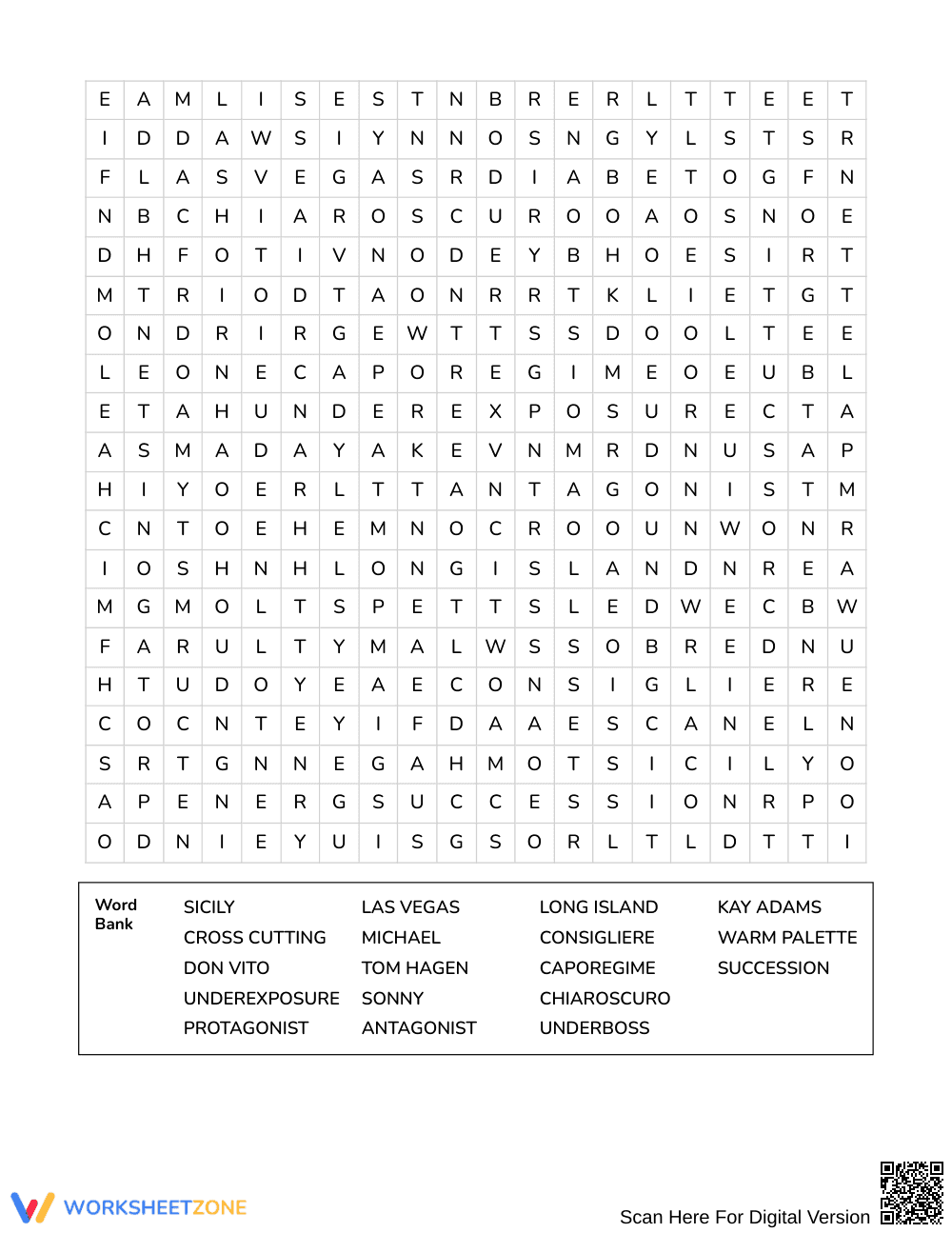
This 3-page printable set includes a comprehensive 18-word search puzzle accompanied by thematic definitions and a full 4-page answer key. The activity features a shuffled word bank alongside analytical clues that prompt learners to connect character actions, dramatic functions, suburban and desert locations, and visual lighting techniques directly to the foundational 1972 motion picture narrative.
Puzzle Mechanics
The activity challenges learners within a dense 20-by-20 letter grid containing 18 hidden vocabulary terms. Words run in all 8 cardinal and intercardinal orientations: North, Northeast, East, Southeast, South, Southwest, West, and Northwest. Learners can locate terms using the shuffled reference word bank or challenge their recall by reading the analytical clues first to identify each term before searching the grid.
Standards Alignment
This film-study activity serves as vocabulary enrichment and narrative analysis practice for post-secondary and adult education. Because it is intended for adult enrichment, film studies electives, or lifelong learning seminars, this resource is not aligned to K-12 academic standards. It strengthens domain-specific cinematic terminology, literary analysis of character arcs, and close-reading comprehension across multiple adult learning contexts.
How to Use It
Incorporate this puzzle after viewing the film to review narrative development and visual storytelling techniques. Facilitators can distribute the clues without the word bank as an initial retrieval exercise during small-group discussions, then provide the full grid for independent search. Adult learners typically complete the analysis and search within 25 to 35 minutes.
Who It's For
This resource is crafted specifically for adult learners in continuing education courses, film analysis electives, introductory screenwriting workshops, or community book-to-film clubs. Instructors can differentiate by encouraging advanced learners to solve the puzzle using only definition clues before consulting the word list. Pair this activity with a scene analysis breakdown of Gordon Willis's cinematography.
According to Fisher & Frey (2014), intentional exposure to domain-specific vocabulary within meaningful thematic contexts solidifies conceptual retention and improves text-based discourse across complex narrative works. In adult education settings, contextualized vocabulary exercises bridge conversational understanding and rigorous structural analysis. By linking 18 specialized cinematic and character-driven terms to analytical definitions, this non-assessed enrichment resource prompts adult learners to examine dramatic hierarchies, lighting contrasts, and narrative pacing without extraneous cognitive load. Adult educators utilizing film as literature can deploy this focused review to anchor group dialogue around character motivation, narrative succession, and period cinematography, ensuring learners actively retrieve and manipulate specialized terms. The accompanying multi-page solution grid provides clear visual confirmation of word placements, supporting autonomous checking and flexible classroom pacing.


