




























Essential Text Navigation Worksheet | Grade 9 English I
Paste this activity's link or code into your existing LMS (Google Classroom, Canvas, Teams, Schoology, Moodle, etc.).
Students can open and work on the activity right away, with no student login required.
You'll still be able to track student progress and results from your teacher account.
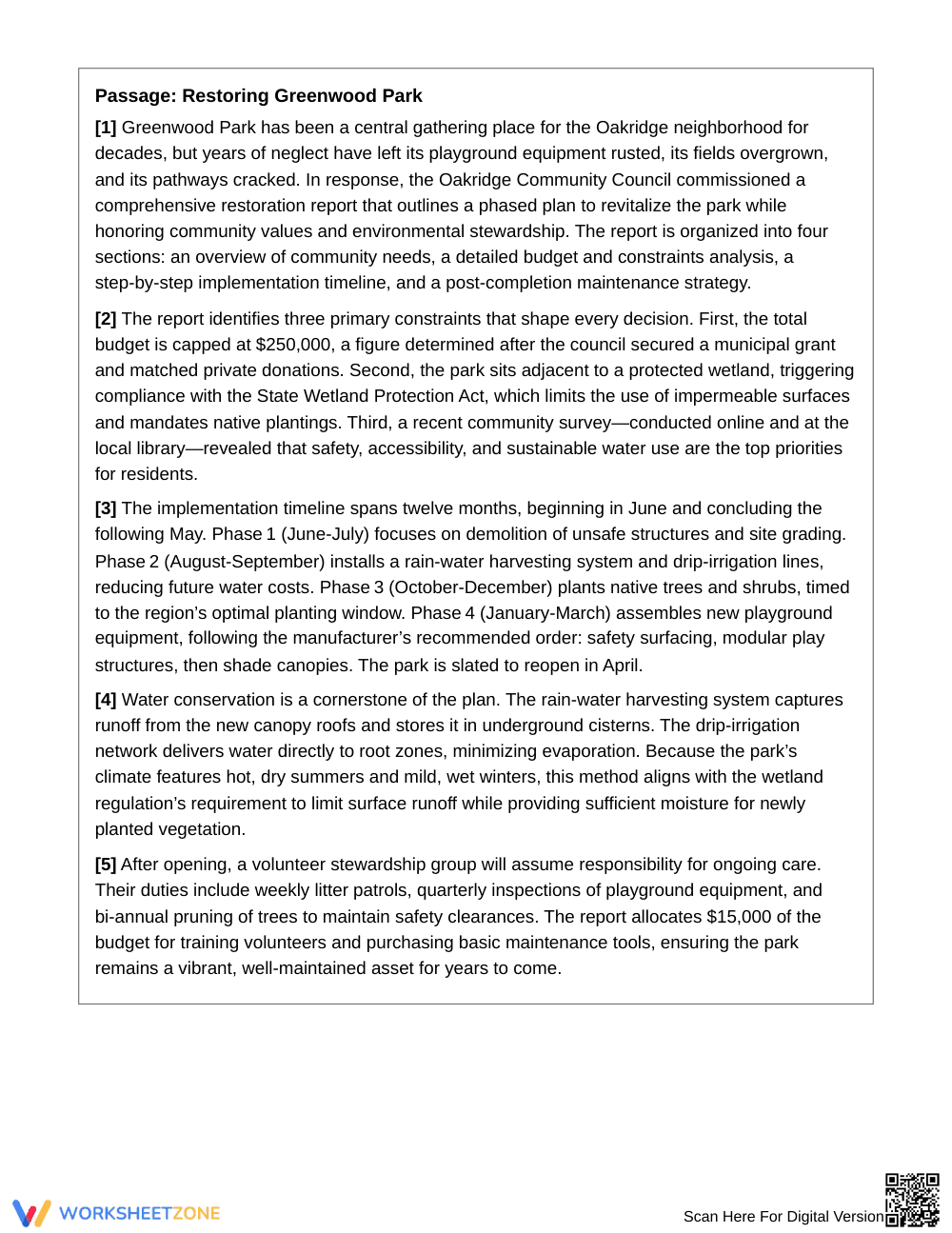
This Grade 9 informational text worksheet trains students to dissect complex civic proposals, extract structural limitations, and evaluate real-world project planning. High school readers navigate a detailed municipal park restoration report, identifying technical constraints, computing project milestones, and defending budget allocations through rigorous textual evidence.
At a Glance
- Grade: 9 · Subject: English I
- Standard: Analyze informational text structure, locate constraints, and cite evidence
- Skill Focus: Redesign Navigation for a Specific Reader
- Format: 5 pages · 10 problems · Answer key included · PDF
- Best For: Close reading and informational analysis
- Time: 40–50 minutes
What's Inside
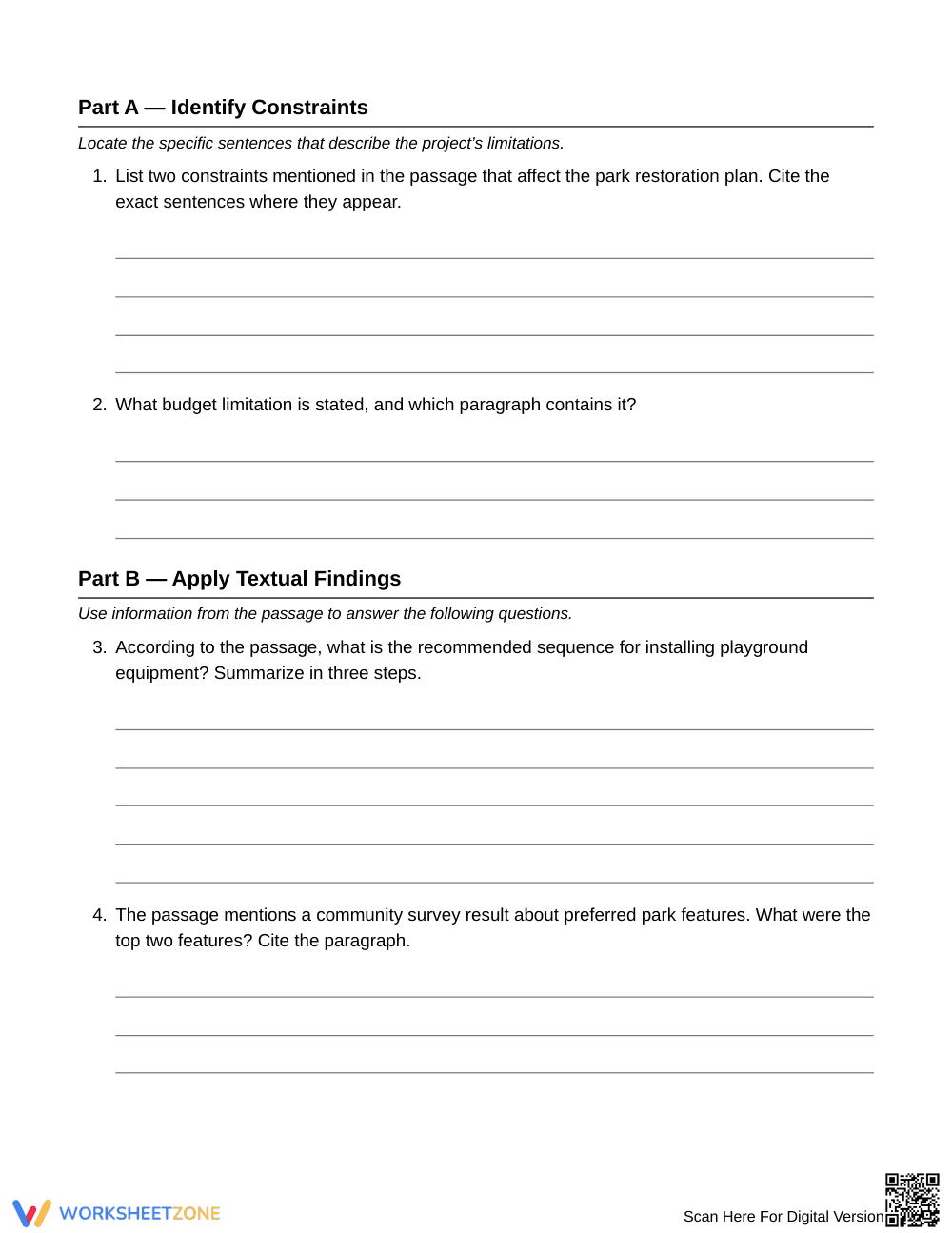
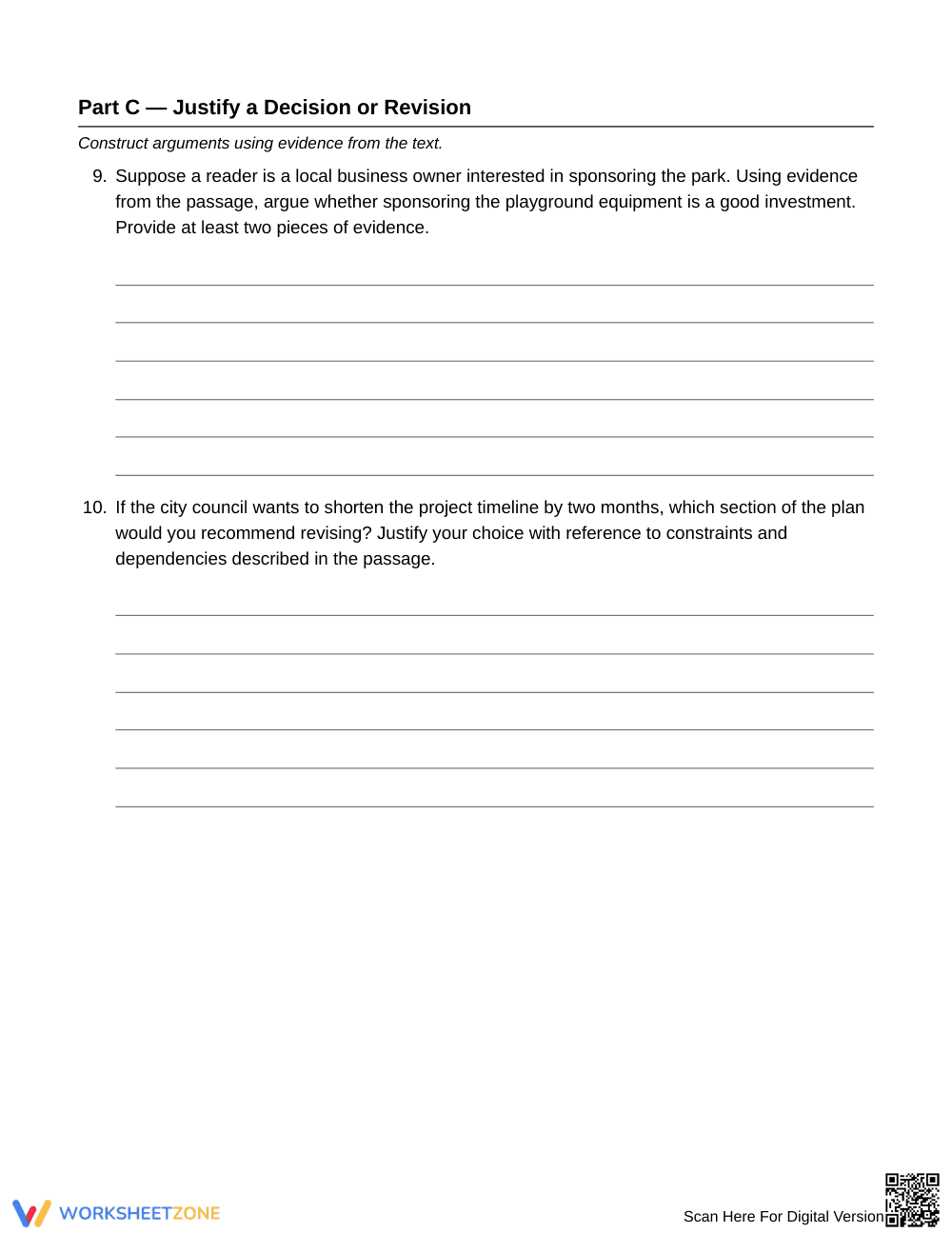
Across 5 printable pages, students engage with a 5-paragraph informational report titled "Restoring Greenwood Park." The worksheet provides 10 rigorous analytical tasks divided into constraint identification, procedural application, and evaluative argumentation. It features a complete 2-page answer key with model explanations, exact paragraph citations, and suggested argumentative points for flexible grading.
Skill Progression
- Guided practice (Part A, 2 tasks): Students locate direct project constraints and funding ceilings, citing exact sentences and paragraph numbers to establish baseline textual accuracy with high scaffolding.
- Supported practice (Part B, 6 tasks): Students calculate timeline phases, interpret environmental mandates, and organize operational sequences using moderate textual synthesis.
- Independent practice (Part C, 2 tasks): Students construct defensible policy arguments and propose schedule revisions for specific stakeholders with minimal teacher prompting.
This sequence embodies the gradual-release model, moving learners purposefully from literal comprehension to evaluative decision-making.
Standards Alignment
This informational text resource targets central high school reading standards by requiring students to cite strong textual evidence, trace multi-step technical processes, and evaluate procedural logic across complex sections. Students analyze how specific constraints determine organizational decisions within real-world reports. Both standard codes can be copied directly into lesson plans, IEP goals, or district curriculum mapping tools.
How to Use It
Deploy this activity after direct instruction on text structures as guided partner practice, or assign it as an independent reading evaluation during an informational unit. While students work, circulate to observe whether they calculate timeline milestones accurately in Part B or merely skim dates. Students typically finish all 10 tasks in 40 to 50 minutes.
Who It's For
This resource serves general education ninth-grade English I students mastering informational text analysis, as well as secondary students requiring practice with functional technical documents. For differentiated support, pair this activity with an organizational text features anchor chart or a structured graphic organizer highlighting project dependencies.
Secondary literacy development relies on structured opportunities for students to interrogate complex informational texts, locate explicit constraints, and evaluate structural logic for specific audiences. According to Fisher & Frey (2014), the gradual release of responsibility framework significantly accelerates comprehension when adolescent learners progress methodically from literal textual retrieval to independent evaluative reasoning. This Grade 9 English I resource establishes rigorous analytical routines across 10 targeted tasks, requiring high school students to extract budgetary limitations, sequence technical project workflows, and justify operational revisions within an authentic municipal planning scenario. By integrating concrete structural dependencies—including state environmental legislation, strict fiscal limits, and phased restoration timelines—the material reinforces active reading strategies necessary for postsecondary academic success. Consequently, educators gain reliable formative assessment data on student ability to synthesize technical details, cross-examine procedural constraints, and defend evidence-based claims efficiently.


