




























Views
Downloads

Essential Supporting Examples Worksheet | Grade 7 ELA

Paste this activity's link or code into your existing LMS (Google Classroom, Canvas, Teams, Schoology, Moodle, etc.).
Students can open and work on the activity right away, with no student login required.
You'll still be able to track student progress and results from your teacher account.
This Grade 7 informational text worksheet equips middle school readers to evaluate, select, and defend textual evidence that illustrates complex interactions between individuals, events, and ideas. Students read a multi-paragraph text and justify why specific examples serve as the strongest support for central arguments.
At a Glance
- Grade: 7 · Subject: ELA
- Standard:
RI.7.3— Analyze how text interactions between individuals, events, and ideas develop meaning- Skill Focus: Defending the most useful supporting example
- Format: 5 pages · 8 problems · Answer key included · PDF
- Best For: Close reading and argument analysis practice
- Time: 40–50 minutes
What's Inside
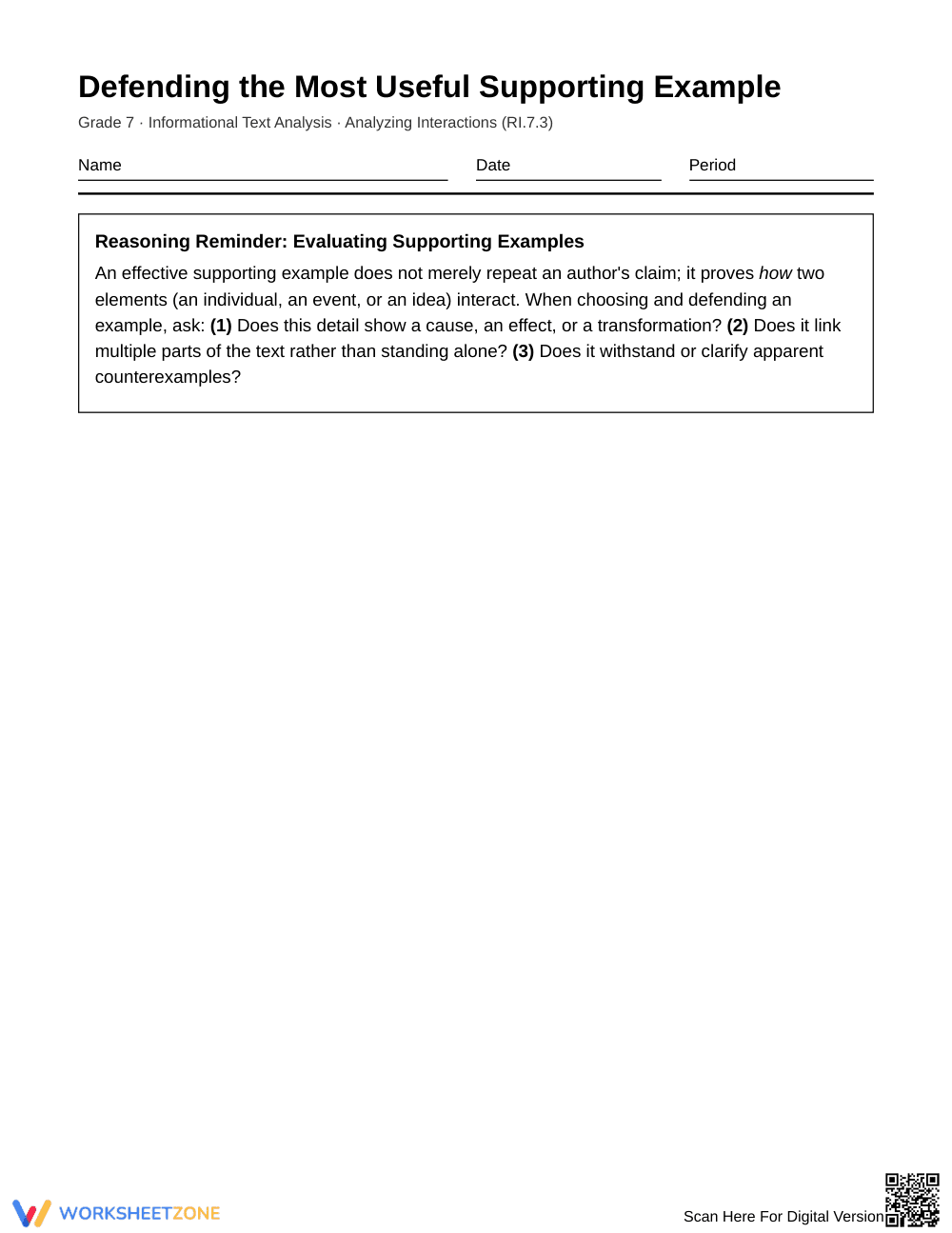
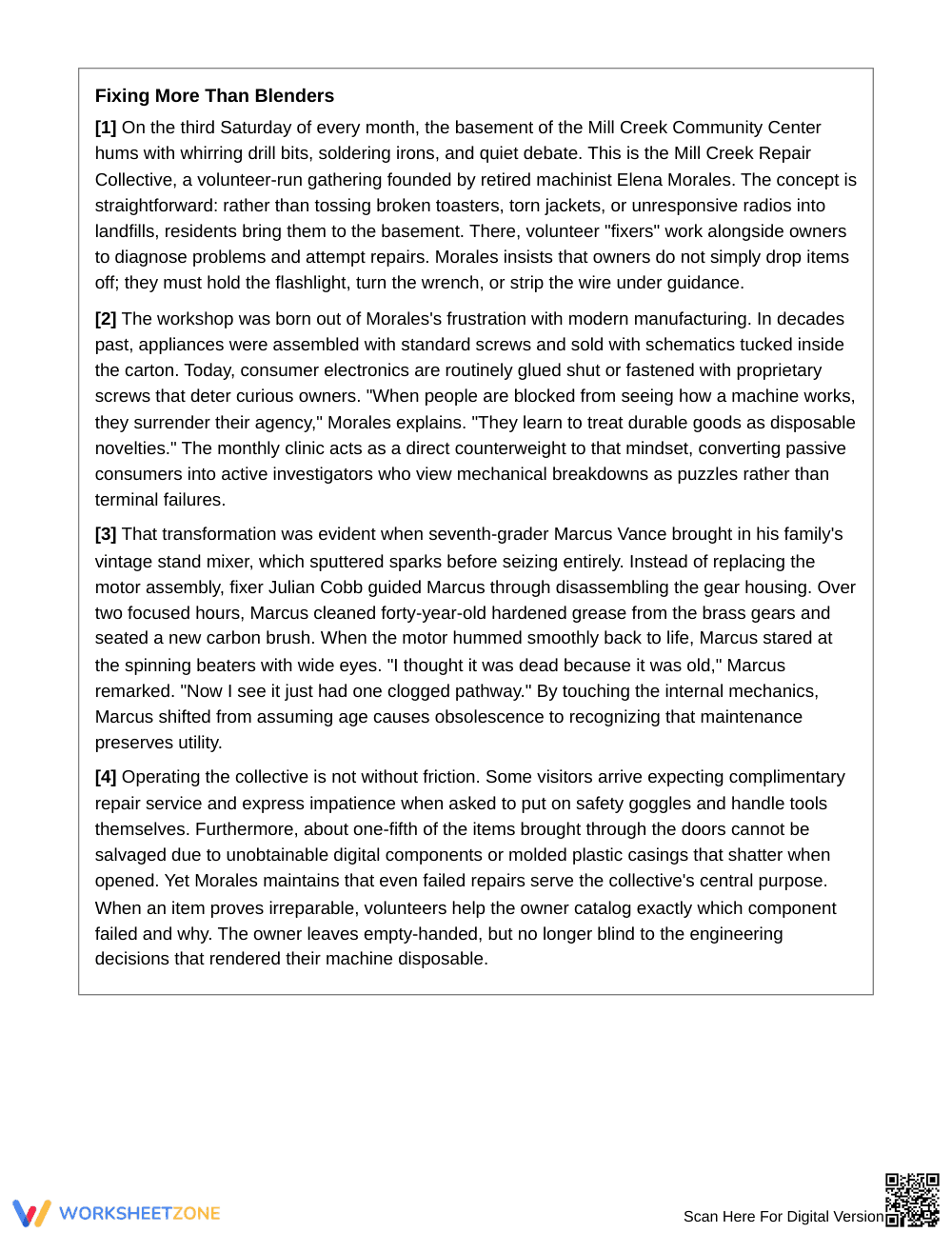
The resource includes an original informational passage, "Fixing More Than Blenders," accompanied by a foundational reasoning reminder box. Across 5 pages, students complete 8 rigorous analytical tasks divided into targeted sections, supported by an extensive 3-page answer key featuring exemplar written responses and evaluation rationale.
Skill Progression
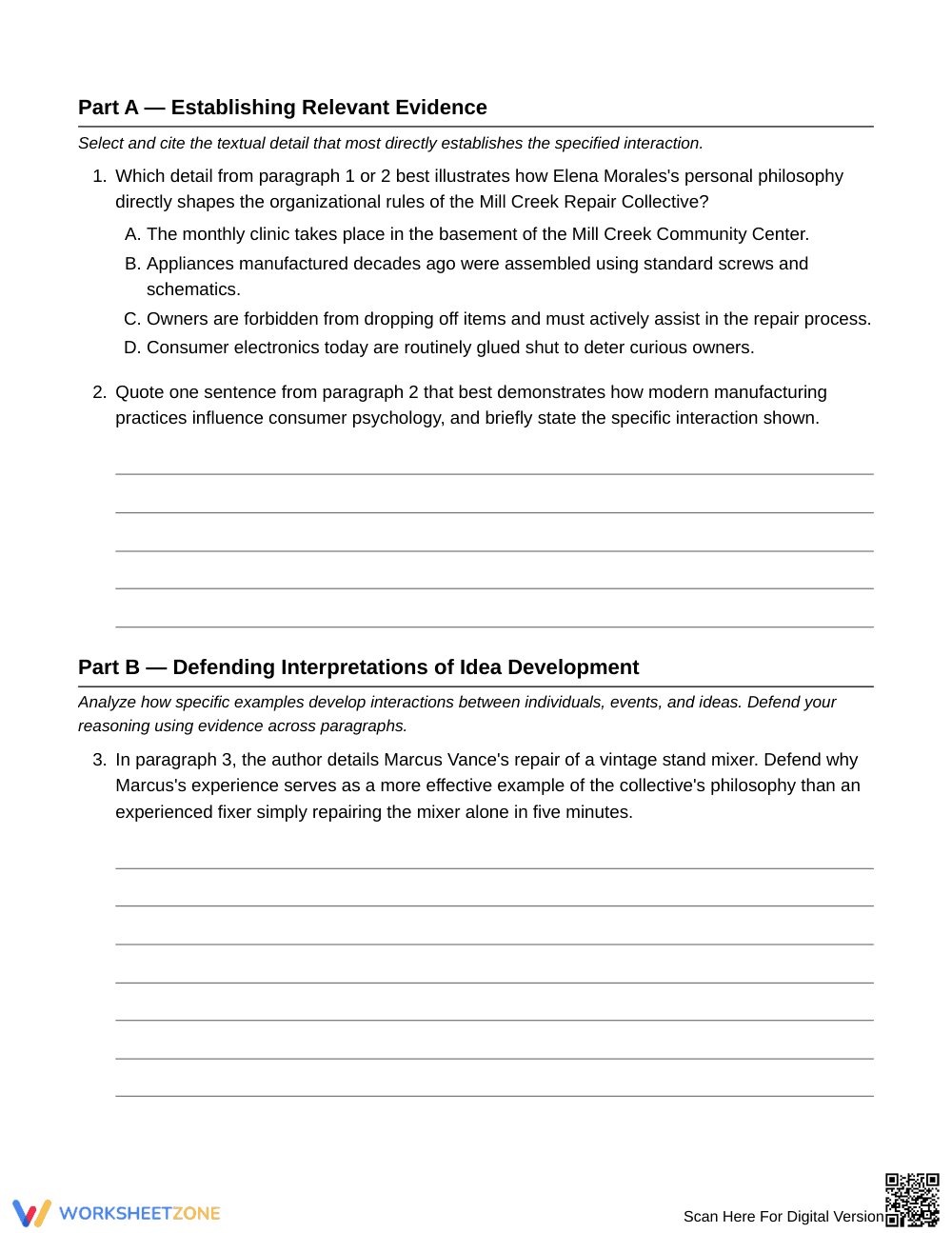
- Guided Practice (Part A, Problems 1–2): Establishes basic identification skills through multiple-choice and short-citation prompts with low scaffolded support.
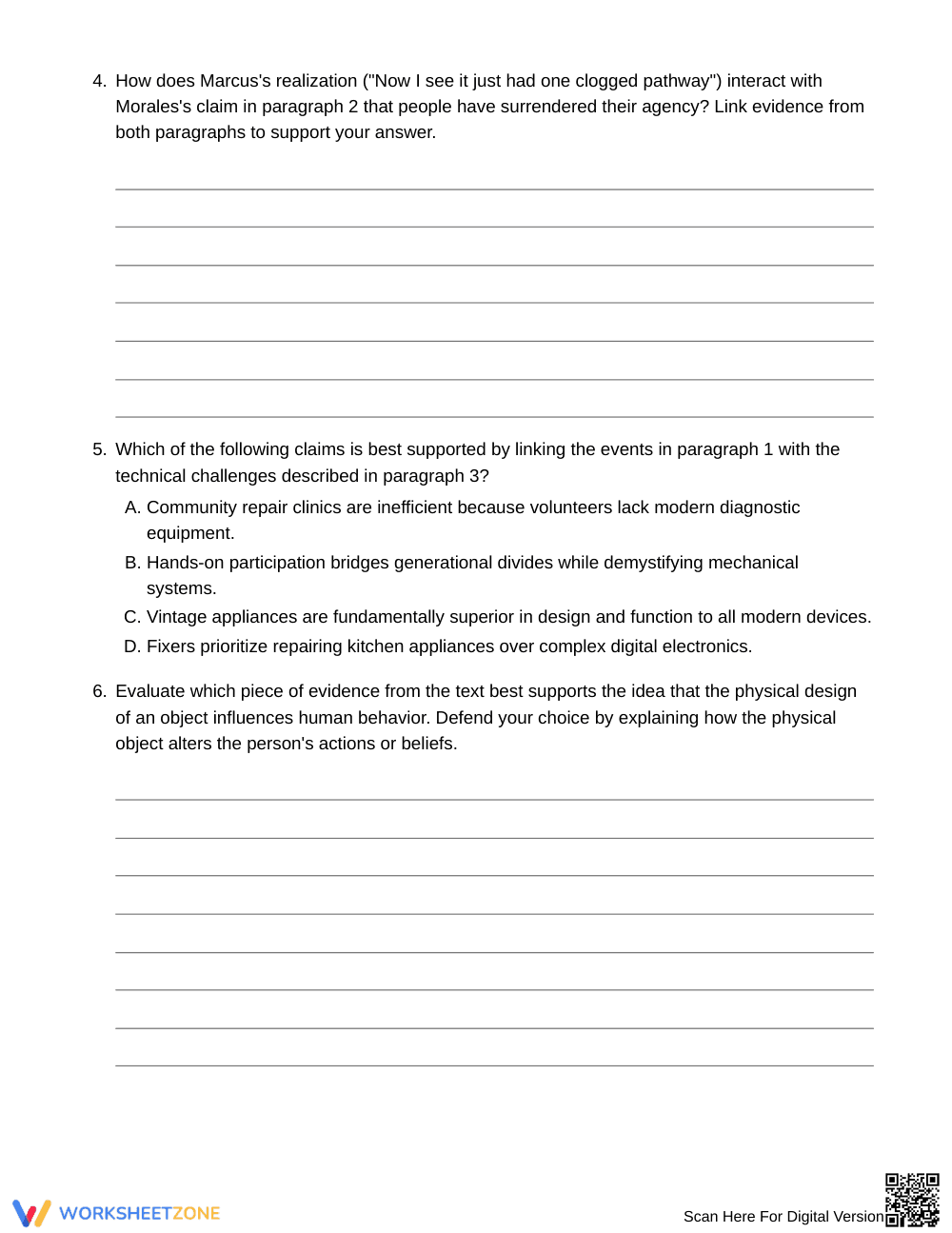
- Supported Practice (Part B, Problems 3–6): Challenges students to defend interpretations and trace multi-paragraph connections between human actions and institutional philosophy with moderate cognitive demand.
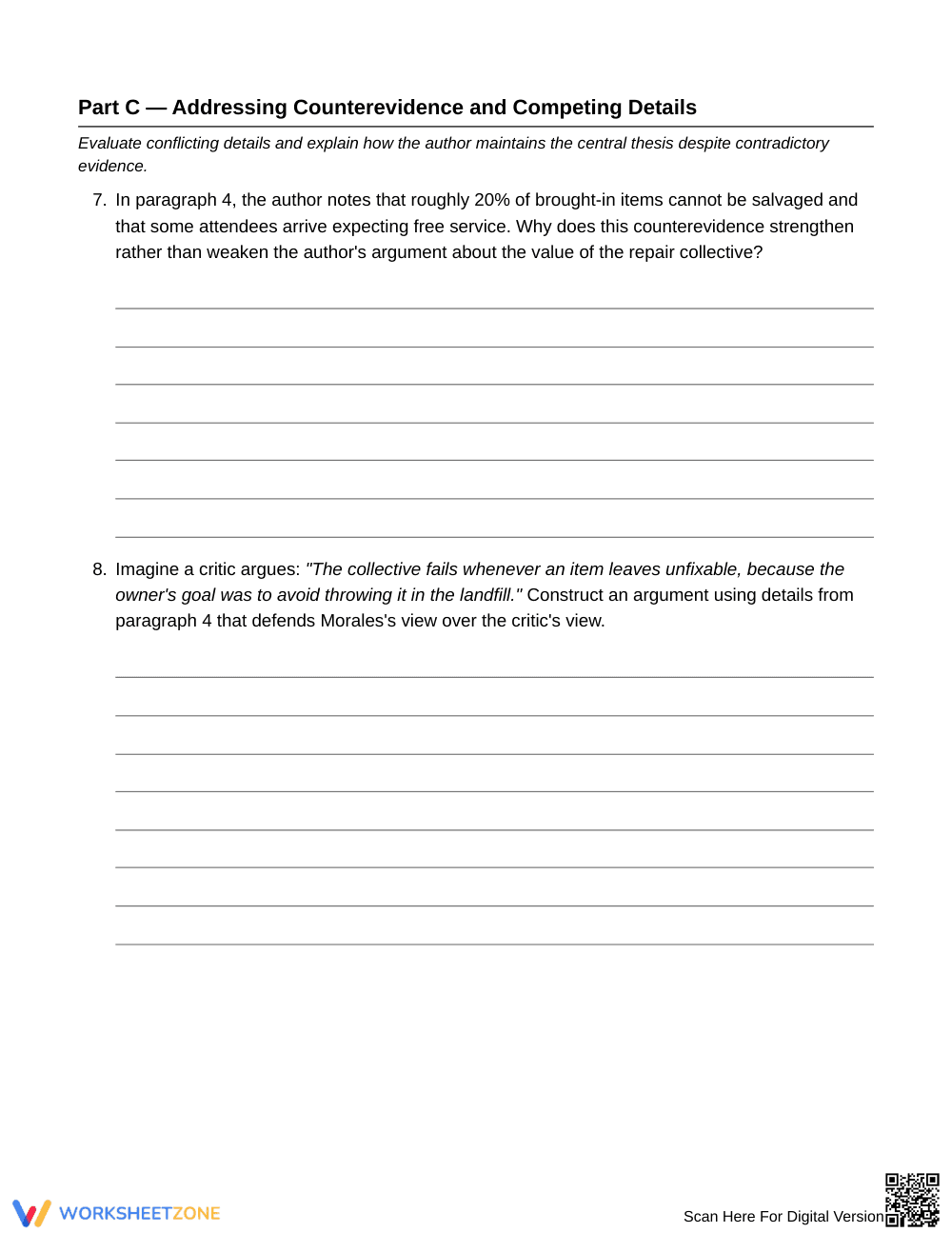
- Independent Practice (Part C, Problems 7–8): Requires independent synthesis to evaluate counterevidence, dismantle opposing viewpoints, and defend nuanced claims with no scaffolds.
This structured progression reflects the gradual release of responsibility model, ensuring students master foundational identification before constructing complex argumentative defenses.
Standards Alignment
This worksheet directly targets RI.7.3: Analyze the interactions between individuals, events, and ideas in a text (e.g., how ideas influence individuals or events, or how individuals influence ideas or events). It also reinforces supporting standard RI.7.1 by requiring textual citations for all defended claims. Both standard codes can be copied directly into lesson plans, IEP goals, or district curriculum mapping tools.
How to Use It
Deploy this resource during the guided practice phase of an informational text unit or after direct instruction on evidence-based argumentation. During work time, formatively assess whether students merely summarize text details or successfully articulate how physical actions transform abstract mindsets. Typical completion requires 40 to 50 minutes of focused analytical writing.
Who It's For
Designed for general education Grade 7 ELA classrooms, this resource also serves honors Grade 6 or intervention Grade 8 cohorts needing focused reinforcement in analytical reasoning. Pair it with an anchor chart on evaluating evidence quality or a mini-lesson on counterarguments.
According to Fisher & Frey (2014), engaging middle school readers in close analytical evaluation of textual evidence builds robust disciplinary literacy and critical argumentation skills. This Grade 7 informational text resource aligns with standard RI.7.3 by requiring learners to analyze how individuals, events, and ideas interact across a 4-paragraph text. Rather than asking students to simply locate explicit facts, the 8 structured tasks require students to defend why a specific example provides superior evidentiary support over competing details. By evaluating counterevidence and linking multiple textual claims, students develop the analytical stamina demanded by state assessments and secondary research standards. The included 3-page answer key provides complete model responses to assist educators in tracking analytical accuracy and evaluating written rationale efficiently during instruction.


