




























Essential Pig Anatomy Data Worksheet | Grade 7-12 Science
Paste this activity's link or code into your existing LMS (Google Classroom, Canvas, Teams, Schoology, Moodle, etc.).
Students can open and work on the activity right away, with no student login required.
You'll still be able to track student progress and results from your teacher account.
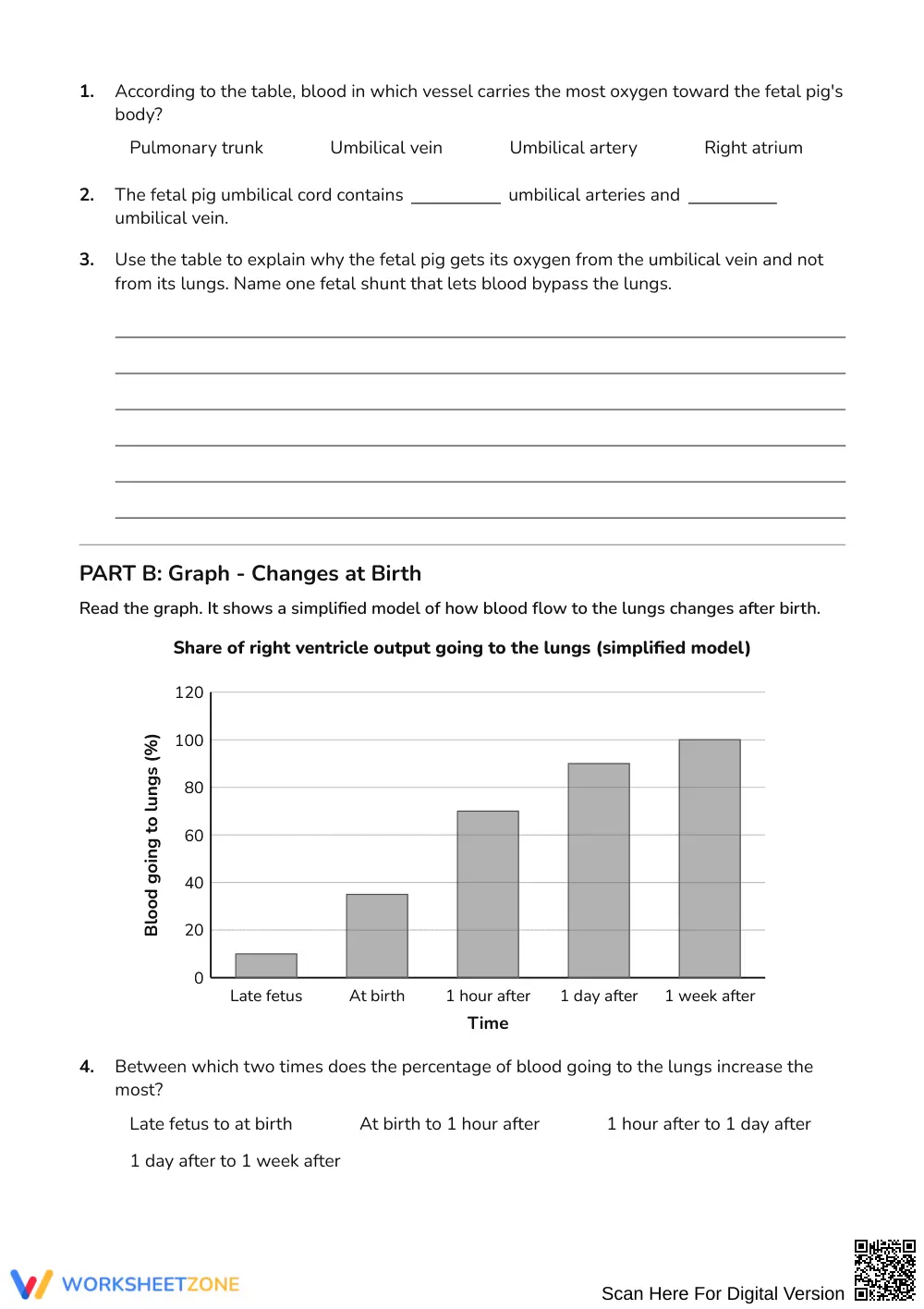
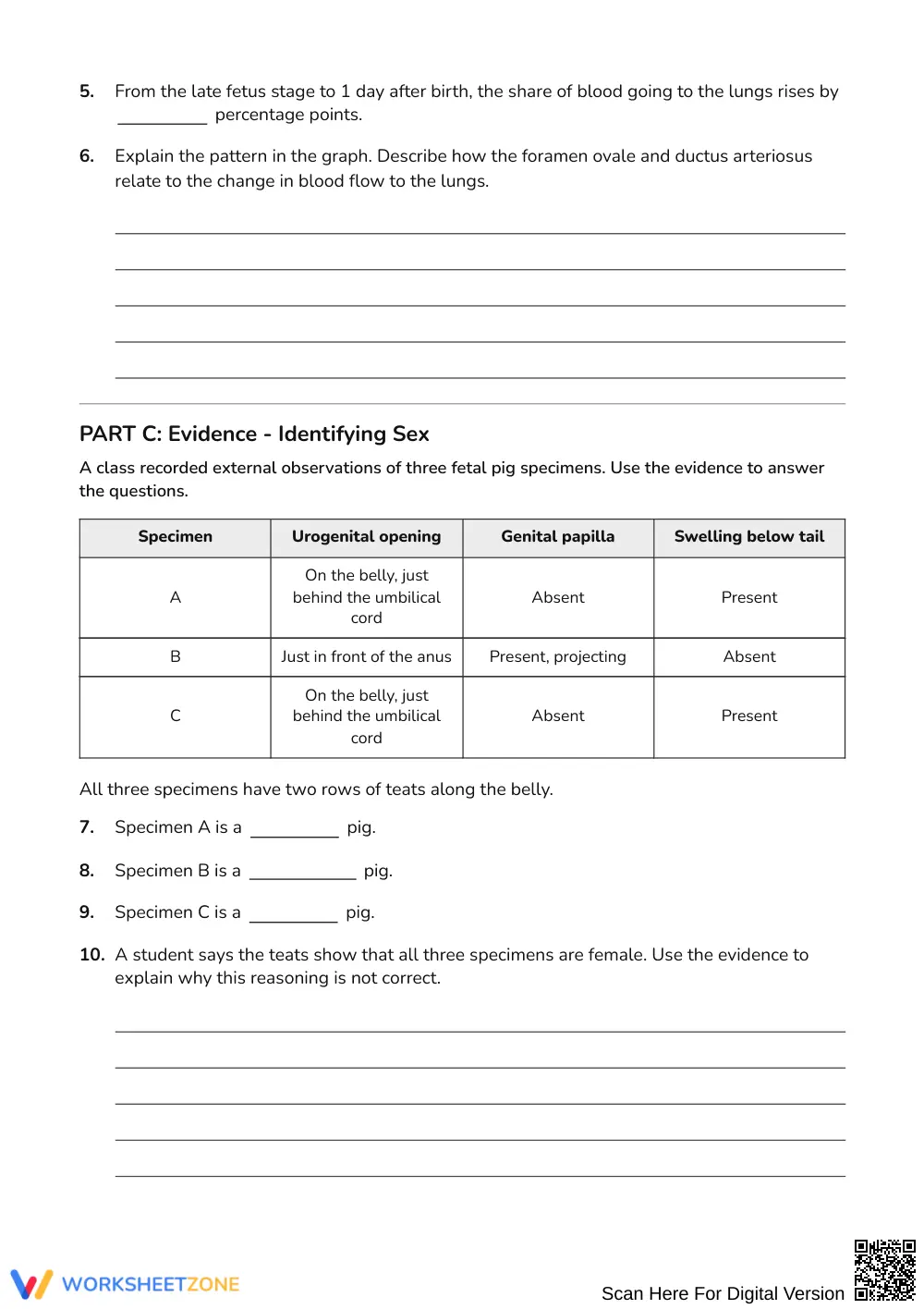
This pig anatomy practice resource equips secondary life science students to interpret anatomical models, circulation graphs, external physical evidence, and dissection notes across 25 structured questions. Learners evaluate cardiovascular blood flow shunts, calculate oxygen saturation drops, distinguish biological sex using morphological criteria, and synthesize physiological claims using authentic scientific reasoning.
At a Glance
- Grade: Grades 7–12 · Subject: Science
- Standard: Scientific Models & Data — Interpret models, graphs, and observational data to evaluate anatomical systems
- Skill Focus: Evidence-based anatomical data and model interpretation
- Format: 4 pages · 25 problems · Answer key included · PDF
- Best For: Pre-dissection prep or lab data review
- Time: 45–60 minutes
What's Inside
Spanning 4 student-facing pages, this resource presents four multi-part inquiry tasks that incorporate realistic biological data representations. Students interact with a front-view fetal heart model, a pulmonary circulation transition graph, a physical specimen comparison matrix, and real-world dissection field notes. The packet features multiple-choice identification items, data table calculations, structured explanations, and a complete claim-evidence-reasoning (CER) framework, accompanied by a comprehensive 4-page answer key.
Skill Progression
- Guided practice (Part A): Students examine a labeled fetal heart diagram and complete a pre-structured oxygen saturation table to identify internal shunts like the ductus arteriosus and foramen ovale.
- Supported practice (Parts B & C): Learners interpret right-ventricle output curves after birth and analyze physical evidence matrices to correct common misconceptions regarding external sex characteristics.
- Independent practice (Part D): Students independently read unorganized visceral dissection notes, classify thoracic and abdominal organs, and compose a formal claim-evidence-reasoning argument describing renal anatomy.
This systematic design follows the gradual-release model, moving students from guided diagram analysis toward independent biological argument construction.
Standards Alignment
This worksheet supports national life science standards that require students to develop and use anatomical models, analyze quantitative physiological data, and construct evidence-based arguments about organ system interactions. Both standard codes can be copied directly into lesson plans, IEP goals, or district curriculum mapping tools.
How to Use It
Deploy this 45–60 minute activity either immediately before a hands-on mammalian dissection or as a dedicated post-lab analysis assignment. For formative assessment, monitor Part C to check whether students rely on superficial traits like teat count rather than diagnostic anatomical landmarks such as urogenital opening placement.
Who It's For
Designed for middle school and high school biology, anatomy, and physiology classes, this worksheet supports diverse learners through clear data tables and scaffolded open-response lines. Pair this packet with a mammalian organ anchor chart or a virtual dissection module to reinforce structural visualization.
According to Fisher & Frey (2014), scaffolded data analysis tasks bridge conceptual biology understanding and empirical laboratory reasoning by guiding students through structured evidence evaluation. This 4-page science worksheet targets data and model interpretation across 25 practice items, prompting secondary students to analyze fetal circulatory shifts, contrast external morphology, and classify thoracic and abdominal organs using authentic dissection observations. By integrating graphic representations of cardiac shunts alongside explicit claim-evidence-reasoning writing tasks, the resource enables learners to translate raw observational records into grounded biological conclusions. Teachers receive an actionable diagnostic tool that tracks student comprehension of mammalian organ systems, pre-natal adaptations, and comparative vertebrate anatomy across general biology or advanced physiology courses.


