





























Essential Misleading Headings Worksheet | Grade 9 English I
Paste this activity's link or code into your existing LMS (Google Classroom, Canvas, Teams, Schoology, Moodle, etc.).
Students can open and work on the activity right away, with no student login required.
You'll still be able to track student progress and results from your teacher account.
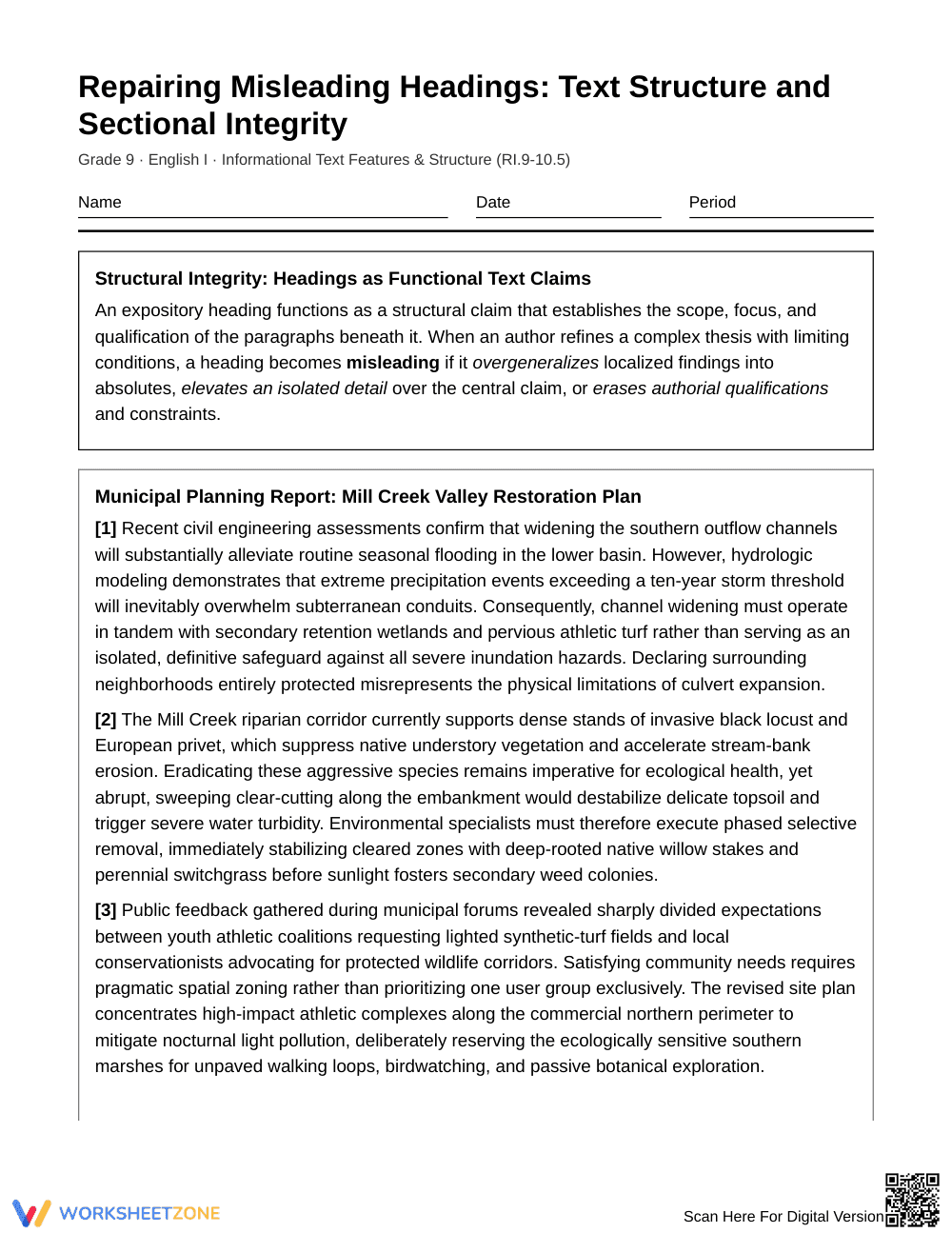
This Grade 9 informational text worksheet teaches students to evaluate expository headings as structural claims and repair misleading sectional titles. Working with a six-paragraph municipal planning report, learners identify unstated qualifications, analyze diagnostic errors in flawed peer reviews, and compose accurate, evidence-backed headings that preserve authorial nuances across complex non-fiction texts.
At a Glance
- Grade: 9 · Subject: English I
- Standard:
RI.9-10.5— Analyze in detail how an author's claims are developed by particular text sections- Skill Focus: Repair a Misleading Heading
- Format: 6 pages · 10 problems · Answer key included · PDF
- Best For: Informational text structure analysis practice
- Time: 45–60 minutes
What's Inside
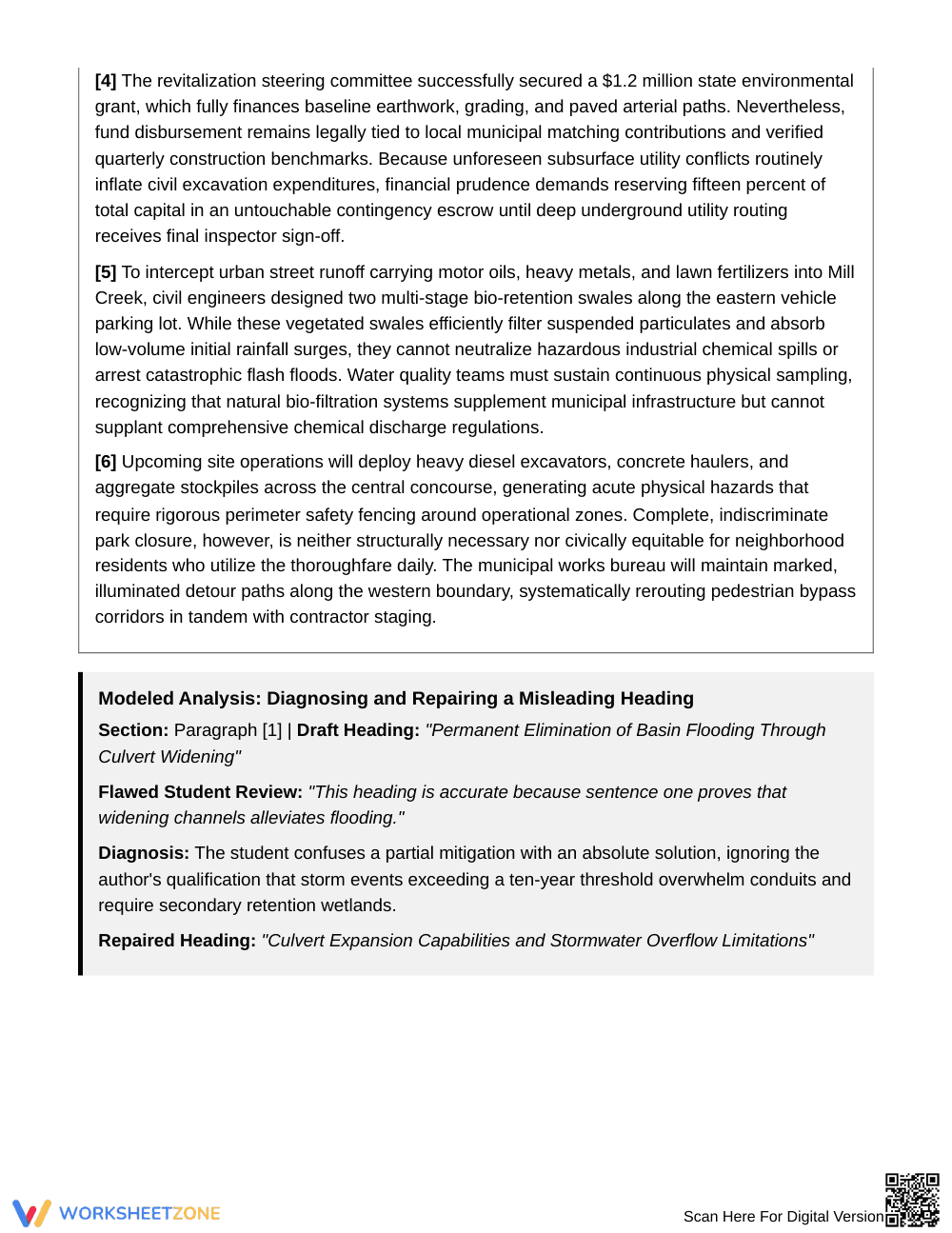
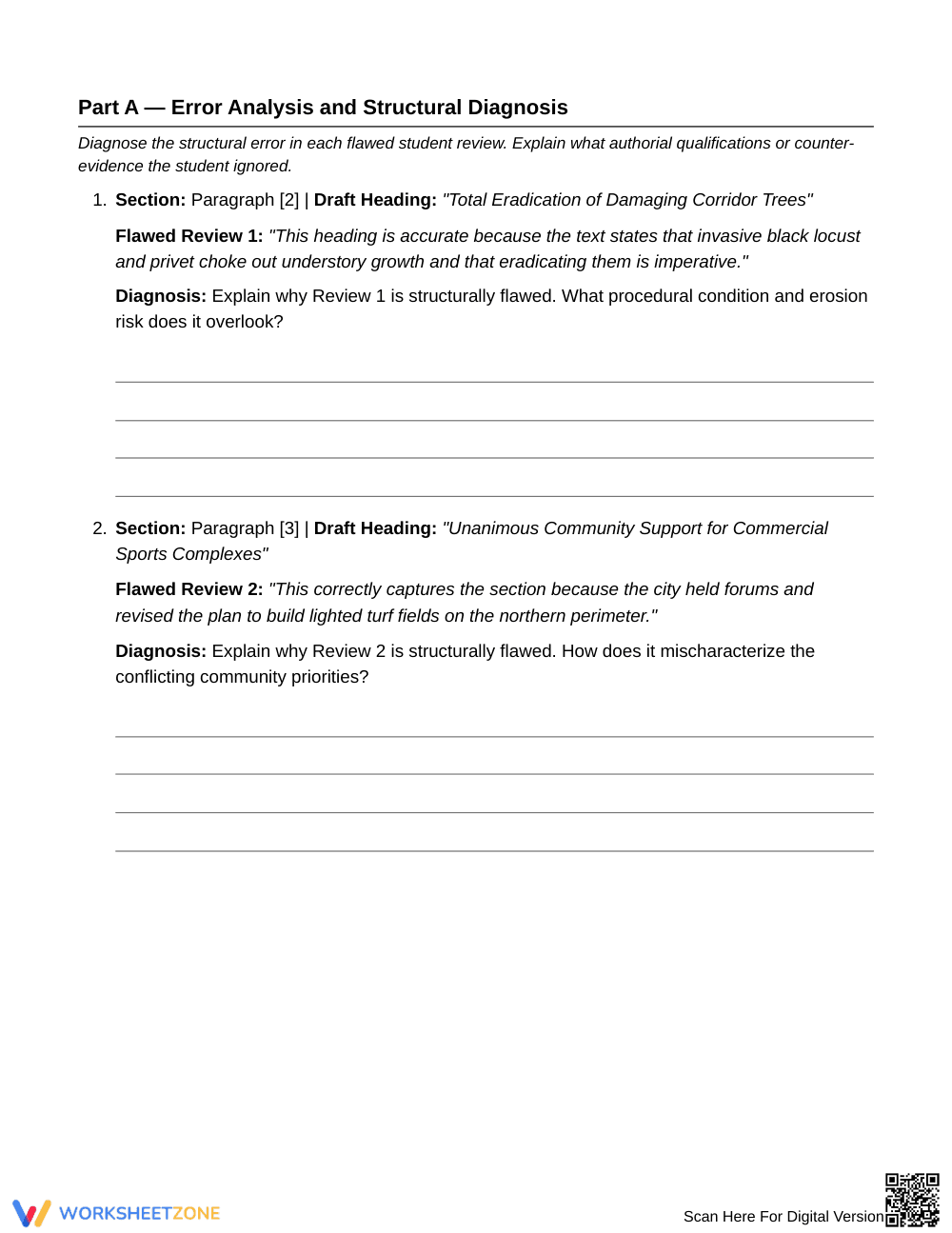
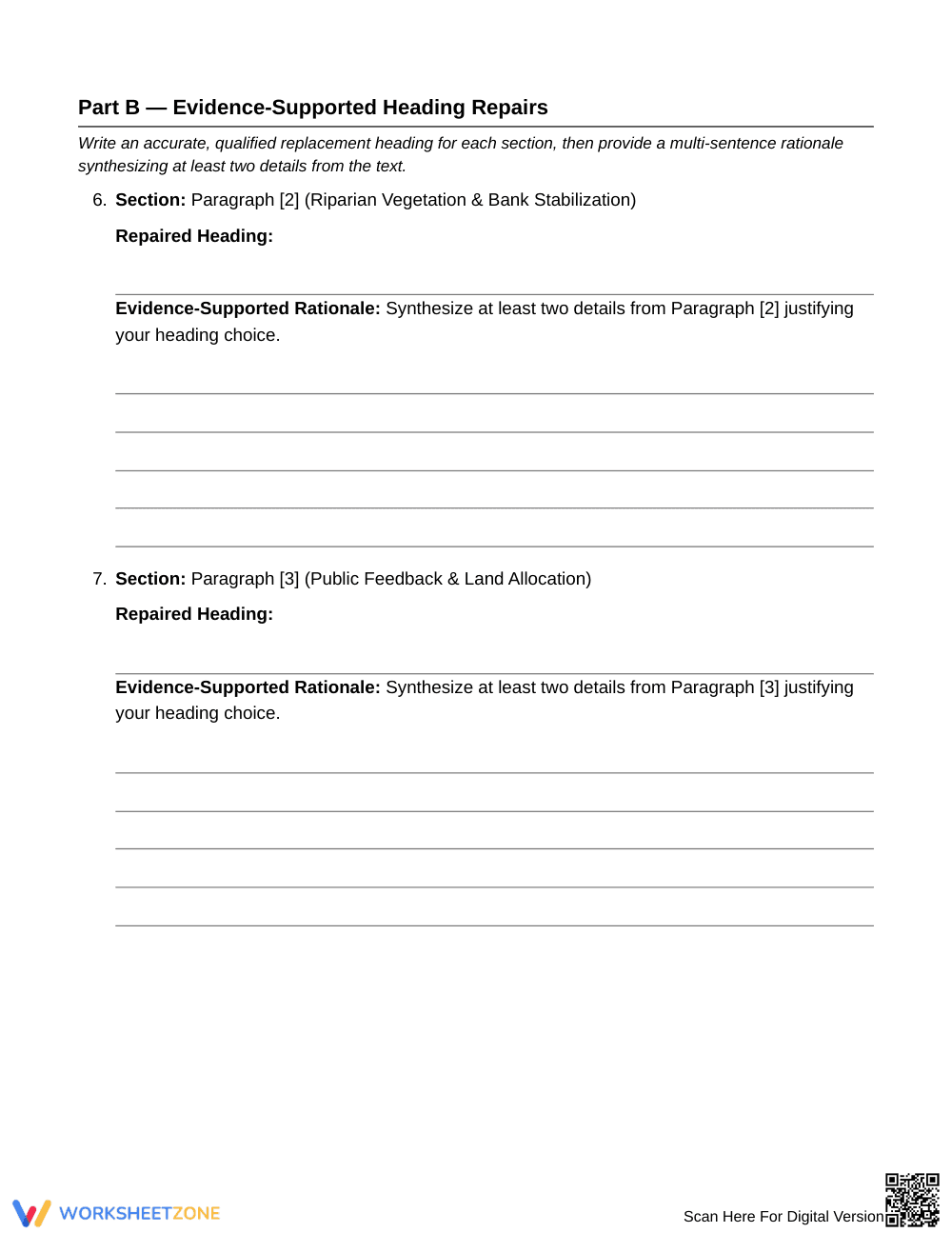
The 6-page printable resource includes an authentic municipal report on urban wetland revitalization, a structural concept guide defining headings as functional claims, a fully annotated modeled analysis, and 10 analytical tasks divided across two rigorous sections. A comprehensive 3-page answer key provides complete structural diagnoses and sample evidence-supported rationales for all student prompts.
Skill Progression
- Guided Practice: A modeled exemplar on Paragraph 1 establishes how overgeneralized student reviews misread structural scope, modeling a rigorous diagnosis and repair before independent work begins.
- Supported Practice (Tasks 1–5): Part A presents 5 flawed peer reviews for error analysis, prompting students to pinpoint overlooked procedural conditions, fiscal constraints, and ecological qualifications.
- Independent Practice (Tasks 6–10): Part B tasks students with generating 5 original replacement headings and writing multi-sentence rationales that synthesize two textual details.
This systematic progression embodies the gradual-release framework, moving learners from conceptual error identification to independent synthesis and precision writing.
Standards Alignment
This worksheet directly targets RI.9-10.5: Analyze in detail how an author's ideas or claims are developed and refined by particular sentences, paragraphs, or larger portions of a text. It also supports RI.9-10.1 by requiring strong textual citations to justify heading revisions. Both standard codes can be copied directly into lesson plans, IEP goals, or district curriculum mapping tools.
How to Use It
Deploy this activity during or after direct instruction on text structure and author's craft. For formative assessment, examine students' Part A diagnoses to identify whether they recognize nuanced constraints or confuse partial solutions with total resolutions. Expect completion within 45 to 60 minutes during a dedicated close-reading workshop or targeted small-group intervention block.
Who It's For
Designed for Grade 9 English I classrooms, pre-AP language arts cohorts, and high school reading intervention groups. To differentiate, pair the analytical text with an informational anchor chart on qualification terms (e.g., partially, contingent) or use guided sentence stems for developing Part B rationales.
Mastering informational text structures under standard RI.9-10.5 requires high school students to examine how subheadings delineate sectional scope and clarify authorial claims. According to Fisher & Frey (2014), explicit instruction in text features and deliberate error analysis enables adolescent readers to move beyond superficial skimming toward deep structural comprehension. When students evaluate draft headings against dense, multi-layered expository texts, they learn to detect subtle qualifying clauses, procedural constraints, and localized evidence that novice readers routinely overlook. This 10-task worksheet strengthens critical reading acumen by requiring students to actively diagnose logical flaws in peer interpretations and draft precise, evidence-supported sectional titles. By grounding heading repairs in direct textual citations across a multi-page municipal report, secondary learners develop the analytical discipline necessary for state standardized assessments, cross-curricular informational reading, and long-term academic literacy.


