
































Essential Football Practice Word Search | Grades 6–7 ELA

Paste this activity's link or code into your existing LMS (Google Classroom, Canvas, Teams, Schoology, Moodle, etc.).
Students can open and work on the activity right away, with no student login required.
You'll still be able to track student progress and results from your teacher account.
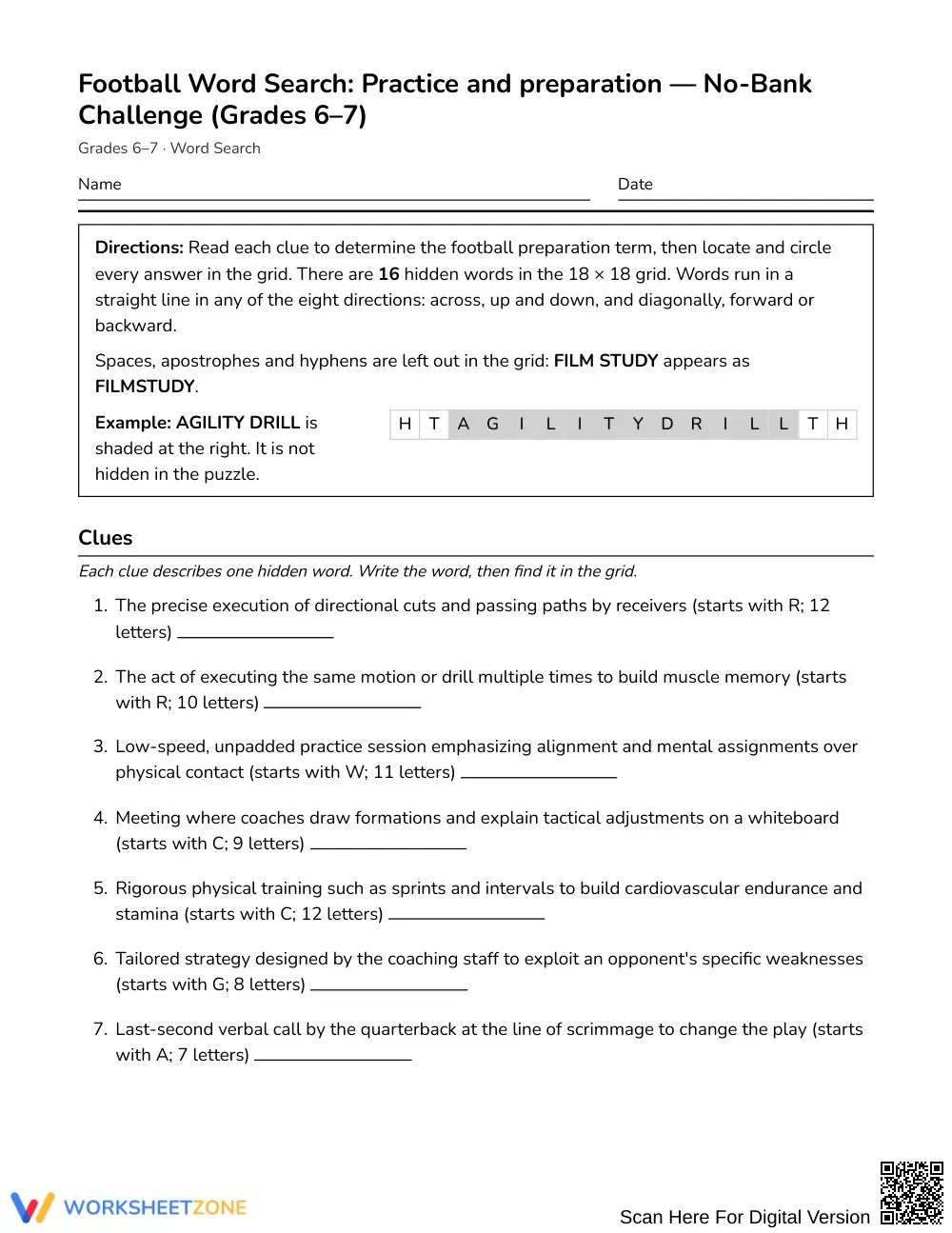
This football preparation word search strengthens domain-specific vocabulary and contextual deduction for students in Grades 6–7. By deciphering descriptive definitions rather than scanning a pre-printed word list, learners actively identify and locate 16 sports terms. This challenging no-bank format reinforces memory retention, spelling precision, and reading comprehension across a multi-page puzzle activity.
At a Glance
- Grade: Grades 6–7 · Subject: English Language Arts (ELA)
- Standard: Not standards-assessed — vocabulary enrichment
- Skill Focus: Football practice and tactical preparation terminology
- Format: 3 student pages · 16 hidden words · 4-page answer key included · PDF
- Best For: Engaging vocabulary reinforcement, emergency sub plans, and independent fast-finisher review
- Time: 25–35 minutes of active, focused student engagement
What's Inside
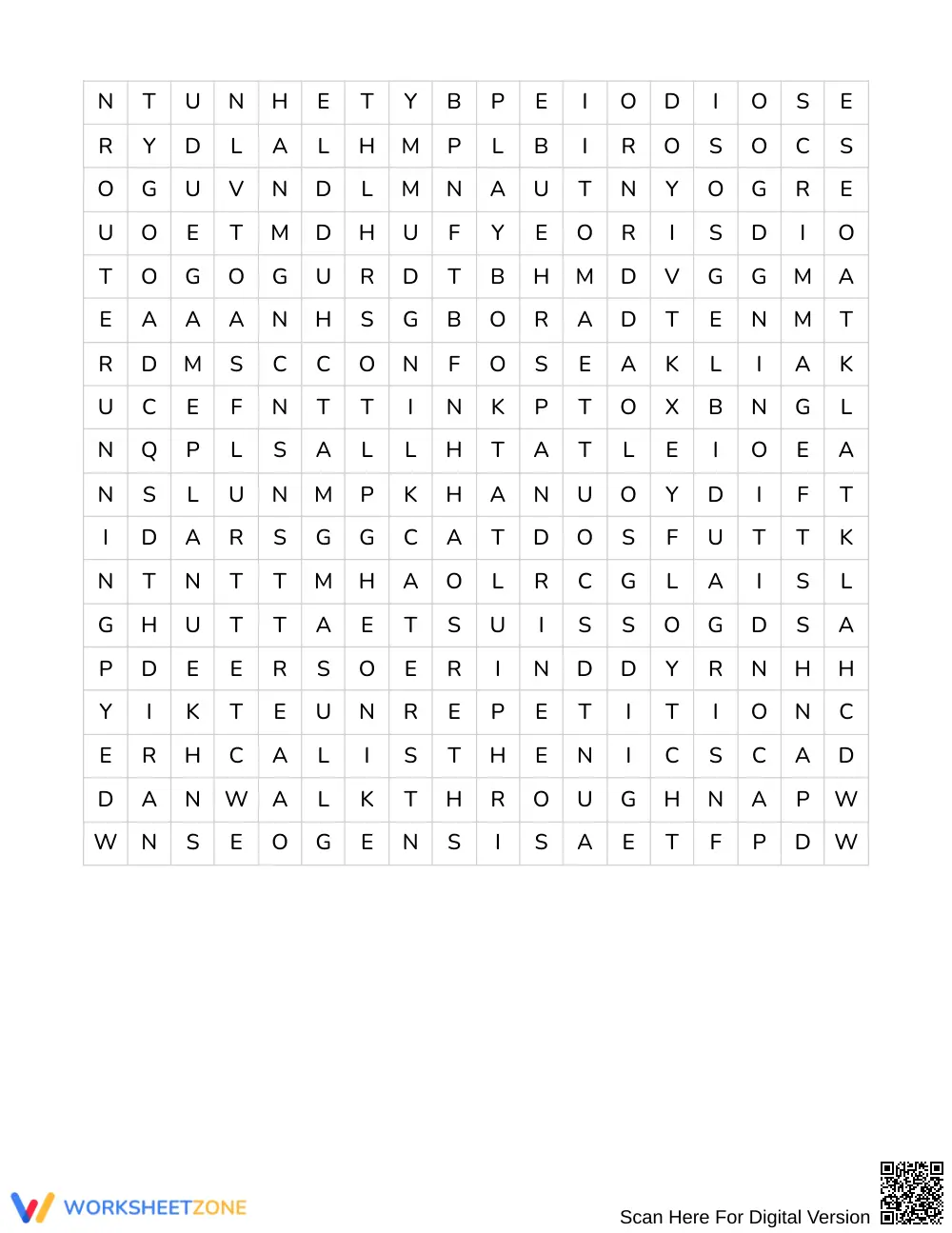
This printable resource features a 3-page word search puzzle packet accompanied by a detailed 4-page answer key. Instead of receiving an open word list, students work through 16 clue definitions to determine each target term before searching. The thorough answer key documents every word location with clear grid overlays, allowing educators or students to verify letter coordinates immediately.
Puzzle Mechanics and Structure
The puzzle is built on an expansive 18 x 18 grid with zero word bank provided, creating an authentic mental workout. To identify the 16 words, learners interpret clues describing team concepts such as film study, audible, walkthrough, and scrimmage. Target terms are hidden forward, backward, vertically, horizontally, and diagonally across all eight directions: North, Northeast, East, Southeast, South, Southwest, West, and Northwest.
Standards Alignment
This resource serves as targeted vocabulary enrichment and is not formally aligned to an assessed state or national standard. It supports cross-curricular literacy by prompting middle school learners to retrieve informational sports vocabulary through contextual clues, reinforcing spelling patterns and critical thinking without standard-specific testing constraints.
How to Use It
Deploy this word search during after-lesson independent practice or as an engaging emergency sub plan. For a vocabulary warm-up after direct instruction on informational text features, have students work individually for 25 to 35 minutes to match definitions to concepts. As a formative assessment tip, observe which football terms prompt students to re-read clues, highlighting concepts that may require brief semantic clarification.
Who It's For
This activity is created for students in Grades 6–7 who enjoy athletic themes or need motivating word study tasks. For learners requiring extra scaffolding, educators can highlight initial letters directly on the 18 x 18 grid. Pair this activity with an informational reading passage on athletic training methods to connect terminology to comprehensive non-fiction texts.
Operating as an unassessed vocabulary enrichment resource rather than targeting a formal state standard code, this word search exercises domain-specific vocabulary acquisition and contextual retrieval for middle school learners. According to Fisher & Frey (2014), intentional exposure to technical terminology through meaningful context clues solidifies content-area schema and accelerates reading fluency. By substituting an overt word bank with 16 descriptive clues, this activity requires students to generate mental representations before searching the 18 x 18 letter grid. This dual-demand process—deciphering definitions and conducting multi-directional visual scanning across eight orientations—strengthens orthographic mapping and lexical memory. Consequently, students in Grades 6–7 engage with informational language organically, bridging conversational interest in athletics with disciplined cognitive practice. The format provides educators with an actionable instructional tool that reinforces specialized terminology while boosting task engagement during independent learning intervals and purposeful classroom transitions.


