




























Views
Downloads

Essential Food Chain Arrows Worksheet | Grade 6 Science

Paste this activity's link or code into your existing LMS (Google Classroom, Canvas, Teams, Schoology, Moodle, etc.).
Students can open and work on the activity right away, with no student login required.
You'll still be able to track student progress and results from your teacher account.
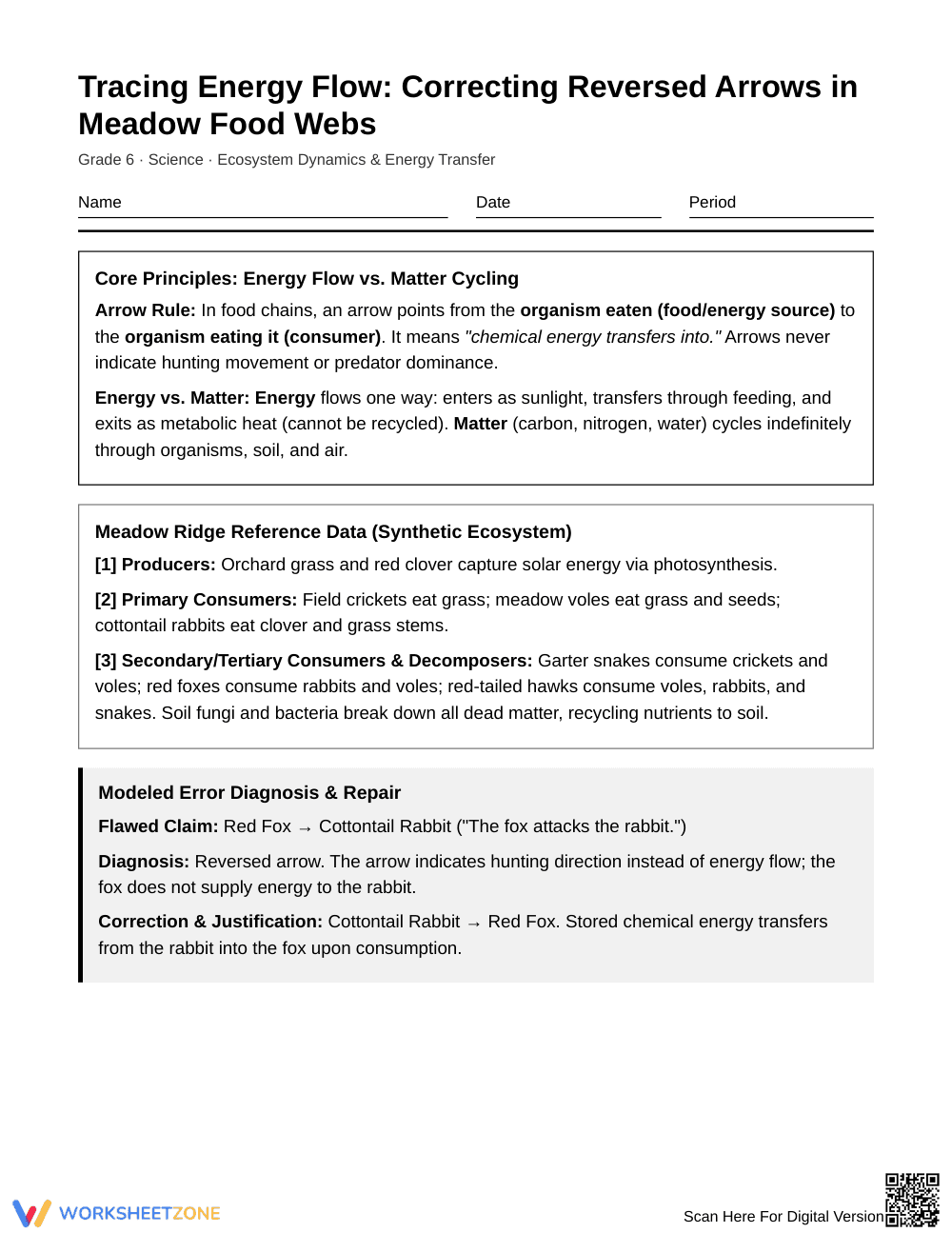
This Grade 6 science worksheet trains middle school learners to master ecological energy flow by identifying, explaining, and correcting reversed arrows in food chains and food webs. Students evaluate trophic relationships across a meadow ecosystem, ensuring they understand that arrows represent unidirectional chemical energy transfer rather than predator hunting paths or matter cycles.
At a Glance
- Grade: 6 · Subject: Science
- Standard: Ecosystem Dynamics — Model energy transfer through feeding relationships and trophic levels
- Skill Focus: Food Chains, Webs & Energy Pyramids: Correct Reversed Energy Arrows
- Format: 5 pages · 16 problems · Answer key included · PDF
- Best For: Conceptual remediation and error analysis
- Time: 40–50 minutes
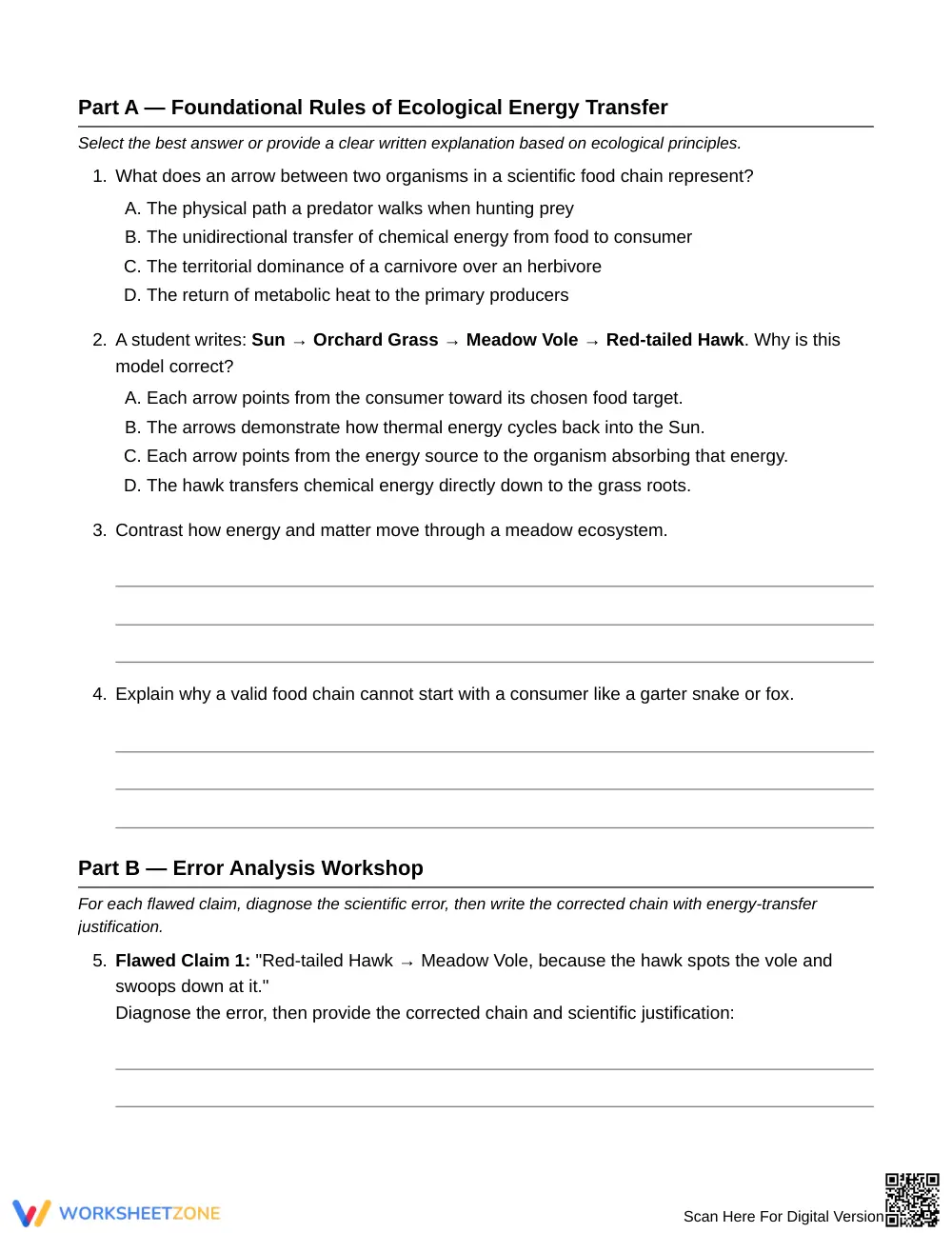
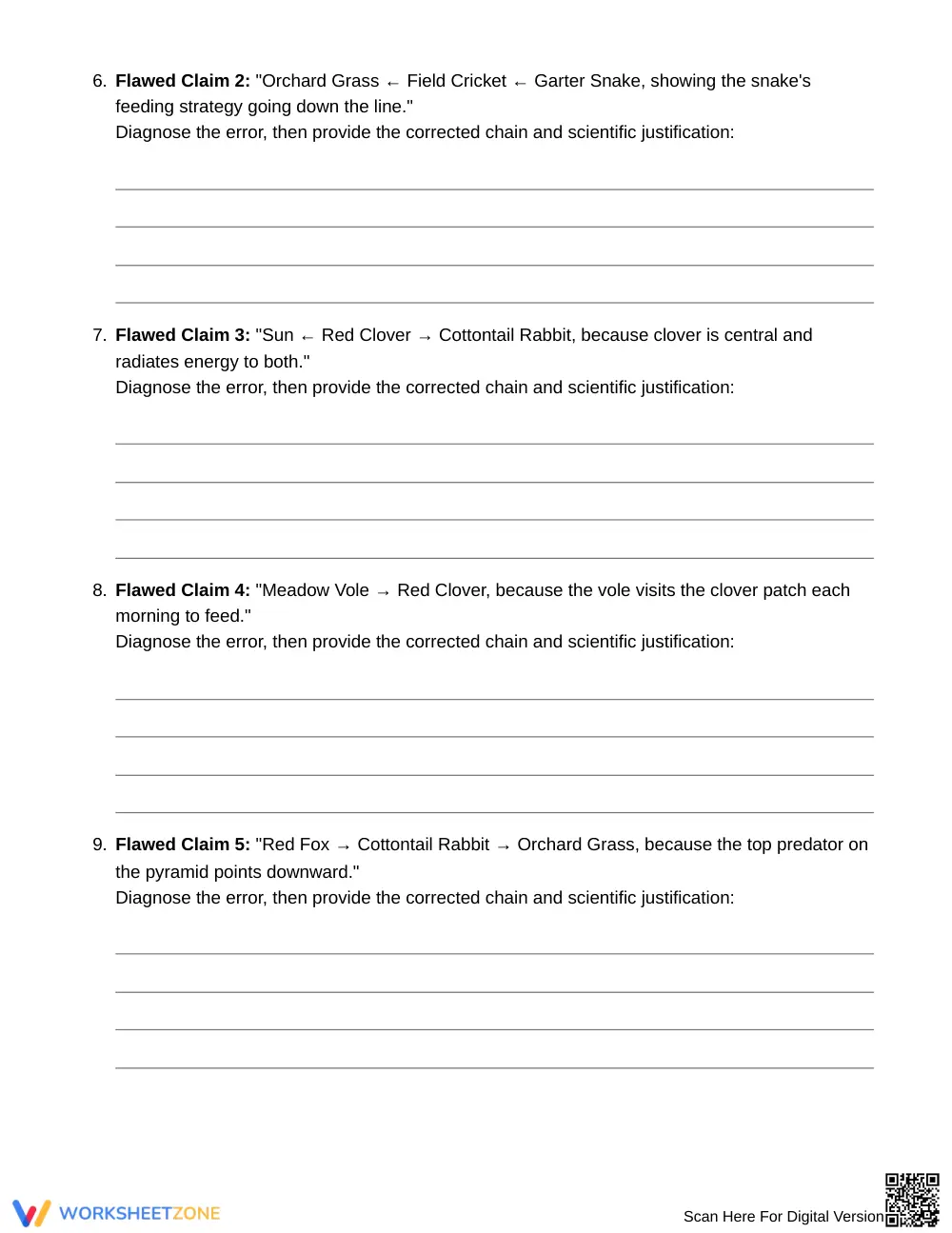
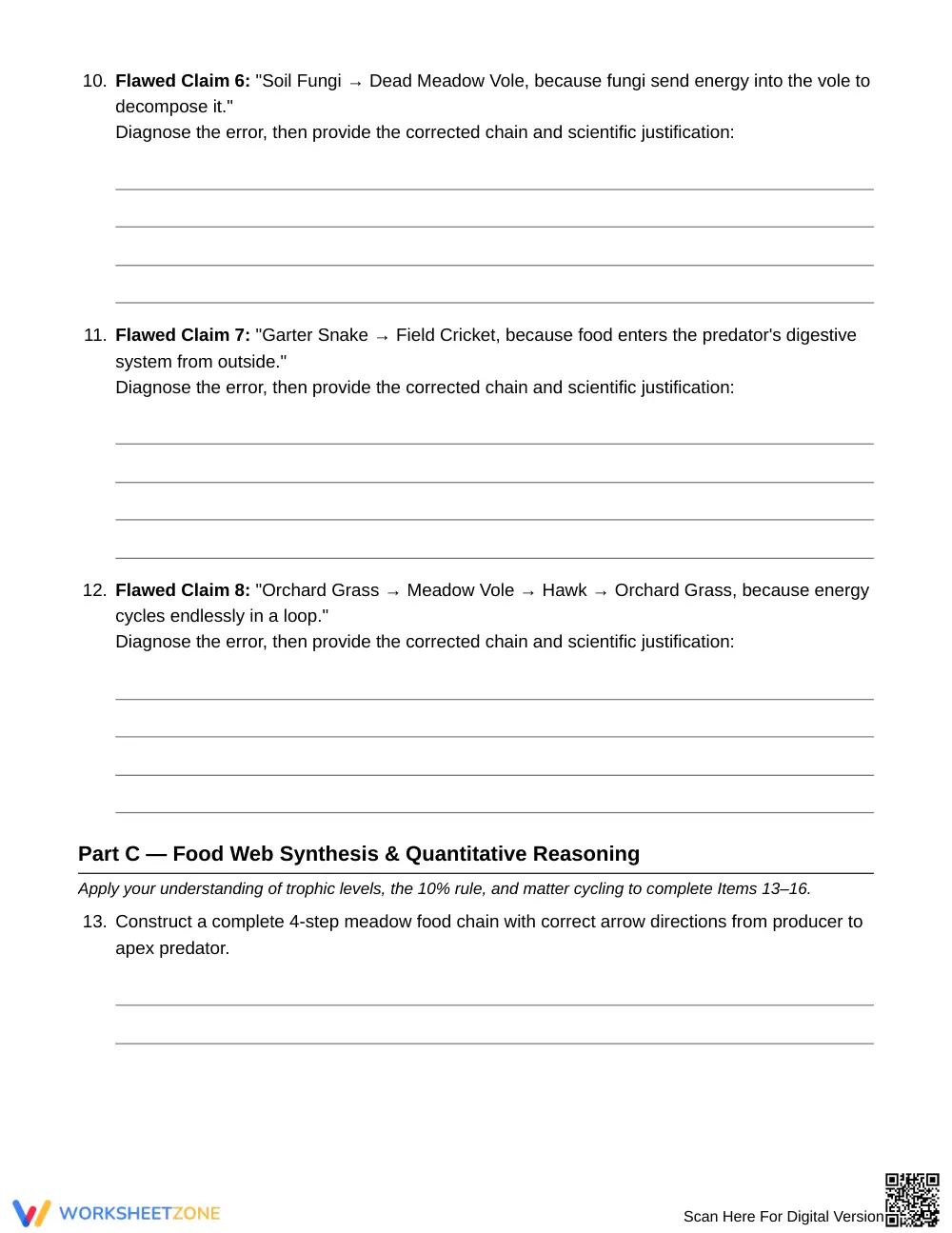
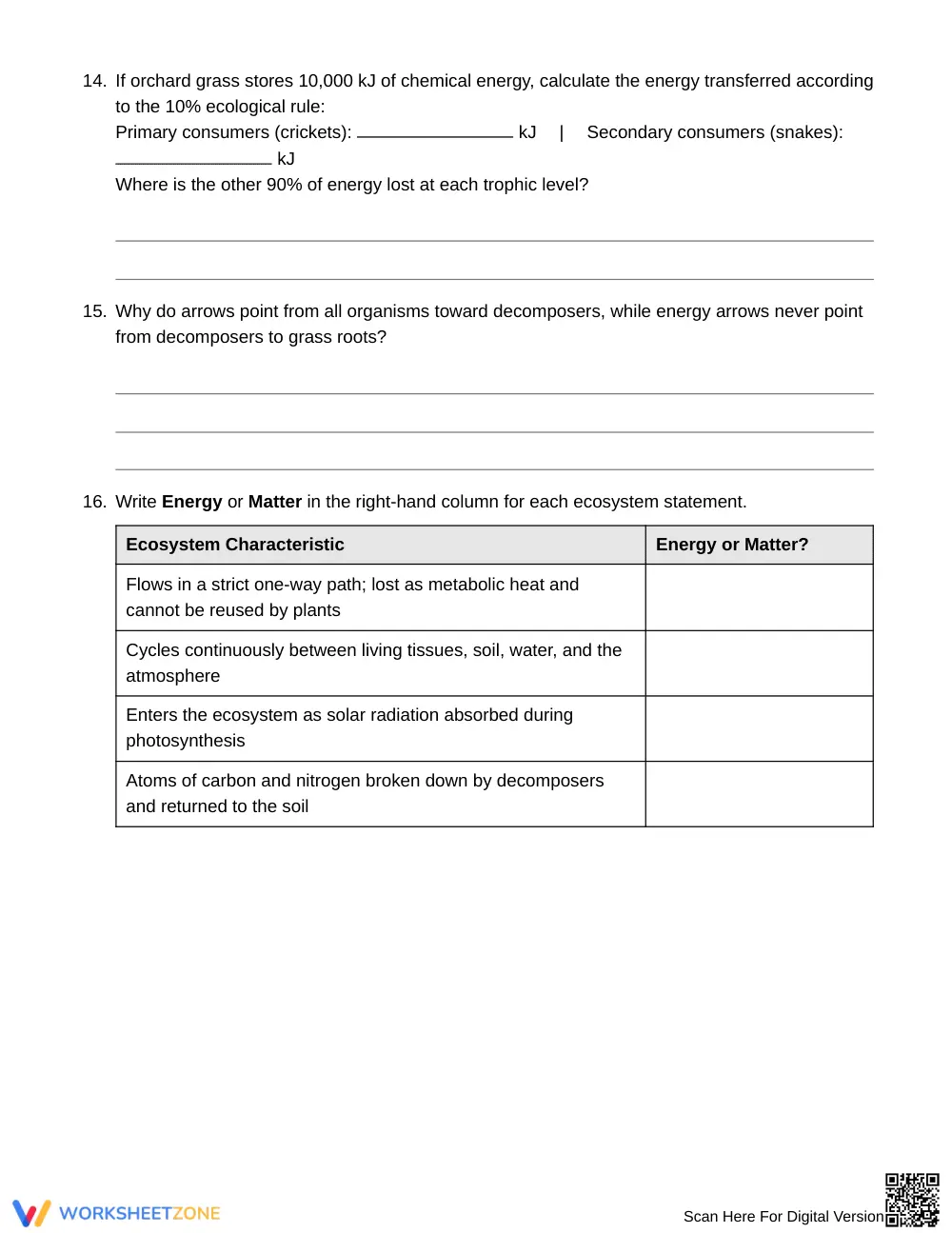
What's Inside: The 5-page printable resource includes reference data for a synthetic meadow ecosystem, a modeled error analysis example, and 16 targeted tasks spanning multiple formats. Students examine core principles, resolve eight flawed ecological claims, calculate trophic energy loss using the 10% rule, and differentiate energy transfer from matter cycling. A comprehensive 3-page teacher answer key provides detailed rationales for every item.
Skill Progression
- Guided Practice (Items 1–4): Students review foundational arrow rules and producer roles through multiple-choice questions and short conceptual explanations supported by reference data.
- Supported Practice (Items 5–12): An error analysis workshop presents eight flawed claims featuring reversed arrows, circular loops, or consumer starting points for students to diagnose and correct.
- Independent Practice (Items 13–16): Learners construct an original four-step food chain, calculate energy transfer across trophic levels with quantitative reasoning, and complete a matter versus energy categorization table.
This sequence follows the gradual release of responsibility model, shifting students from guided conceptual recognition to rigorous, independent ecological modeling.
Standards Alignment
This worksheet aligns directly to middle school life science standards for ecosystem dynamics and energy transfer, which require students to develop models showing how matter cycles and chemical energy flows among living and nonliving components of an ecosystem. Students contrast the one-way passage of energy with the continuous recycling of matter through decomposers. Both standard codes can be copied directly into lesson plans, IEP goals, or district curriculum mapping tools.
How to Use It
Deploy this worksheet after direct instruction on food chains and ecological pyramids. Use it during an active guided-practice block or as an intervention station to correct the persistent misconception that arrows point to what a predator attacks. Formative assessment tip: observe whether students justify Part B corrections with energy intake or physical hunting actions. Expect 40 to 50 minutes for full completion.
Who It's For
This resource serves general education Grade 6 science classes, remedial life science groups, and students preparing for state science assessments. Pair this activity with a food web diagramming lab or an ecosystem energy pyramid anchor chart to reinforce how 90% of thermal energy dissipates at each feeding tier.
Middle school science curricula frequently encounter the persistent misconception that arrows in ecological diagrams point from predator to prey, representing pursuit rather than nutritional energy flow. According to Fisher & Frey (2014), systematic error diagnosis and repair tasks solidify conceptual mastery faster than repetitive diagram construction alone. This 16-task ecosystem dynamics resource explicitly resolves that misunderstanding by requiring sixth-grade students to trace chemical energy from producers through apex consumers and decomposers across five scaffolded pages. Students evaluate flawed food chains, recalculate caloric loss via the 10% ecological rule, and distinguish one-way heat dissipation from circular matter cycling. Because each task demands evidence-based correction rather than rote recall, teachers gain actionable formative insight into student reasoning. This structured approach helps young scientists master essential trophic modeling skills aligned with national middle school life science standards.


