



























Essential Decorating Tools Word Search | Grades 6–7 ELA
Paste this activity's link or code into your existing LMS (Google Classroom, Canvas, Teams, Schoology, Moodle, etc.).
Students can open and work on the activity right away, with no student login required.
You'll still be able to track student progress and results from your teacher account.
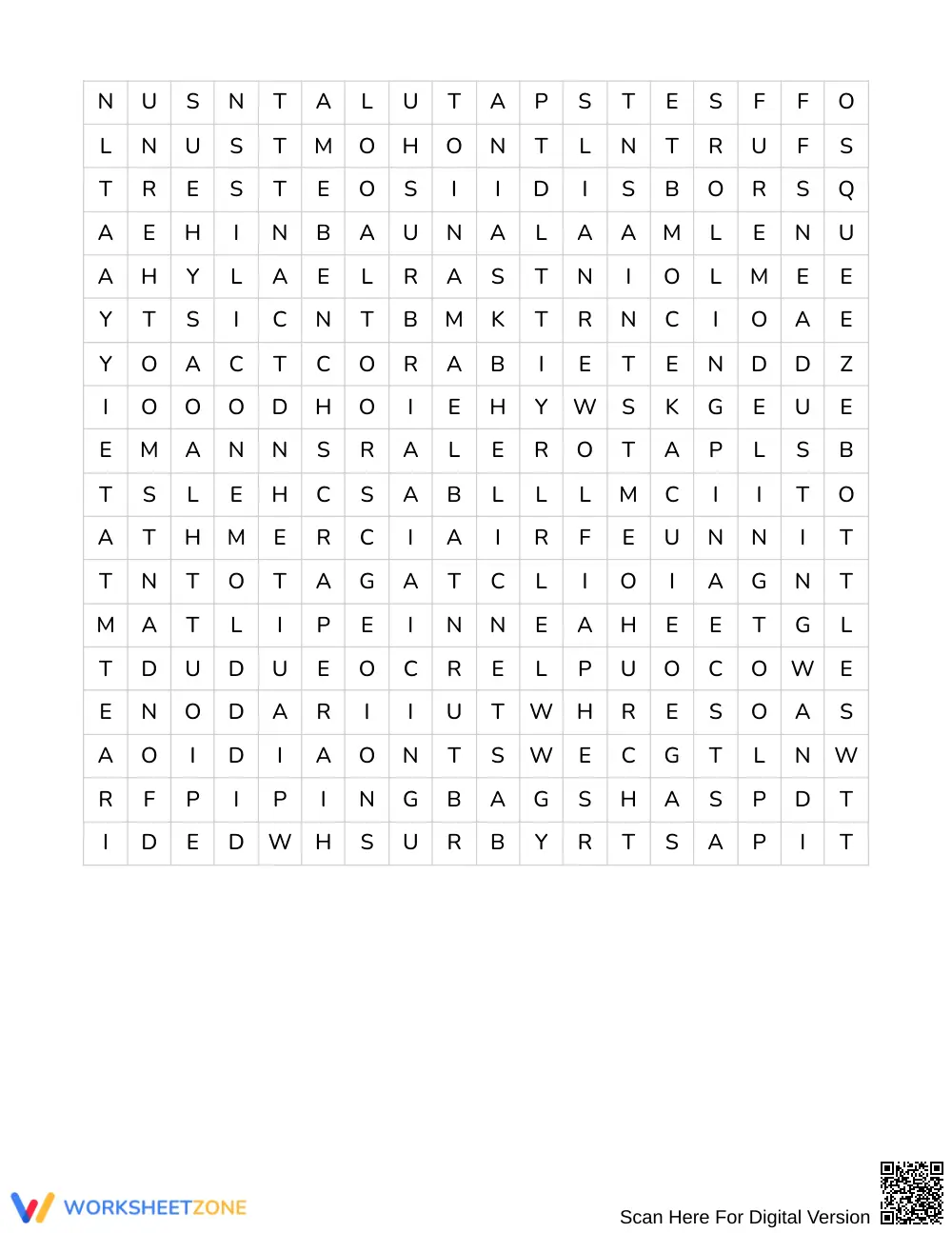
Build domain-specific culinary vocabulary with this challenging no-bank word search designed for middle school learners. Students read descriptive functional definitions, deduce the correct dessert decorating utensil or equipment term, and locate all 16 target words within an extensive puzzle grid. This resource strengthens context clue decoding, spelling accuracy, and technical reading comprehension.
At a Glance
- Grade: Grades 6–7 · Subject: English Language Arts (ELA)
- Standard: Not standards-assessed — vocabulary enrichment
- Skill Focus: Decorating tools vocabulary
- Format: 3 pages · 16 words · Answer key included · PDF
- Best For: Vocabulary enrichment, early finishers, culinary units
- Time: 25–35 minutes
What's Inside
This 3-page printable activity delivers a rigorous twist on traditional search puzzles. Rather than scanning a pre-printed list of answers, students must analyze 16 detailed clue descriptions to determine terms like offset spatula, coupler, turntable, and bench scraper. The activity includes a clear clue sheet, a large letter puzzle, and a comprehensive 4-page answer key showing exact letter paths for fast grading.
Puzzle Mechanics & Design
This activity features an 18 x 18 grid designed to build sustained visual tracking and morphological recall without simplified scaffolding:
- Clue-Driven Decoding: Students solve clues defining specialized utensils, testing their ability to infer specific terminology from precise descriptions.
- Complex Search Paths: Words are hidden across all 8 possible compass directions: North, Northeast, East, Southeast, South, Southwest, West, and Northwest.
- No-Bank Format: Omitting an upfront word list requires active recall and confirmation, preventing passive letter matching.
This layout encourages active cognitive engagement as students verify spelling letter-by-letter across intersecting rows.
Standards Alignment
This activity provides targeted vocabulary enrichment and is not aligned to a specific standard. It supports cross-curricular technical literacy by introducing precise culinary arts terminology through contextual definitions.
How to Use It
Deploy this puzzle as an independent vocabulary station during informational text units, or assign it as an engaging enrichment task following direct instruction on technical language. During independent work, circulate to observe whether students deduce answers directly from the functional clues before searching the grid or require prompting to highlight clue keywords. Most students will complete the reading and puzzle search within 25 to 35 minutes.
Who It's For
This puzzle is structured for students in Grades 6–7 expanding their exposure to specialized informational texts, career-technical vocabularies, or culinary arts topics. It pairs naturally with non-fiction procedural recipes, baking science informational passages, or classroom culinary demonstrations.
Academic vocabulary acquisition thrives when learners encounter technical terminology embedded within meaningful context clues. According to Fisher & Frey (2014), intentional exposure to domain-specific words through varied, problem-solving tasks significantly reinforces word retention, orthographic memory, and reading fluency across secondary grade bands. By requiring students to interpret 16 precise descriptive definitions rather than simply copying an alphabetized list, this word search promotes deeper semantic processing. Learners actively connect practical kitchen applications—such as rotating turntable stands, smoothing fondant paddles, and adjusting piping couplers—with their formal designations. Navigating the dense 18 x 18 letter matrix across reverse and diagonal orientations also sharpens visual discrimination and letter-sequence tracking, providing students with rigorous spelling consolidation. This vocabulary enrichment resource serves as an effective instructional bridge between recreational word puzzles and purposeful informational literacy development in middle school classrooms.


