































Essential Brave Characters Word Search | Grades 6–7 ELA

Paste this activity's link or code into your existing LMS (Google Classroom, Canvas, Teams, Schoology, Moodle, etc.).
Students can open and work on the activity right away, with no student login required.
You'll still be able to track student progress and results from your teacher account.
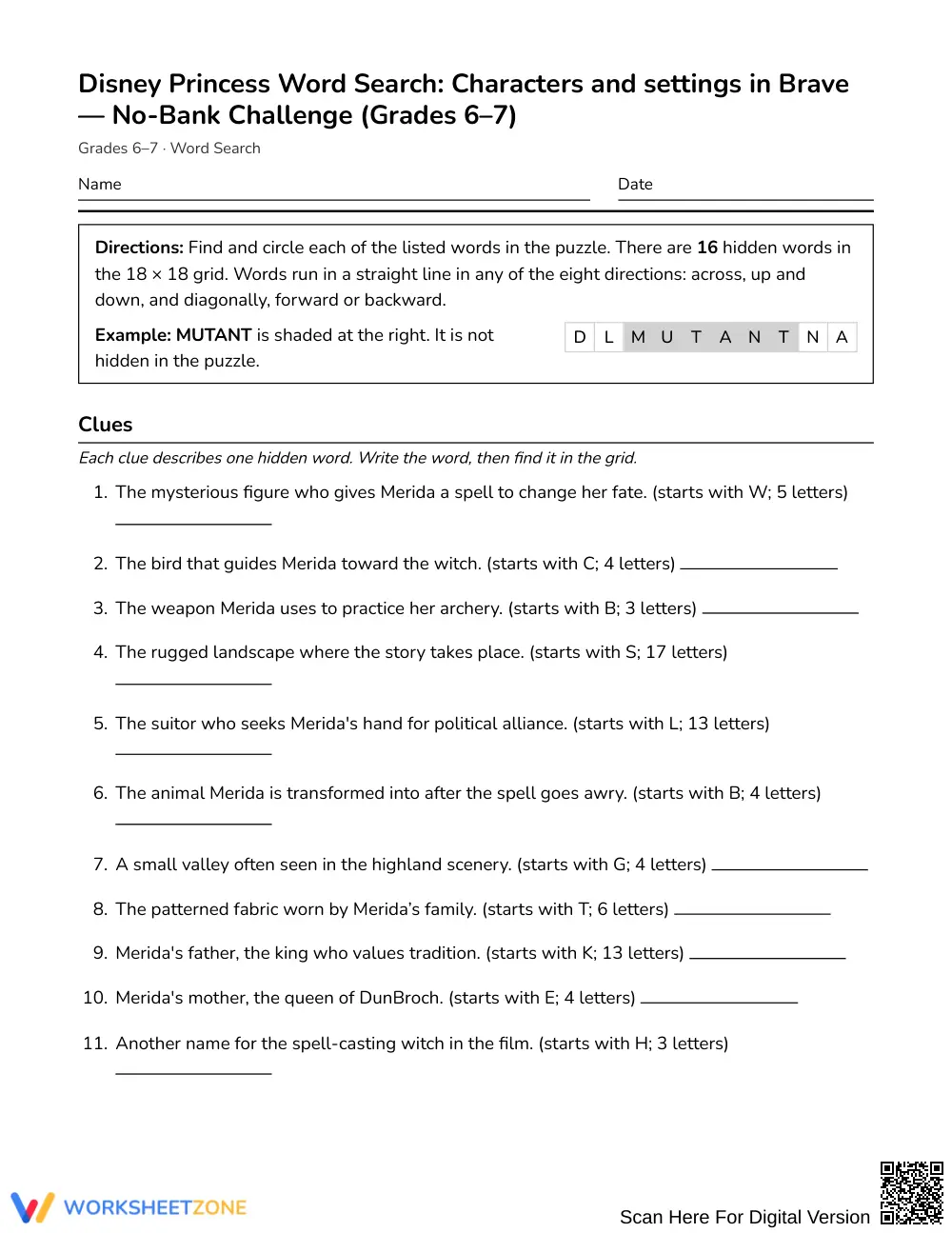
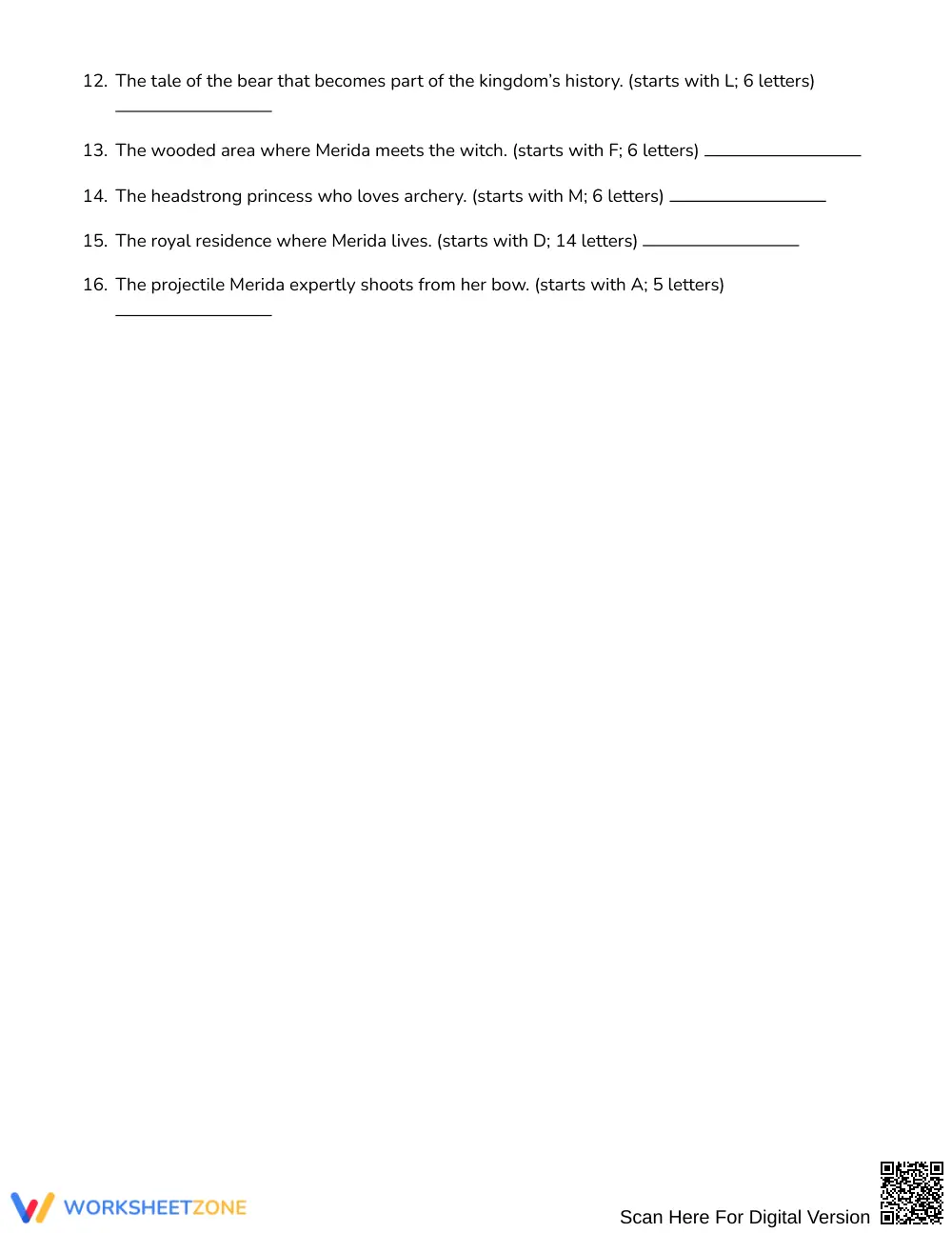
This printable word search strengthens middle school literacy by prompting students to identify 16 key words connected to character traits, narrative conflicts, and geographical settings in Brave. Students read narrative clues, infer corresponding terms, and locate them within a challenging letter grid, reinforcing comprehension and context recall.
At a Glance
- Grade: Grades 6–7 · Subject: English Language Arts (ELA)
- Standard: Not standards-assessed — vocabulary enrichment
- Skill Focus: Characters and settings in Brave
- Format: 3 pages · 16 words · Answer key included · PDF
- Best For: Vocabulary enrichment and post-reading review
- Time: 20–35 minutes
What's Inside
The activity package includes a 3-page printable puzzle resource equipped with full contextual clues and a complete 3-page solution reference. Instead of relying on a passive word list, the activity tasks learners with decoding 16 distinct narrative descriptions before locating the answers across the grid, followed by an overlay answer key for rapid verification.
Puzzle Mechanics
The word search is built around an 18 x 18 letter matrix designed to challenge upper-elementary and intermediate middle school readers. Rather than providing a standard word bank, the puzzle presents 16 character, prop, and setting clues that students must solve to uncover target vocabulary. Hidden terms run across all 8 cardinal and intercardinal compass directions: north, northeast, east, southeast, south, southwest, west, and northwest. This multidirectional layout encourages disciplined scanning, visual tracking, and precise orthographic recognition without visual aids.
Standards Alignment
This activity is designed specifically for thematic vocabulary enrichment and literary appreciation; it is not formally aligned to an individual Common Core state standard. It reinforces domain-specific terminology, character analysis concepts, and setting descriptions across middle grade language arts units without requiring formal standard tracking.
How to Use It
Introduce this puzzle immediately after completing a class film analysis or novel study unit to assess memory and character recognition. Alternatively, assign it as a high-engagement station activity during independent reading rotations. As a formative check, observe whether learners correctly identify literary roles from the clues before searching the grid. The puzzle typically takes 20 to 35 minutes to complete.
Who It's For
This activity serves students in Grades 6–7 who benefit from active retrieval practice and orthographic reinforcement. It functions effectively for general education classes, early finishers, and middle school intervention groups needing engaging context clues. Pair this puzzle with an introductory character map or a setting analysis graphic organizer.
Educational research from Fisher & Frey (2014) emphasizes that purposeful vocabulary acquisition requires intentional retrieval routines and contextual association rather than isolated rote exposure. While word searches are frequently classified as recreational, integrating rigorous definitional clues directly activates reading comprehension schema and mental lexicon mapping. Middle school learners in Grades 6–7 consolidate orthographic patterns and narrative vocabulary when locating multi-directional terms across complex grids. Utilizing clues that describe character motivation, physical setting, and plot devices bridges recreational engagement and formal text analysis. Because this resource presents clues rather than an open word bank, students must actively generate target vocabulary terms from memory before engaging in visual scanning. This multi-step process promotes cognitive engagement, orthographic awareness, and thematic retention across secondary literary units.


