



























Essential Background Art Word Search | Grades 4–5 ELA
Paste this activity's link or code into your existing LMS (Google Classroom, Canvas, Teams, Schoology, Moodle, etc.).
Students can open and work on the activity right away, with no student login required.
You'll still be able to track student progress and results from your teacher account.
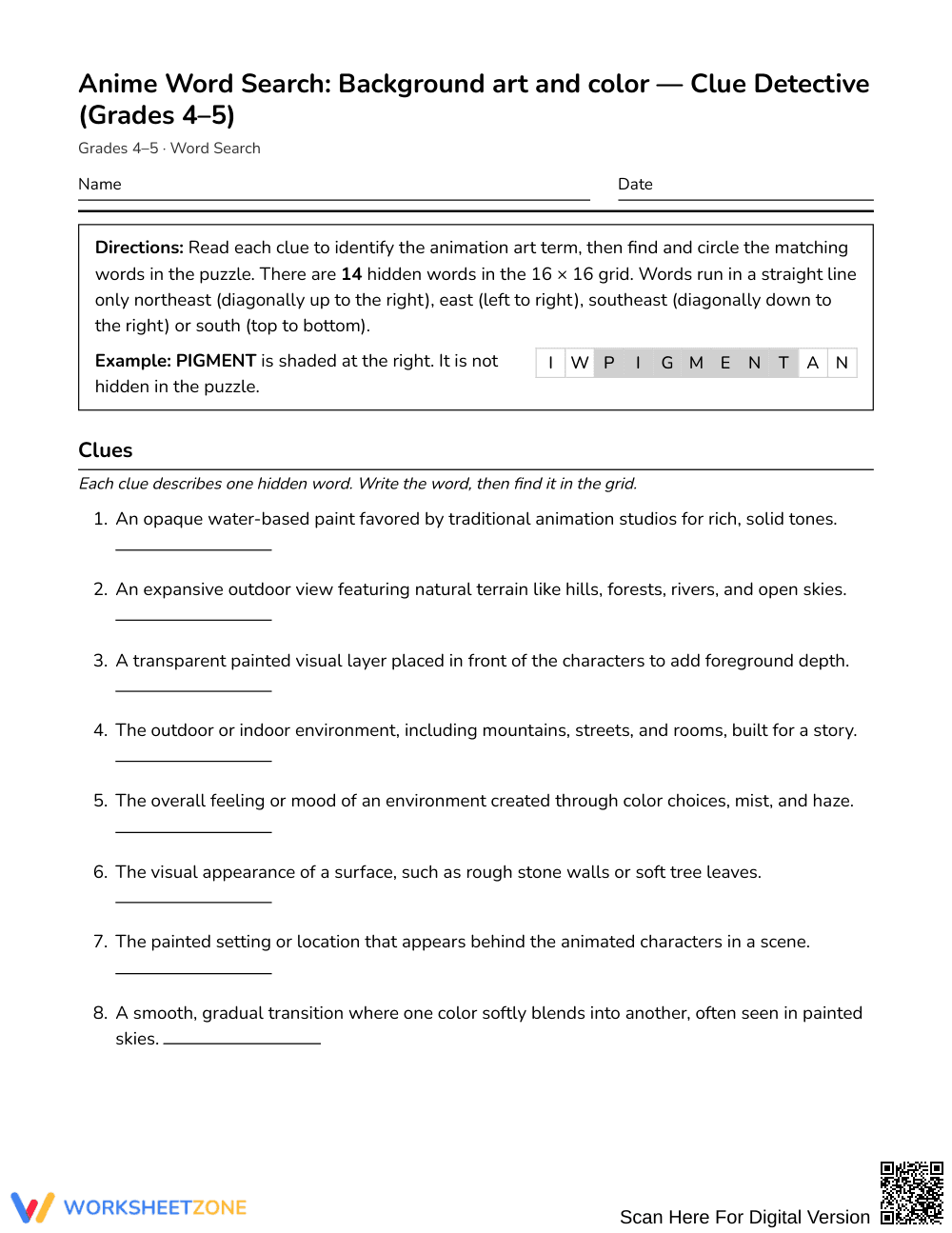
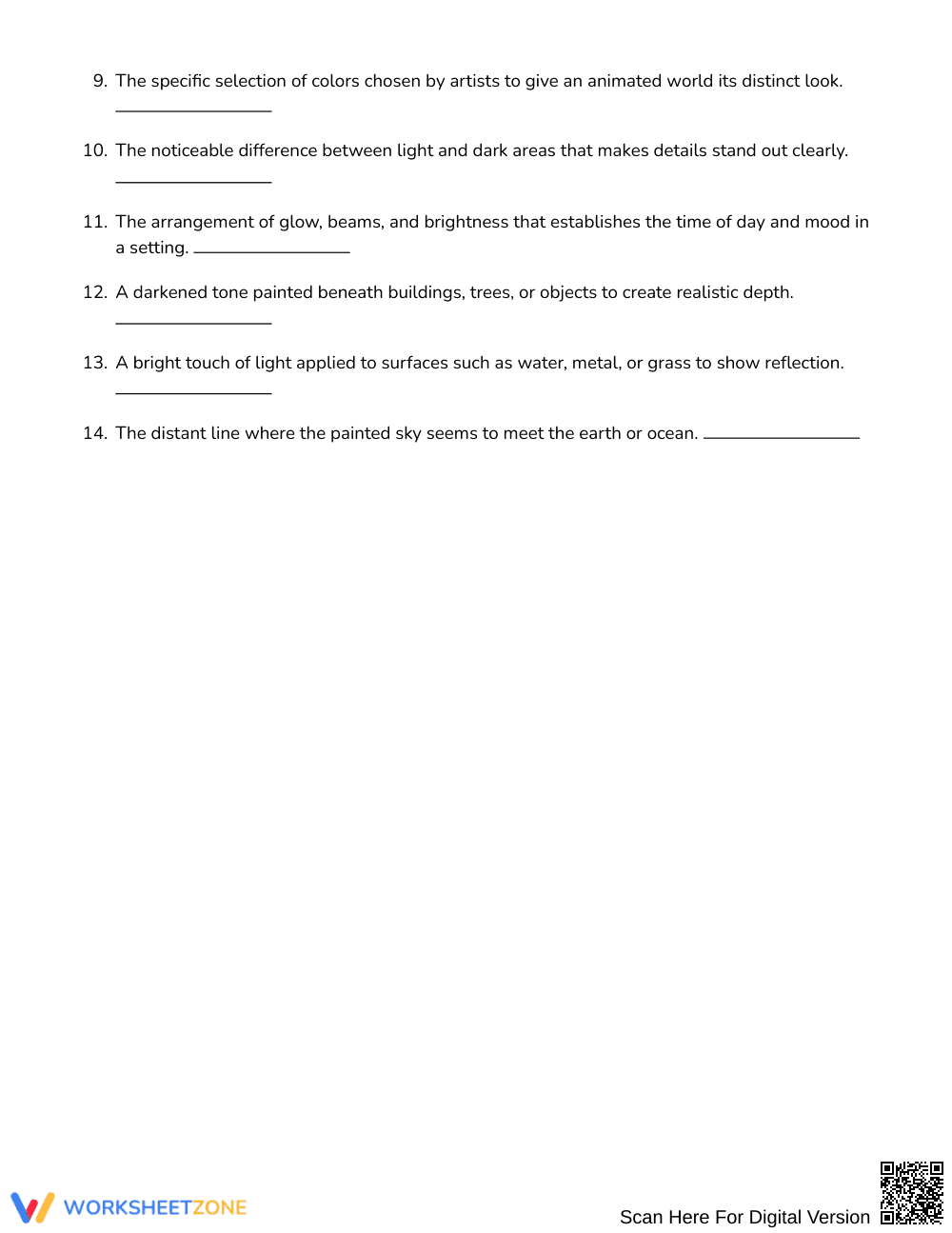
This Grades 4–5 English Language Arts word search builds vocabulary connected to animation background art and color design. Students read 14 contextual clues to identify specialized artistic terminology before locating each hidden word. The activity reinforces reading comprehension, visual scanning, and media arts literacy through focused vocabulary exploration.
At a Glance
- Grade: Grades 4–5 · Subject: English Language Arts (ELA) Vocabulary
- Standard: Not standards-assessed — vocabulary enrichment
- Skill Focus: Background art and color vocabulary
- Format: 3 pages · 14 words · Full 3-page answer key included · PDF
- Best For: Vocabulary enrichment, media arts units, and early finishers
- Time: 20–30 minutes of focused visual scanning practice
What's Inside
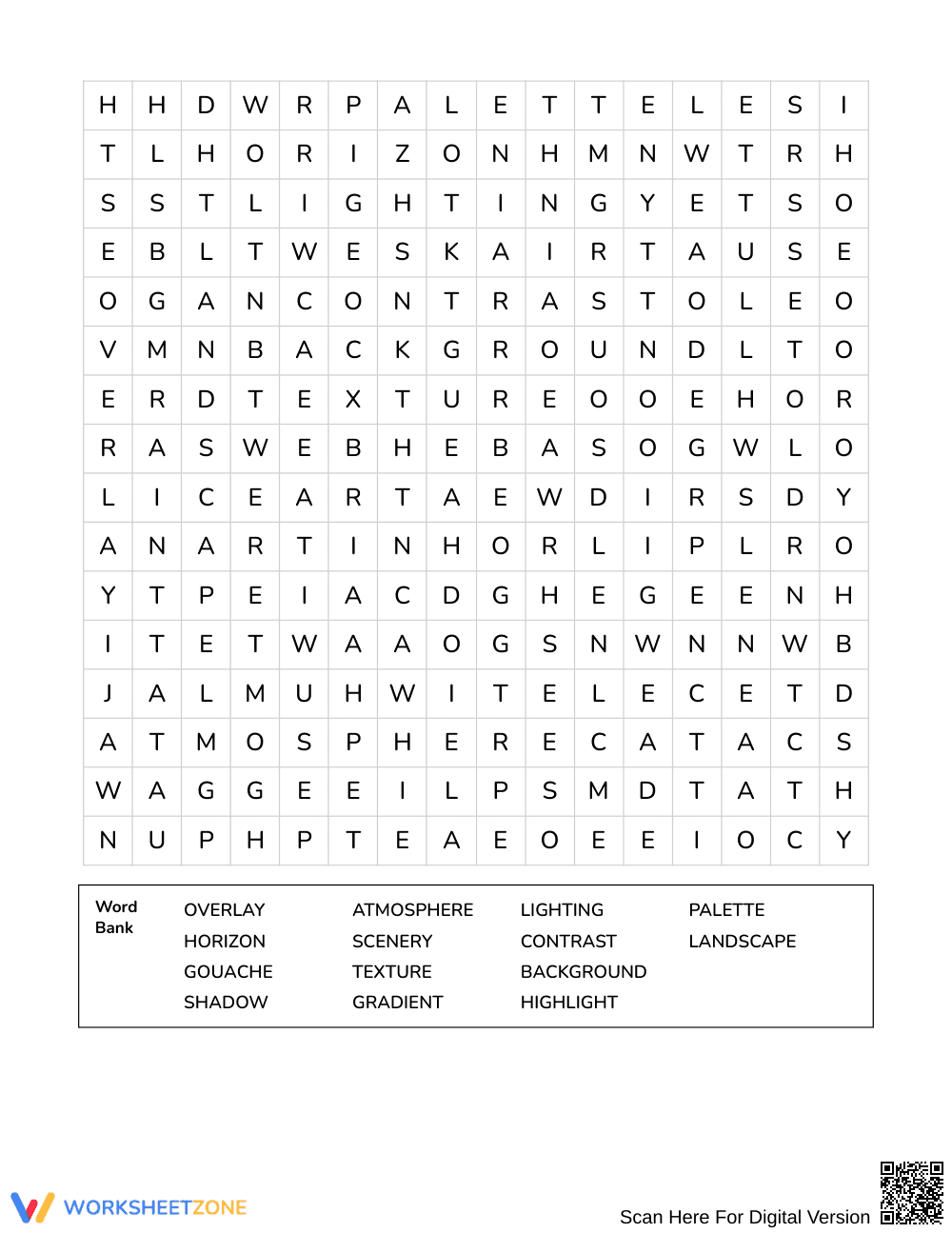
This 3-page printable PDF features a clue-based word search with 14 hidden vocabulary terms. Students read descriptive clues defining production concepts such as gouache, gradient, overlay, and lighting. A shuffled word bank provides reference support, and a complete 3-page answer key provides highlighted paths for straightforward verification.
Puzzle Mechanics
The puzzle uses a 16 x 16 letter grid containing 14 words running in four directions: northeast (NE), east (E), southeast (SE), and south (S). Omitting reverse diagonal upward paths ensures intermediate elementary readers focus on recognition. Students read each definition clue to identify the word from the shuffled bank before finding it in the grid.
Standards Alignment
This resource provides vocabulary enrichment and is not aligned to a specific standard. By introducing technical terms from visual storytelling and animation, the puzzle supports cross-curricular language acquisition. Teachers can integrate this activity into visual arts lessons, informational reading units, or descriptive writing practice.
How to Use It
Use this word search during an introductory lesson on setting or as an independent task after reading descriptive passages. For whole-class use, assign the puzzle during independent practice. As students work, check whether they solve the definition clues before scanning the grid, clarifying terms like gouache or gradient. Completion takes approximately 20 to 30 minutes.
Who It's For
This resource serves Grades 4–5 students strengthening descriptive vocabulary and visual analysis. English language learners benefit from matching clues to the shuffled word bank, while advanced students can explain how background colors shape setting tone. Pair this activity with an illustrated mentor text or animation background artwork to connect vocabulary directly to visual media.
This educational word search provides specialized vocabulary enrichment centered on background art and color terminology for upper elementary learners. Rather than addressing a single state standard, the resource emphasizes domain-specific vocabulary acquisition and contextual decoding through 14 descriptive clues. Research from Fisher & Frey (2014) emphasizes that intentional word exploration and meaningful exposure to technical terms across multiple contexts significantly strengthens long-term comprehension and academic vocabulary retention. By reading functional definitions of production terms like palette, horizon, texture, and atmosphere, students engage in active semantic processing before visually locating each term within the 16 x 16 letter grid. This dual-action approach reinforces spelling patterns, word recognition, and contextual inference without requiring prior technical art training. Educators can deploy the activity during media arts units or literacy stations to foster persistent word awareness and confident cross-curricular vocabulary usage.


