


























1 / 2
0
Views
0
Downloads

0.0
0
Save
0 Likes
Share
Understanding Emotional Language Worksheet
0 Views
0 Downloads
Paste this activity's link or code into your existing LMS (Google Classroom, Canvas, Teams, Schoology, Moodle, etc.).
Students can open and work on the activity right away, with no student login required.
You'll still be able to track student progress and results from your teacher account.
Information
Description
What It Is:
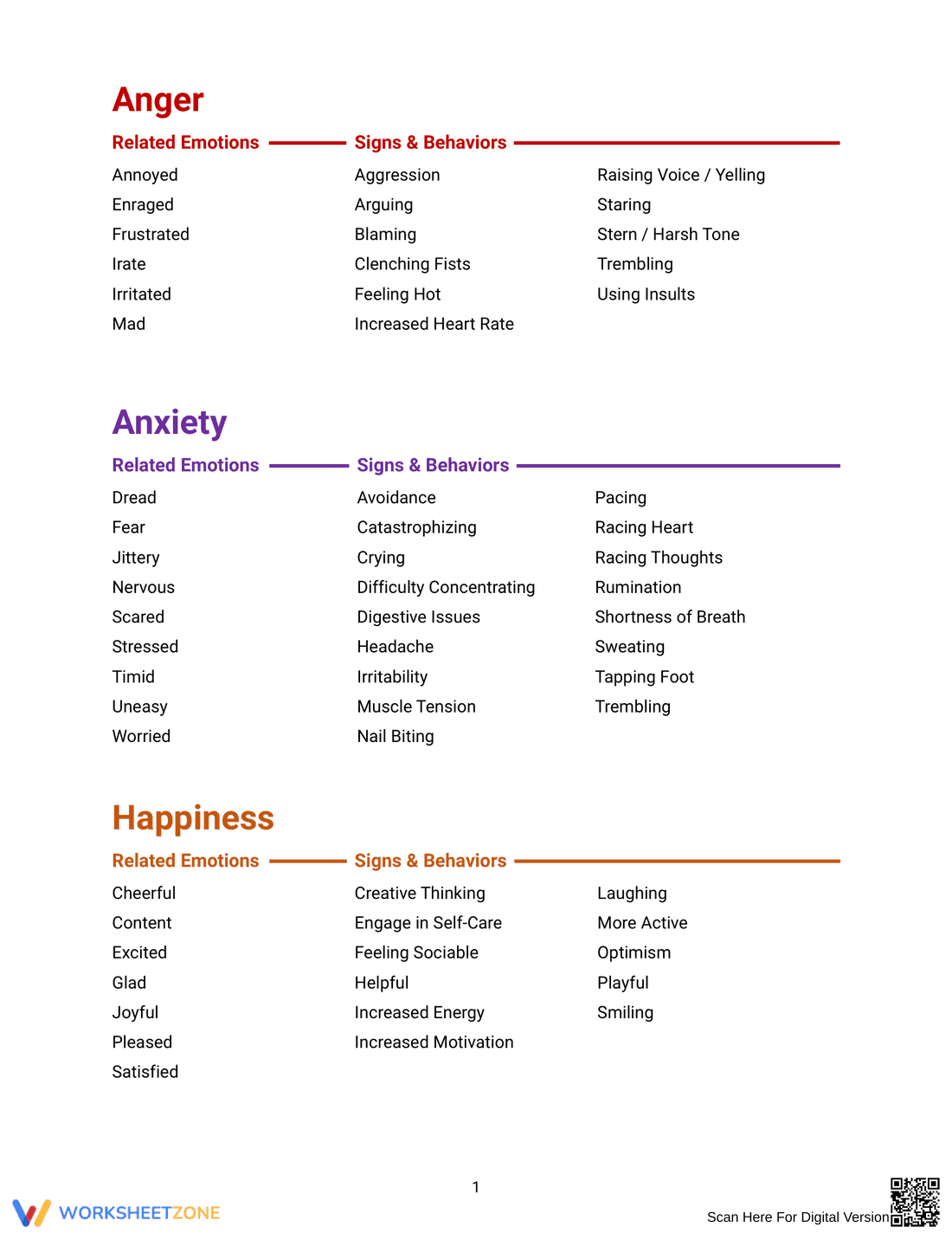
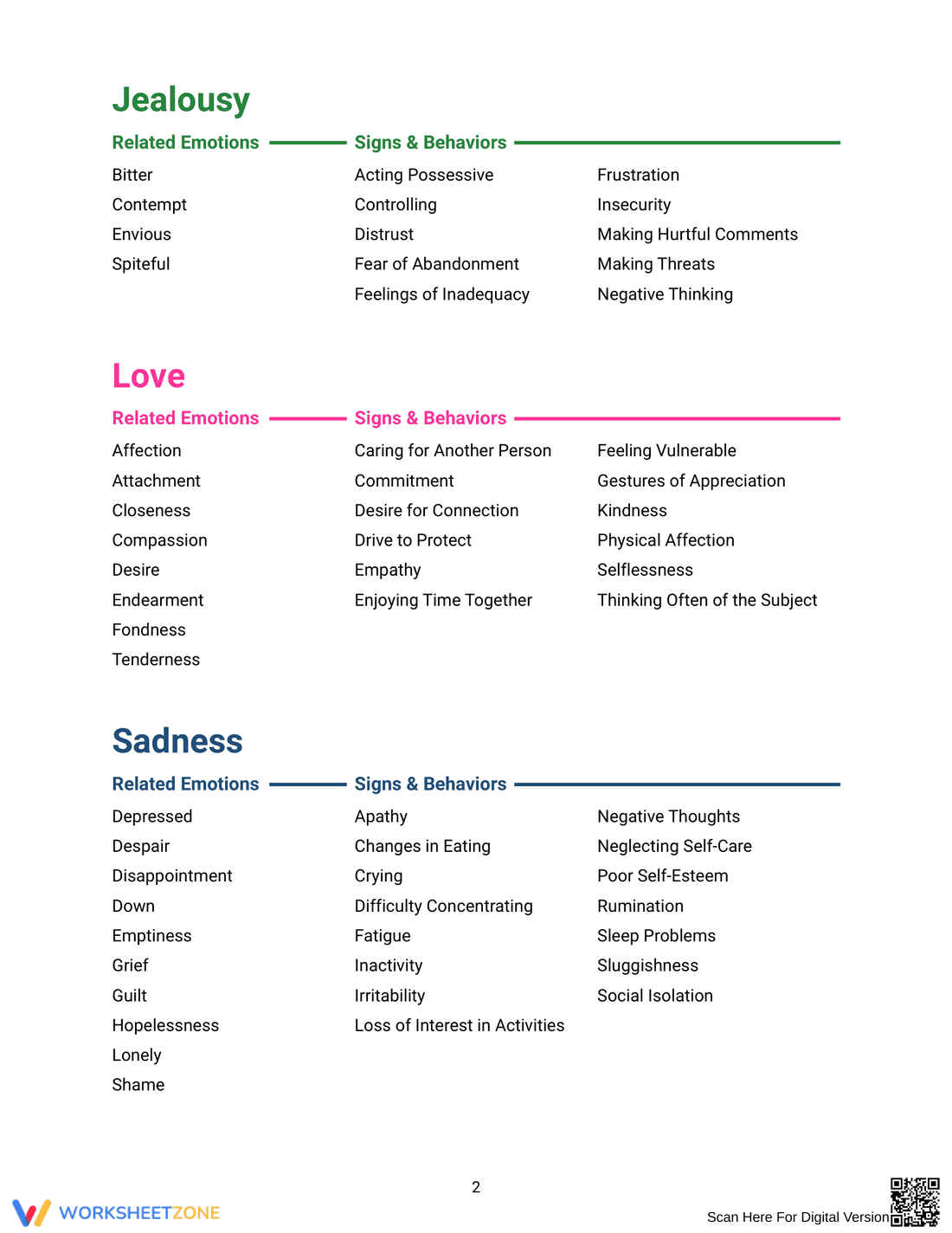
The worksheet lists three emotions: Anger, Anxiety, and Happiness. For each emotion, it provides a list of related emotions and a list of signs and behaviors associated with that emotion. For example, under Anger, related emotions include 'Annoyed' and 'Frustrated,' while signs and behaviors include 'Aggression' and 'Arguing'. The anxiety section includes related emotions like 'Dread' and 'Fear' with signs like 'Avoidance' and 'Pacing'. The happiness section lists related emotions like 'Cheerful' and 'Excited' with signs like 'Creative Thinking' and 'Laughing'.
Grade Level Suitability:
This worksheet is suitable for late elementary (4th-5th grade) through middle school (6th-8th grade) students. The vocabulary is accessible, and the concepts are relevant to this age group's social and emotional development. It could also be used for high school students or adults for self-reflection or therapy.
Why Use It:
This worksheet helps students identify and understand a range of emotions and their associated behaviors. It promotes emotional literacy, self-awareness, and empathy by connecting feelings to observable actions. It can be used to facilitate discussions about emotional regulation and coping strategies.
How to Use It:
The worksheet can be used as a starting point for discussions about feelings. Students can be asked to circle or highlight emotions they have experienced, discuss the associated behaviors they have noticed in themselves or others, and brainstorm healthy coping mechanisms. It can be completed individually, in small groups, or as a class activity.
Target Users:
This worksheet is beneficial for students, counselors, therapists, educators, and parents who want to explore and understand emotions. It's particularly useful for individuals working on emotional regulation, self-awareness, and social skills.
The worksheet lists three emotions: Anger, Anxiety, and Happiness. For each emotion, it provides a list of related emotions and a list of signs and behaviors associated with that emotion. For example, under Anger, related emotions include 'Annoyed' and 'Frustrated,' while signs and behaviors include 'Aggression' and 'Arguing'. The anxiety section includes related emotions like 'Dread' and 'Fear' with signs like 'Avoidance' and 'Pacing'. The happiness section lists related emotions like 'Cheerful' and 'Excited' with signs like 'Creative Thinking' and 'Laughing'.
Grade Level Suitability:
This worksheet is suitable for late elementary (4th-5th grade) through middle school (6th-8th grade) students. The vocabulary is accessible, and the concepts are relevant to this age group's social and emotional development. It could also be used for high school students or adults for self-reflection or therapy.
Why Use It:
This worksheet helps students identify and understand a range of emotions and their associated behaviors. It promotes emotional literacy, self-awareness, and empathy by connecting feelings to observable actions. It can be used to facilitate discussions about emotional regulation and coping strategies.
How to Use It:
The worksheet can be used as a starting point for discussions about feelings. Students can be asked to circle or highlight emotions they have experienced, discuss the associated behaviors they have noticed in themselves or others, and brainstorm healthy coping mechanisms. It can be completed individually, in small groups, or as a class activity.
Target Users:
This worksheet is beneficial for students, counselors, therapists, educators, and parents who want to explore and understand emotions. It's particularly useful for individuals working on emotional regulation, self-awareness, and social skills.


