




























Views
Downloads
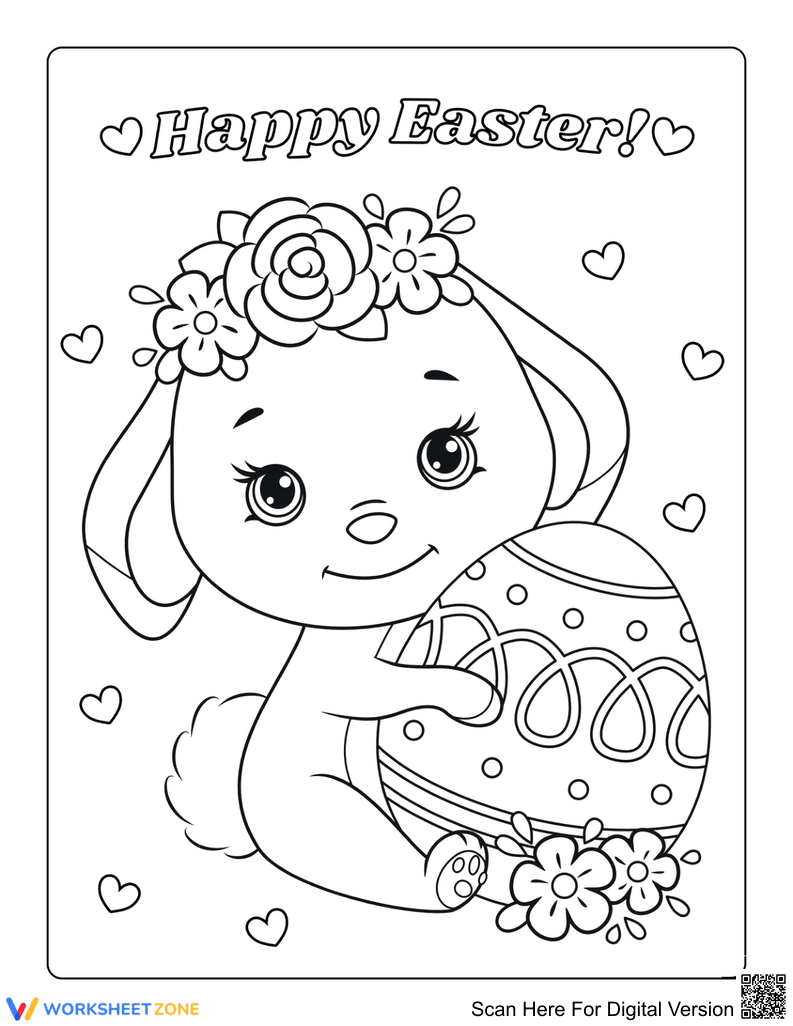

Easter Bunny with Egg Coloring Page | Essential Printable

Paste this activity's link or code into your existing LMS (Google Classroom, Canvas, Teams, Schoology, Moodle, etc.).
Students can open and work on the activity right away, with no student login required.
You'll still be able to track student progress and results from your teacher account.
This Kindergarten Easter Bunny with Egg coloring worksheet provides students with a high-quality creative outlet to develop essential fine motor skills. By engaging with this seasonal illustration, learners practice the precision required for future writing tasks while exploring holiday themes. This printable resource ensures immediate student engagement with zero teacher preparation required for the classroom.
At a Glance
- Grade: Kindergarten · Subject: English
- Standard:
CCSS.ELA-LITERACY.SL.K.5— Add drawings or visual displays to descriptions to provide additional detail- Skill Focus: Fine motor development
- Format: 1 page · 1 task · No answer key required · PDF
- Best For: Seasonal morning work and holiday activities
- Time: 15–20 minutes
What's Inside
The worksheet features a single, large-format illustration of a cheerful bunny holding a detailed Easter egg, complete with a floral crown. The line art is crisp and clear, designed specifically for young learners who are still mastering boundary awareness. This one-page PDF includes intricate patterns on the egg and flowers to encourage varied color choices and focused attention.
Zero-Prep Workflow
The zero-prep workflow for this resource is designed for maximum efficiency in a busy classroom. First, print the single-page PDF for your entire class in less than one minute. Second, distribute the sheets during a transition period or as a "fast finisher" option, requiring zero verbal instructions. Finally, review the completed work by displaying it on a seasonal bulletin board to build classroom community.
Standards Alignment
This resource is aligned with `CCSS.ELA-LITERACY.SL.K.5`, which asks students to add drawings or other visual displays to descriptions as desired to provide additional detail. While primarily an artistic activity, it supports the language arts goal of using visual media to communicate ideas. This standard code can be copied directly into lesson plans, IEP goals, or district curriculum mapping tools.
How to Use It
Use this worksheet as a calming morning work activity during the week leading up to spring break. It serves as an excellent formative assessment for observing pencil grip and hand-eye coordination in early learners. Expected completion time ranges from 15 to 20 minutes, making it an ideal filler for unexpected schedule gaps or as part of a holiday-themed learning center.
Who It's For
This worksheet is primarily designed for Kindergarten and Grade 1 students, though it is suitable for any early learner needing fine motor practice. It is an excellent resource for occupational therapy sessions or as a quiet-time activity for students with sensory processing needs. Pair this worksheet with a seasonal read-aloud book about spring or an anchor chart describing Easter traditions.
The use of thematic coloring activities, such as this Easter Bunny with Egg worksheet, serves as a foundational tool for developing the fine motor control necessary for early literacy and writing success. According to research by Fisher & Frey (2014), engaging students in visual-motor tasks helps bridge the gap between creative expression and the physical demands of letter formation. This worksheet aligns with CCSS.ELA-LITERACY.SL.K.5 by encouraging students to use visual displays to enhance their communication and storytelling abilities. By focusing on the intricate details of the bunny and the decorated egg, learners practice precision and grip strength in a low-stakes, high-interest environment. Such activities are essential for Kindergarten students as they transition into more formal academic writing. This resource provides a structured yet flexible way to integrate seasonal themes into the daily curriculum while supporting the developmental milestones identified in modern educational frameworks. It is a reliable tool for early childhood educators.


