


























0
Views
0
Downloads

0.0
0
Save
0 Likes
Share
Draw the Faces: Expressing Emotions Worksheet
0 Views
0 Downloads
Paste this activity's link or code into your existing LMS (Google Classroom, Canvas, Teams, Schoology, Moodle, etc.).
Students can open and work on the activity right away, with no student login required.
You'll still be able to track student progress and results from your teacher account.
Information
Description
What It Is:
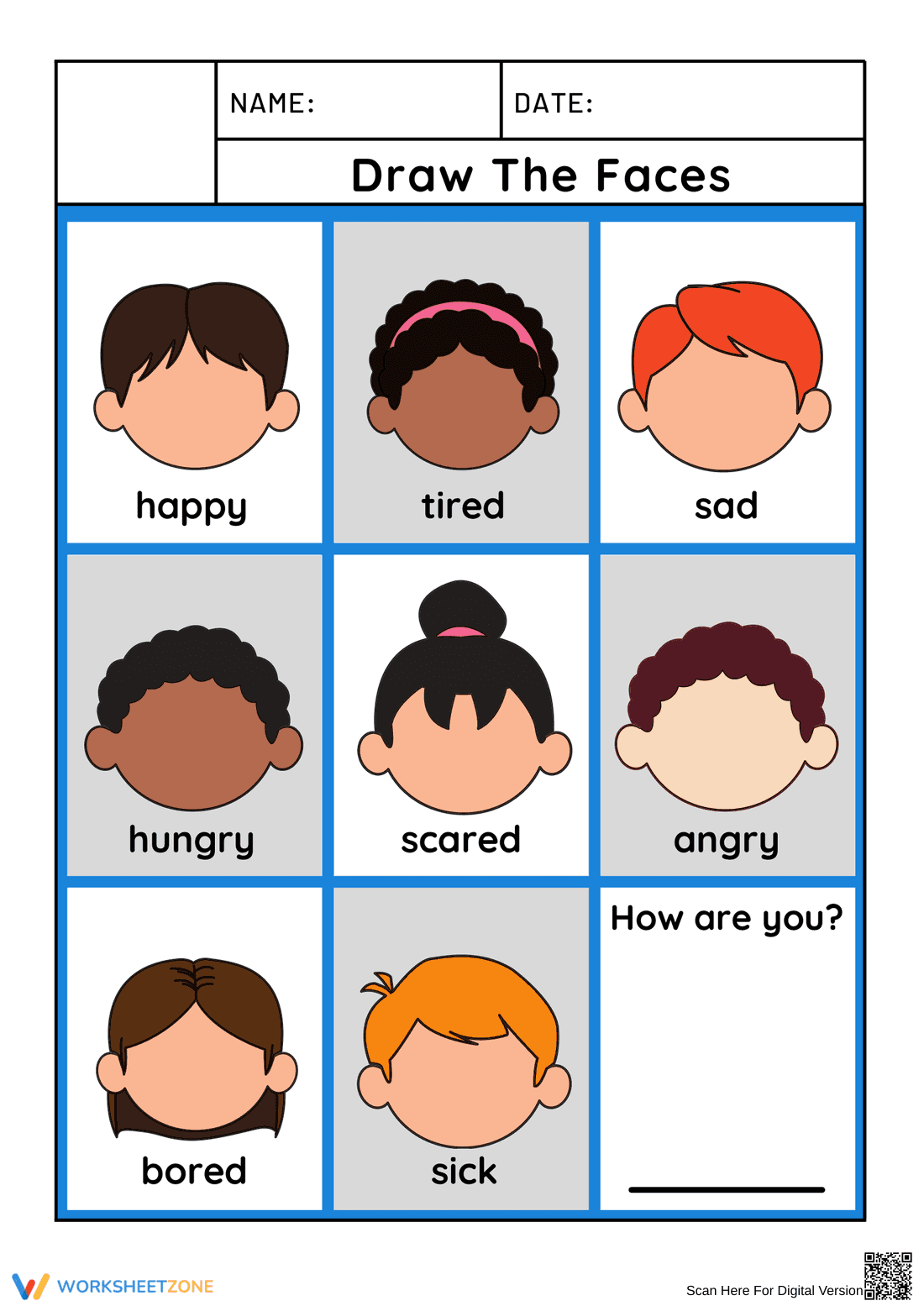
This is a worksheet titled 'Draw The Faces.' It presents nine boxes. Eight boxes contain a blank face outline with a different emotion labeled beneath each: happy, tired, sad, hungry, scared, angry, bored, and sick. The last box contains the question 'How are you?' with a blank line for writing. Students are expected to draw the facial expressions corresponding to the emotion labels.
Grade Level Suitability:
Suitable for Pre-K, Kindergarten, and early elementary (Grade 1-2). It's appropriate for these grades because it focuses on basic emotion recognition and simple drawing skills.
Why Use It:
This worksheet helps children identify and express different emotions through drawing. It promotes emotional literacy, fine motor skills, and creative expression. It also encourages self-reflection by asking 'How are you?'.
How to Use It:
Provide students with the worksheet and drawing materials (crayons, pencils, markers). Instruct them to draw the facial expressions that match the emotion word under each blank face. In the last box, they should draw their own face and write how they are feeling.
Target Users:
Preschool children, kindergarten students, early elementary students, ESL learners, and children with special needs who are working on emotional recognition and expression.
This is a worksheet titled 'Draw The Faces.' It presents nine boxes. Eight boxes contain a blank face outline with a different emotion labeled beneath each: happy, tired, sad, hungry, scared, angry, bored, and sick. The last box contains the question 'How are you?' with a blank line for writing. Students are expected to draw the facial expressions corresponding to the emotion labels.
Grade Level Suitability:
Suitable for Pre-K, Kindergarten, and early elementary (Grade 1-2). It's appropriate for these grades because it focuses on basic emotion recognition and simple drawing skills.
Why Use It:
This worksheet helps children identify and express different emotions through drawing. It promotes emotional literacy, fine motor skills, and creative expression. It also encourages self-reflection by asking 'How are you?'.
How to Use It:
Provide students with the worksheet and drawing materials (crayons, pencils, markers). Instruct them to draw the facial expressions that match the emotion word under each blank face. In the last box, they should draw their own face and write how they are feeling.
Target Users:
Preschool children, kindergarten students, early elementary students, ESL learners, and children with special needs who are working on emotional recognition and expression.


