


























Views
Downloads
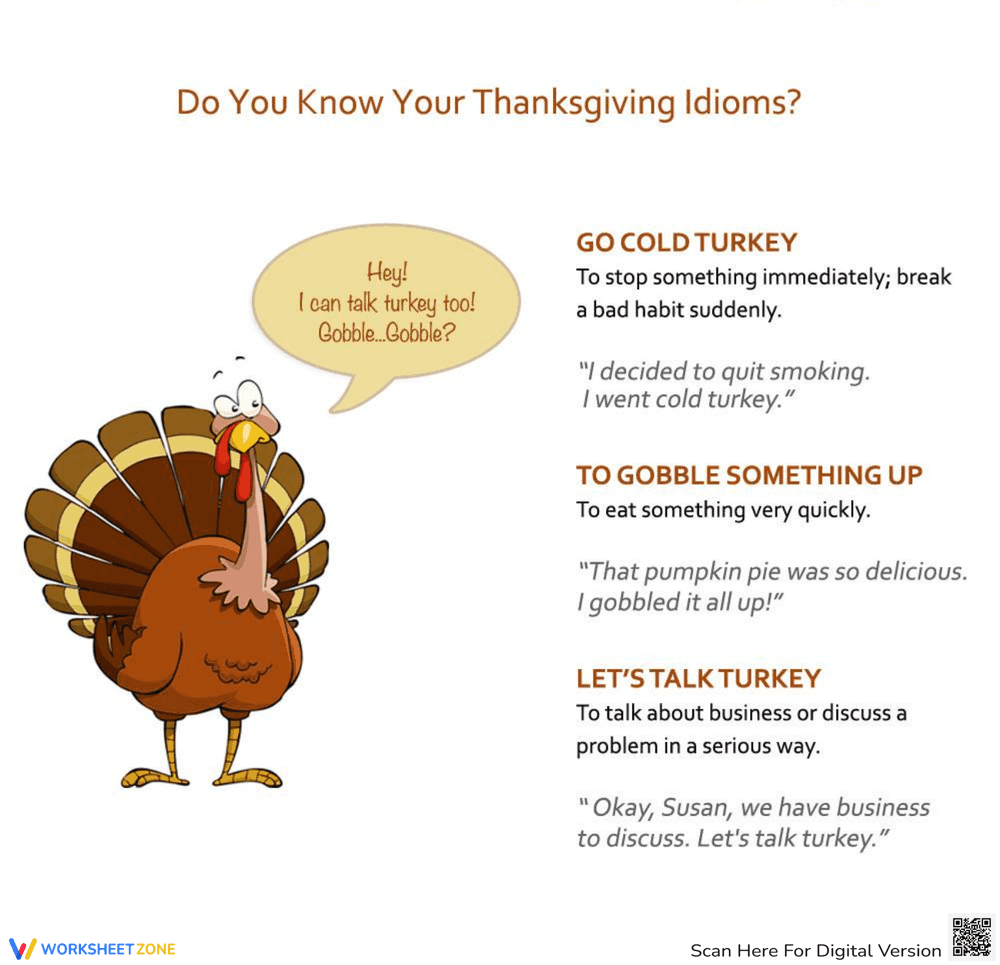

Essential Thanksgiving Idioms Worksheet | Grades 3-6
Paste this activity's link or code into your existing LMS (Google Classroom, Canvas, Teams, Schoology, Moodle, etc.).
Students can open and work on the activity right away, with no student login required.
You'll still be able to track student progress and results from your teacher account.
This Thanksgiving idioms worksheet helps students master figurative language through holiday-themed vocabulary. Students identify and define common expressions like "cold turkey" and "talk turkey" to improve reading comprehension and writing nuance. By connecting seasonal themes to linguistic concepts, this resource ensures students retain complex figurative meanings while staying engaged during holiday lessons.
At a Glance
- Grade: 4 · Subject: ELA
- Standard:
CCSS.ELA-LITERACY.L.4.5.B— Explain the meaning of common idioms, adages, and proverbs- Skill Focus: Figurative Language & Idioms
- Format: 1 page · 10 problems · Answer key included · PDF
- Best For: Seasonal vocabulary practice and bell ringers
- Time: 15–20 minutes
The worksheet features a clear, student-friendly layout with 10 specific idiom tasks. Each section provides a bolded idiom, a concise definition, and a contextual example sentence to model proper usage. The single-page PDF format includes a matching answer key, allowing for quick self-correction or teacher grading without additional research or preparation.
This resource follows a streamlined three-step workflow. First, print the single-page PDF in less than 30 seconds. Second, distribute the sheets to students for a 15-minute independent or partner activity. Finally, review the answers as a whole group in under 5 minutes using the provided key. Total teacher preparation time is less than 2 minutes, making it an ideal sub plan or seasonal filler.
Standards Alignment
This resource aligns with `CCSS.ELA-LITERACY.L.4.5.B`, which requires students to explain the meaning of common idioms, adages, and proverbs. It also supports L.5.5.B by building the foundational knowledge needed for more complex figurative analysis in later grades. Both standard codes can be copied directly into lesson plans, IEP goals, or district curriculum mapping tools.
How to Use It
Use this worksheet as a warm-up activity during the week of Thanksgiving to settle the class. It also serves as an excellent formative assessment after a lesson on literal versus figurative language. Observe if students can apply the idioms to their own sentences to gauge true mastery. Completion typically takes 15 to 20 minutes depending on the grade level.
Who It's For
This is designed for upper elementary students in grades 3 through 6, including English Language Learners who often struggle with non-literal phrases. It pairs naturally with a holiday-themed reading passage or a vocabulary anchor chart. The clear examples provide necessary scaffolding for students working toward grade-level proficiency in language arts.
Research by Fisher & Frey (2014) emphasizes that figurative language instruction is most effective when situated within meaningful contexts rather than isolated lists. This worksheet applies that principle by using a cohesive Thanksgiving theme to anchor the learning of CCSS.ELA-LITERACY.L.4.5.B. By providing both definitions and example sentences, the resource reduces the cognitive load on students, allowing them to focus on the semantic shift between literal and figurative meanings. According to the NAEP, students who demonstrate a strong grasp of idioms and adages consistently score higher on reading comprehension assessments because they can better interpret authorial intent and tone. This printable resource provides the structured repetition necessary for long-term retention of these linguistic nuances. Educators can use this tool to bridge the gap between basic vocabulary and the sophisticated language required for middle school success, ensuring all learners meet rigorous state standards.


