


























Views
Downloads
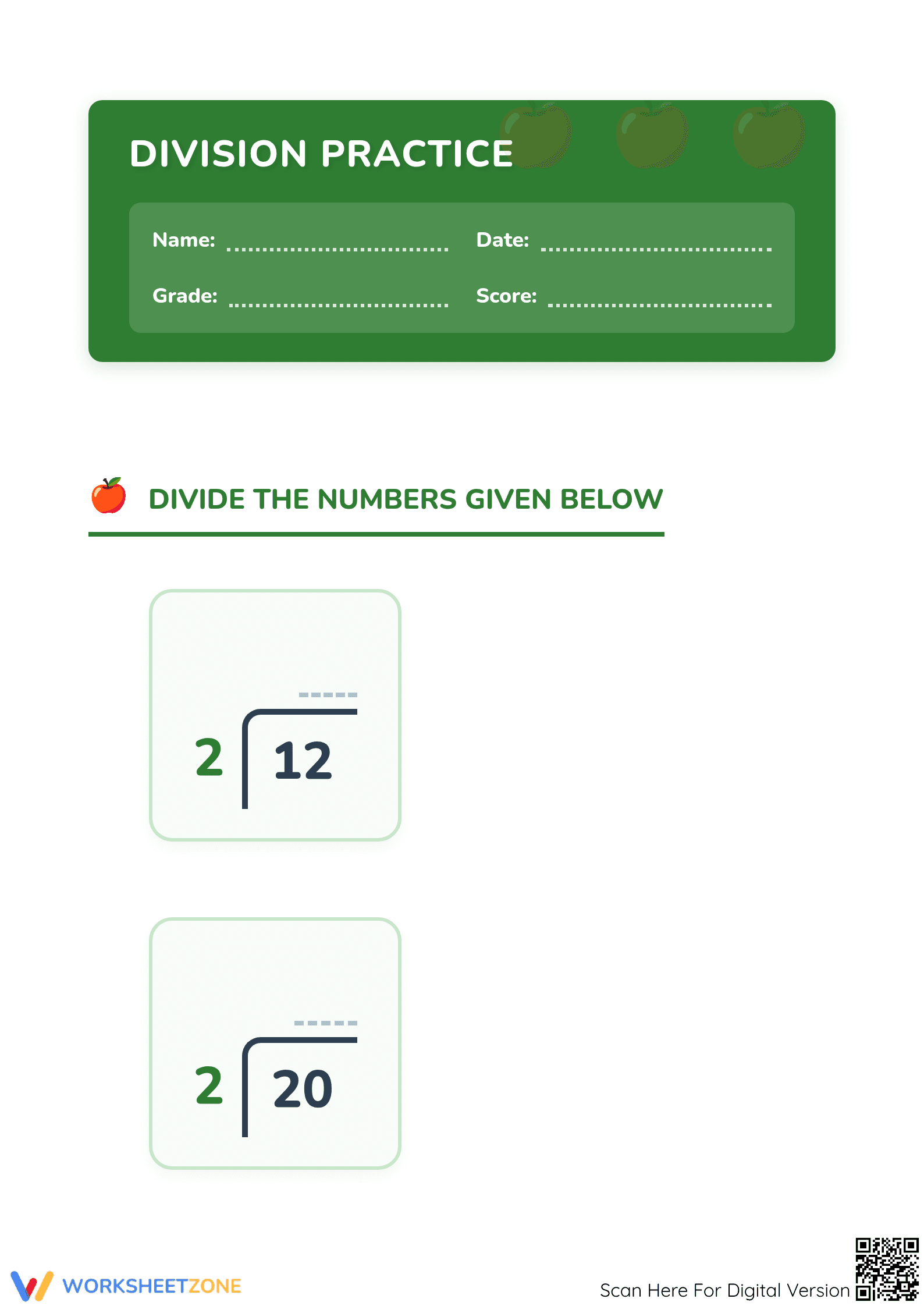
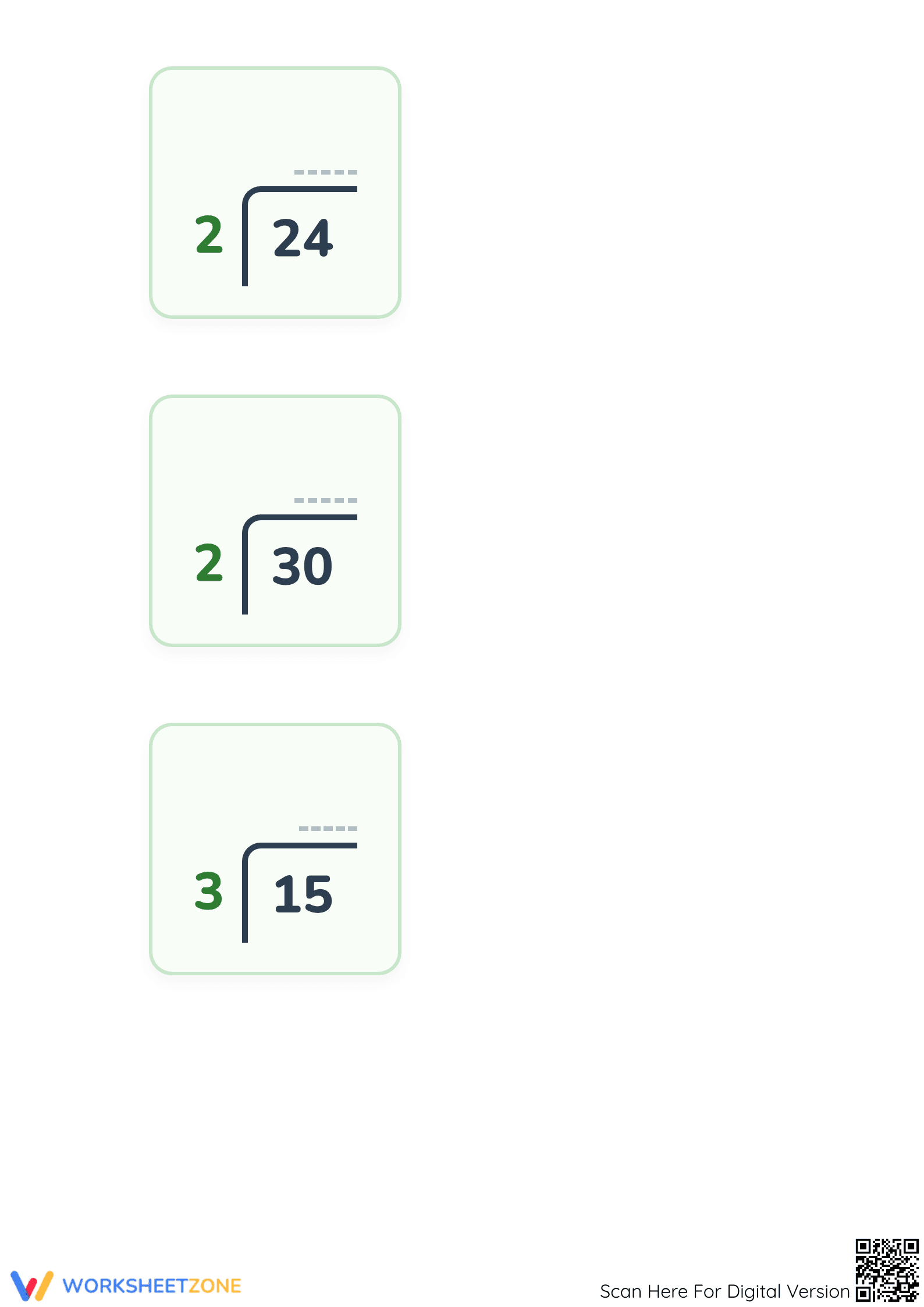
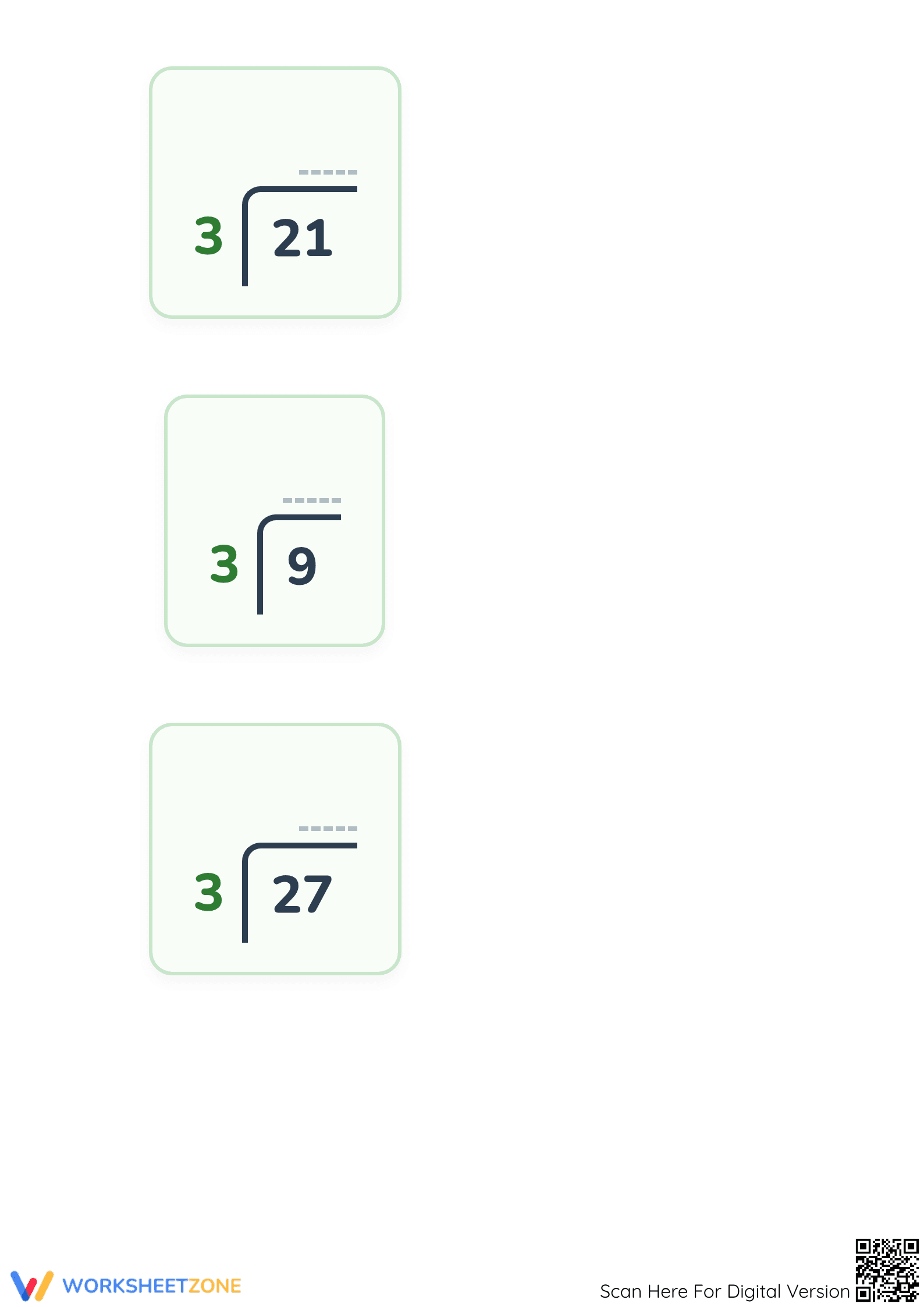
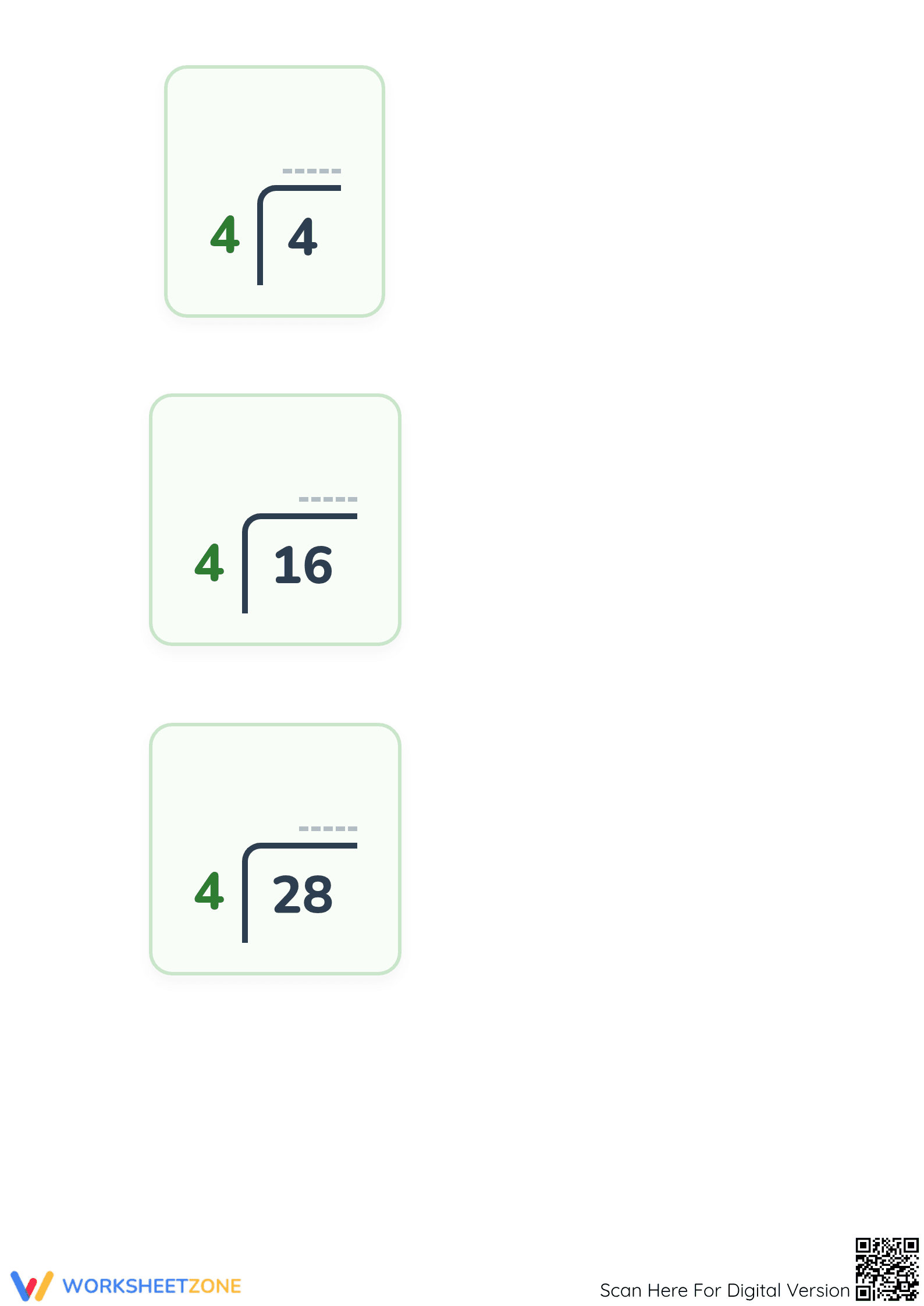
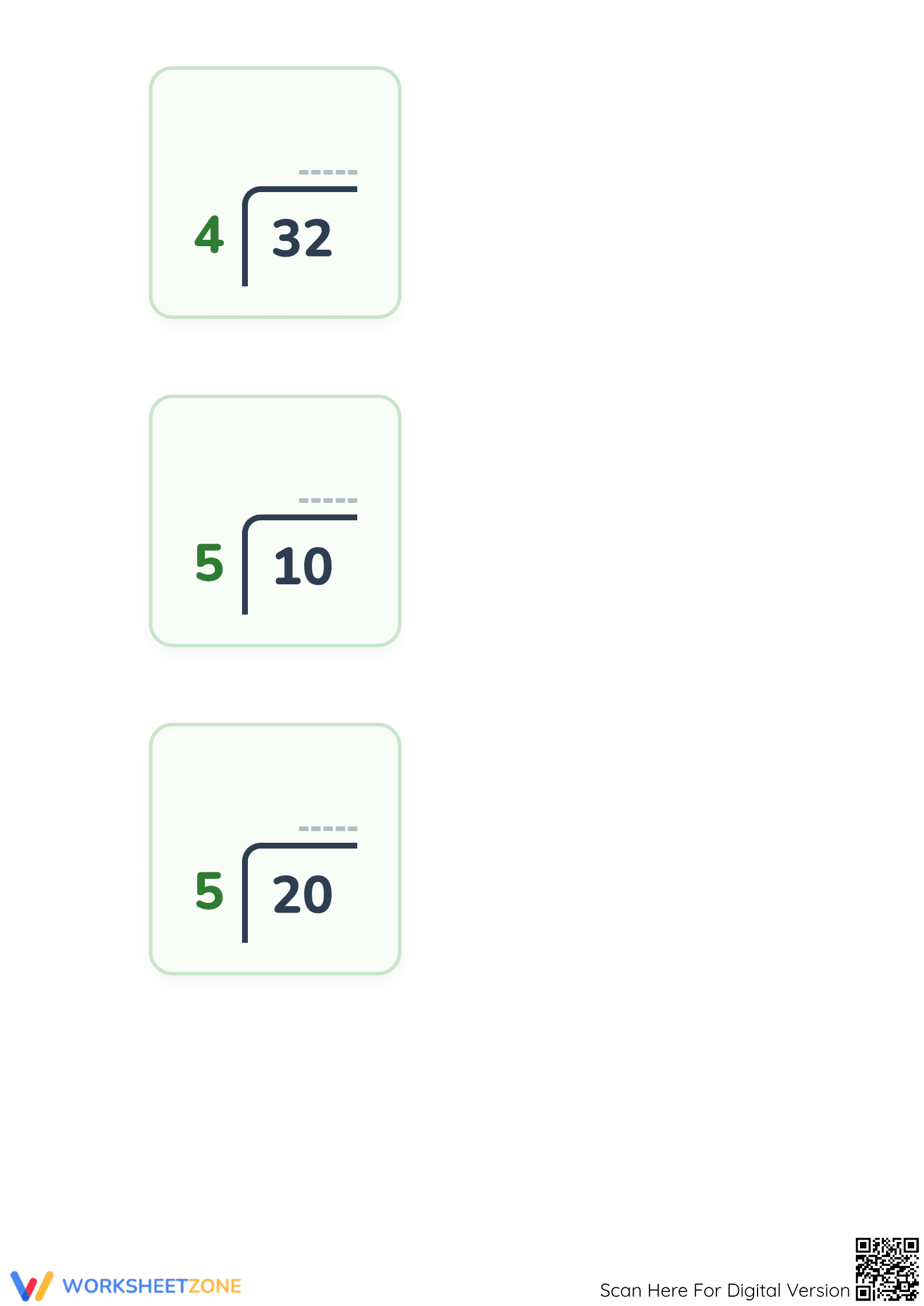

Essential Division of Numbers Worksheet | Grade 3 Math
Paste this activity's link or code into your existing LMS (Google Classroom, Canvas, Teams, Schoology, Moodle, etc.).
Students can open and work on the activity right away, with no student login required.
You'll still be able to track student progress and results from your teacher account.
This comprehensive Grade 3 math worksheet strengthens division fluency through 50 targeted practice problems. By mastering basic quotients for numbers 2, 3, 4, 5, and 10, students build the computational foundation necessary for more complex algebraic thinking and multi-step word problems involving multiplication and division relationships.
At a Glance
- Grade: 3 · Subject: Math
- Standard:
CCSS.MATH.CONTENT.3.OA.C.7— Fluently divide within 100 using strategies such as the relationship between multiplication and division- Skill Focus: Basic division facts
- Format: 5 pages · 50 problems · Answer key included · PDF
- Best For: Daily morning work or computational fluency checks
- Time: 15–25 minutes
What's Inside
This set contains five distinct pages, each focused on a specific divisor to ensure thorough mastery of basic division facts. With 10 problems per page, the layout is clean and distraction-free, providing ample space for students to write their answers. A full answer key is provided, allowing for quick grading or student self-correction during independent work periods.
Skill Progression
- Guided practice: The initial pages focus on divisors of 2 and 3, allowing students to use familiar skip-counting patterns to find quotients.
- Supported practice: Middle pages introduce divisors of 4 and 5, encouraging students to apply their knowledge of doubling or nickel-counting strategies.
- Independent practice: The final page covers division by 10, solidifying the concept of place value shifts in the division process.
This structured approach follows the gradual-release model, moving from high-frequency facts to more challenging mental math calculations through the I Do, We Do, You Do framework.
Standards Alignment
The primary standard addressed is CCSS.MATH.CONTENT.3.OA.C.7, which requires students to fluently multiply and divide within 100. This resource also supports CCSS.MATH.CONTENT.3.OA.A.2 by helping students interpret whole-number quotients of whole numbers. Both standard codes can be copied directly into lesson plans, IEP goals, or district curriculum mapping tools for accurate tracking.
How to Use It
Deploy this worksheet as a formative assessment after introducing the concept of division as "fair sharing" or equal groups. Teachers can observe which divisors cause hesitation to identify specific students who need intervention with their multiplication facts. Expect most students to complete one page in approximately 4 minutes, making it an ideal exit ticket to gauge daily understanding.
Who It's For
This resource is designed for Grade 3 students working toward mastery of the Common Core standards, but it also serves as an excellent remedial tool for Grade 4 or 5 learners who require extra support with basic fact recall. It pairs naturally with physical manipulatives like counters or arrays, providing a bridge between concrete understanding and abstract numerical computation.
According to the NAEP reports on mathematical achievement, computational fluency with basic operations is a critical predictor of success in middle-school algebra. This division worksheet aligns with the instructional framework by providing repetitive, low-stakes practice that reduces cognitive load during the acquisition of new mathematical procedures. Research from Fisher & Frey (2014) emphasizes the importance of guided practice in the gradual release of responsibility, ensuring that students do not develop misconceptions. By focusing on divisors 2, 3, 4, 5, and 10 in a structured sequence, this resource allows teachers to pinpoint exact gaps in a student's mental math strategies aligned to CCSS.MATH.CONTENT.3.OA.C.7. The inclusion of a clear answer key supports immediate feedback, which has been shown in the ScienceDirect TpT Analysis to significantly improve retention rates. This 5-page set provides the high-frequency repetition necessary to move division facts to long-term fluency.


