


























Views
Downloads

Essential Cursive J Practice | Grade 2-3 Printable
Paste this activity's link or code into your existing LMS (Google Classroom, Canvas, Teams, Schoology, Moodle, etc.).
Students can open and work on the activity right away, with no student login required.
You'll still be able to track student progress and results from your teacher account.
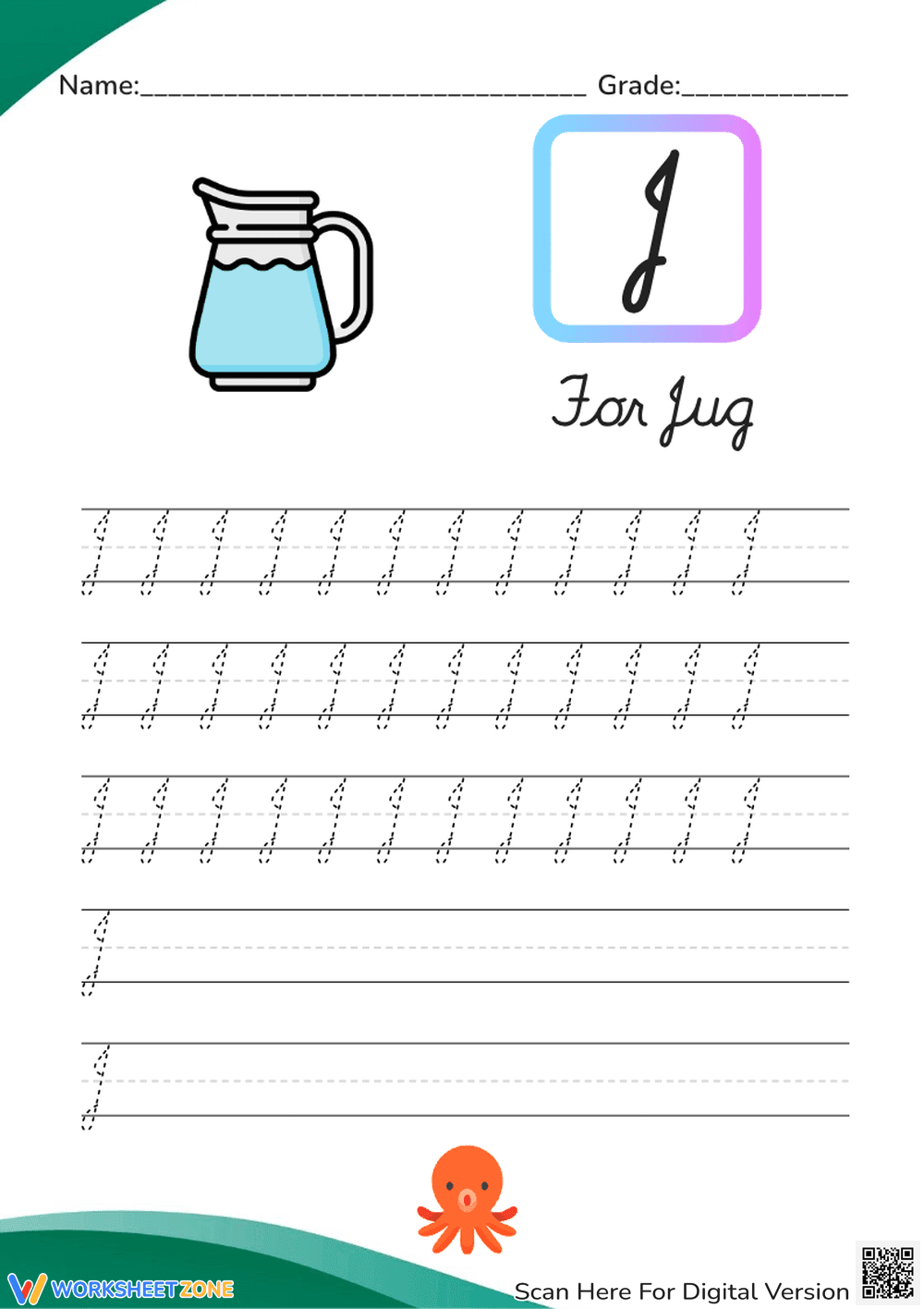
This Grade 3 cursive handwriting worksheet provides a focused environment for students to master the uppercase letter J. By combining visual associations with repetitive kinesthetic practice, learners develop the muscle memory necessary for fluid script. Students will transition from guided tracing to independent letter production, ensuring a solid foundation for cursive literacy and penmanship.
At a Glance
- Grade: 3 · Subject: Handwriting
- Standard:
CCSS.ELA-LITERACY.L.3.1— Demonstrate command of the conventions of standard English capitalization and handwriting- Skill Focus: Cursive uppercase J formation
- Format: 1 page · 60 tasks · No-prep · PDF
- Best For: Morning work or handwriting centers
- Time: 10–15 minutes
What's Inside: This single-page PDF features a clear, blue-themed layout designed to minimize visual distraction. It includes a large reference letter J paired with a "Jug" illustration to reinforce letter-sound correspondence. The page contains three full rows of dotted-line tracing guides followed by two rows of empty primary lines for independent practice, totaling approximately 60 letter attempts.
The zero-prep design allows for an immediate classroom workflow. First, print the single-page PDF in less than 30 seconds. Second, distribute to students during a transition period or as a dedicated handwriting block, which takes about 1 minute. Third, review student letter formation by checking the slant and loop of the uppercase J against the provided guidelines. Total teacher preparation time is under 2 minutes, making this an ideal resource for busy mornings or substitute teacher plans.
Standards Alignment: This resource is aligned with `CCSS.ELA-LITERACY.L.3.1`, which requires students to demonstrate command of the conventions of standard English grammar and usage when writing. Specifically, it targets the foundational motor skills required for legible cursive writing. This standard code can be copied directly into lesson plans, IEP goals, or district curriculum mapping tools.
How to Use It: This worksheet is best utilized during the "independent practice" phase of a handwriting lesson. After a brief teacher demonstration of the stroke order for uppercase J, assign this sheet as a quiet desk activity. It also serves as an excellent formative assessment tool; observe students as they work to identify those struggling with grip or stroke direction. Completion typically takes 10 to 15 minutes.
Who It's For: This practice page is designed for 2nd and 3rd-grade students who are beginning their cursive journey. It is also highly effective for older students requiring remedial handwriting support or fine motor intervention. Pair this worksheet with a cursive anchor chart or a short reading passage about objects starting with the letter J to create a cohesive literacy lesson.
According to research by Fisher & Frey (2014) regarding the gradual release of responsibility, structured handwriting practice provides the necessary scaffolding for fine motor development. This worksheet aligns with CCSS.ELA-LITERACY.L.3.1 by focusing on the conventions of standard English through the specific formation of the cursive uppercase letter J. By providing 60 distinct opportunities for letter production—ranging from guided tracing to independent strokes—students build the muscle memory required for legible script. Handwriting remains a critical component of literacy, as the physical act of writing letters by hand is linked to improved letter recognition and spelling accuracy in early elementary students. This resource serves as a targeted tool for educators to ensure students meet foundational writing standards while minimizing instructional friction. The inclusion of visual cues, such as the jug illustration, reinforces phonemic awareness alongside kinesthetic practice, creating a multi-sensory learning experience that supports diverse learner needs.


