


























Views
Downloads
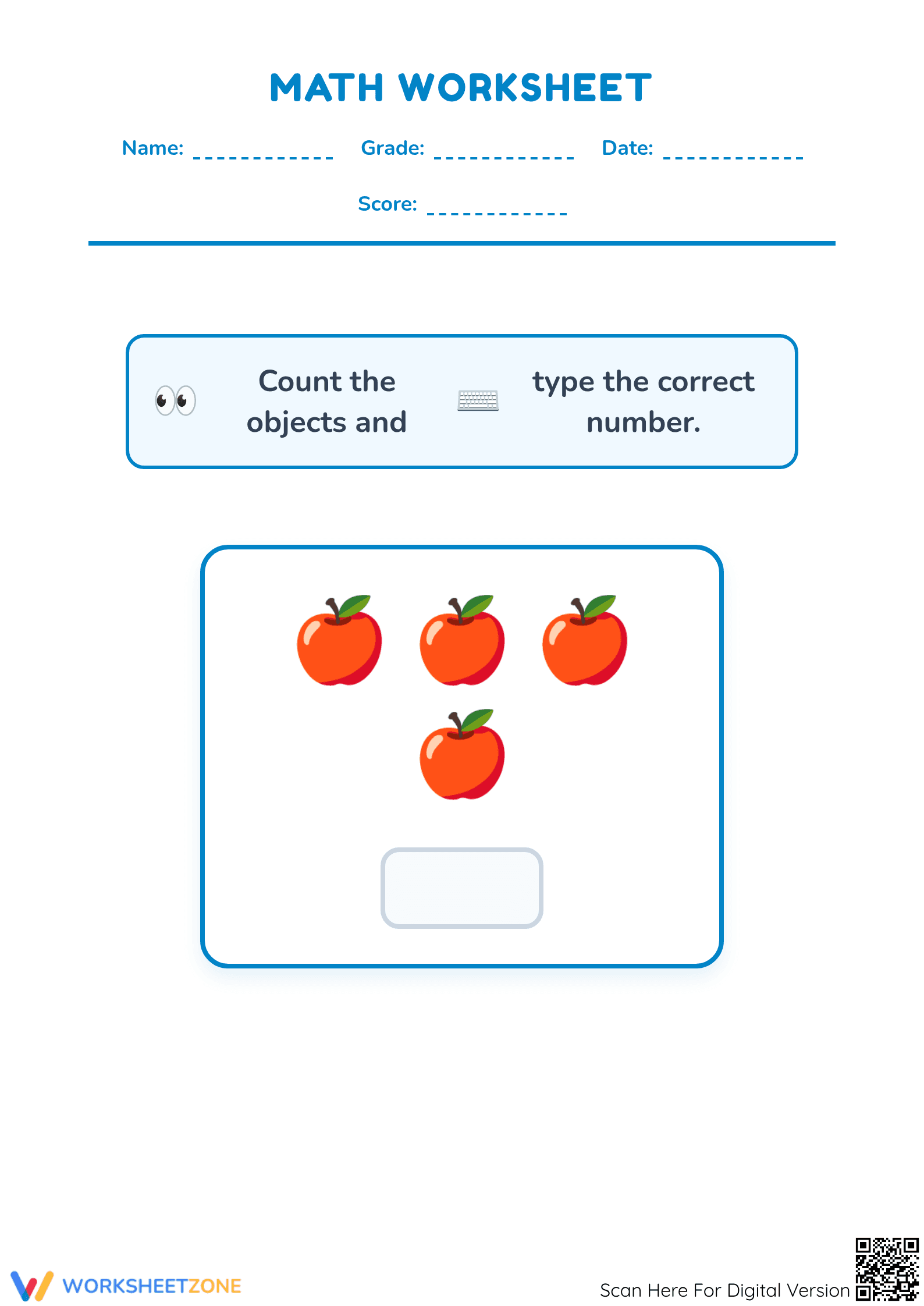
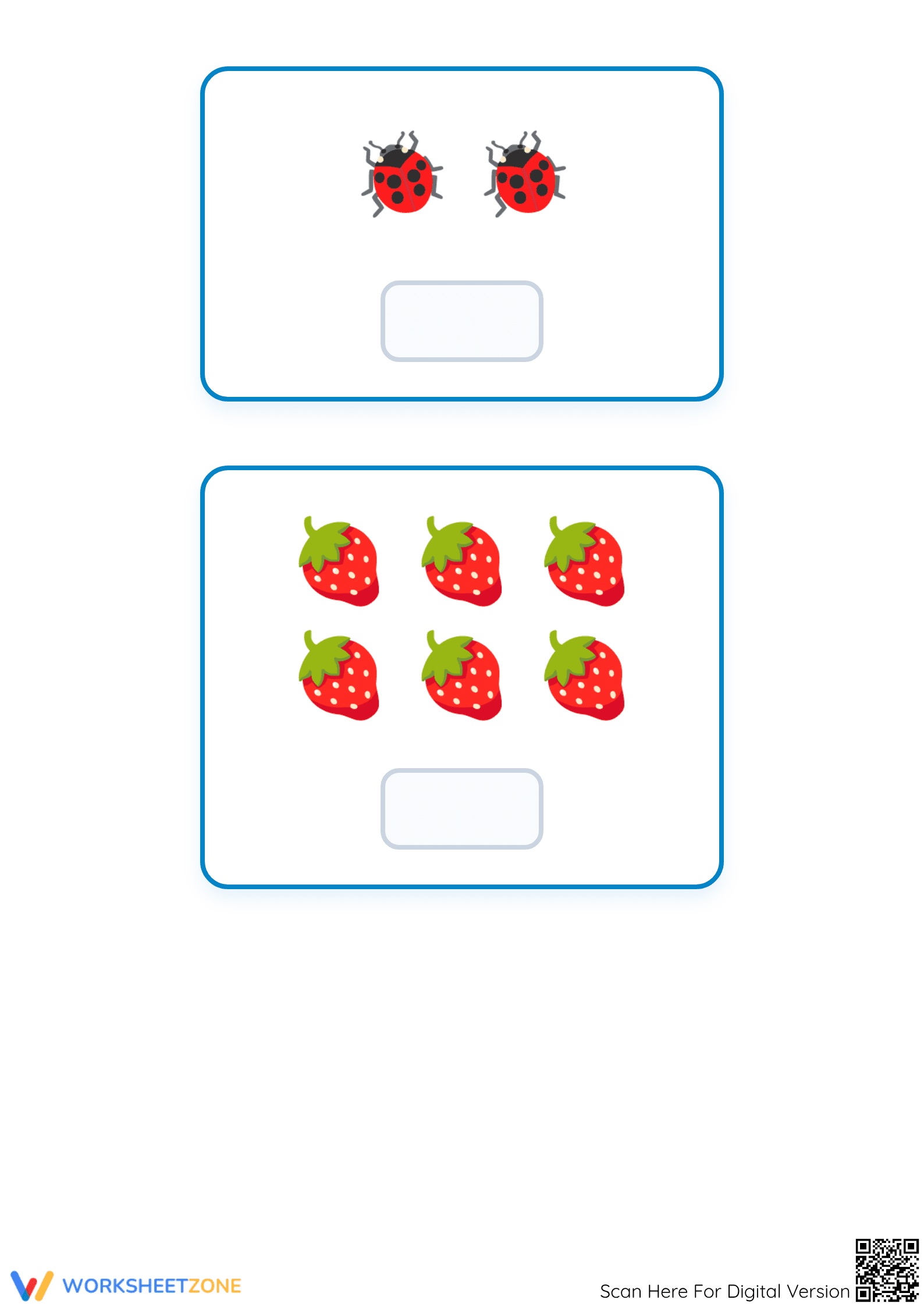
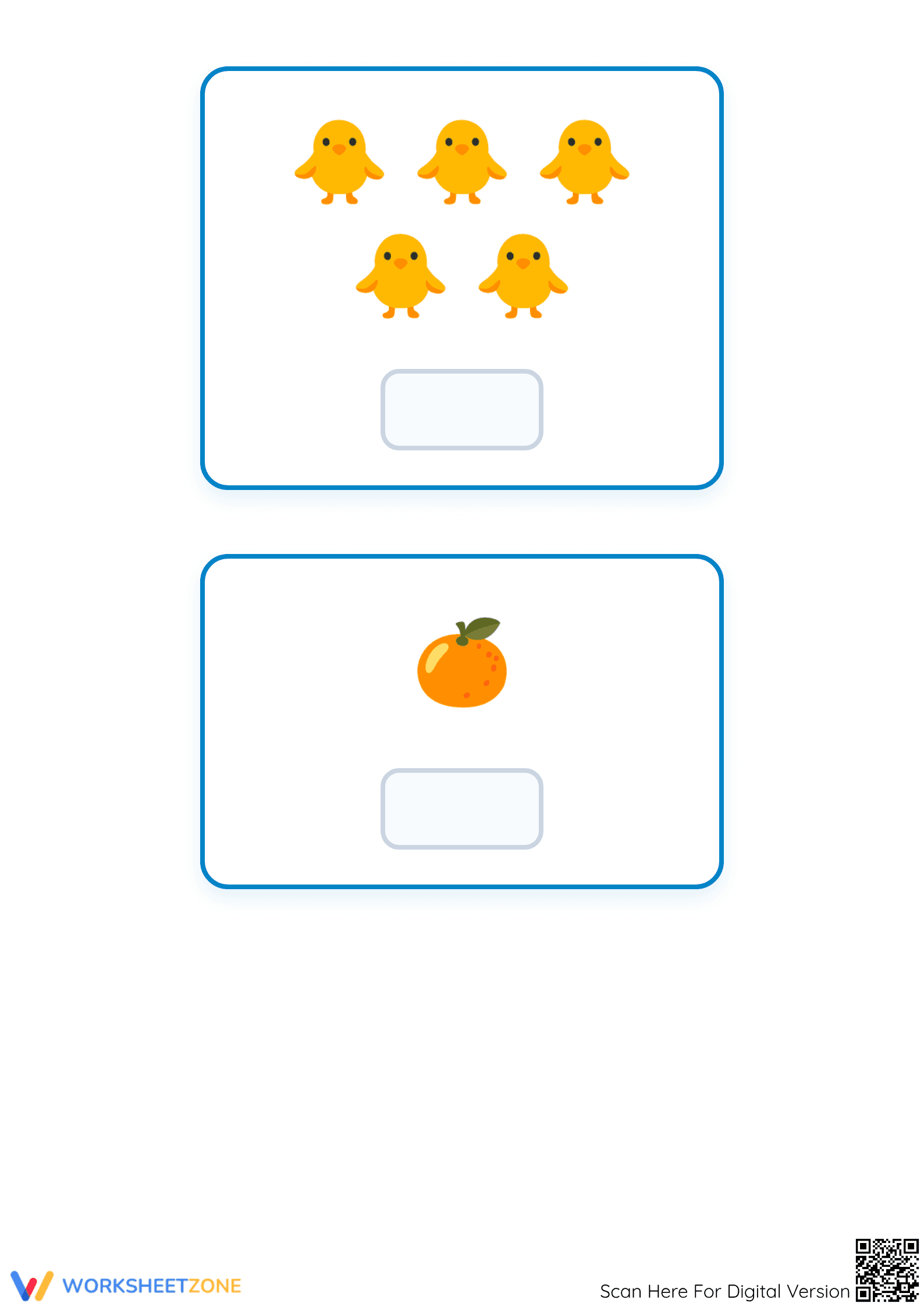
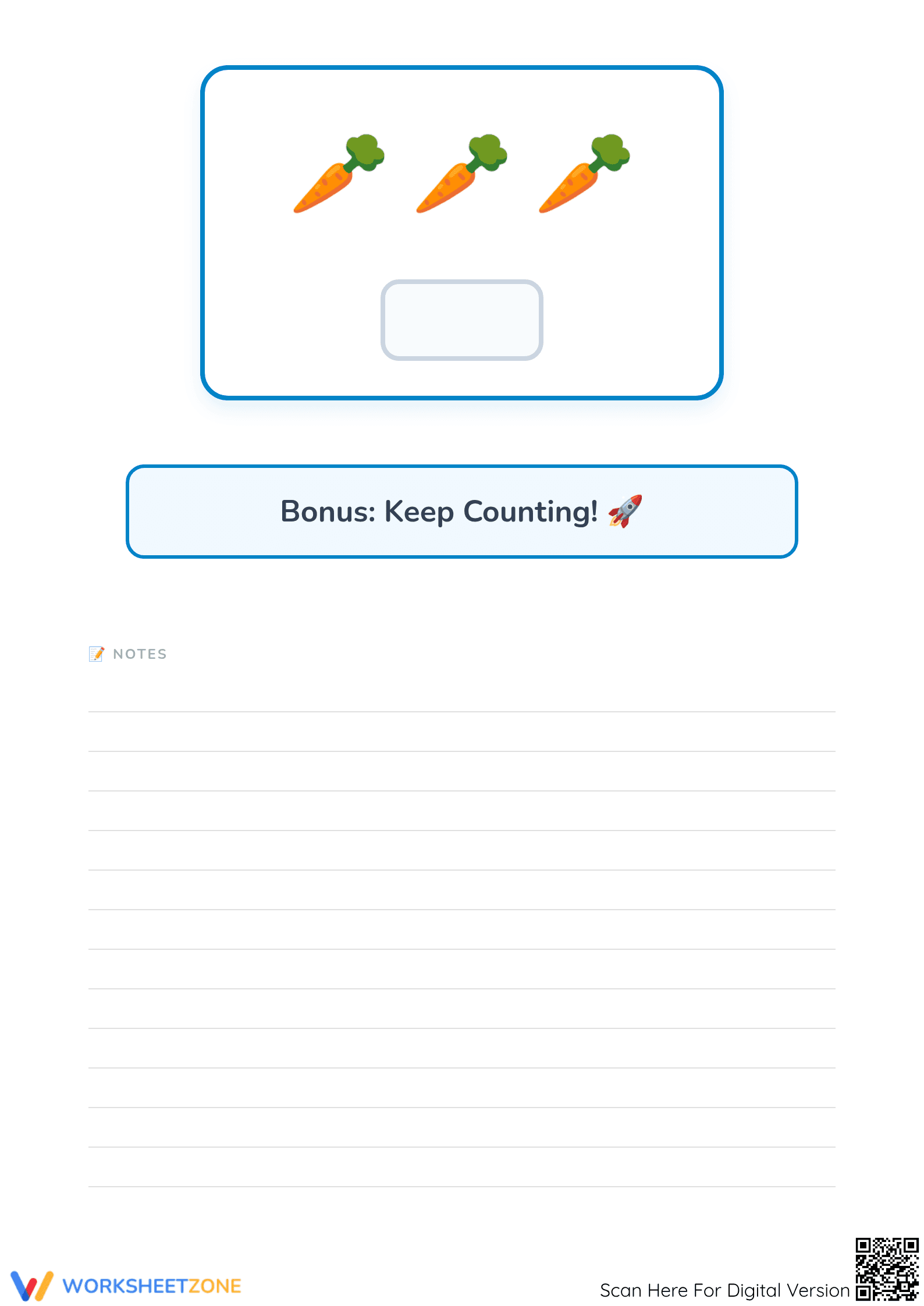
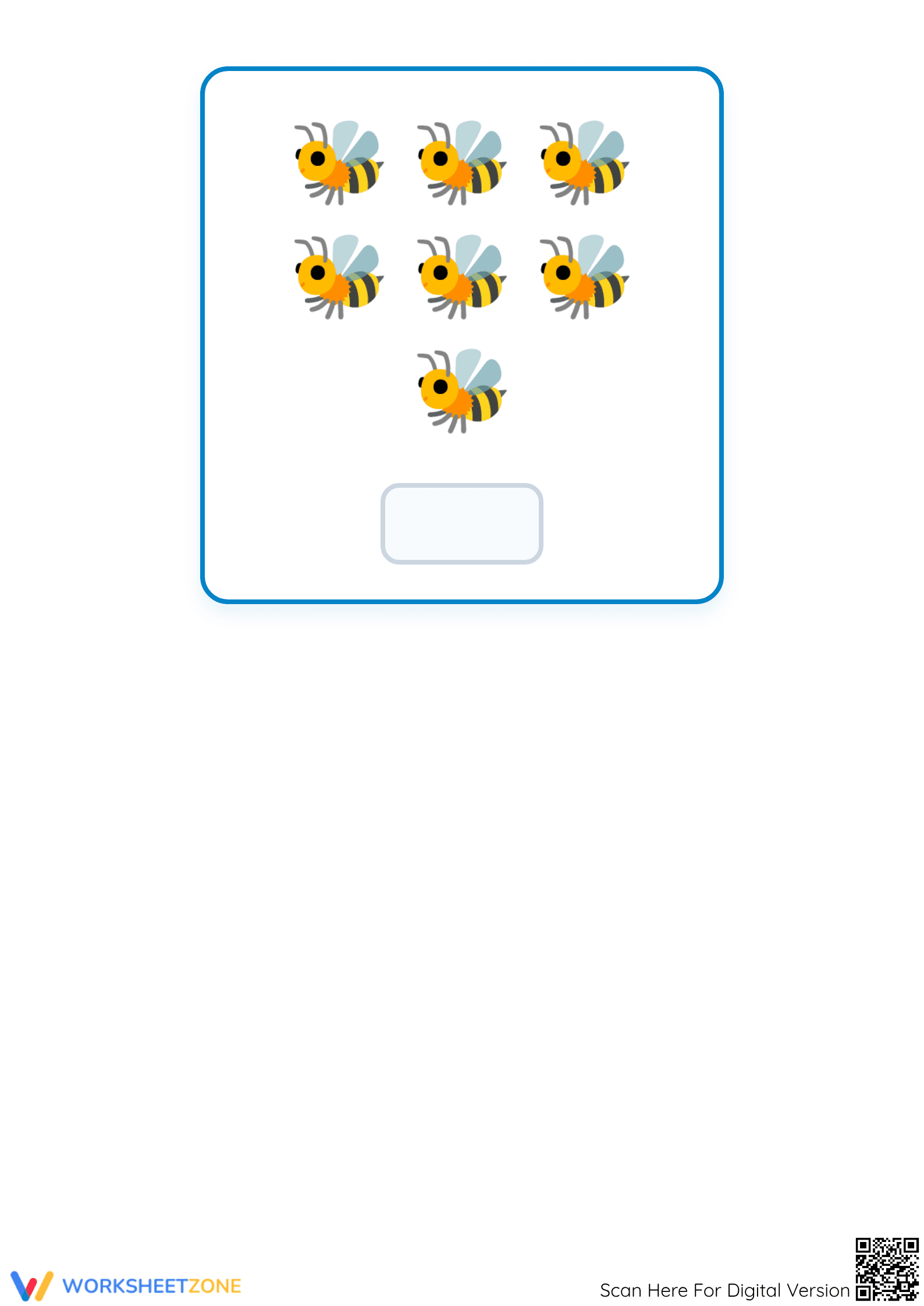

Counting to 6 Worksheet | Printable Grade K Math
Paste this activity's link or code into your existing LMS (Google Classroom, Canvas, Teams, Schoology, Moodle, etc.).
Students can open and work on the activity right away, with no student login required.
You'll still be able to track student progress and results from your teacher account.
This essential math worksheet provides focused practice for kindergarten students on counting objects and writing the corresponding numerals from 1 to 6. Through a series of clear and structured activities, learners will strengthen their one-to-one correspondence and number recognition skills, building a foundational understanding of quantity and cardinality.
At a Glance
- Grade: Kindergarten · Subject: Math
- Standard:
CCSS.MATH.CONTENT.K.CC.B.5— Count to answer 'how many?' questions for up to 10 objects.- Skill Focus: Counting objects and writing numerals 1-6
- Format: 5 pages · 9 problems · Answer key included · PDF
- Best For: Early number sense, independent practice, math centers
- Time: 15–20 minutes
What's Inside
This five-page PDF contains nine activities to build counting fluency. The first eight tasks involve counting sets of shapes and writing the numeral (1-6). The final page offers a number tracing activity to reinforce number formation. A complete five-page answer key is included for easy checking.
A Clear Path to Counting Mastery
This worksheet follows a gradual release model to build confidence in counting skills.
- Guided Practice: The first pages feature four tasks with small quantities (1-4). Teachers can model touching each object once while counting aloud before the student writes the number, perfect for an "I Do" or "We Do" session.
- Supported Practice: The next four tasks introduce quantities up to 6. Students can work in pairs, applying counting strategies to these new sets of objects with peer or teacher support.
- Independent Practice: The final number tracing activity on page five serves as an independent task to consolidate number formation. Students can complete this at their desks, demonstrating their learning.
Standards-Aligned for Your Classroom
This resource directly targets Kindergarten math standards. The primary alignment is to CCSS.MATH.CONTENT.K.CC.B.5, where students count to answer "how many?" questions. This worksheet provides targeted practice with numbers up to 6. It also supports CCSS.MATH.CONTENT.K.CC.A.3 by having students write numerals. Both standard codes can be copied directly into lesson plans or curriculum maps.
Flexible for Any Lesson Plan
This worksheet is a versatile tool for your math block. Use it after a direct instruction lesson on counting for immediate practice, or place it in a math center rotation for independent work. For formative assessment, observe if students touch-count each object and form numerals correctly. Most students will complete the packet in 15-20 minutes.
Perfect for Early Learners
This resource is designed for Pre-K and Kindergarten students developing number sense. The clean layout and familiar shapes are ideal for young learners, and the repetition builds confidence. For a complete lesson, pair this worksheet with a hands-on activity using counting bears or blocks to represent the quantities shown.
Supporting early numeracy with targeted practice aligns with findings on effective mathematics instruction. This worksheet, focused on standard CCSS.MATH.CONTENT.K.CC.B.5, provides structured exercises where students count objects to answer "how many?" and write the numeral. Research highlighted by the RAND Corporation emphasizes that foundational skills like counting are critical predictors of later math achievement (RAND AIRS 2024). The worksheet's design—clear, repetitive tasks that build from smaller to larger quantities up to six—provides the focused repetition that helps solidify the connection between a quantity and its symbolic representation. This approach is consistent with evidence-based practices for developing cardinality in young learners, ensuring that students do not just recite numbers but understand what they represent, a key insight from decades of mathematics education research. This resource gives teachers a practical tool to implement these principles in their classroom.


