


























Views
Downloads

Essential Fraction to Decimal Conversion Packet | Grades 4-6
Paste this activity's link or code into your existing LMS (Google Classroom, Canvas, Teams, Schoology, Moodle, etc.).
Students can open and work on the activity right away, with no student login required.
You'll still be able to track student progress and results from your teacher account.
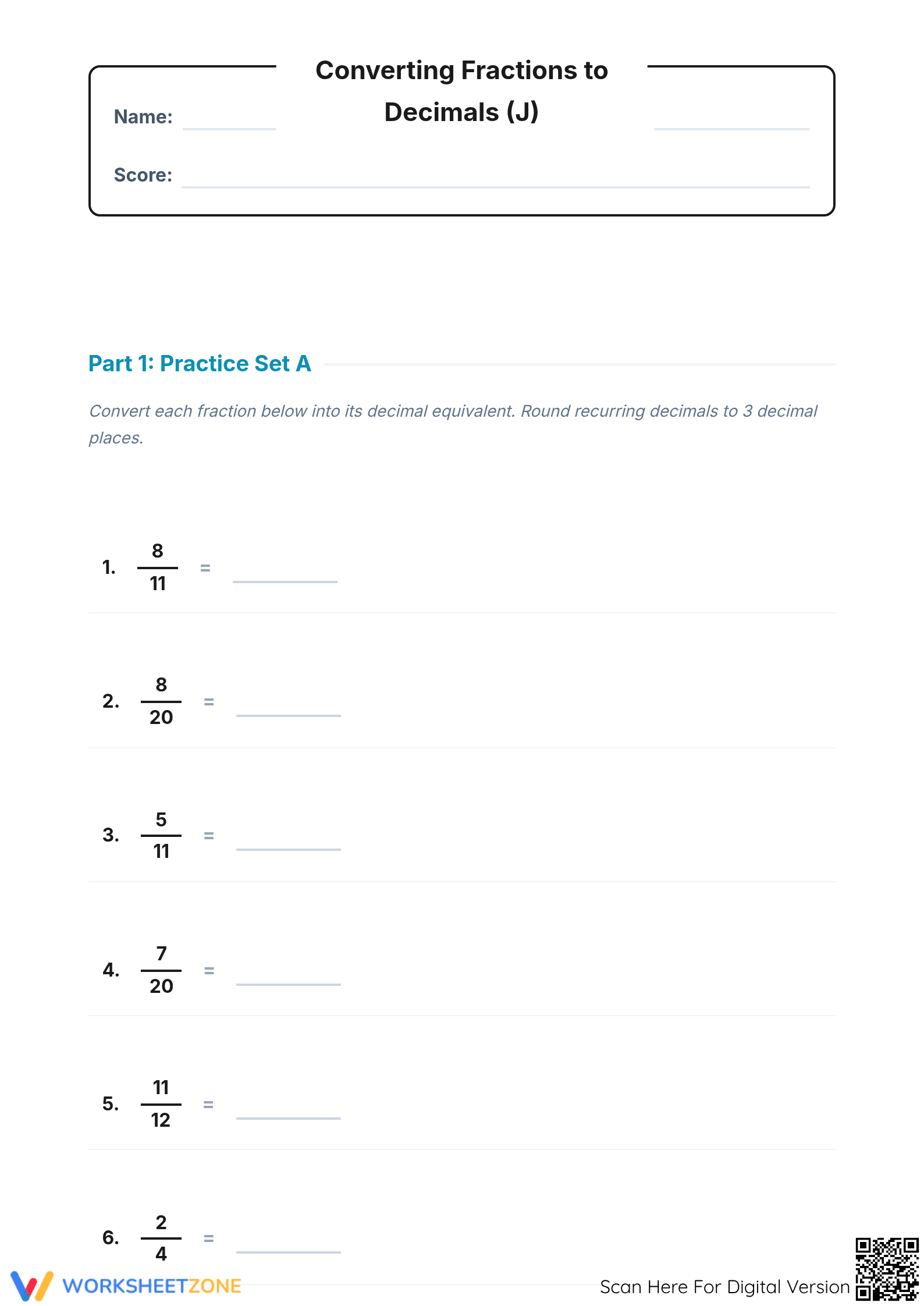
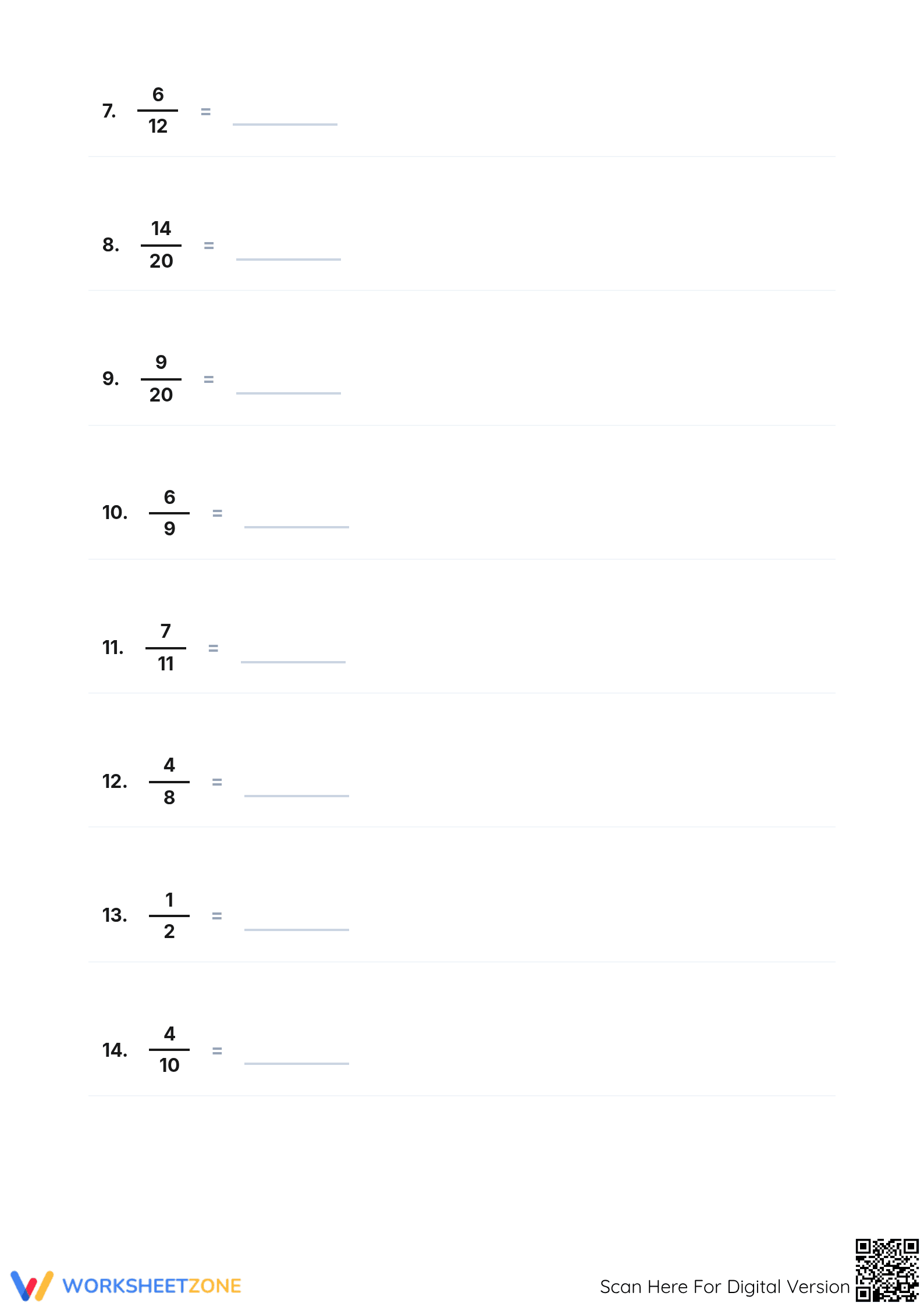
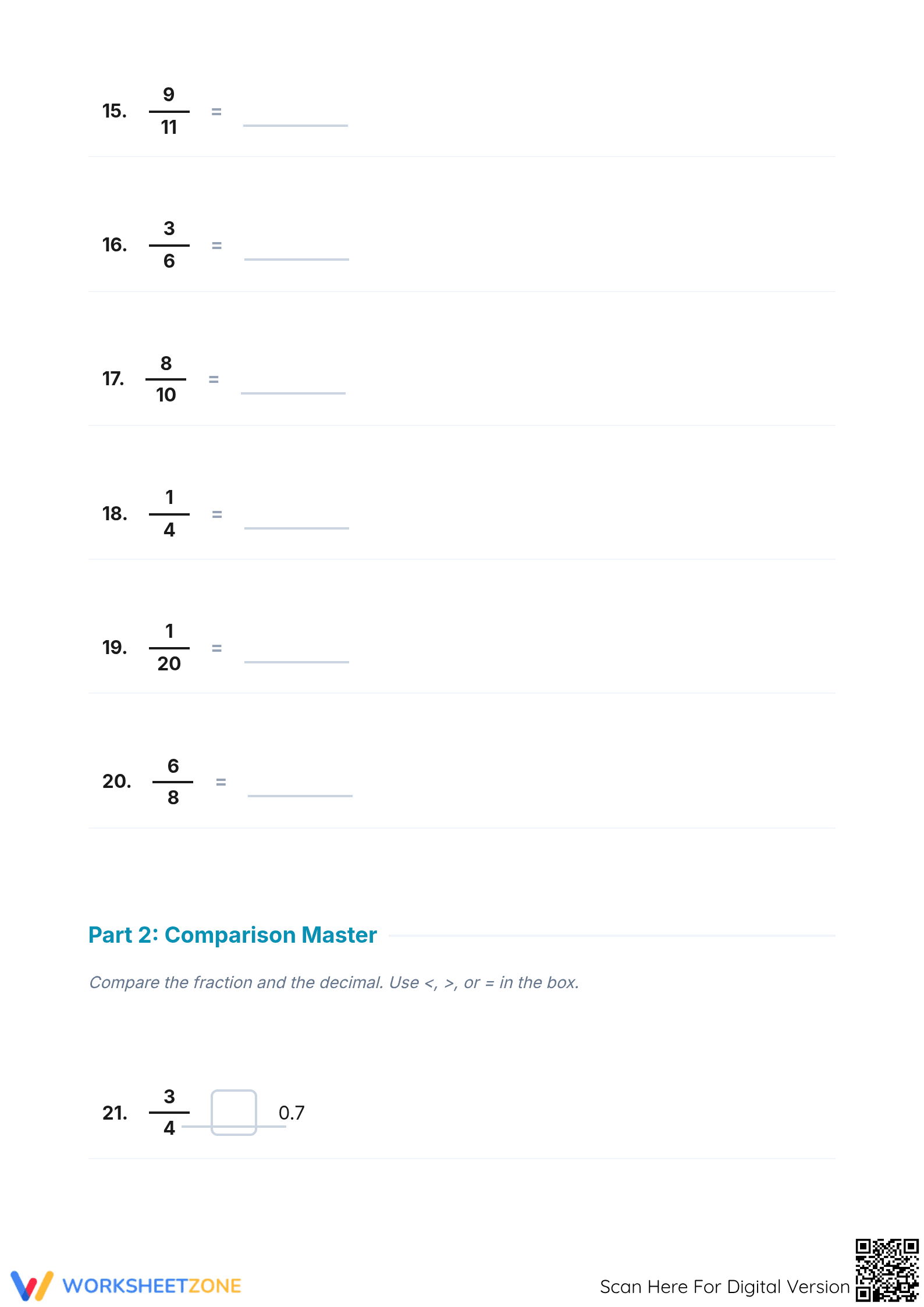
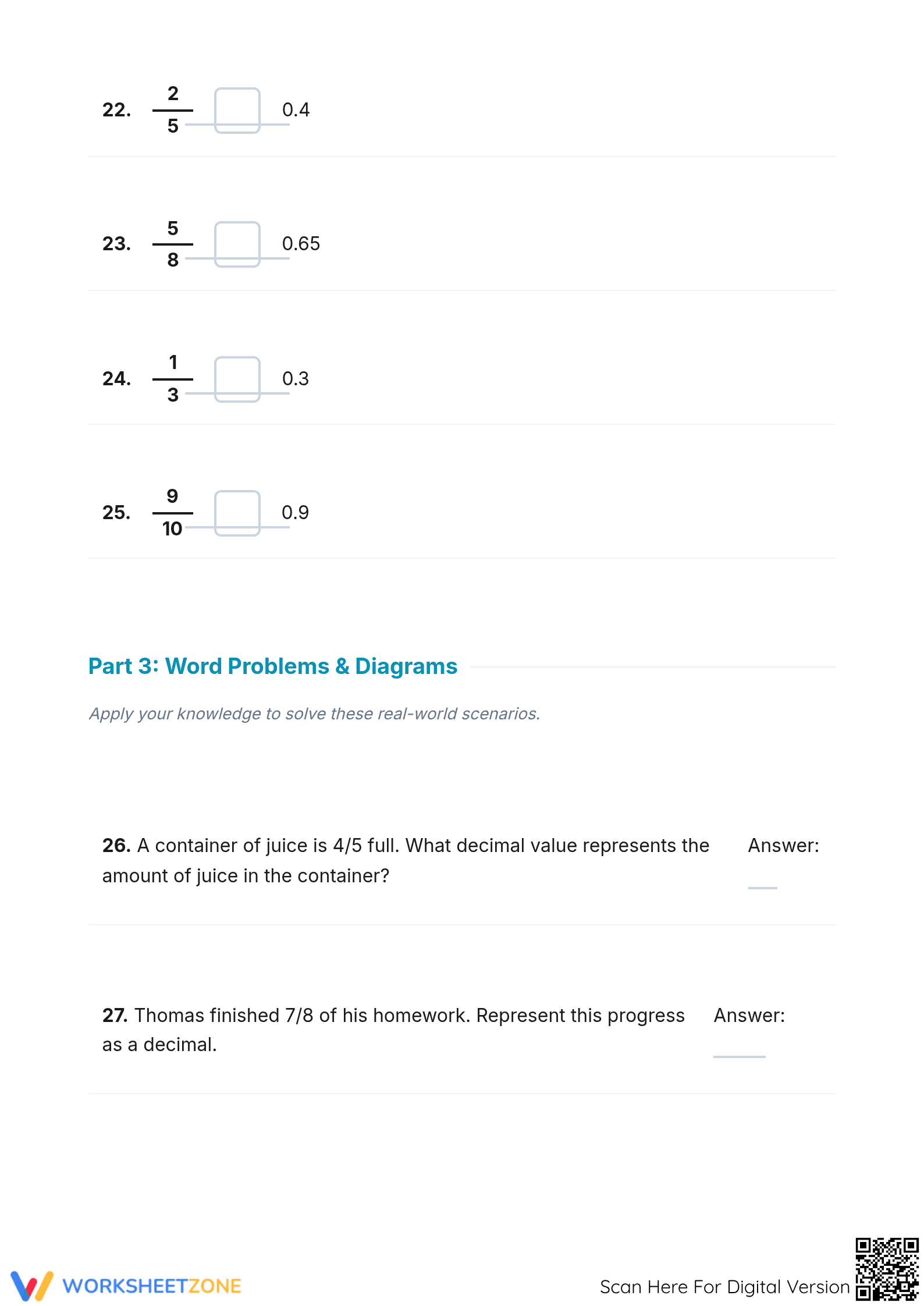
This comprehensive math worksheet provides targeted practice for students learning to convert fractions into decimals and compare values with precision. By interpreting fractions as division, learners build essential fluency required for advanced proportional reasoning. This resource bridges the gap between abstract number representation and practical data application through engaging task formats.
At a Glance
At a Glance
- Grade: 5 · Subject: Math
- Standard:
CCSS.MATH.CONTENT.5.NF.B.3— Interpret fractions as division to convert them into precise decimal values- Skill Focus: Fraction to decimal conversion
- Format: 5 pages · 33 problems · Answer key included · PDF
- Best For: Independent practice and formative assessment
- Time: 30–45 minutes
What's Inside
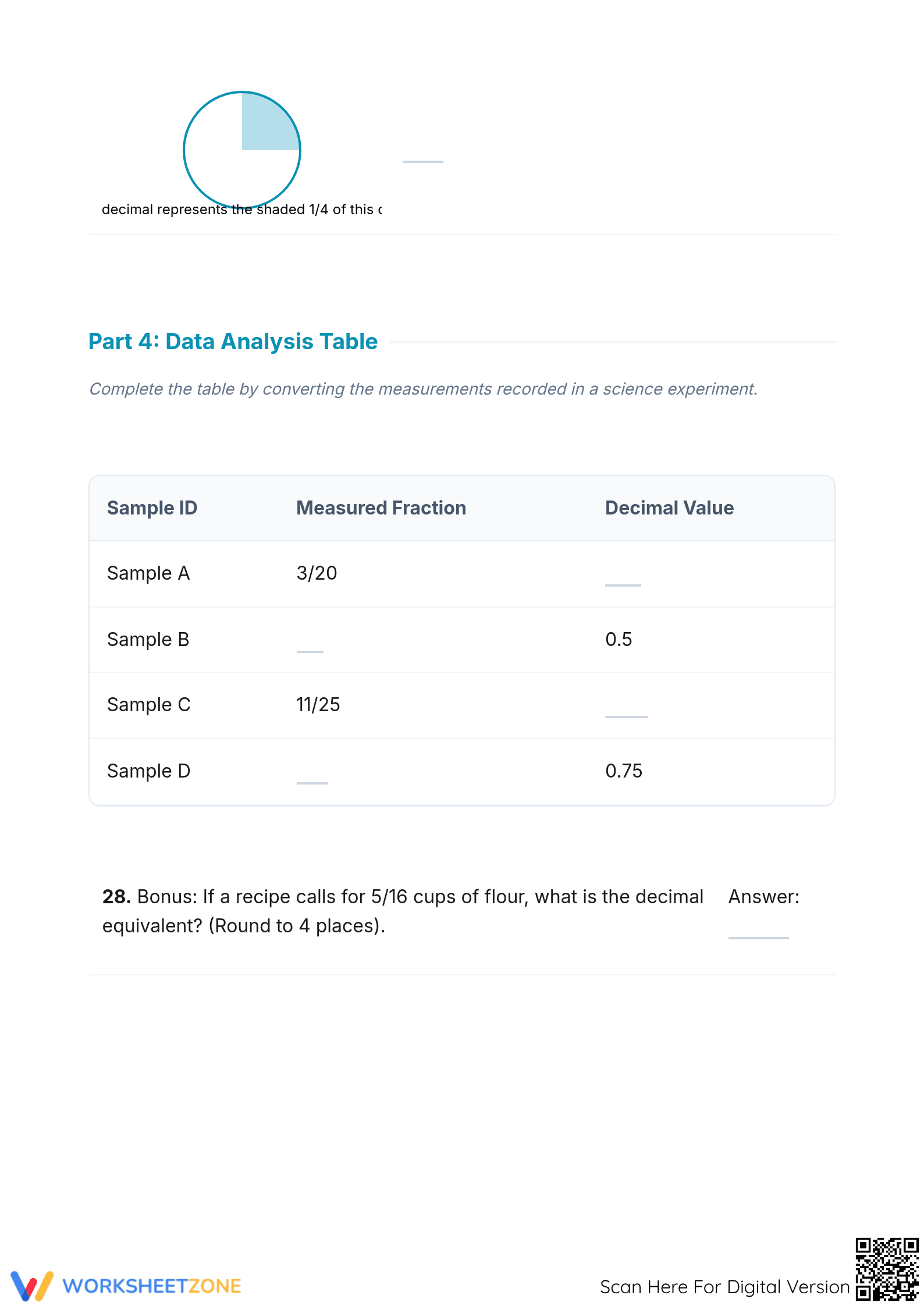
This packet includes 5 pages of instructional material featuring 33 unique problems. Students begin with isolated conversion practice in Part 1, progress to value comparisons using mathematical symbols, and apply skills to real-world word problems. A data analysis table and a diagrammatic challenge provide multi-modal engagement, while a bonus multi-step problem ensures extension for early finishers. A full answer key is provided for grading.
Zero-Prep Workflow
The Zero-Prep Workflow is designed for maximum efficiency in active classrooms. 1. Print (30 seconds): Simply select the pages needed for your specific lesson plan. 2. Distribute (1 minute): Give the packets to students for independent or small group work. 3. Review (30 seconds): Use the provided key for immediate feedback or self-grading. Total teacher prep time is under 2 minutes, making this an ideal solution for emergency sub plans.
Standards Alignment
This resource aligns primarily with CCSS.MATH.CONTENT.5.NF.B.3, which requires students to interpret a fraction as division of the numerator by the denominator. It also supports CCSS.MATH.CONTENT.6.RP.A.3 by preparing students for ratio and rate reasoning. Both standard codes can be copied directly into lesson plans, IEP goals, or district curriculum mapping tools to ensure administrative compliance and instructional tracking.
How to Use It
Use this packet during the independent practice phase of a gradual release lesson to monitor student progress. It also serves as an excellent warm-up activity for subsequent lessons on percentages or unit rates. Teachers should observe student rounding techniques during Part 1 to identify common misconceptions early. Expected completion time is approximately 35 minutes for most learners, allowing for a thorough class review afterward.
Who It's For
This resource is tailored for Grade 5 and Grade 6 students solidifying their understanding of rational numbers. It is especially beneficial for learners requiring structured scaffolds or those transitioning to middle school math. Pair this with a visual fraction wall or an anchor chart on decimal place value for optimal instructional results in inclusive classroom environments.
Research from NAEP (2022) indicates that fluency in rational number conversion is a significant predictor of success in middle-school algebra and proportional reasoning. This Grade 5 worksheet addresses foundational needs by providing structured opportunities to interpret fractions as division, a method supported by Fisher & Frey (2014) as a key component of the gradual release of responsibility. By moving from isolated practice to contextualized data tables and word problems, students solidify their understanding of the relationship between division and decimal representation. The inclusion of rounding requirements further develops computational precision. Standardized performance in CCSS.MATH.CONTENT.5.NF.B.3 is essential for students transitioning to complex ratios. This resource aligns with evidence-based instructional strategies that emphasize the connection between symbolic representation and real-world application, ensuring students meet rigorous mathematics standards while building long-term cognitive retention of core rational number concepts.


